mlops
(100)
Cloudangles wants AI to earn its keep
The company pairs its own software with the people who put it to work. Its most revealing stories begin with an unruly cloud bill and a price prediction that kept getting things wrong.

Intuitive.ai and the case for agreeing first
Before AI can give a useful answer, a company has to agree on the question. Intuitive.ai is building a business around that surprisingly difficult task.

Wits Innovation Lab builds the missing connections
A Shopify adapter. An artisan storefront. A team that stays through launch. Wits Innovation Lab’s most revealing work happens where one system has to meet another.

Jim Rebesco and the problem with tomorrow
He learned to keep algorithms working on Wall Street. At Striveworks, Jim Rebesco is applying that lesson to a world where the weather, the data, and the adversary refuse to stand still.

AI is loud. TWIML listens.
Sam Charrington built a business around asking AI researchers how things actually work. The interesting part is what happened when his listeners started learning together.
Practical AI makes the demo face reality
Two working AI practitioners built a show around a stubborn question: what happens when the technology leaves the demo? Eight years of conversations have made Practical AI a useful place to ask it.

io.net and the art of renting somebody else’s GPU
The AI compute shortage has an awkward companion: idle hardware. io.net wants to connect the two, but its most revealing lessons concern trust, incentives and the price of a finished job.

Anaconda made Python easy. Now it sells peace of mind.
The company that helped millions get started with Python found its paying customer in a different room: the enterprise worried about what all that free software might bring through the door.

Provectus puts AI where the work gets stuck
A pastry order, a hundred-page risk report, a support ticket: Provectus builds AI around the awkward business chores that hold everything else up. Its proposition is a working system, with the keys handed to the customer.

Pythian Services for When the Database Is Only Half the Problem
The alarms, the stalled AI pilot, the spreadsheet nobody trusts. Find the right Pythian service across eight buying paths—and know who keeps it running after launch.
Blackstraw sells the work that comes after the AI demo
A model can impress a room and still disappoint a business. Blackstraw makes its living in that awkward interval, turning scattered data and promising algorithms into systems people can actually use.

MoBagel and the art of making AI earn its keep
A failed marketing model, a motorcycle-parts seller and a shipping forecast reveal MoBagel’s practical wager: AI becomes useful when it changes a decision someone already has to make.

Blaize and the Trouble with a Clever Chip
Blaize built a processor for AI that has to live on a power budget. Its harder experiment is turning clever silicon into a dependable business.

RandomTrees and the tyranny of the tiny task
An invoice, a shipping document, a database migration: RandomTrees builds AI around the work that quietly holds an enterprise hostage. Its bet is that reusable agents need a very particular kind of human help.
Tecton and the Price of a Millisecond
Tecton made a business of getting fresh data to a model before the moment to decide has passed. Its journey from Uber infrastructure to Databricks acquisition shows why the least glamorous part of AI can be the part customers pay for.

Simplismart and the Expensive Second After the Model Thinks
The glamour in artificial intelligence belongs to the model. The bill belongs to inference. Simplismart built a business in that awkward second between a clever answer and one that arrives fast enough, cheaply enough, and inside the right security perimeter.

Enterprise Data and AI Operations Makes AI Clock In
The model is rarely what keeps an AI pilot from becoming daily work. The missing layer is the data foundation, workflow engineering and round-the-clock operational discipline that makes intelligence dependable.

Canonical gave away Ubuntu. Then it found the paying customer.
The company behind Ubuntu chased a phone that never shipped. Its more durable business is keeping other people’s open-source software running - from 5G networks to space-mission infrastructure.
Open Innovation AI wants to put your GPUs to work
Buying AI chips is the easy part. The Abu Dhabi company is building the software that lets enterprises share the compute, govern the models and keep the whole operation under their own control.

The Insurance Lab That Never Has to Pitch a Client
Liberty IT has spent nearly three decades turning Belfast engineering talent into software for one enormous customer: its parent, Liberty Mutual. Its best work shows what a captive technology company can do when cloud experiments are expected to survive contact with claims, compliance and millions of policyholders.
CapeStart's Real Product Is the Last Mile of Enterprise AI
Most AI projects do not die in the demo. They stall in the unglamorous stretch between a clever model and a system that regulated teams can trust. CapeStart has built a 600-plus-person business around crossing that gap.
Dataiku Built the Control Room for AI - Now It Has to Prove the Room Matters
The Paris-born software company made a $350 million-a-year business out of getting analysts, engineers and risk teams into one room. Its next act is deciding whether the agent boom needs a hall monitor - or a control system.

Hyun Kim Is Teaching AI to See the World Beyond the Screen
A six-month lab failure nudged Hyun Kim from genetics toward automation. Eight years after founding Superb AI, he is still chasing the same practical question: how do you make intelligent systems work when the real world refuses to behave like a demo?
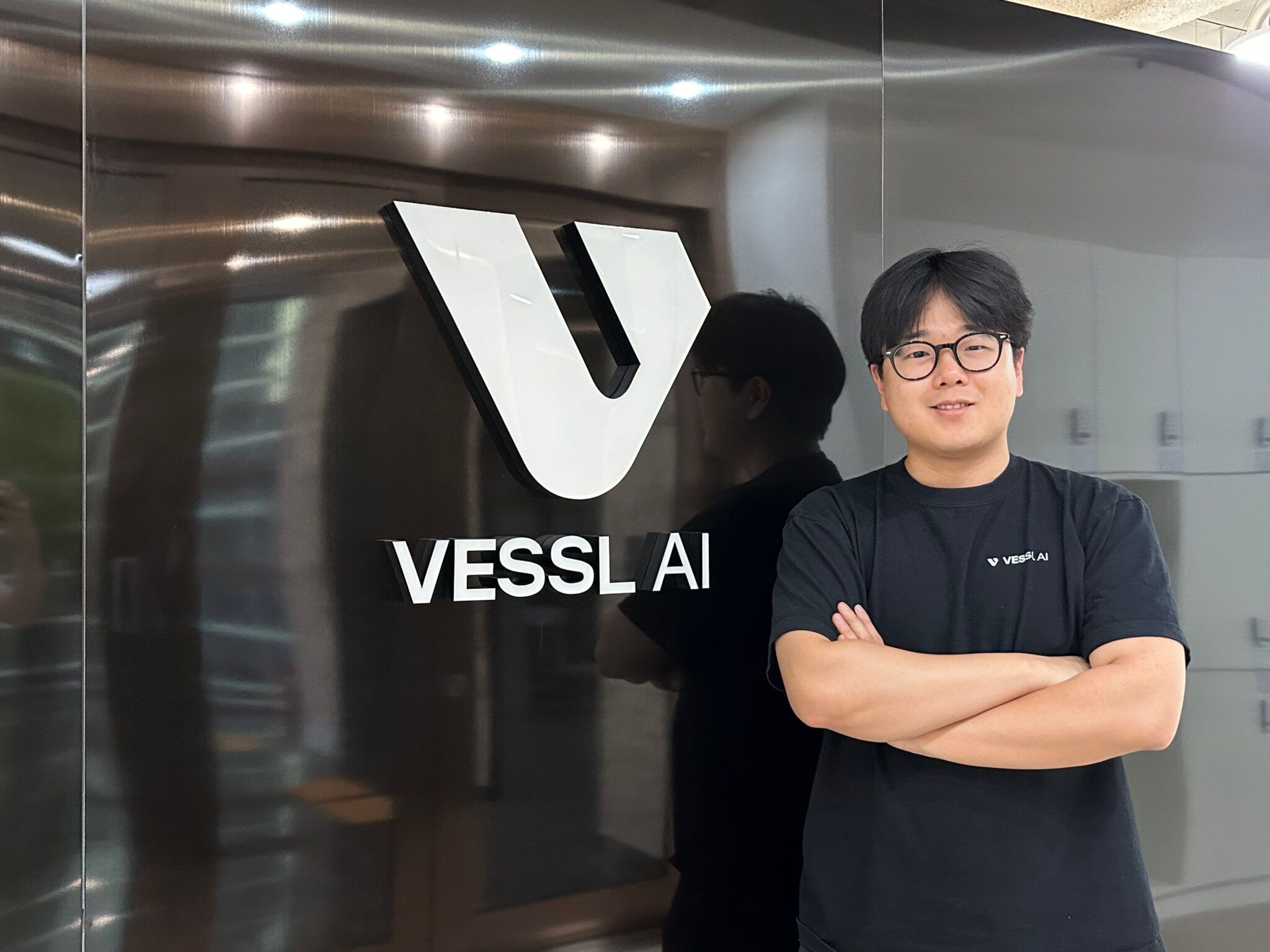
Jaeman An Is Building the Plumbing for AI's Expensive New Age
Before AI could write the future, someone had to make the machines cooperate. The VESSL AI co-founder turned a decade of infrastructure headaches into a company built for the age of scarce GPUs and restless models.

Bhushan Muthiyan Left Silicon Valley to Fix the Unfashionable Part of AI
The Automaton AI founder is betting that India’s AI advantage will be won in the plumbing: cleaner data, disciplined deployment and systems that work where enterprises actually keep their information.

The Company Betting That AI Still Needs a Human in the Loop
Label Studio put data labeling in the hands of a million AI practitioners. Now HumanSignal is wagering that the harder generative-AI models get, the more they need human judgment behind them.

Sixteen Years, No Funding, and the AI Nobody Demos
ITRex Group has spent sixteen years turning other companies' hardest problems into working software. Now it is doing the same with AI - the part that runs in production, not the part that looks good on stage.
The Database Fixers Who Want to Keep Enterprise AI Alive
Pythian spent nearly three decades learning how enterprise data breaks. Now it is using that operational muscle to move AI out of the demo room and into the systems companies cannot afford to lose.
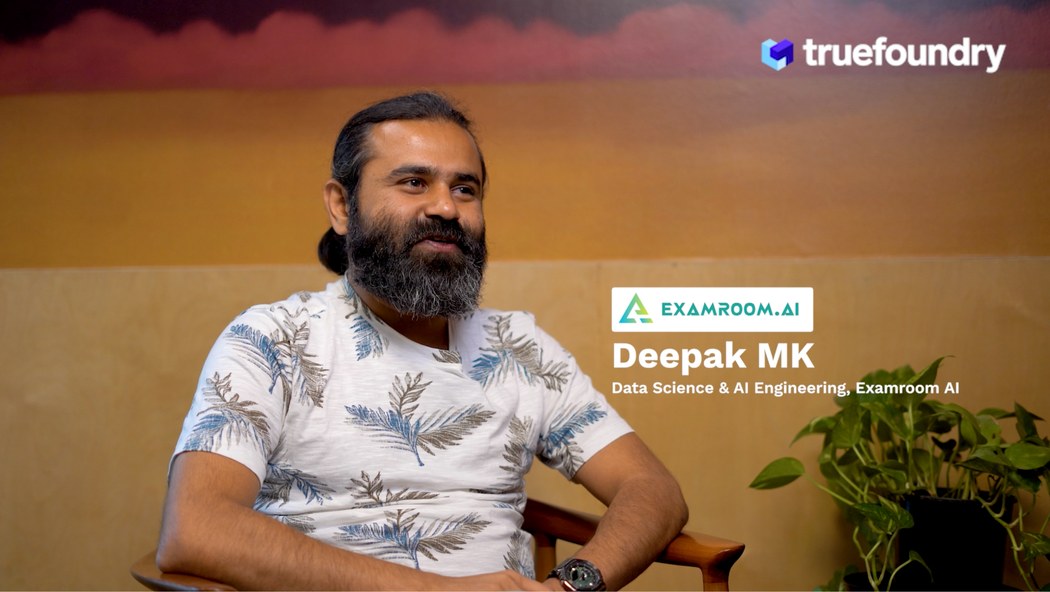
The Exam That Never Ends: How ExamRoom.AI Tamed 60 AI Models Before the Bell Rang
A TrueFoundry case study on ExamRoom.AI, an AI-first assessment platform that runs 60+ distinct AI solutions across exams that can last up to 28 hours. After an object-detection model that passed local testing failed in production, ExamRoom.AI moved off hand-managed Kubernetes onto TrueFoundry's deployment platform and AI Gateway. Deployment dropped from six days to under two hours, the platform scaled from a handful of test users to 500,000 in production, and three ML Ops engineers were freed from cluster babysitting to build product.

TensorPool
TensorPool (YC W25) is a San Francisco startup that turns cloud GPUs into a git-style command line. Instead of wrestling with SSH sessions, provider dashboards, and idle-instance billing, machine learning engineers describe a training job in a config file and run 'tp job push' - TensorPool spins up a multi-node cluster across partner clouds, streams logs, saves outputs, and shuts everything down, billing only for runtime. It advertises GPU access at roughly half the cost of major cloud providers, with H100s starting around $1.99/hr. Founded by three Stanford dormmates, the company was accepted into Y Combinator's Winter 2025 batch.