sensor-fusion
(59)
Orca AI wants to give ships more time to think
A camera on the bridge is becoming a fleet-wide habit. Orca AI’s bet is that spotting trouble earlier can make shipping safer, calmer and cheaper - while crews keep command.
The Navy Wanted Thousands of Robot Boats. HavocAI Built the Brain That Lets One Person Run the Fleet
Two Navy veterans started with Python, borrowed-looking boats and a blunt thesis: the hull is replaceable; coordination is the product. Two years, dozens of military deliveries and roughly $196 million later, HavocAI is testing whether one software stack can turn sea, air and land robots into a useful team.
CEVA Sells the Part of the Chip You Never See - and Gets Paid Again Every Time It Ships
CEVA is the rare semiconductor company that does not need to manufacture a chip to collect from billions of them. Its bet is simple: as intelligence moves out of the cloud, the best tollbooth may be a small, power-efficient block of reusable silicon IP.
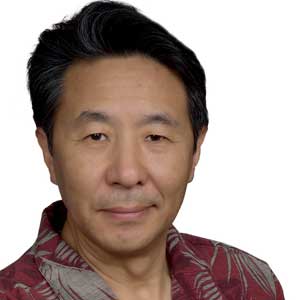
John Lin Spent Decades Teaching Cameras to See. Now He Wants Machines to Know Where They Are.
Before spatial computing became a slogan, John Lin was studying the stubborn physics of camera-phone images. His second act turns that patience into compact vision systems for robots and mixed-reality glasses.
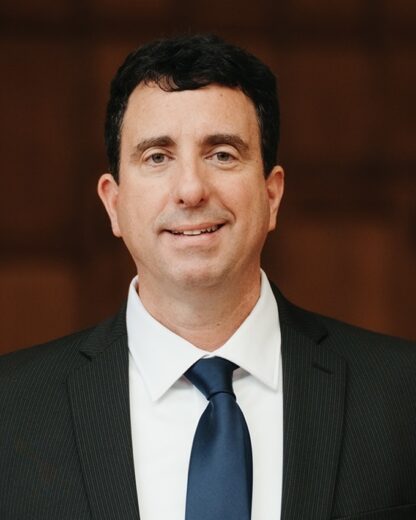
Mario Paniccia Put Light on a Chip. Now He Is Teaching Machines Not to Get Lost.
The former Intel Fellow spent decades persuading silicon to carry light. At ANELLO, he is using the same stubborn physics to help vehicles find their way when satellites cannot.
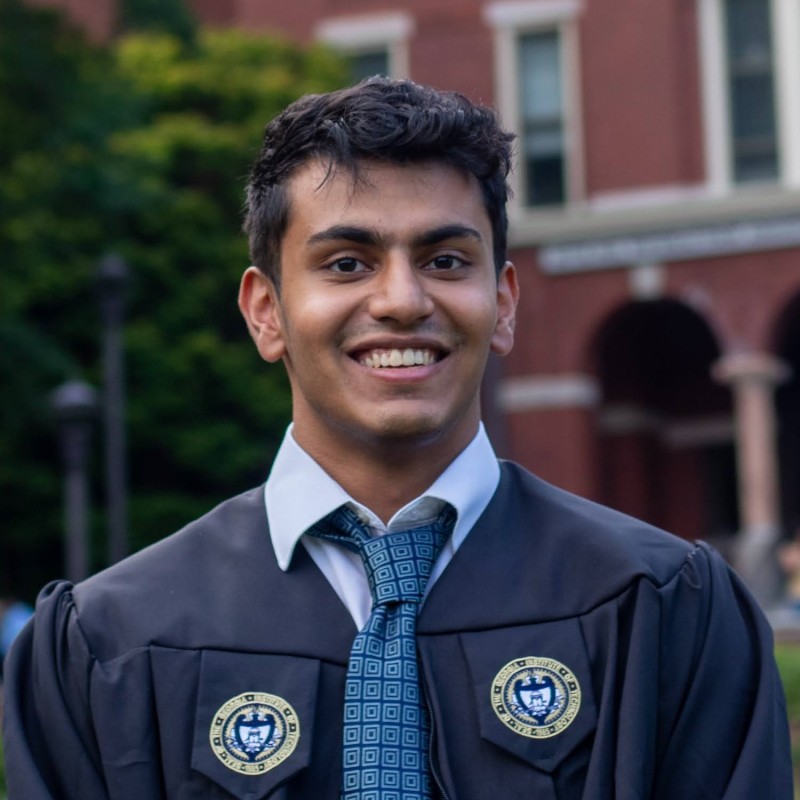
Anshul Ahluwalia Wants Drone Defense to Speak One Language
After building aircraft autonomy at Shield AI, the Georgia Tech computer scientist found his startup idea in defense technology's least glamorous corner: getting incompatible machines to cooperate.
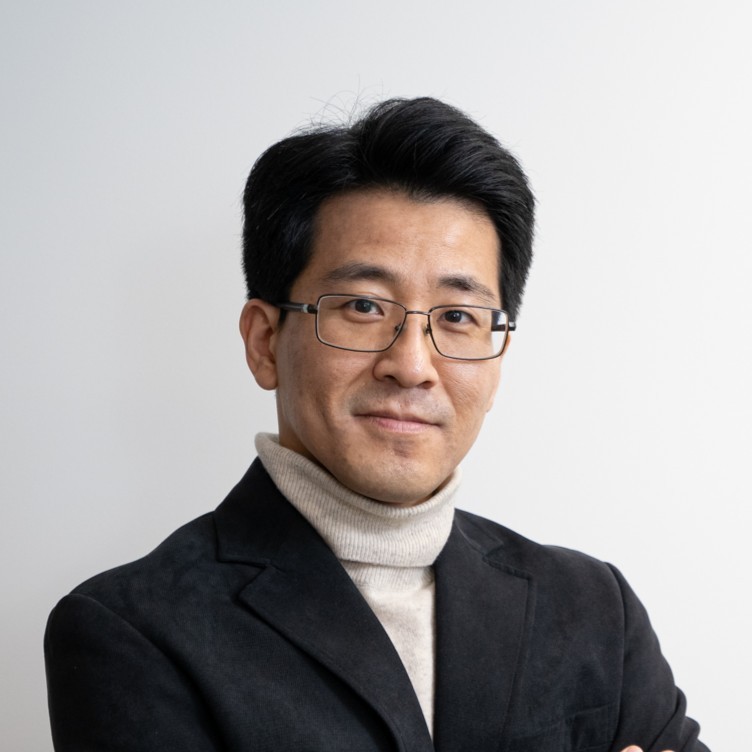
Hyunggi Cho Bet on the Part of Self-Driving That Had to Ship
A cafeteria conversation became a nine-year lesson in automotive patience. Hyunggi Cho built Phantom AI around the unfashionable idea that the road to autonomy begins with driver assistance people can actually use.

Movo Started With Shifts. Now It Wants to Prove the Work Actually Happened
After building a labor marketplace and then an autonomous scheduling engine, Jason Radisson found a sharper problem: honest care providers can do the work and still fail the audit. Movo’s new bet is a cheap tap, a chain of signals and a record designed to survive scrutiny.

NODAR Is Teaching Cheap Cameras to Do LiDAR's Expensive Job
The autonomous-vehicle industry spent years putting lasers on roofs. NODAR's contrarian pitch is simpler: spread two cameras apart, keep them calibrated through every pothole, and let software recover the world in 3D.

Phantom AI Stopped Chasing the Robotaxi - and Sold the Safety Layer Every Truck Was Missing
A bruising highway demo exposed the gap between autonomy theater and dependable safety. Phantom AI spent the next eight years making the less glamorous bet - affordable software that can see a pedestrian, fuse a radar return and help an ordinary vehicle stop.

Ivan Poupyrev Is Teaching Machines to Read the World Beneath the Screen
For three decades, Ivan Poupyrev has kept asking the same practical question: how can computing escape the glass rectangle? At Archetype AI, his answer begins with the signals already humming through factories, streets, clothes, and machines.

Chuck Gershman Is Teaching Machines to See After Dark
After three decades in semiconductors and five startup teams, Chuck Gershman is betting that autonomy's hardest problem is not intelligence alone. It is reliable perception when light, weather, cost, and physics stop cooperating.
BeeX
The Singapore deeptech cutting the tether on underwater inspection - autonomous drones that survey ships, wind farms and seabeds without divers, ROV pilots or a support vessel overhead.
Advanced Navigation
Advanced Navigation is a Sydney-based deep-technology company building navigation and autonomy systems that let robots, ships, aircraft, submarines and spacecraft know where they are when GPS is jammed, denied or simply unavailable. Founded in 2012 by Xavier Orr and Chris Shaw to commercialise AI-based inertial navigation research, it now designs and manufactures fibre optic gyroscopes, MEMS inertial sensors, underwater acoustic positioning and a miniature autonomous underwater vehicle across defense, space, marine, mining and commercial markets. In March 2026 it raised US$110M in Series C funding to accelerate its expansion into photonics, AI and quantum sensing.
Surtr Defense Systems
Surtr Defense Systems builds ParallaxOS, a hardware-agnostic operating system for drone defense. It ingests data from any radar, RF detector, camera, or acoustic array, fuses it into a single common operating picture, applies AI threat classification, and passes human-authorized engagement recommendations to any effector. Founded in 2026 by two former Shield AI and Anduril autonomy engineers, the company is a Y Combinator Spring 2026 (P26) startup that raised roughly $4.8M in seed funding and field-tested its system with Ukraine's Brave1 defense cluster.
Humatics
Humatics is a Waltham, Massachusetts technology company building microlocation systems - hardware and software that pinpoint the position of people, vehicles, and machines to millimeter and centimeter precision. Combining industrial-grade ultra-wideband radio with inertial sensors, GNSS, and analytics software, its platform serves two markets: industrial automation and robotics through the Milo Microlocation System, and rail and transit through the Humatics Rail Navigation System. Founded in 2015 by MIT professor David Mindell and industry veteran Gary Cohen, the company works with partners including Siemens Mobility and Hitachi Rail on projects such as the New York MTA subway signaling upgrade.

Nexar Inc.
Nexar is a New York-based mobility technology company that turns connected dashcams into a real-time sensing network for the physical world. Founded in 2015 by Eran Shir and Bruno Fernandez-Ruiz, it sells LTE-connected 4K dashcams to consumers while aggregating anonymized road imagery into CityStream, a platform that gives cities, mapmakers, insurers and autonomous-vehicle developers a minute-by-minute, ground-level view of streets. In July 2026 Nexar agreed to merge with Nauto to form an independent infrastructure platform for physical AI, backed by more than 10 billion historic miles of driving data across 50+ countries.
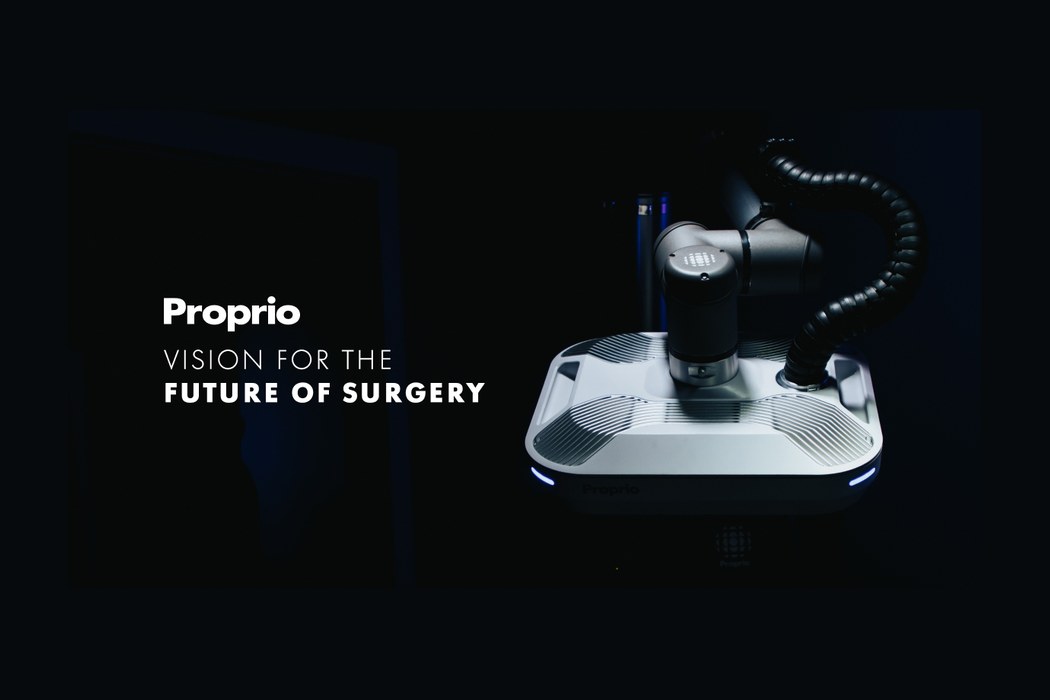
Proprio
Proprio is a Seattle medical technology company building an AI-powered surgical navigation platform, Paradigm, that uses light field imaging, computer vision, and machine learning to give surgeons a continuous, radiation-free 3D view of anatomy during spine surgery. Spun out of the University of Washington in 2016, the company fuses live intraoperative sensing with preoperative scans - a capability it calls Volumetric Intelligence - to improve precision, capture surgical data, and build a foundation model for surgery.
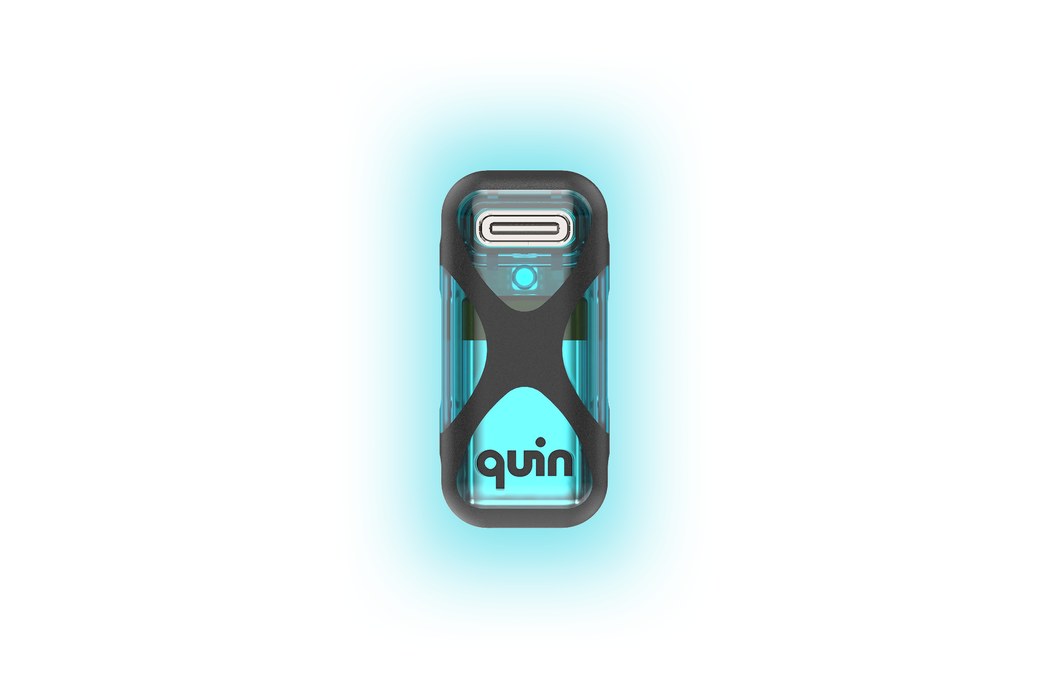
Quin
Quin (Quintessential Design) builds intelligent safety technology for helmets. Founded in 2017 by industrial designer Anirudha 'Ani' Surabhi, the company created the first motorcycle helmets with integrated crash detection and an SOS beacon, then pivoted to an 'ingredient brand' model that licenses its sensor-fusion hardware and emergency-response software to leading helmet makers. Its Quin Pod and Quin Tag devices measure motion thousands of times per second, detect dangerous impacts, and automatically alert emergency contacts and dispatch services with location and impact data across cycling, motorsport, snow sports, climbing and equestrian.
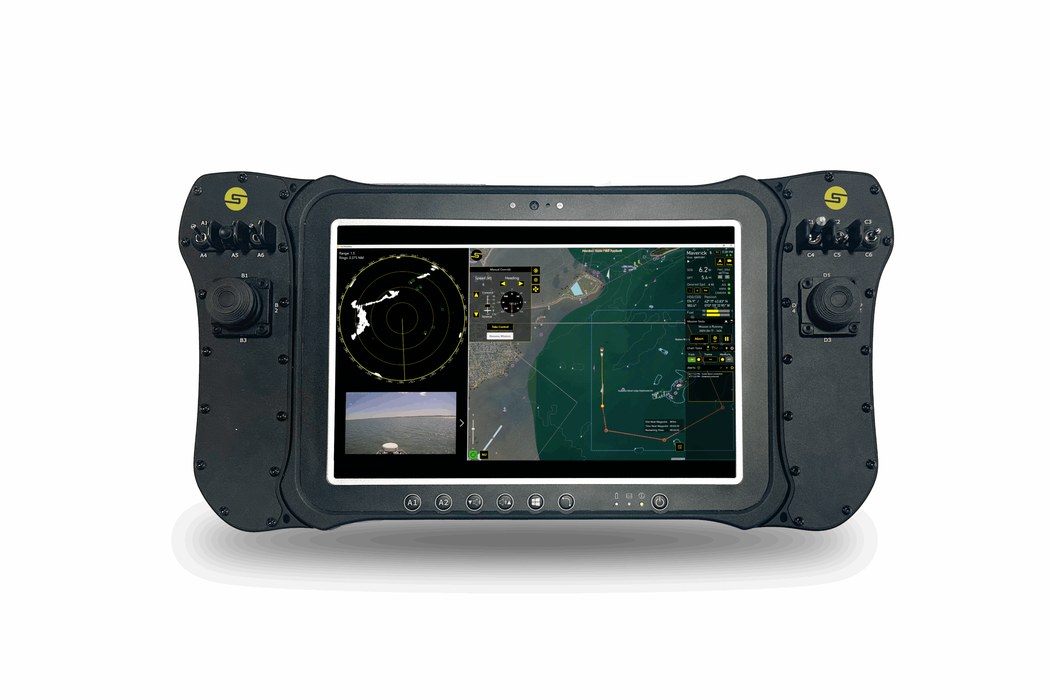
Sea Machines Robotics
Sea Machines Robotics is a Boston-based company building autonomous command, control, and perception systems for commercial and defense vessels. Its products - including the SM300 autonomous control system, the SM200 wireless remote helm, and the AI-Ris computer-vision sensor - let workboats, tugs, survey craft, and unmanned surface vehicles operate remotely or autonomously while improving safety and crew productivity. Founded in 2015 by marine engineer Michael G. Johnson, the company has deployed systems on four continents and works with customers spanning shipping, spill response, government, and the military.
Airspace Defense
Airspace Defense (formerly Airspace Systems) is a Silicon Valley company that secures the low-altitude airspace where drones increasingly operate. Its patented Airspace Spatial platform fuses Remote ID, RF and electronic sensing, radar and AI analytics to detect, identify and track unauthorized drones and their operators at city scale. Founded in 2015 by a team from Apple, Google and Cisco, the company serves public safety agencies, national defense and major enterprises, and its autonomous Interceptor drone is held in the Smithsonian National Air and Space Museum.
ANELLO Photonics
ANELLO Photonics is a Santa Clara, California semiconductor and navigation company that builds SiPhOG, described as the world's smallest high-precision silicon photonic optical gyroscope. By shrinking fiber-optic-class gyroscope performance onto a chip, ANELLO delivers inertial measurement units (IMUs) and full inertial navigation systems (INS) that keep vehicles, drones, ships and robots positioned accurately when GPS/GNSS signals are jammed, spoofed or simply unavailable - across land, air and sea. Founded in 2018 by silicon-photonics pioneer Dr. Mario Paniccia and MEMS/inertial-sensor veteran Mike Horton, the company serves defense, maritime, aerospace, agriculture, construction, mining and autonomous-vehicle markets.

Archetype AI
Archetype AI is a San Mateo-based physical AI company founded by former Google Advanced Technology and Projects (ATAP) leaders. It builds Newton, a multimodal foundation model that fuses real-time data from cameras, radar, microphones, accelerometers and dozens of other sensors with natural language, so machines can perceive, understand and reason about the physical world. On top of Newton, the company ships an Archetype Platform, an Agent Toolkit and prebuilt Physical Agents that turn raw sensor streams into actionable insight for manufacturing, construction, energy, telecom and city infrastructure. It raised a $35M Series A in November 2025, bringing total funding to $48M.
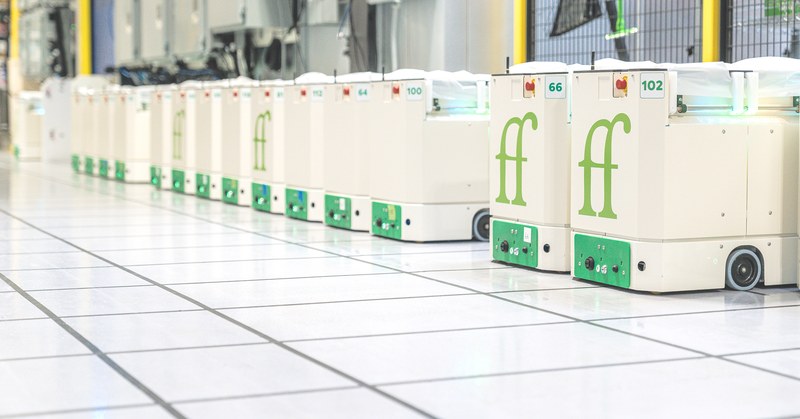
Fulfil
Fulfil (Fulfil Solutions) is a Mountain View robotics company building a fully automated grocery pick-and-pack system. Its ShopBot robots handle every grocery category and temperature state - produce, refrigerated, frozen - with item-level tracking powered by AI, computer vision and sensor fusion. The goal is to make online grocery, a famously unprofitable business, actually pencil out for retailers while cutting food waste. Fulfil emerged from stealth in February 2023 with $60M in Series B funding and powers Save Mart's Lucky Now same-day delivery service.

MicroVision, Inc.
MicroVision, Inc. (NASDAQ: MVIS) is a Redmond, Washington-based developer of lidar and perception technology built on more than three decades of MEMS laser beam scanning. Once known for pico-projection and its PicoP scanning engine used in consumer displays, the company has pivoted to become a supplier of automotive-grade and industrial lidar sensors - the MAVIN and MOVIA lines - plus perception software, targeting ADAS, autonomous vehicles, robotics, and a fast-growing security and defense business.

Nullmax
Nullmax is an AI company building vision-only, map-free autonomous driving software for mass-produced cars. Founded in Silicon Valley in 2016 by former Tesla Autopilot engineer Lei Xu and headquartered in Shanghai, it develops MaxDrive, a chip- and sensor-agnostic driving stack, and Nullmax Intelligence (NI), an end-to-end, multimodal system that reads the road with cameras instead of lidar or high-definition maps. Its technology ships in production vehicles from major Chinese automakers.
Owl Autonomous Imaging
Owl Autonomous Imaging (Owl AI) builds Monocular 3D Thermal Ranging cameras and AI perception software that let vehicles and machines see people, animals and obstacles in total darkness, blinding glare, fog, rain and snow. Founded in 2018 by Chuck Gershman and Gene Petilli, the Fairport, New York company pairs its own HD long-wave infrared focal plane array with thermal CNNs to deliver both classification and distance from a single passive camera - aimed at pedestrian automatic emergency braking, ADAS and defense.
Scout AI
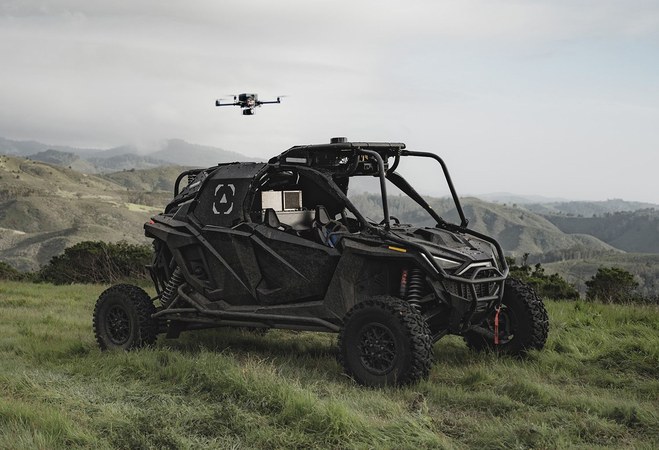
Scout AI is a Silicon Valley defense-tech company building Fury, a Vision-Language-Action foundation model that turns unmanned robots - ground, air, sea, and space - into autonomous agents that perceive the world, understand natural-language commands, and act in GPS- and comms-denied environments. Founded in 2024 by Colby Adcock and Collin Otis, the company raised a $100M Series A in April 2026 (which it billed as the largest defense-tech Series A in U.S. history) after emerging from stealth in 2025 with a $15M seed and early Department of Defense contracts.

Xvisio Technology Corporation
Xvisio Technology Corporation is a Silicon Valley-founded spatial computing company building the visual SLAM engines, sensor-fusion modules, and mixed-reality hardware that let machines and headsets understand where they are in physical space. Its SeerSense modules and SeerLens MR glasses - built on a low-latency VPU pipeline it calls SlimEdge XR - power 6DoF tracking, depth sensing, and on-device AI inferencing for AR headsets, robots, and industrial devices across healthcare, manufacturing, education, and logistics.
Deepen AI
Deepen AI is a Silicon Valley company building the data lifecycle infrastructure for autonomous systems and physical AI. Its platform combines multi-sensor data annotation, sensor calibration (LiDAR, camera, radar, IMU), and validation tools that carmakers, robotics firms, and AV developers use to turn raw sensor data into reliable training data. Founded in 2017, Deepen also co-created Safety Pool, a global scenario-sharing initiative launched with the World Economic Forum and WMG at the University of Warwick.