solar
(40)
The Charger Company That Quietly Became an Energy Company
Anker started by selling a better phone charger on Amazon. Fourteen years later it is putting battery walls, robot vacuums, and solar systems in homes across 100-plus countries - and betting its next act is energy, not accessories.

The Henderson Company Betting Your Roof, Your Locks and Your Light Switch Belong on One App
Solar panels, door cameras, thermostats and monitored alarms - most homeowners buy them from four different companies. LivSmart's pitch is that they should have bought them from one.

The $100 Box That Turns 400,000 Homes Into a Power Plant
A former commodities trader noticed homeowners were flying blind on their own electricity. So he sold them a $100 box - and started wiring 400,000 basements into a grid-scale power plant.

He Built the Zillow for Land - Then Wood Mackenzie Bought the Whole Map
LandGate turned 200-plus public datasets into a value score for nearly every acre in America. Ten years later, the company that data centers and grid developers lean on to pick sites got bought by Wood Mackenzie.
SolarEdge Technologies
The Israeli company that made every solar panel report for duty individually - and then had to fight its way back from a near-death inventory crisis.

Beyond Reach Labs
Beyond Reach Labs is a New York space-hardware startup building ultra-light deployable solar arrays that pack down to the size of a dining table and unfold to the size of a football field in orbit, delivering roughly 10x more usable power per launch without adding mass or volume. Founded by former NASA researcher Mitchell Fogelson and ex-SpaceX parachute lead Pele Collins, the company grew out of NASA-funded research into kilometer-scale space structures and is targeting a 2027 in-space flight demonstration.

Cheers
Cheers is a Y Combinator (S24) startup building a full-stack Generative Engine Optimization (GEO) platform for local service businesses. It helps HVAC, plumbing, roofing, solar and smart-home companies get recommended by AI assistants like ChatGPT and by Google, by auditing their AI visibility, fixing their web presence, and turning frontline employees into a review engine using NFC tap tools with per-employee attribution.

SwitchDin
SwitchDin is a Newcastle, Australia-based energy technology company that builds software and edge hardware to make distributed energy resources (DER) - rooftop solar, home and grid batteries, EV chargers and controllable loads - visible, controllable and orchestrable at scale. Its Stormcloud cloud platform and Droplet edge controllers create a common, vendor-neutral language across different brands of inverters and batteries, letting utilities, retailers and network operators run microgrids, virtual power plants and flexible-export programs. Founded in 2014 by Dr Andrew Mears, the company works with major Australian utilities including Horizon Power, Ausgrid, AGL, Origin and Western Power, and helped deliver a world-first renewable-only microgrid run in Onslow, WA.

Scanifly
Scanifly is a New Jersey-based B2B software company that helps solar contractors design and survey photovoltaic systems using drone imagery, photogrammetry, and AI. Its cloud platform turns a five-minute drone flight or remote satellite/LiDAR data into a to-scale 3D model accurate to within 1-3 inches, then generates layouts, shading reports, and permit-ready plan sets. Contractors use it from pre-sale proposals through post-sale final design to cut survey and design time by as much as 90% and reduce costly change orders on install day.

Jason Steinberg
Jason Steinberg is the CEO of Scanifly, a drone-based software platform that lets solar companies survey rooftops, build 3D models, run shading analysis, and produce permit-ready designs without repeated site visits or dangerous roof climbs. A CFA charterholder who once installed solar panels on New Jersey rooftops, he spent years financing renewable energy projects at Bloomberg New Energy Finance and CohnReznick Capital before taking the helm at Scanifly in 2018. He hosts the podcast 'When Life Gives You Lumens,' where he digs into how the solar industry can scale through better technology, safety, and workforce development.

Cool Earth Solar
Cool Earth Solar is a California solar company with two lives: it launched in 2006 as a venture-backed clean-energy startup chasing utility-scale power with cheap, air-inflated plastic concentrator dishes, then evolved into a locally owned residential and commercial solar installer serving the Stockton-to-Placerville corridor. Today it designs, engineers, and installs solar power and battery storage systems in-house - no outsourcing - under CEO Rob Lamkin, and has been a recognized SunPower dealer, winning national and regional dealer awards.
EliTe Solar
EliTe Solar is a Singapore-headquartered photovoltaic manufacturer founded in 2005 that designs and produces solar wafers, cells and modules for utility, commercial and residential customers in more than 30 countries. With manufacturing across Vietnam, Indonesia and a new hub in Egypt, the company has shipped over 10GW of modules and has been ranked a BloombergNEF Tier 1 manufacturer continuously since 2012, positioning vertical integration and low levelized cost of energy as its core pitch.
Pegasus Solar
Pegasus Solar is a Richmond, California manufacturer of rooftop solar mounting and racking systems designed to make installation faster, cheaper, and more watertight for residential and commercial solar installers. Founded in 2012 by Kai Stephan, the company sells a full catalog of mounts, rails, flashings, and rail-free systems - including its SkipRail and InstaFlash lines - through a distributor and installer network across the U.S. Pegasus emphasizes American manufacturing, durable design, and reducing labor time on the roof, with millions of units shipped and a track record it markets around zero reported roof leaks.

Station A
Station A is a San Francisco climate-tech company that runs a software marketplace for buying and selling clean energy. Its platform turns a building's address into a data-driven estimate of the financial return on solar, battery storage, and EV charging, then lets commercial real estate owners list projects and collect competitive bids from a network of thousands of vetted energy developers. Spun out of NRG Energy in 2018 by a team that met at MIT, Station A aims to make clean energy transactions as simple and transparent as an online marketplace, and counts large owners like Prologis, Walmart, CBRE, Nestle, and Goldman Sachs among its users.
Terrajoule Energy Inc
Terrajoule Energy is a Palo Alto cleantech company building modular, dispatchable solar power stations that deliver clean electricity around the clock without lithium-ion batteries. Its patented Dispatchable Solar Module (DSM) pairs prefabricated Linear Fresnel solar concentrators with a Steam Accumulator Energy Storage (SAES) system - storing energy as pressurized hot water in steel pressure vessels - and reciprocating steam piston engines to turn steam into electricity. The pitch is blunt: store energy in steel and water instead of rare metals, and undercut the cost of PV-plus-battery from day one. Founded by electrical engineer and serial hardware entrepreneur Stephen J. Bisset, Terrajoule raised an $11.5M Series A from NEA and Air Liquide's ALIAD, and was acquired by Environmental Clean Technologies Limited in December 2025.

Nithish Sairam
Nithish Sairam is the co-founder and CEO of Illumine-i, a solar and power-engineering design firm he built after stints at Tesla and NextEra Energy. Under his leadership the bootstrapped firm expanded from a five-person team to roughly 240 engineers across offices in Fremont, Austin, and Chennai, and has been described as the largest independent digital design engineering firm in the residential PV solar sector.

BuildQ
BuildQ is an AI-native software and services company for capital-intensive infrastructure - energy, data centers and real estate. Founded in 2024 by attorney and former renewable-energy operator Maryssa Barron, the platform centralizes a project's documents, financials and contracts, then uses AI to run due diligence, surface risks and obligations, and produce investor-ready memos and data rooms. The pitch, in Barron's words, is 'TurboTax for project finance': turn the slow, six-figure, thousand-page grind of financing a clean-energy project into something faster and cheaper. Less than a year after launch, BuildQ reported 300+ projects, 10+ gigawatts of capacity and $150M+ in deal flow on the platform.

Plural
Plural is a San Francisco fintech building the financial operating system for infrastructure - a programmable execution layer that tokenizes real-world energy assets like solar farms, battery storage, and data centers. It targets the 'missing middle' of clean energy: sub-$100M projects too small for traditional project finance but too big to ignore. By pairing smart-contract automation with a registered broker-dealer, Plural lets developers raise capital faster and lets institutional and alternative investors underwrite, monitor, and trade cash-flow streams from the electron economy.

Jutta Friedrichs
Jutta Friedrichs is a German-born designer and co-founder of Soofa, the Cambridge, MA company that makes solar-powered digital signs for city sidewalks. Before Soofa she ran the MÜ furniture studio in Shanghai, co-founded Xindao's in-house design team, won two Red Dot Awards, an iF Design Award and an Elle Decoration Award, and earned a Masters at the Harvard Graduate School of Design. She mentors at the Harvard Innovation Lab and works at the seam of hardware, human-centered design, and the civic public realm.

AEONrv
AEONrv builds all-season, electric-cabin RVs designed for off-road and off-grid adventure. Headquartered in Reno, Nevada, the company converts AWD Ford Transit chassis into propane-free overland campers powered by solar and lithium - engineered for skiers, climbers, and remote workers who want to disappear into the mountains without giving up the comforts of home.

Blumen Systems
Blumen Systems is a San Francisco software company building an AI-powered operating system for infrastructure permitting and environmental diligence. It fuses 2,000+ geospatial datasets, a nationwide database of local zoning and permitting rules across 3,200+ jurisdictions, and a decade of historic permit outcomes to flag fatal flaws and regulatory risk on energy and infrastructure sites in days instead of months. In 2025 its tools were used to evaluate roughly 60 GW of solar, battery, gas, and data-center projects.

Adam Silver
Adam Silver is the co-founder and CEO of Plural (Plural Finance / Plural Energy), a San Francisco startup building a financial operating system for energy infrastructure. Plural tokenizes real-world clean energy assets - solar arrays, batteries, and data centers - turning them into programmable, investable products, and runs a FINRA-member broker-dealer with a transfer agent license. A former Deloitte consultant and ServiceNow product lead, Silver became obsessed with what he calls 'the miracle of lights turning on,' then with the unacceptable difficulty of financing the assets behind it. In September 2025 Plural closed an oversubscribed $7.13M seed round led by Paradigm, bringing total funding to roughly $9.3M, with over $300M in distributed solar and battery assets available for investment.
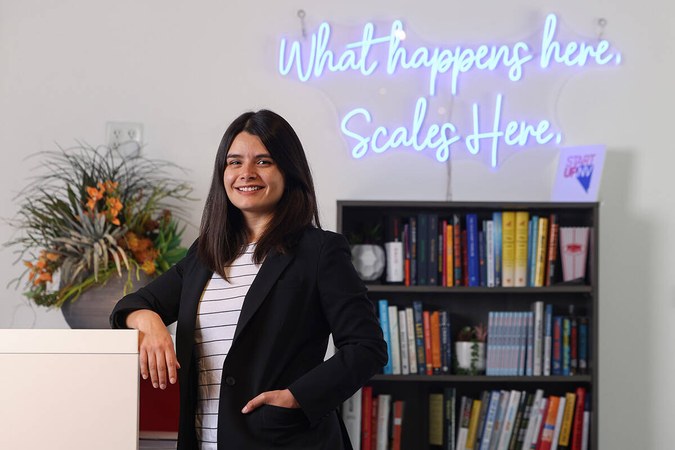
Maryssa Barron
Maryssa Barron is the founder and CEO of BuildQ, an AI-powered project intelligence platform for the energy sector that structures project data, automates due diligence, and accelerates clean energy financing and M&A. A Harvard graduate, Stanford-trained lawyer, and licensed D.C. attorney, she spent nearly a decade in renewable energy - pioneering early power purchase agreements and rising to COO at a global independent power producer - before building the tool she wished had existed. She founded BuildQ in 2024 while studying for the bar exam, won the 2025 AngelNV competition and over $1 million in funding, and within a year had grown the platform to 300+ projects, 10+ gigawatts of clean energy capacity, and over $150 million in deal flow.

Phil Krinner
Phil Krinner is the co-founder and CEO of Arch, a San Francisco company building AI revenue software for home services contractors, starting with HVAC and heat pumps. A Stanford GSB graduate and former McKinsey strategy consultant who once built large-scale solar plants and installed panels himself, Krinner started Arch after asking 15 contractors to quote a heat pump for his apartment and finding that not one could tell him whether it would save money. Arch uses public home data and AI to help contractors find the right homes, size systems in minutes, and run hyper-personalized campaigns. The company raised a $6.2M seed round in 2024 led by Coatue with Floodgate, Gigascale, ReGen and MCJ.

Hover Energy
Hover Energy is a Dallas-based clean-energy company that builds patented Wind-Powered Microgrids - rooftop arrays of compact 36 kW turbines that turn a building's own edge into a sail, combined with solar, storage, and an AI-driven control stack. The system is designed to offset most or all of a building's power use on site, delivering resilient, behind-the-meter electricity to commercial, industrial, and data-center customers. Paired with IBM's watsonx and Maximo software and scaled through joint ventures like EverOn Energy, Hover pitches an Energy-as-a-Service path to what it calls 'real zero.'

SYSO Technologies
SYSO Technologies is a Boston-based market operations partner for renewable energy and battery storage assets. The company acts as the market operator for solar, wind, and energy storage projects, handling registration, forecasting, bidding, scheduling, real-time dispatch, and settlement across every major North American ISO/RTO market. Its cloud-based, AI-enabled Energy Management Platform turns passive renewable generators into active market participants, and by 2026 SYSO managed more than 4.5 GW across 300+ sites.
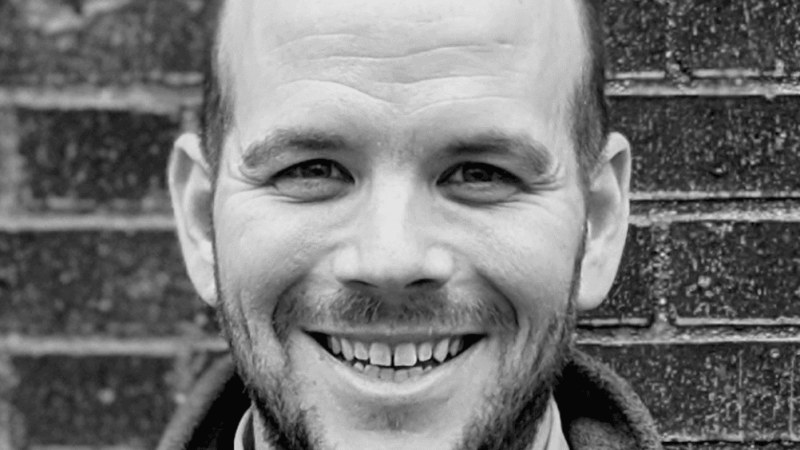
Nicholas Speyer
Nicholas Speyer is the co-founder and CEO of SYSO Technologies, a Boston-based market operations firm that runs renewable and battery storage assets in the wholesale power markets. Under his leadership, SYSO has grown to manage more than 4.5 gigawatts across 300+ sites in every major ISO/RTO market and into Canada, backed by a $15.5M Series B from Kimmeridge, New Energy Capital and MassMutual Ventures. A Stanford-trained energy resources engineer, Speyer spent two decades building energy-software and efficiency businesses before turning SYSO into what its investors call the clear leader in its space.

Beacon Power Services
Beacon Power Services (BPS) is an energy-technology company building data and grid-management software for Africa's power sector. Its AI-enabled platforms - Adora for real-time grid monitoring, CAIMS for utility asset and customer data, and the Xepp consumer app - help electricity distributors cut losses, prevent outages and digitize networks. Founded by aerospace engineer turned investment banker Bimbola Adisa, BPS now serves utilities reaching more than 50 million people across Nigeria, Ghana, Kenya, Zambia and beyond, processing over a billion grid data points a day.
Euclid Power
Euclid Power is a New York-based operating system for renewable energy projects, pairing an AI-driven software platform with expert services across the development, financing, construction, and operations lifecycle. Founded in 2021 by former Goldman Sachs and Generate Capital energy professionals, Euclid turns scattered project documents into a single source of truth, helping developers, investors, and asset owners cut diligence and transaction timelines from months to days. It has been embedded in more than 1,000 solar and storage projects, onboarded over 12 GW of capacity, and supported $10B+ in renewable energy investment.

Jacob Sandry
Jacob Sandry is the co-founder and CEO of Euclid Power, a New York renewable energy operating system that turns scattered solar and storage project documents into decision-ready intelligence. After helping build Goldman Sachs' renewables fund from zero to $3 billion deployed, he left to fix the unglamorous paperwork that quietly stalls clean energy. Euclid now supports more than 21 GW across 1,100+ projects, raised a $20M Series A led by Venrock, and bets that AI plus accountable human experts beats AI alone in an industry where 99% accurate is functionally wrong.