Products
26 loaded
Lark
Lark is ByteDance's productivity superapp that stitches chat, video meetings, docs, spreadsheets, calendar, and project workflows into one platform, designed for multilingual teams that want to shrink their tool stack without losing power.

The Workforce That Never Clocks Out
Agentforce is Salesforce's platform for building and deploying autonomous AI agents that work alongside humans across sales, service, marketing, and commerce. Launched at Dreamforce in September 2024 and powered by the Atlas Reasoning Engine, it lets companies stand up agents that resolve customer queries, qualify leads, and complete tasks grounded in their own CRM data. It has become the fastest-growing product in Salesforce history, reaching a $1.2 billion annual recurring revenue run rate by April 2026.

The Freight Data You Already Owned, Finally Talking Back
Pallet Atlas is a data intelligence platform for logistics that ingests operational data from TMS, WMS, ERP systems, email, and documents, then normalizes and connects customers, subsidiaries, facilities, lanes, and contracts into a single network model. It enriches that model with outside signals like spot rates, lane density, distribution center locations, and weather, and lets operators ask plain-English questions to surface hidden revenue opportunities in seconds instead of days.

The Salesperson Nobody Hired: How AI Decides Who You Trust Before You Do
YesPress Newsroom, powered by Story Engine, publishes the stories that build authority, earn trust, and increase a company's visibility inside AI answers - the recommendations, comparisons, and explanations that millions of people now ask chatbots for before they ever visit a website or run a Google search.

The Signal Before the Siren: How NationGraph Reads a Government's Mind
Signals is NationGraph's buying-trigger engine for companies selling to state, local, education and defense (SLED) buyers. It aggregates thousands of public sector data sources - budgets, RFPs, board meeting minutes, grant awards, contract renewals and personnel changes - and converts them into scored, ranked opportunities that surface before a formal RFP is ever published. The result is delivered daily, organized by account, and synced into Salesforce, HubSpot and Slack so sellers can act on intent instead of waiting for the bid.

Stop Building AI Walls. Fix the Reason People Call.
Spiral by UJET is an AI-powered conversational analytics platform that uses Deep AI Research to autonomously analyze 100% of customer interactions across voice, chat, email, surveys, social media, and reviews. Rather than deflecting customers with AI walls, Spiral finds the root cause of why people contact support in the first place and helps teams eliminate avoidable contacts at the source. Founded by Elena Zhizhimontova and acquired by UJET on November 18, 2025, Spiral continues as a standalone product while feeding conversational intelligence into UJET's cloud contact center platform.

Mercedes-Benz EQB
The Mercedes-Benz EQB is a battery electric compact luxury crossover SUV that takes the practical, boxy silhouette of the GLB and replaces the combustion engine with a silent electric powertrain. It is one of the few compact EVs to offer an optional third row, making it a rarity in the electric space for growing families.

Mini Cooper SE
The Mini Cooper SE is the all-electric version of the Mini Hatch, currently in its fourth generation (J01, 2024+) built on a dedicated EV platform. Manufactured by Spotlight Automotive, a BMW-Great Wall joint venture in Zhangjiagang, China, it features a 54.2 kWh battery, 160 kW (215 hp) motor, 402 km (250 mi) WLTP range, and a distinctive circular 240mm OLED touchscreen running OS9.

O-Boy Satellite Smartwatch
O-Boy is the world's first satellite-connected emergency rescue smartwatch, built for adventurers and professionals who operate beyond cellular coverage. Designed by Belgian studio Futurewave for startup LifeLineSat, it lets you send GPS-pinpointed rescue signals, custom messages, or live location tracking directly via satellite - no phone required. Think of it as the emergency button the wilderness has always needed, worn on your wrist.
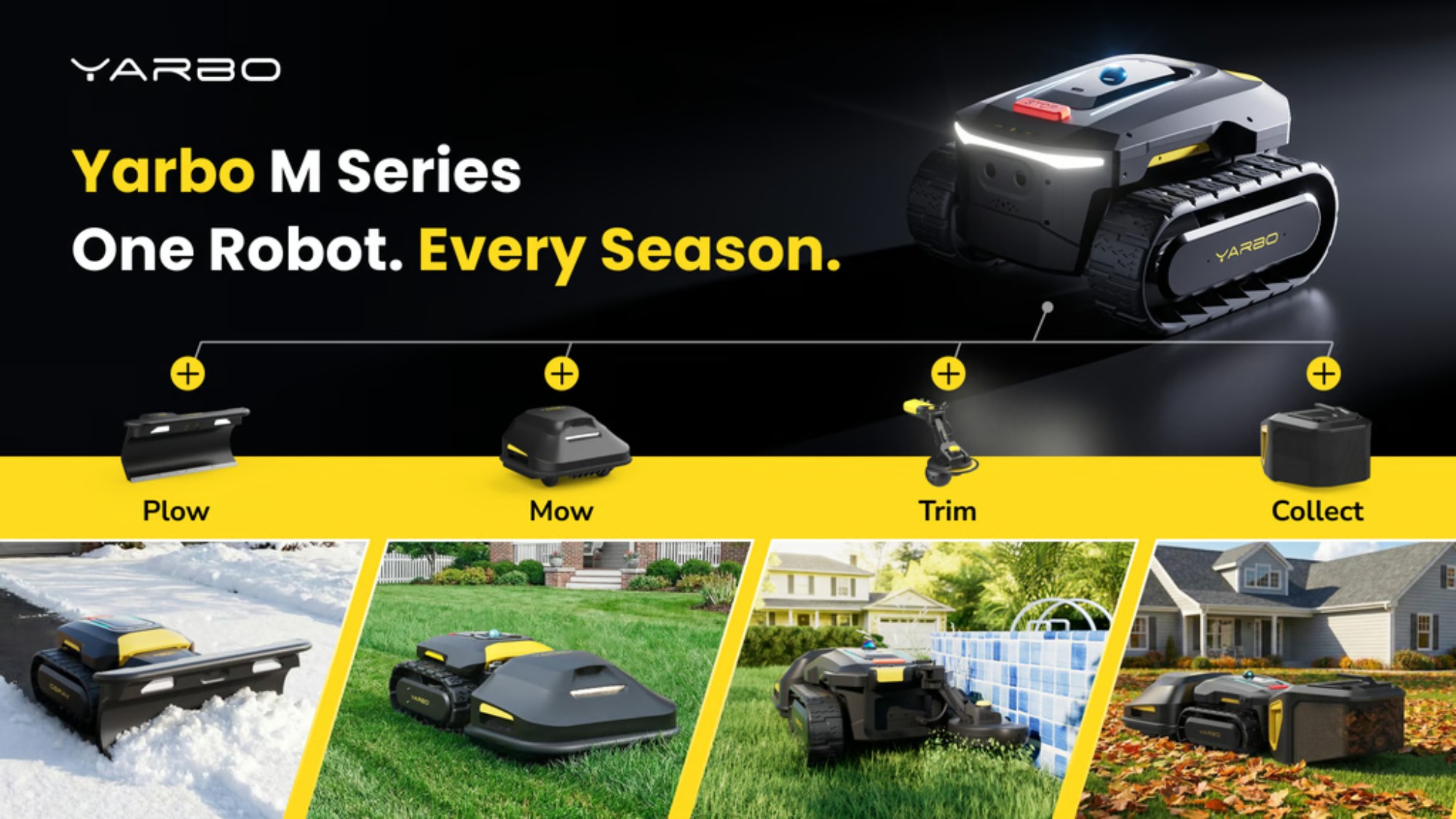
Yarbo M Series Robot
Yarbo M Series is a modular, autonomous yard robot that replaces four seasonal machines - lawn mower, snow blower, leaf collector, and edge trimmer - with one tracked, wire-free platform. Unveiled at CES 2026 and raising $2.6M on Kickstarter (26x its goal), the M Series uses nRTK GPS, LiDAR, and onboard AI to navigate without buried boundary wires, handles slopes up to 35 degrees, and operates year-round from -13F to 113F.

Samsung Galaxy Z TriFold
The Samsung Galaxy Z TriFold is Samsung's first tri-fold smartphone — a 309g engineering marvel that unfolds from a pocketable phone into a full 10-inch tablet via two precision hinges. Launched in December 2025 at $2,899, it sold out globally within minutes of each restock before being discontinued in March 2026, with a successor already confirmed for 2027.

Samsung The Frame TV
Samsung The Frame TV is a lifestyle television that doubles as a work of art. Launched in 2017, it features a matte anti-reflection display, magnetic customizable bezels, and an Art Mode powered by the Samsung Art Store - offering 3,000+ museum-quality artworks from 70+ institutions including MoMA, the Met, and Musée d'Orsay. When not streaming or gaming, it displays fine art like a framed painting on your wall, complete with a near-flush wall mount included in the box.

Shokz OpenFit Pro
Shokz OpenFit Pro are open-ear earbuds that pull off something most audiophiles thought impossible - noise reduction without sealing your ears. Launched at CES 2026, they combine a SuperBoost dual-diaphragm driver, Dolby Atmos with head tracking, 50 hours of battery life, and a triple-microphone array that quietly tamps down background noise while keeping you aware of your surroundings. Built for athletes, office workers, and anyone who refuses to sacrifice situational awareness for sound quality.

Ultra-Slim 5000mAh Power Bank
The Anker Nano Power Bank (5K, MagGo, Slim) - Model A1665 - is Anker's thinnest-ever 5,000mAh portable charger, measuring just 0.34 inches (8.6mm) thick. With Qi2-certified 15W MagSafe wireless charging, 20W USB-C wired charging, graphene-based thermal management, and a body made from 75% recycled materials, it redefines what a pocket-sized power bank can be. Beloved by travelers, iPhone users, and minimalists who refuse to carry a brick.

Toyota Crown
The Toyota Crown is a bold reinvention of Japan's most storied nameplate - a fastback crossover-sedan that blends sedan elegance with SUV practicality, hybrid efficiency up to 42 MPG, and available 340 hp performance. Returning to the US after a 51-year absence, the 16th-generation Crown starts at $41,440 and challenges European luxury sedans with Toyota reliability and genuine design daring.

Toyota Prius Prime
The Toyota Prius Prime is a plug-in hybrid electric vehicle (PHEV) that combines a 2.0-liter engine with a 13.6 kWh battery for up to 44 miles of all-electric range and 127 MPGe, all wrapped in a bold redesigned body that won 2024 North American Car of the Year.

Volkswagen ID.4
The Volkswagen ID.4 is VW's first all-electric SUV, built on the purpose-designed MEB platform and assembled in Chattanooga, Tennessee. Launched in 2020 and named World Car of the Year 2021, it offers up to 291 miles of EPA-rated range, 175 kW DC fast charging, and qualifies for the full $7,500 federal EV tax credit — making it one of the most accessible premium electric crossovers on the American market.

Volkswagen ID.7
The Volkswagen ID.7 is VW's flagship all-electric liftback - a five-door E-segment executive car built on the MEB platform that combines up to 702 km WLTP range, 200 kW fast charging, and a suite of first-in-class technologies including an augmented reality head-up display and ChatGPT-powered voice assistant. Positioned to replace the Passat and Arteon, it targets premium EV buyers who want BMW i5 / Mercedes EQE capability at a lower price point.

Volvo C40 Recharge
The Volvo C40 Recharge is a compact luxury electric crossover coupe - Volvo's first model designed exclusively as a battery-electric vehicle from the ground up. It pairs a coupe-style sloping roofline with a leather-free Scandinavian interior, Google Built-in infotainment, IIHS Top Safety Pick+ ratings, and up to 297 miles of EPA-estimated range, making it a premium EV for buyers who value design, sustainability, and safety over maximum range or lowest cost.

Volvo EX90
The Volvo EX90 is a full-size, seven-seat luxury electric SUV and Volvo's most technologically ambitious vehicle ever made. Serving as the electric successor to the iconic XC90, it combines Scandinavian design, 300 miles of EPA range, and an unprecedented sensor suite - including LIDAR, 8 cameras, 5 radars, and an AI-powered Driver Understanding System that can pull the car over and call emergency services if the driver is unresponsive. Starting at $76,695, it won the 2025 World Luxury Car of the Year and a 2024 TIME Best Invention award.

Volvo XC60 Recharge
The Volvo XC60 Recharge (now T8 Plug-In Hybrid) is Volvo's best-selling car of all time - a compact luxury SUV with 455 horsepower, 35+ miles of electric-only range, and Scandinavian design chops that out-muscle every rival in its class while quietly winning World Car of the Year 2018.

Xpeng G9
The Xpeng G9 is a flagship mid-size electric SUV from Chinese EV maker Xpeng Motors, built on an 800V silicon carbide platform with class-leading fast charging (10-80% in 12 minutes on 2025 models), up to 725 km CLTC range, and a full-stack autonomous driving system called XNGP. It competes directly with Tesla Model Y and premium European EVs, and has been exported to Europe, the Middle East, and Southeast Asia. Its tech is now licensed to Volkswagen Group.

Xpeng P7
The Xpeng P7 is a flagship battery-electric executive fastback sedan from Chinese EV maker XPeng Motors (NYSE: XPEV). Launched in 2020 as China's longest-range EV, it combines European-inspired design with advanced AI-powered autonomous driving tech, a 800V charging architecture, and a cockpit packed with intelligent features — all at a price that undercuts comparable European and American rivals by a wide margin.

Zeekr 001
The Zeekr 001 is a premium battery electric shooting brake made by Zeekr, a Geely Holding Group sub-brand. Launched in 2021, it is widely described as the world's first mass-produced EV shooting brake - a swooping 5-door fastback combining Porsche Taycan Sport Turismo aesthetics with aggressive EV performance and tech at a fraction of the price. With triple five-star safety ratings, up to 1,265 hp in its FR quad-motor variant, and charging speeds that hit 546 kW peak on its 2026 900V platform, the 001 has become the benchmark for Chinese premium EVs seeking global legitimacy.

Zeekr X
The Zeekr X is a compact electric crossover SUV from Zeekr - Geely's premium EV brand - designed by a European team led by ex-Volkswagen chief Stefan Sielaff, built on Geely's advanced SEA platform, and packing up to 489 hp with a sliding 14.6-inch touchscreen in a city-friendly footprint. It launched in China in 2023 and has since expanded to Europe, Australia, Southeast Asia, and beyond - offering hypercar acceleration, 5-star safety ratings, and a built-in mini-fridge in a sub-$25,000 (China) package.

Microsoft Dynamics 365
Microsoft Dynamics 365 is Microsoft's flagship suite of intelligent, cloud-based enterprise business applications combining CRM and ERP capabilities under a single unified platform. Launched in November 2016, it covers sales, customer service, finance, supply chain, HR, commerce, and field service — all deeply integrated with Microsoft 365, Azure, LinkedIn, and Power Platform. With embedded Copilot AI and autonomous AI agents, Dynamics 365 serves nearly 100,000 organizations worldwide and is a consistent Gartner Magic Quadrant Leader across CRM, ERP, and Sales Force Automation categories.