WORLD CAR OF THE YEAR 2021 BUILT IN TENNESSEE $7,500 FEDERAL TAX CREDIT 291 MILES EPA RANGE 175 kW FAST CHARGING 917,000+ SOLD GLOBALLY NEXT GEN: THE ID.TIGUAN WORLD CAR OF THE YEAR 2021 BUILT IN TENNESSEE $7,500 FEDERAL TAX CREDIT 291 MILES EPA RANGE 175 kW FAST CHARGING 917,000+ SOLD GLOBALLY NEXT GEN: THE ID.TIGUAN
Volkswagen Electric

Volkswagen
ID.4

Born electric. Built in America.

The car that convinced 90 international journalists it was the best vehicle on the planet - and also qualifies for a $7,500 government check. Not bad for a crossover from Wolfsburg.

World Car of the Year Made in Tennessee 82 kWh Battery 291 mi Range
Volkswagen ID.4 - official press photo

The one that got away with being sensible. - VW Press, 2025

The EV That Chose Sanity Over Spectacle

"I have been driving since 1969 and have owned 17 new vehicles. This is the first vehicle I've ever owned that I've found to be 100% pure joy." - ID.4 owner, Consumer Reports, 2025

The Volkswagen ID.4 is not trying to win a drag race. It is not promising to send rockets to Mars. It does not have a pet name coined by a billionaire or a fan community that treats software updates like religious events. What it has is a solid chassis, a well-made cabin, a battery that does what the label says, and a sticker price that - after the federal government hands you $7,500 back - dips below forty thousand dollars for a vehicle assembled in Chattanooga, Tennessee.

That is a genuinely useful thing. And useful things, done well, change the world more reliably than flashy things done badly.

The ID.4 arrived in 2020 as VW's first all-electric SUV, built on the MEB platform - a purpose-engineered electric architecture the company co-developed across its entire group. No skateboard borrowed from a hybrid, no converted diesel underpinnings. Clean sheet. The car that emerged beat 94 rivals to become the 2021 World Car of the Year, and it has since sold over 917,000 units worldwide. Not because it is the fastest, or the cheapest, or the most technologically exotic. Because it is, stubbornly and deliberately, a very good car.

291
Miles EPA Range (82 kWh RWD)
28
Minutes to 80% charge (175 kW)
335
Horsepower (Pro S AWD)
917K+
Units Sold Globally
$7,500
Federal EV Tax Credit
"It won World Car of the Year in its first complete year of global sales, beating 94 other vehicles judged by journalists from 24 countries. Then it went home to Tennessee." - YesPress Editorial

From Wolfsburg to Chattanooga

The story of the ID.4 begins not in 2020 but in 2015, when VW was embroiled in the greatest scandal in automotive history. Dieselgate had exposed the gap between what the company said its engines did and what they actually did. Volkswagen needed a road back. It chose electricity.

The MEB platform - Modular Electric Drive Matrix - was the architectural bet VW made on that road back. Unlike companies that stapled electric motors onto existing gasoline platforms, VW built MEB from scratch for one purpose: to carry batteries, and to carry people around them. The flat floor, the extended wheelbase, the optimized cabin space - all of it flows from that original decision to start over.

The ID.4 was the first MEB-based SUV, and VW was honest about what it was trying to do: take the electric vehicle out of the specialty-product bracket and park it squarely in the mainstream. Not a luxury statement. Not a performance toy. An all-electric family crossover that a former Toyota RAV4 buyer would feel comfortable choosing.

When U.S. production started in Chattanooga in mid-2022, that ambition crystallized into something more concrete: an American-made electric car eligible for the full $7,500 federal tax credit. VW had quietly positioned itself to benefit from the Inflation Reduction Act's domestic assembly requirements - a fact that has given the ID.4 a genuine pricing advantage over most of its foreign-assembled rivals.

Who It's Really For

The ID.4 is for the person who has been watching the EV market for three years and has decided it is finally time - but does not want to feel like a guinea pig. They want a recognizable brand with a dealership network. They want German engineering with American tax credits. They want a rear seat that fits three adults without a complaint. They want to explain their car to their parents without a PowerPoint presentation.

They also want something quiet. Genuinely, deeply quiet. The ID.4's cabin, at highway speeds, is one of the more serene places you can be in a vehicle under $50,000. No engine noise. Minimal road intrusion. The soft suspension absorbs American pavement with the patience of a diplomat. None of this is accidental.

The Controls Problem

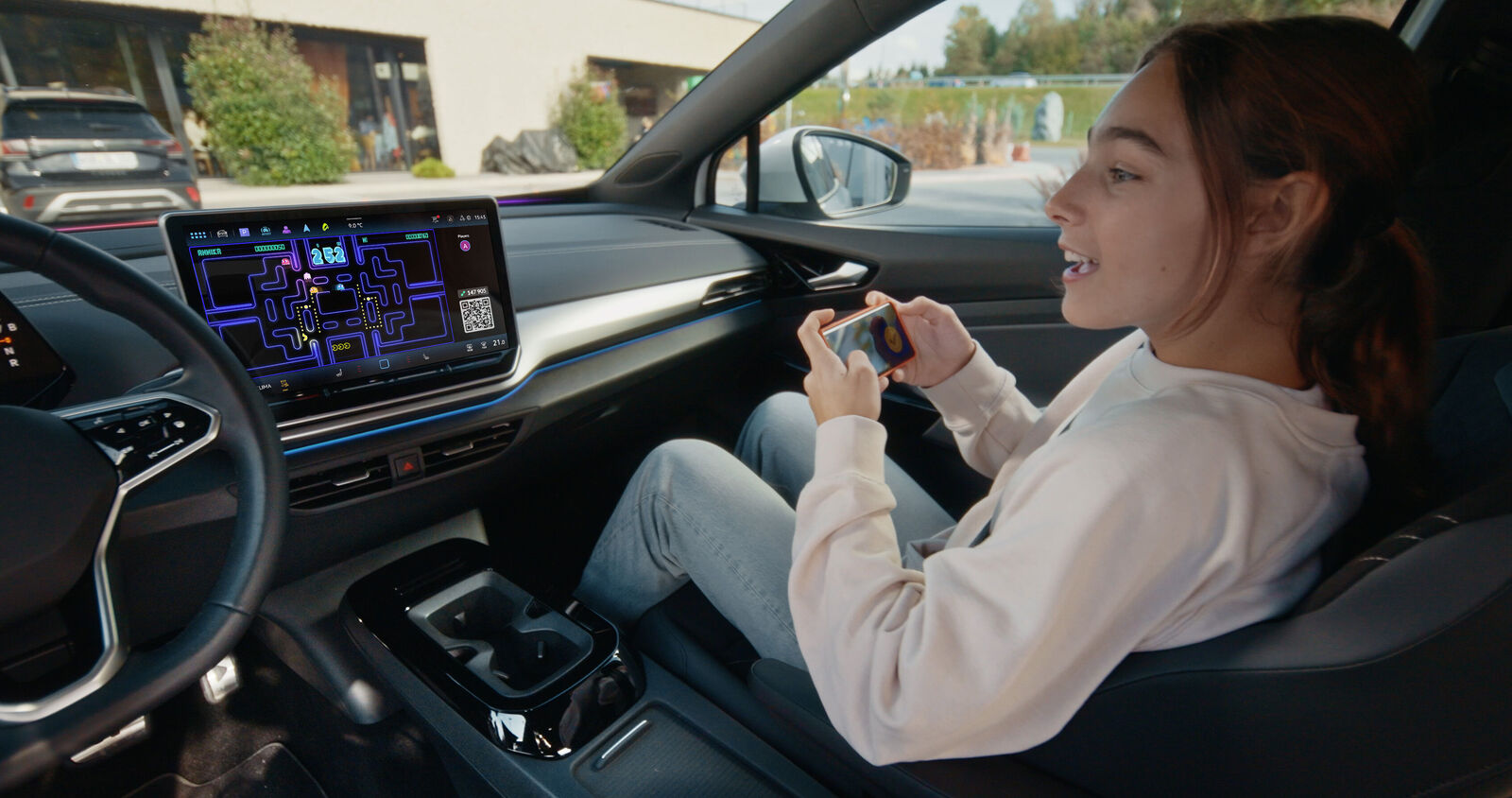
Here is the honest part, the part that owners mention and reviewers document: the ID.4's interior controls were initially controversial, and in some respects they remain so. The original touchscreen-centric interface - with capacitive touch sliders for climate and volume, buried menus for basic functions - frustrated people who simply wanted to change the temperature without looking away from the road.

VW has been iterating. The 2024 model brought a larger 12.9-inch touchscreen. Over-the-air updates have improved the software. The next generation, the ID.Tiguan revealed in January 2026, brings back physical buttons - a tacit admission that the experiment had limits. But current ID.4 owners should know: the car's driving experience is significantly better than its infotainment learning curve.

The Tax Credit That Changes the Math

The Inflation Reduction Act created a $7,500 clean vehicle tax credit for electric vehicles assembled in North America with battery components from qualifying sources. The ID.4, built in Chattanooga, qualifies for the full amount. At point-of-sale application (allowed since 2024), this is a discount off sticker - not a deduction you wait for at tax time.

That makes the effective starting price of an ID.4 approximately $39,000. At that price, the conversation changes. You are no longer comparing the ID.4 against a Tesla Model Y or a Hyundai Ioniq 5 as an equal. You are comparing it at a significant price advantage. This is not a technicality. It is the central commercial argument for the car.

The End of an American Chapter

In April 2026, VW announced that U.S. production of the ID.4 in Chattanooga would end. The plant is being retooled for the 2027 Atlas and Atlas Cross Sport - gasoline vehicles. This decision, coming amid VW's broader restructuring and a challenging EV market, has led to headlines declaring the ID.4 "dead." The reality is more nuanced. Inventory will continue to be sold through 2027. The ID.Tiguan will eventually come to North America. And approximately 917,000 people around the world already own one - a community unlikely to lose interest in software updates anytime soon.

The ID.4's American chapter ends. The story does not.
What It Does

Twelve Things Worth Knowing

MEB Platform

Purpose-built electric architecture. No compromises from previous ICE designs - optimized battery packaging, flat floor, extended wheelbase.

🔋
82 kWh Battery

Primary battery delivering up to 291 miles EPA range. Hairpin winding motor technology - borrowed from aerospace - for higher power density.

175 kW DC Fast Charging

10% to 80% in approximately 28 minutes on compatible CCS fast chargers. Significant improvement over earlier 135 kW limit.

🤖
Travel Assist

Highway semi-autonomous driving combining adaptive cruise control with lane centering. Works up to 130 mph - though please consider the legal context first.

📱
Wireless CarPlay & Android Auto

No cables. Your phone connects, your maps load, your music plays. The obvious thing that took the industry too long to standardize.

🛰️
Over-the-Air Updates

VW Car.OS enables remote software and firmware updates. Your car can improve while it sits in your garage overnight.

🥽
AR Head-Up Display

Optional augmented reality HUD projects navigation and vehicle data onto the windshield. Turn arrows appear to float on the actual road ahead of you.

🛡️
IQ.DRIVE Safety Suite

Forward collision mitigation, blind spot warning, lane keeping assist, rear cross traffic alert. Standard across all trims.

🔈
Whisper-Quiet Cabin

No engine. Excellent sound insulation. Acoustic glass available on higher trims. The quietest $40,000 vehicle most buyers will have ever occupied.

🏭
Made in Tennessee

Assembled at VW's Chattanooga plant. Qualifies for the full $7,500 federal EV tax credit under the Inflation Reduction Act.

🚗
Dual-Motor AWD

Front induction motor + rear permanent magnet motor. Up to 335 hp and 0-60 in 4.9 seconds on the Pro S AWD trim.

📦
Genuinely Usable Cargo Space

30.3 cu ft with seats up, 64.2 cu ft folded. More practical than the vast majority of crossovers at this price point.

Technical Dossier

Numbers That Matter

Powertrain & Performance

Battery (Standard)62 kWh
Battery (Primary)82 kWh
EPA Range (82 kWh RWD)291 miles
EPA Range (82 kWh AWD)255-263 miles
Motor (RWD)APP 550 - 201 hp, 229 lb-ft
Motor (AWD)295-335 hp, 339 lb-ft
0-60 mph (RWD)7.8 seconds
0-60 mph (AWD)4.9 seconds
DC Fast Charging175 kW peak
10-80% Charge Time~28 minutes
AC Charging11 kW onboard
Charging PortCCS (Combined Charging System)

Interior & Cargo

Cargo (Seats Up)30.3 cu ft
Cargo (Seats Folded)64.2 cu ft
Infotainment12.9" touchscreen (higher trims)
Driver Display5.3" digital instrument cluster
Apple CarPlayWireless
Android AutoWireless
Wireless ChargingStandard
Head-Up DisplayAR HUD (optional)
Panoramic SunroofAvailable
OTA UpdatesYes - VW Car.OS
ConnectivityLTE/4G, Wi-Fi hotspot
AssemblyChattanooga, Tennessee
Trophy Cabinet

The Hardware

2021
World Car of the Year
90+ international journalists
2021
IIHS Top Safety Pick+
2022
MotorWeek Drivers' Choice
Best EV
2023
MotorWeek Drivers' Choice Best EV
(Second Consecutive)
2024
Car and Driver
Editors' Choice
2024
MotorWeek Drivers' Choice
(Third Consecutive)
2022
First VW EV Built
in the United States
2021
Popular Mechanics
Automotive Excellence Award

Should You Buy One?

The Case For

Start with the money. After the $7,500 federal tax credit, a 2025 or 2026 ID.4 starts around $39,000. That is not cheap, but it is competitive with gasoline crossovers in the same class, and you are getting a vehicle with no fuel costs, significantly lower maintenance requirements (no oil changes, fewer brake wear events due to regenerative braking), and a charging experience that - for anyone with a home charger - becomes genuinely invisible within a week of ownership.

The driving experience rewards patience. The ID.4 is not dramatic in the way a Tesla Model 3 Performance or a Hyundai Ioniq 6 can be. It is more like a very good executive airport hotel: quiet, comfortable, everything where you expect it, nothing that surprises you. The ride quality is exceptional for the class. High-speed stability is solid. The AWD version, at 4.9 seconds to 60 mph, moves quickly enough to feel genuinely fun without cosplaying as a sports car.

Cargo space is excellent. The flat floor (no transmission tunnel) means rear passengers have real legroom. The front frunk is small but exists. Visibility, particularly the rear, is better than many competitors. The ID.4 is simply very livable.

The Case Against

The infotainment interface has been improved but remains polarizing. If you spend ten minutes in a test drive poking at menus and adjusting the climate control, you will form an opinion immediately. Some people adapt; others never stop noticing it. This is not a trivial complaint - you interact with the interface every single day you drive the car.

The 175 kW DC fast charging is good, not great. Against Hyundai Ioniq 5's 350 kW capability (10-80% in 18 minutes), or the growing Supercharger network that Tesla buyers can now use, the ID.4 takes longer to top up on a road trip. For daily charging at home, this does not matter. For long highway trips, it adds time.

The staggered tire sizes on some configurations - wider in the rear than the front - mean you cannot rotate them. This accelerates rear tire wear. It is a real-world cost that owners are often surprised by.

And now, the elephant: production of the U.S.-assembled ID.4 ends in April 2026. Inventory continues. But if you are buying in 2026 or 2027 from remaining stock, you should verify tax credit eligibility on that specific VIN, as rules can evolve. A dealer with access to remaining inventory is worth calling before assuming the credit applies.

The Verdict: Who Should Buy This Car

Buy the ID.4 if: you want a daily driver that charges at home and handles family life without drama. You care more about refinement and value than maximum range or charging speed. You have a driveway or garage with an outlet. You trust Volkswagen's service network. You can stomach the touchscreen interface with a two-week adjustment period.

Look elsewhere if: you drive long distances frequently and want to minimize charging stops. You want the best infotainment system in the segment (look at Hyundai/Kia). You want the absolute lowest price (look at the Chevrolet Equinox EV). You want maximum range anxiety relief (look at Tesla Model Y).

The ID.4 is the grown-up choice in a segment that sometimes forgets adults have jobs and children and finite patience for quirky software. It is not trying to be your favorite car. It is trying to be the best tool you own. That is a useful thing to be.

"Absolutely love it - excellent vehicle, roomy, quiet, comfortable, great EV range and battery charging speeds. Really nothing to complain about." - 5-Star Owner Review
"I have been driving since 1969 and have owned 17 new vehicles since... This is the first vehicle I've ever owned that I've found to be 100% pure joy." - Consumer Reports, 2025
"The ID.4 is...competent, practical, and pleasant...but it's also the friend who cuts corners, insisting he knows a faster way." - The Drive, 7/10
YesPress Scorecard
Range
8.2
Charging Speed
7.2
Interior Quality
8.5
Value (after credit)
9.0
Infotainment
6.5
Cargo & Practicality
8.8
The Field

The ID.4 vs The World

vs.
Tesla Model Y

From ~$45,000. Better range, Supercharger network. Stiffer ride, more austere interior. No dealer network safety net.

vs.
Hyundai Ioniq 5

From ~$44,000. 350 kW ultra-fast charging beats anything in class. V2L capability, bold design. No full $7,500 credit on all trims.

vs.
Chevrolet Equinox EV

From ~$35,000. Significantly cheaper. Domestic assembly. Less premium feel and smaller dealer EV expertise.

vs.
Ford Mustang Mach-E

From ~$42,000. Sportier dynamics, BlueCruise driver assist. Range falls slightly short. Ford dealer quality varies widely.

The Details

Eight Things Nobody Puts in the Brochure

01

The ID.4's rear motor sits above the rear axle - the exact spiritual position of the original Beetle's engine. Volkswagen, threading continuity through 80 years of design history.

02

VW's Chattanooga plant keeps the grass short with actual sheep. The factory is as pastoral as automobile manufacturing gets. Your ID.4 was partially maintained by livestock.

03

In 2021, VW sent press outlets a release claiming it was rebranding as "Voltswagen." Financial journalists ran it as fact. VW said it was a stunt. The relationship with journalists has been complicated since.

04

The ID.4 won World Car of the Year 2021 in its first complete year of global sales. It beat 94 other vehicles, judged by journalists from 24 countries. First full year. World's best car.

05

The motor coils use hairpin winding technology - a technique borrowed from aerospace and industrial applications - for higher power density and more efficient cooling in a smaller package.

06

The 2023 animated film "Ladybug & Cat Noir: The Movie" featured the ID.4 through a VW brand partnership. The car is genuinely in an animated superhero movie. The Beetle would approve.

07

The next generation abandons the ID.4 name entirely. It becomes the "ID.Tiguan" - combining VW's EV sub-brand with one of its most beloved nameplate legacies. The number car era ends quietly.

08

Global sales: 917,000+ units from 2020-2025. Peak year was 2023 at 223,425 units worldwide. That is a lot of people who decided the most important thing in a car is that it works reliably every day.

Five Years, Fast

The ID.4 Timeline

2016
The Bet is Made

VW announces the ID. electric sub-brand at the Paris Motor Show, post-Dieselgate. The MEB platform development begins in earnest.

September 2020
Global Debut

Production ID.4 officially revealed and launched. First deliveries begin in Europe from the Zwickau, Germany plant.

March 2021
U.S. Sales Begin

American deliveries start; initially imported from Germany while Chattanooga preparations continue.

April 2021
World Car of the Year

ID.4 beats 94 competitors to win the most prestigious automotive award voted by 90+ international journalists. Its first full year of sales.

July 2022
Made in America

U.S. domestic production begins at Chattanooga, Tennessee. VW's first American-built EV. Qualifies for full $7,500 federal tax credit.

2024
Significant Refresh

New APP 550 motor (up to 335 hp), 175 kW fast charging (up from 135 kW), 12.9-inch touchscreen standard on higher trims, improved EPA range.

January 2026
The Successor Revealed

Next-generation redesign debuted as the "ID.Tiguan" - new name, new face, physical buttons return, MEB+ platform with unified cell batteries.

April 2026
U.S. Production Ends

VW announces Chattanooga will retool for 2027 Atlas (gasoline). ID.4 inventory continues to sell. The American chapter closes.

What It Costs

Pricing That Makes Sense After April 15

Standard RWD
$46,570
~$39,070 after federal credit

62 or 82 kWh battery. 201 hp. Up to 291 miles range. Entry trims include wireless CarPlay, digital displays, Travel Assist suite. 2026 starting MSRP.

Pro S Plus AWD
$59,130
~$51,630 after federal credit

82 kWh dual-motor. 335 hp. 0-60 in 4.9 sec. All premium features included. The performance argument for buyers who want capability alongside practicality.

Prices approximate for 2026 model year. Federal $7,500 credit subject to income limits and credit eligibility. Consult a dealer for current VIN-specific credit availability.

Share This Profile