People
30 loaded
Dave Kelf
Dave Kelf is the CEO of Breker Verification Systems, a San Jose-based EDA company whose test suite synthesis technology automates verification of large, complex chips including more than half of the world's RISC-V processor core projects. A UK-trained engineer turned marketing and business leader, Kelf spent three decades across Cadence, Synopsys, Co-Design Automation, Novas, and OneSpin, where he helped introduce and grow the SystemVerilog language and the Verdi debug environment. He rose from Breker's chief marketing officer to chief executive in October 2021 and has since guided the company through back-to-back years of 35 percent revenue growth.

Elizabeth Stone
Elizabeth Stone is the Chief Product and Technology Officer of Netflix, where she leads the company's product, engineering, data and design organizations. An economist by training with a PhD from Stanford and a bachelor's from MIT, she moved from equity derivatives trading and economic consulting into technology leadership roles at Nuna and Lyft before joining Netflix in 2020. She became Netflix's first CTO in 2023 and was elevated to CPTO in 2026, and is known for a data-driven, systems-thinking approach to building high-performance teams.

Jennifer Rankin Byrne
Jennifer Rankin Byrne is the founder and principal of MERIT Coaching Communications Consulting in Cincinnati, Ohio, where she coaches leaders and communicators to sharpen their voice, build executive presence, and lead with authenticity. She brings more than two decades of communications leadership, including years as Vice President of Corporate Communications at PBS and earlier roles at the U.S. Patent and Trademark Office, AOL, and Turner Broadcasting/CNN. Her practice blends real-world corporate experience with a curiosity-led, customized coaching approach summed up in her tagline: 'Communicate with purpose. Grow with confidence.'

Sarah Kissko Hersh
Sarah Kissko Hersh is a public relations and communications leader with more than 25 years of agency and brand experience, and the founder of Type A Consultancy, a communications and leadership practice based just outside New York City. A Top 2% LinkedIn creator with a following in the tens of thousands, she works as a PR coach, trainer, and fractional communications advisor, helping executives and teams get unstuck, tell simpler stories, and communicate with clarity and kindness.

Becca Chambers
Becca Chambers is the Chief Marketing Officer at Scale Venture Partners and one of LinkedIn's most recognizable communications voices, widely known as 'Becca from LinkedIn.' With roughly two decades in B2B tech communications and 15+ years focused on enterprise technology and cybersecurity, she has led brand, PR, analyst relations, and crisis communications at companies including McAfee, Ivanti, and MobileIron. She co-hosts the Under Embargo podcast, advises early-stage startups, and reaches millions each month with candid content on brand, leadership, and building in tech.
Jon Hawkins
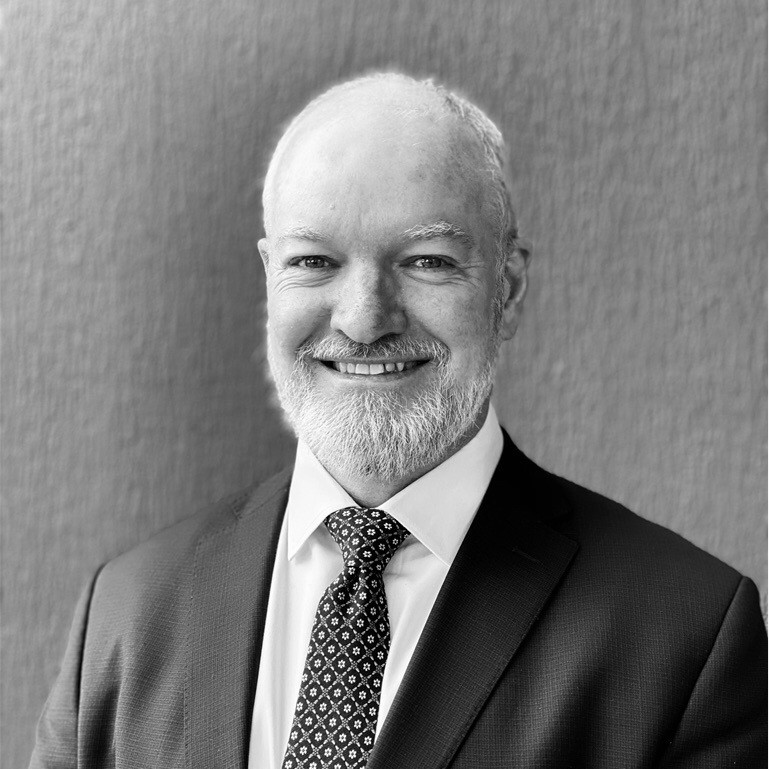
Jon 'Irish' Hawkins is an Australian Defence Force veteran of 25 years, SAS-trained officer, and the founder of Omni Executive - one of Australia's fastest-growing sovereign defence companies. Starting from an idea at his kitchen table in 2012, he built Omni into a 400+ person operation spanning aerospace, consulting, security, maritime and vetting, with around $100 million in annual turnover. A fierce advocate for truly Australian-owned defence capability, he stepped back from the CEO role in February 2026 to serve as Chair of Omni's Board.

Dave Danielsen
Dave Danielsen is the CEO of CairnSurgical, a clinical-stage medical device company in Lebanon, New Hampshire, that spun out of Dartmouth in 2015. He leads development of the Breast Cancer Locator System, a patient-specific, 3D-printed surgical guide paired with visualization software that helps surgeons see a tumor's size, shape, and location before a lumpectomy and remove it with cleaner margins. A West Point graduate with a Tuck School MBA, Danielsen has spent his career running commercial-stage health and diagnostics companies, and is now steering CairnSurgical through its U.S. pivotal trial, FDA submission, and early commercial launch in Europe.

Dave Feldman
Dave Feldman is the co-founder and CEO of Greenboard, a New York-based company building an AI-native operating system for financial compliance. A Johns Hopkins-trained engineer who previously led product work at Guideline and a Hive AI joint venture with Bain & Company, Feldman started Greenboard in 2023 with college friend Ed Schembor after seeing how badly financial firms struggled with fragmented, dated compliance tools. Greenboard went through Y Combinator's Winter 2024 batch and has raised $20 million total, including a $15.5M Series A led by Base10 Partners, with more than 500 financial institutions running their compliance programs on the platform.

Dave Hendricks
Dave Hendricks is the co-founder and CEO of Vertalo, an Austin-based platform that acts as an SEC-registered transfer agent and tokenization engine for real-world assets. He has spent close to a decade building infrastructure to turn illiquid private securities into compliant, transferable digital assets. A serial entrepreneur, he previously co-founded LiveIntent, the programmatic email advertising platform, and helped build CheetahMail into the world's largest email service provider before its 2004 sale to Experian. Earlier he ran the worldwide relationship between Arthur Andersen and Oracle and worked on large securitization projects. He is known for a pragmatic, institution-focused view of crypto and a habit of dismissing hype cycles in favor of durable financial plumbing.

Dave Morgan
Dave Morgan is the founder and CEO of Simulmedia, a New York adtech company that pioneered data-driven linear TV advertising and now runs the cross-channel TV+ platform, the Skybeam self-serve CTV buying tool, and the PlayerWON in-game video ad network. A lawyer turned three-time adtech founder, he earlier built Real Media (a predecessor of 24/7 Real Media, sold to WPP for $649 million) and TACODA (a behavioral targeting pioneer acquired by AOL for $275 million in 2007). Morgan returned to Simulmedia's CEO seat in October 2024 to chase the connected-TV opportunity, and he is a long-running MediaPost columnist known for his '96/4' rule about the gap between CTV viewership and CTV ad dollars.

David Arreaga
David Arreaga is the co-founder and CEO of Ares Materials, a Plano, Texas deep-tech company building AI-designed optical polymers for flexible and foldable electronics. A materials scientist with a Ph.D. from UT Dallas, he turned doctoral research on polymer substrates into a company whose Pylux cover-window and adhesive materials target the next generation of foldable displays. Ares pairs high-throughput experimentation with machine learning to shorten materials development from decades to years, and closed the first trench of a $12M Series B round in 2025.

David Carey
David Carey is the Chief Executive Officer of Preceptis Medical, the Golden Valley, Minnesota company behind the Hummingbird Tympanostomy Tube System, an FDA-cleared device that lets clinicians place pediatric ear tubes in the office without general anesthesia. Appointed CEO in July 2025, Carey brings three decades of commercial leadership across the medical device industry, including senior roles at Pristine Surgical, Stryker, Medtronic, and Invuity, where he helped guide the company through an IPO before its acquisition by Stryker. At Preceptis, he is focused on scaling the Hummingbird device to more surgeons and families nationwide.

David Dixon
David Dixon is the Chief Executive Officer of Conner Industries, a Fort Worth, Texas-based industrial packaging and wood products company. Since taking the helm in 2017, he has led the transformation of a financially challenged industrial lumber business into a diversified, integrated packaging platform operating roughly 19 manufacturing locations across 14 states with revenues approaching $200 million. A CPA and Six Sigma Black Belt with deep experience in private equity-backed turnarounds, Dixon spent earlier chapters of his career at Price Waterhouse, Cummins, Goodyear, Eaton, John Zink, and The Crosby Group before bringing that operational discipline to Conner.

David Dokes
David Dokes is the co-founder and CEO of Polar Analytics, a first-party data and business intelligence platform built for Shopify and direct-to-consumer brands. Before Polar, he led growth at car-sharing marketplace Turo, where he ran a roughly $20M annual marketing budget. He teamed up with former Airbnb data scientist Charbel Seif in 2020 to give smaller retailers the kind of enterprise-grade data infrastructure that big companies take for granted, unifying scattered marketing, sales, and inventory data into one dashboard that installs in days rather than months. Under his leadership Polar has raised roughly $28.5M and now serves several thousand merchants across dozens of countries.

David Fontain
David Fontain is the co-founder and CEO of Foresight, a San Francisco insurtech that pairs workers' compensation coverage with its own safety technology, Safesite. An Australian who grew up on the Gold Coast and started out in investment banking, he built Foresight after a childhood friend died in a preventable workplace accident. The company underwrites for hard-to-place middle-market businesses in industries like construction and manufacturing, using an 'engage and save' model that rewards safer companies with faster premium relief. Foresight has raised tens of millions from investors including OMERS Ventures, and its technology is credited with cutting workplace incident frequency by double digits.

David Jones
David Jones is the founder and CEO of The Brandtech Group, the digital-only marketing group he built to help global brands do their marketing better, faster and cheaper using technology and, increasingly, generative AI. A British executive who once ran the entire Havas network, he left the traditional agency world in 2014, raised hundreds of millions to launch You & Mr Jones in 2015, and rebranded it The Brandtech Group in 2022. Today the company operates in dozens of countries with thousands of employees and positions itself as the world's leading generative-AI marketing company. Jones also co-founded the youth leadership forum One Young World and wrote the book Who Cares Wins.

David Lazerson
David Lazerson is the co-founder and CEO of Briya, a healthcare technology company that connects hospitals, research institutions, and life sciences organizations so they can share de-identified, real-world patient data securely and in compliance with U.S. and European privacy rules. A physicist and cognitive scientist by training and a former Israeli military cyber operations officer, Lazerson built Briya on cryptography, federated learning, and zero-knowledge proofs, and in 2025 launched Briya AIRE, a clinical-grade AI research assistant that lets researchers ask questions in plain language instead of writing code.

David Mather
David Mather is the CEO and Chairman of NxLite, a clean-tech company making nano-thin, air-stable energy and solar control coatings for glass, acrylic and polycarbonate windows. Appointed in February 2024 to lead the former 3E Nano through commercialization, he brings decades of executive experience across technology and clean-tech companies including Alegion, MTPV Power Corporation, Hoovers, Hewlett Packard and Compaq. Under his leadership NxLite launched its L80 low-E sputter coating, opened a 45,000-square-foot manufacturing center in Canton, Michigan, and raised a Series A that expanded to $13.1 million to scale production of coatings aimed at cutting the energy lost through windows.

David Rubinstein
David Rubinstein is the CEO of OptiRTC (Opti), a Boston-area company that builds cloud software to monitor and adaptively control stormwater infrastructure in real time. A technology operator with roughly four decades of experience scaling high-tech startups, he joined Opti as President and COO in 2018 and became CEO in 2019, steering the company from an engineering-services consultancy into a digital water product business. His background spans SaaS and data companies including DataXu, Resolve Technology, Invoke Solutions, and Convergent Group, which he helped take public before its sale to Schlumberger.

David Schofman
David Schofman is the CEO and co-founder of Coro Health, an Austin-based company that builds therapeutic music and multi-faith spiritual streaming programs for senior living communities, hospitals and hospices. A serial entrepreneur who built one of the first online golf retail businesses in the 1990s and later ran global ecommerce for Callaway Golf, Schofman turned to health technology in 2008, translating research on music and the brain into a subscription platform now used across thousands of care communities in the US and Canada.

David Snider
David Snider is the founder and CEO of Harness, a New York wealthtech company that pairs people navigating startup equity, taxes, and estate decisions with a curated network of tax, financial, and legal advisers. Before Harness, he was COO and CFO of Compass, where he helped scale the real estate platform from pre-launch to a $1.8 billion valuation and raised every round from Series A through E. Earlier he invested more than $2 billion in deals at Bain Capital private equity and, as a college senior, wrote Money Makers, a finance primer built from interviews with leaders like Jamie Dimon and David Rubenstein.

David Stein
David Stein is the co-founder and CEO of Ash (formerly Ash Wellness), a New York-based B2B platform that lets healthcare organizations run their own at-home testing programs. He launched the company out of Cornell Tech's MBA program in 2019 after a frustrating personal experience getting sexual health testing, first building a direct-to-consumer brand for the LGBTQ+ community and then pivoting to white-label infrastructure for providers and payers during COVID-19. Today Ash handles kit design, a CLIA/CAP-certified lab network, logistics, and patient-facing software across all 50 states, and has shipped more than a million test kits.

Debi Dowling
Debi Dowling is Senior Vice President of Business Operations, Chief Marketing Officer, and Chief of Staff to the CEO at Onapsis, the Boston-based leader in SAP and ERP application security. Wearing three hats at once, she sets the company's marketing strategy, keeps cross-functional priorities aligned as a strategic partner to the CEO, and runs the operational machinery that ties day-to-day work to company goals. Before Onapsis she spent years at Juniper Networks as Chief of Staff and business-enablement leader across Global Services and Sales Engineering, with earlier management roles at Vodafone, Siemens, and Acision in the UK. She is based in Greater Boston.

David Stout
David Stout is the co-founder and CEO of webAI, an Austin-based company building private, on-device artificial intelligence that runs on hardware people already own instead of centralized cloud data centers. Raised on a cattle ranch in northern Michigan, he taught himself to compress large AI models onto phones, laptops and edge hardware, and founded webAI in 2019 with Ethan Baird and Tyler Mauer. The company reached a $2.5 billion valuation in January 2026 on the thesis that the most valuable AI of the future will be sovereign, distributed and local rather than rented from Silicon Valley hyperscalers.

David Weber
David Weber, PhD, is the President and CEO of Mosanna Therapeutics, a Redwood City biotech developing MOS118, a bedtime nasal spray for obstructive sleep apnea that aims to restore the body's natural airway reflex during sleep. A biotech operator with more than 30 years in drug development, capital formation, and corporate strategy, he previously led Otonomy through its IPO and multiple clinical programs, and served as CEO of MacuSight and Oculex Pharmaceuticals. He joined Mosanna in June 2025 as the company launched with an $80 million Series A.

David Weinfeld
David Weinfeld is the co-founder and CEO of Screenverse, a New York-based ad management and monetization company for digital screens in the physical world. Launched in April 2020 at the start of the pandemic, Screenverse now represents more than 100,000 digital out-of-home screens, from billboards and urban panels to Walmart pharmacy displays and digital jukeboxes. Before Screenverse, Weinfeld was Vistar Media's first supply sales hire, where he grew the partner network from 30 to over 120 global media owners. In 2024 the company raised $10.5 million from Volition Capital.

David Wells
David Wells is the CEO of Ondo Perps, the equity-perpetuals trading arm of Ondo Finance, where he leads the push to bring leveraged trading of U.S. stocks, ETFs, and commodities onchain with tokenized shares usable as collateral. He founded and ran Enclave Markets, the first Fully Encrypted Exchange, incubated within Ava Labs, after earlier roles at Two Sigma and Paxos. A Harvard Business School graduate and long-time markets operator, Wells has spent his career building institutional-grade trading infrastructure and arguing that crypto markets still hold real inefficiencies for those who can build fair, private, and efficient venues.

Davide Asnaghi
Davide Asnaghi is the co-founder and CEO of Diode Computers, a startup rebuilding how printed circuit boards are designed and manufactured. An Italian-born engineer trained at UC Berkeley, he spent years building hardware at Apple's Special Projects Group and medical-device companies before starting Diode to replace legacy EDA tools with open-source, AI-friendly software: a Python design language backed by a Rust compiler that turns requirements into manufacturable circuit boards in a fraction of the usual time. Diode raised an $11.4M Series A led by Andreessen Horowitz and partners with Anthropic to make Claude a more capable electrical engineer.

Debra Weidanz
Debra Wawro Weidanz is the co-founder, CEO and chief scientist of Resonant Sensors Incorporated, an Arlington, Texas biotech that builds label-free, high-throughput biosensor systems used to speed antibody discovery, drug screening and diagnostics. An electrical engineer turned inventor, she developed the company's guided-mode resonance sensor technology out of research at the University of Texas at Arlington, and later co-founded the cancer-immunotherapy startup Abexxa Biologics, which Boehringer Ingelheim acquired in 2021. With her husband Jon, she has become a notable UTA benefactor, funding a named tissue-engineering lab and research fellowships.

Deepak Chhugani
Deepak Chhugani is the founder and CEO of Nuvocargo, an AI-powered platform for cross-border truckload freight between the United States and Mexico. Born in Kenya to Indian parents and raised in Ecuador, he worked on Latin America M&A deals at Bank of America Merrill Lynch before starting Nuvocargo in 2019. The company has raised more than $75 million from investors including Y Combinator, Tiger Global, QED, and NFX, and combines freight forwarding, customs brokerage, cargo insurance, and financing on one platform. Chhugani was named to the Forbes 30 Under 30 list for enterprise technology in 2023 and is an Endeavor Entrepreneur.