Founder · Adtech Pioneer
Dave Morgan
The serial founder rebuilding TV advertising for the streaming age - measurable, transparent, and buyable by anyone.
Founder & CEO, Simulmedia · New York
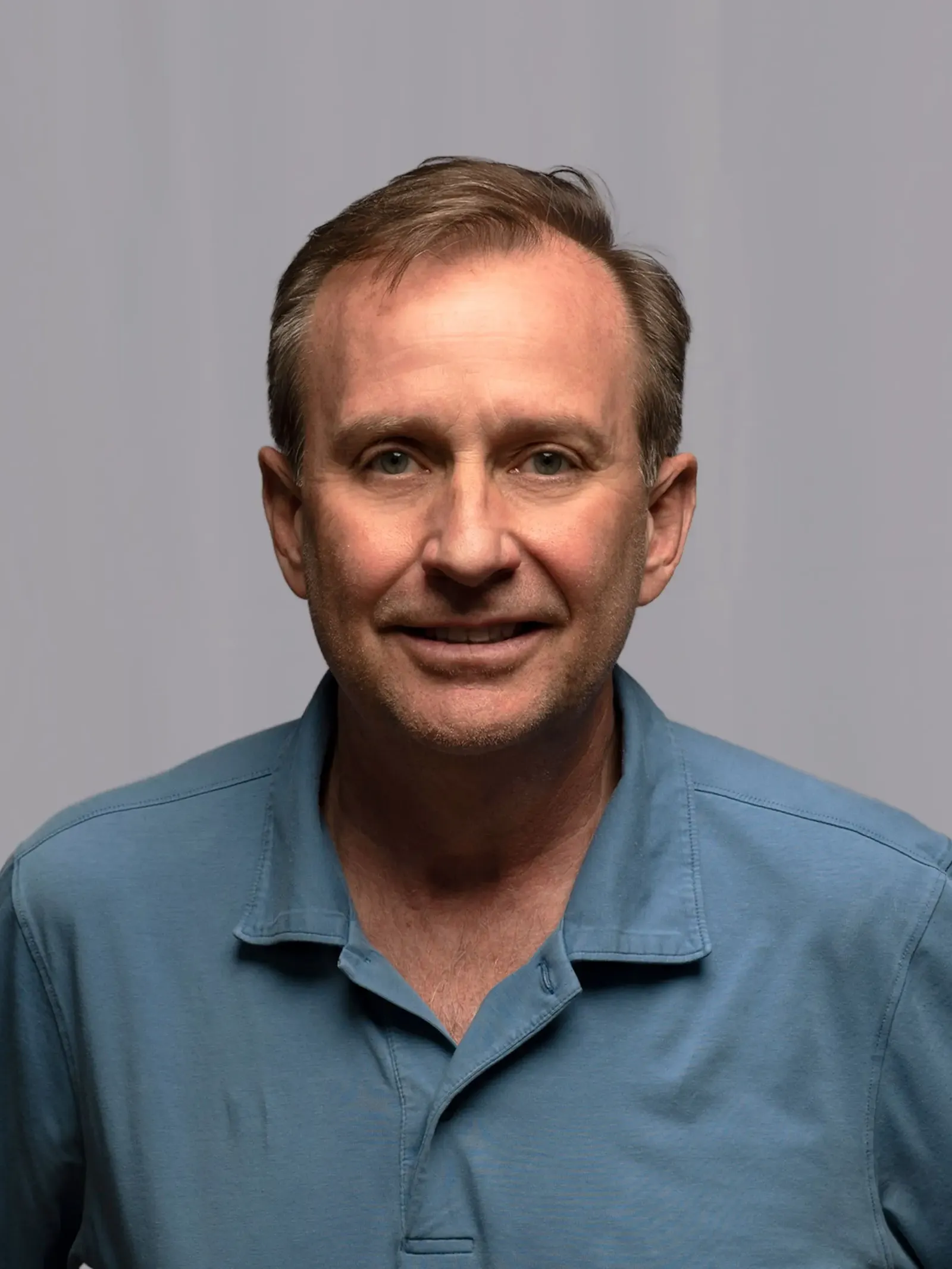
The serial founder rebuilding TV advertising for the streaming age - measurable, transparent, and buyable by anyone.
Dave Morgan runs Simulmedia, the New York company he founded in 2008 to answer a simple, stubborn question: why couldn't television advertising be as measurable as direct marketing? Sixteen years later that question has become an industry. Simulmedia's patented TV+ platform buys and measures ads across linear and connected TV, its Skybeam tool lets small agencies run targeted streaming campaigns on their own, and its PlayerWON network places real video ads inside free-to-play video games.
In October 2024 Morgan did something founders rarely do. He took back the CEO title he had handed off, stepping out of the executive chairman's chair to run the company day to day again. The reason he gave was blunt: the opportunity in connected TV is enormous, and capturing it would require everyone at Simulmedia to "think, move, act and react at start-up speed."
It is a role he has played before. Morgan has founded three separate advertising-technology companies, and each was called a pioneer in its era. He tends to arrive early, argue his case in plain language, and stay long enough to watch the rest of the market catch up.
You need to be purpose-built for TV.Dave Morgan
One of the world's first ad-serving and online ad-network companies. It merged with 24/7 in 2001 to form 24/7 Real Media, later acquired by WPP in a deal valued at $649 million and folded into Xaxis.
A pioneer of behavioral online advertising, targeting audiences by what they browsed rather than the page they landed on. AOL bought it in 2007 for $275 million, and Morgan became EVP of Global Advertising Strategy there.
Built to bring data-driven targeting to linear TV, now a cross-channel platform spanning connected TV, broadcast, cable and video games through TV+, Skybeam and PlayerWON.
Morgan built a whole worldview around a single mismatch he keeps pointing out. About a third of American viewers now watch television through streaming and connected devices. Yet only a sliver of TV advertising dollars has followed them there. He calls it the 96/4 rule - and treats the gap between viewing and spending as the business Simulmedia exists to close.
of US viewers watch TV via streaming / CTV
of TV commercial ad dollars go to CTV
The lack of transparency in parts of the streaming and linear TV ad ecosystem undermines trust, accountability and the core effectiveness of the medium. It's unacceptable that marketers can't easily get the granular reporting they need to prove ROI.
The CTV market opportunity is enormous and will require everyone at Simulmedia to think, move, act and react at start-up speed.
He is a lawyer by training - a J.D. from Dickinson School of Law and a political science degree from Penn State - who built ad companies instead of practicing law.
He grew up in a semi-rural Pennsylvania town before becoming a fixture of New York's adtech scene.
One of his best early pitches happened in an elevator, cornering venture capitalist Brad Burnham - a conversation that helped bring him to New York and launch Real Media.
At AOL he reread Machiavelli's "The Prince" to navigate internal politics, argued against the Bebo acquisition, and left when his advice was ignored. The $850M deal later sold for roughly $20M.
He likes reminding people that Elon Musk co-founded Zip2, a classified-ad company, long before rockets and cars.
He lives in Manhattan with his wife, the author Lorea Canales, and their two daughters, and writes a long-running column on TV and advertising for MediaPost.