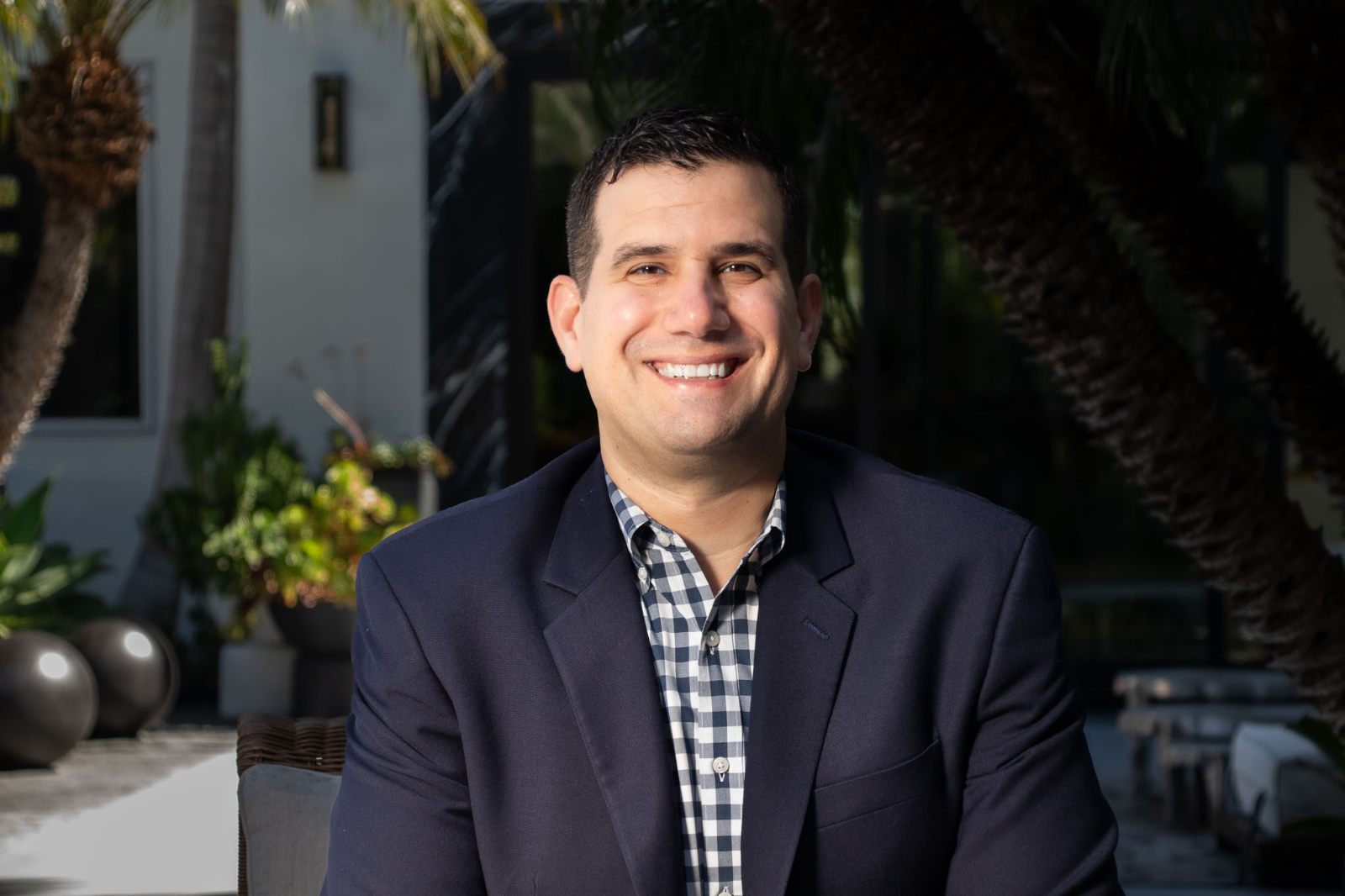
The operator behind 100,000 screens
David Weinfeld sells attention in the physical world. As co-founder and chief executive of Screenverse, he oversees the advertising on more than 100,000 digital screens scattered across American life - digital billboards on city arteries, urban panels in New York and Los Angeles, displays inside Walmart stores nationwide, and jukeboxes lit up in bars and venues around the globe. Most people walk past these screens without a thought. Weinfeld's whole business is making sure the right ad is on them at the right moment, and that the company that owns the screen gets paid for it.
Screenverse describes itself plainly: an ad management and monetization company for digital screens in the physical world. The pitch underneath is more specific. Media owners - the companies that install and operate screens - are good at building networks and bad at squeezing revenue out of programmatic ad exchanges. That work is technical, relationship-heavy, and constant. Weinfeld's company takes it off their hands, running the ad sales and network management so the owner can focus on the screens themselves.
The timing of the launch is the part of the story people remember. Weinfeld and co-founder Adam Malone started Screenverse in April 2020, the same weeks that advertisers were tearing up media plans and out-of-home budgets were evaporating with foot traffic. Founding an advertising company in that moment looked close to reckless. It turned out to cut the other way. With traditional buys cancelled, programmatic adoption accelerated, and a small, flexible company with screens in every Walmart pharmacy and a willingness to move fast had room to prove itself while larger players froze.
A supply-side apprenticeship
Weinfeld did not arrive at Screenverse as a first-time founder guessing at a market. He had spent well over a decade inside digital out-of-home before he started his own company. The formative chapter was Vistar Media, where he was the first supply sales hire - employee number one on the side of the business that works with the screen owners rather than the advertisers. There he grew the partner network from 30 media owners to more than 120 globally and helped turn the supply-side platform into a multi-million dollar software business.
That role taught him the shape of the problem he would later build a company around. Screen owners were multiplying. Programmatic demand for out-of-home was arriving. The connective tissue between the two - the sales relationships, the platform integrations, the day-to-day optimization - was thin and hard to build. When he left to co-found Screenverse with Malone, a fifteen-year out-of-home veteran who had helped scale the ad-buying platform DOmedia, the two founders were splitting a problem they had each spent their careers watching from opposite sides.
Growth by grind
The numbers since have been steep. Screenverse posted 340% annual revenue growth in 2022, expanded its roster of media partners, and grew its team well past its early headcount. In May 2024 it raised $10.5 million from Volition Capital, a Boston growth-equity firm, in a round Weinfeld has framed as a fuel-up rather than a pivot. The money is going where a services-heavy company grows: hiring in finance, sales, and client services, and investment in the technology that keeps a sprawling screen network performing.
Weinfeld has been candid that he chose Volition for how they behaved as much as what they offered. He describes an outbound-driven, founder-first firm and singles out the people he worked with by name, praising their integrity over their check size. It is a revealing detail about how he runs things - the same instinct that shows up in how he talks about Screenverse's own customers.
What he's building toward
Ask Weinfeld about the plan and the answer is less about a new product than about scale and consistency. "We want to continue to do the things that got us here but at a bigger, better, and faster scale," he has said - a founder resisting the temptation to reinvent a company that is working. The larger bet is on the medium itself: that out-of-home advertising, long a world of static vinyl and long-term contracts, keeps shifting into a fully digital, data-driven, programmatic channel. If it does, the company sitting between tens of thousands of screens and the advertisers who want them stands to matter a great deal.
For all the market-scale talk, Weinfeld keeps the frame small and human. He and Malone talk about putting people and partners at the center of the business. He lives in Westfield, New Jersey with his wife Catherine and their two children, a quiet counterweight to a company whose screens light up in Times Square and beyond. He is not the loudest founder in ad tech. After five years, the 100,000 screens make the argument for him.
"We want to continue to do the things that got us here but at a bigger, better, and faster scale."
"Screenverse has a lot of grit and strength."
The company crossed its fifth anniversary in 2025, a milestone that in the pandemic spring of 2020 was far from guaranteed. Weinfeld's version of the story is not about surviving bad timing. It is about a market that was always going to go digital, and being early, patient, and partner-obsessed enough to be standing there when it did.