Tagged: co-founder
30 results
Romi Gubes
Romi Gubes is the co-founder and CEO of Sensi.AI, an Austin-based company that turns ambient audio into around-the-clock care intelligence for seniors aging at home. A former Fortune 500 software engineer, she started the company in 2019 after a personal experience with vulnerability in care redirected her career toward protecting people who can't advocate for themselves. Under her leadership Sensi has raised more than $98 million, grown revenue 400% in a year, and expanded into what she describes as an AI operating system for senior care.

Russ Lebovitz
Russ Lebovitz is the co-founder and CEO of Amprion, a precision brain diagnostics company that built the first commercial seed amplification assay for detecting misfolded alpha-synuclein - the protein at the root of Parkinson's disease and other synucleinopathies. An MD/PhD trained at Washington University in St. Louis and a former research physician at Baylor and Fox Chase Cancer Center, Lebovitz spent years chasing prions after the mad cow scare, then pivoted the same detection science toward common neurodegenerative diseases. His SYNTap test won an FDA Breakthrough Device Designation and is now used in clinical trials and patient care to spot brain disease years before symptoms appear.

Sagar Batchu
Sagar Batchu is the co-founder and CEO of Speakeasy, a San Francisco developer-tools company that turns OpenAPI specs into production-grade SDKs, Terraform providers, and MCP servers. A computational physicist by training who spent a decade building data infrastructure - including scaling LiveRamp's London engineering office from zero to 50+ engineers - he started Speakeasy in 2022 with Simon Yu to fix the unglamorous, error-prone work of shipping and consuming APIs. The company has raised roughly $29 million, including a $15 million Series A led by FPV Ventures, and counts Vercel, Mistral AI, and Verizon among its users.

Sagi Rodin
Sagi Rodin is the CEO and co-founder of Frontegg, a customer identity and access management (CIAM) platform for B2B SaaS companies. He started coding at 14, served as a database instructor in the Israeli army, earned a computer software engineering degree from the Technion, and led cloud security work at Check Point before spinning the idea for Frontegg out of a problem he kept hitting: every new app needed the same login, user management, and admin plumbing built from scratch. Founded in 2019 with CTO Aviad Mizrachi, Frontegg has raised roughly $70 million and gives developers plug-and-play identity infrastructure so they can focus on their core product.

Sam Dai
Sam Dai is the co-founder and CEO of Enpower Greentech, a battery cell maker building semi-solid-state, lithium-metal, and silicon-rich cells. Trained as a physicist at Tsinghua and a materials scientist at UT Austin under Nobel laureate John B. Goodenough, he started the company in 2012 with fellow post-doc Che Yong. The company has shipped over 3 million solid-state cells, holds more than 100 patents, and runs facilities across the US, China, Japan, and Germany. Dai was selected for Unreasonable Impact Asia Pacific 2024.

Sean Burke
Sean Burke is the CEO and co-founder of Enteligent, a Morgan Hill, California clean-energy hardware company building what it calls the world's first solar-powered DC-to-DC EV charger. Before starting Enteligent in 2020, Burke spent more than two decades as an executive at HP, Dell, Flex, Nortek, Katerra and AMD, working on early notebook computers and the first dual-screen Android phone, and leading product teams credited with 260-plus patents. At Enteligent he is trying to strip the wasteful conversion steps out of charging by keeping power in DC form from solar panel to car battery.

Shawn Guan
Shawn Guan is the CEO and co-founder of Umbo Computer Vision, an AI company building autonomous video security systems that watch camera feeds and flag real threats instead of stray animals and swaying trees. After roughly 2,000 client meetings in the traditional surveillance business taught him how badly false alarms wear people down, he co-founded Umbo in 2014 with Ping-Lin Chang and Tingfan Wu to put deep learning behind the lens. The company raised about $17.6 million, won a Best Startup nod at NVIDIA's 2016 deep learning conference and SIA's Best in Video Analytics in 2017, and ran offices in San Francisco, Taipei and London.

Shruthi Rao
Shruthi Rao is the co-founder of Vendia, a San Francisco multi-cloud distributed data platform that helps enterprises share and reconcile data in real time across companies, clouds, and tech stacks. Before Vendia she founded the blockchain practice at AWS, launching Amazon Managed Blockchain and Amazon Quantum Ledger Database, and led business development for the AWS serverless portfolio including Lambda and API Gateway. She set up what she describes as India's first crypto mining operation in 2011 and has advised the Ethereum Project, Ripple, MOBI, the Linux Foundation, and the World Economic Forum.
Anuraag Gutgutia
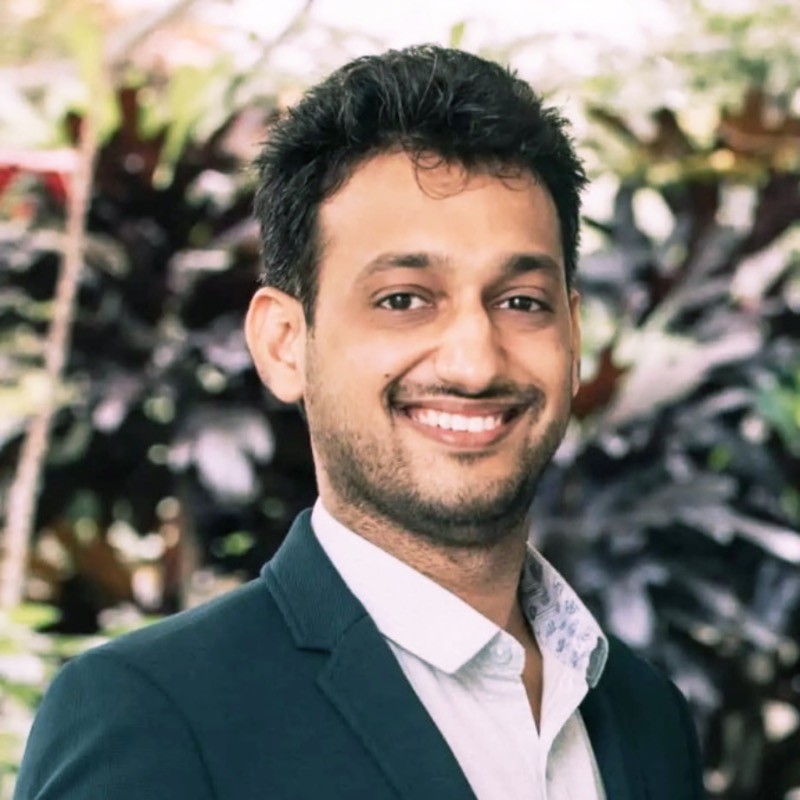
Anuraag Gutgutia is co-founder of TrueFoundry, a San Francisco-based enterprise AI platform that lets companies build, deploy, and govern generative and agentic AI inside their own cloud infrastructure. A quantitative analyst turned repeat entrepreneur, he spent seven years at WorldQuant rising to VP of Portfolio Management and the CEO's office before co-founding the talent platform EntHire (acquired by InfoEdge/BigShyft) and then TrueFoundry in 2021 alongside two IIT Kharagpur batchmates. TrueFoundry has raised $21.3M in total funding - including a $19M Series A led by Intel Capital in February 2025 - and serves Fortune 1000 companies seeking to run AI workloads without infrastructure complexity or data-sovereignty tradeoffs.
Stanley Wei
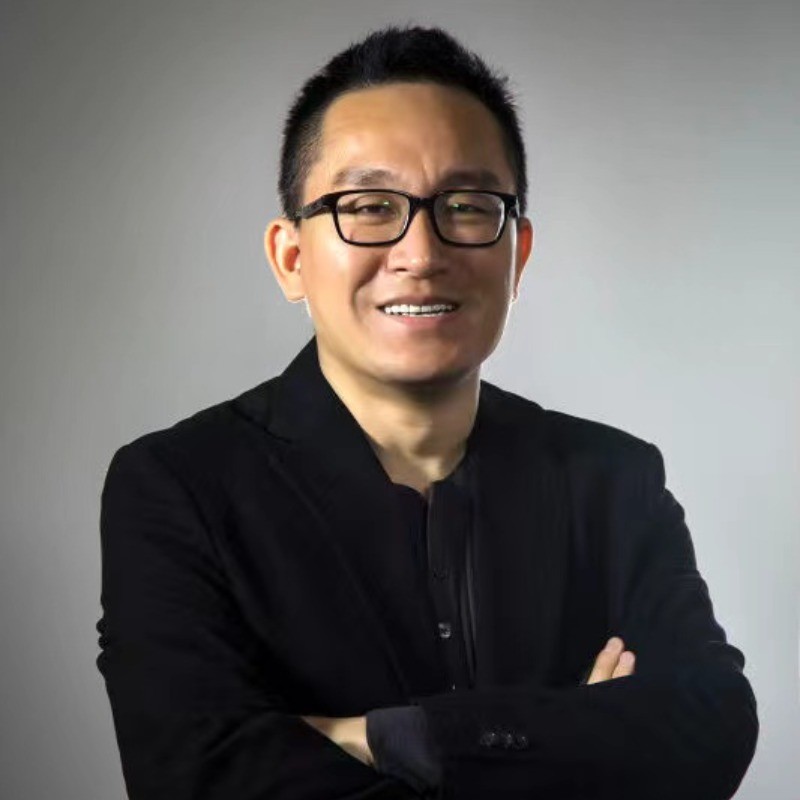
Stanley Wei is the CEO and co-founder of Pine AI (19pine.ai), a San Francisco startup building an autonomous AI agent that fights consumers' customer-service battles for them: negotiating bills, cancelling subscriptions, disputing overcharges, and chasing refunds through real phone calls and emails. A former Chief Strategy and Operating Officer at Nasdaq-listed Agora and a former investor at Hillhouse Capital, Wei founded Pine in late 2024 after a $200 dispute with his bank ate up 90 minutes of his life. Pine raised a $25 million Series A in December 2025 and reports more than $37 million in consumer savings.

Srinath Sridhar
Srinath Sridhar is the co-founder and CEO of Regie.ai, an AI-native sales engagement platform based in San Francisco that automates prospecting and generates personalized outbound campaigns for enterprise sales teams. A computer scientist with a PhD in algorithms and machine learning from Carnegie Mellon and an MBA from Harvard, he spent time on Facebook's early engineering team and was a founding engineer at BloomReach before co-founding the supply-chain company Onera. He now argues for a humanistic approach to AI, one that hands routine work to machines so people can do the creative parts.

Snigdha Kumar
Snigdha Kumar is the CEO and co-founder of Brico, a San Francisco regtech startup that automates the slow, state-by-state process of getting and keeping financial licenses for payments, lending, mortgage and crypto companies. A Harvard-trained public policy analyst with more than a decade in fintech across the U.S., India, Indonesia and Myanmar, she previously led product operations at the savings app Digit. In October 2025 Brico raised a $13.5M Series A led by Flourish Ventures, on the back of 600% year-over-year growth.

Steijn Pelle
Steijn Pelle is the co-founder and CEO of Lassie, a San Francisco AI company building an autonomous back-office worker that runs the financial admin of independent businesses, starting with dental and medical practices. A Dutch transplant to Silicon Valley with roughly 15 years in startups, he cut his teeth on consumer growth at HealthTap, Coinbase and Robinhood before founding Lassie in 2021. In June 2026 the company raised a $35M Series A led by Andreessen Horowitz, bringing total funding to $47M, while operating in more than 700 practices across 49 states.

Stephen Klein
Stephen Klein is the co-founder and CEO of Hyphen, a San Jose food-robotics company that builds the automated Makeline - a hybrid manual-and-robotic assembly system that runs beneath the counter to build bowls and plates at up to 350 meals per hour. A self-described foodservice fanatic since childhood, Klein started a text-to-order frozen yogurt business in college, helped scale Instacart in its early days, and ran operations at robotic coffee bar Cafe X before launching Hyphen in 2020 with co-founder Daniel Fukuba. Hyphen has since drawn investment from Tiger Global, Chipotle and Cava and deployed systems with chains and foodservice operators across the country.

Jens Nicolaysen
Jens Nicolaysen is the co-founder and Chief Marketing Officer of Shinesty, the Boulder, Colorado apparel brand whose stated mission is to force the world to take itself less seriously. A 2010 marketing graduate of CU Boulder's Leeds School of Business, he spent his early career doing brand strategy and innovation consulting for large consumer companies before launching Shinesty in mid-2014 with fellow Leeds alum Chris White. The company began as a vintage-clothing resale operation with buyers scouring thrift shops in college and ski towns, pivoted to original designs in 2015, and grew into a direct-to-consumer underwear and loungewear business best known for its trademarked Ball Hammock pouch underwear, its holiday and theme-party outfits, and a joke-first marketing voice that Nicolaysen oversees across email, paid media, catalogues and video. Shinesty's story became a six-episode MTV2 series in 2017, the company was named an Inc. 5000 honoree in 2022, and it has raised roughly $8.2 million through a Series A.
Josh Tabaj
Josh Tabaj is the Chief Marketing Officer and one of four co-founders of Branded Bills, the Arizona headwear and apparel company that turned a hand-branded leather patch into a national custom-merchandise business. Branded Bills started around 2015 in a Mesa garage with a branding iron, a knife, and roughly $1,000 from each founder; its first patch hat went to a South Dakota brewery. The company grew from state-pride hats into a vertically integrated operation that sources and produces its own headwear, runs a custom and corporate-branding division, sells officially licensed collegiate gear, opened its first physical store inside the Phoenix Suns' Footprint Center in 2022, and moved into a 96,000-plus square foot Tempe headquarters in 2025. Tabaj handles the marketing side of that machine - the brand voice, the customer story, and the argument that a logo deserves better than a screen print.

Taylor Capuano
Taylor Capuano is the co-founder and chief creative officer of CAKES body, a viral direct-to-consumer apparel brand she launched in 2022 with her twin sister, Casey Sarai. Starting with $5,000 each in personal savings and no marketing budget, the sisters bootstrapped the company from a side hustle into a business that reported roughly $95 million in net sales in its fiscal year ending June 2025. A December 2023 appearance on ABC's Shark Tank, where they landed a deal with Emma Grede, accelerated the brand's rise. Capuano leads creative and marketing, and has become a public voice for bootstrapped, digital-first growth and family-friendly workplace policies.

Steve Tuck
Steve Tuck is the co-founder and CEO of Oxide Computer Company, a hardware-software startup building a rack-scale 'cloud computer' that brings hyperscaler-style elastic infrastructure to on-premises data centers. After nine years at Dell and roughly a decade at cloud provider Joyent, Tuck teamed with Bryan Cantrill and Jessie Frazelle in 2019 to co-design servers, networking, and software from the ground up. Under his leadership Oxide has shipped its first commercial racks and raised more than half a billion dollars, including a $200M Series C, to expand its take on enterprise cloud ownership.

Suresh Srinivas
Suresh Srinivas is the Co-Founder and CEO of Collate and the creator of OpenMetadata, an open-source data intelligence platform. A longtime figure in the big-data world, he was an early Apache Hadoop developer and HDFS committer at Yahoo, co-founded Hortonworks, and served as Chief Architect for data at Uber before building Collate to help enterprises make their data usable, trustworthy, and well-governed.

Thomas Bowman
Thomas Bowman is a James Beard-nominated chef turned food scientist and the co-founder of Eclipse Foods, an Alameda, California company building molecule-for-molecule plant-based replacements for dairy. After cooking and staging at restaurants that together held 16 Michelin stars and leading product development at JUST (formerly Hampton Creek), Bowman set out to recreate the taste and texture of dairy from non-GMO plants like oats, corn, and potatoes. Eclipse launched in 2019 out of Y Combinator, chose ice cream as its flagship, and has raised roughly $96 million to date, reaching retailers, foodservice, and direct-to-consumer channels.

Tito Goldstein
Tito Goldstein is the co-founder and co-CEO of Teambridge, an AI-native, composable workforce management platform built for hourly, shift-based, and frontline teams. A former principal product designer at Uber, he and co-founder Arjun Vora interviewed thousands of drivers and realized the self-service and agency of the Uber app was missing for the roughly 60% of the global workforce still stuck on legacy tools. After two years of near-zero revenue, they rebuilt the product as configurable building blocks, and it outsold two years of prior work in its first month. Teambridge now serves 200+ enterprise customers and over 500,000 workers, has raised $35M+ including a $28M Series B, and Goldstein was named to Forbes' Top AI Founders to Watch in 2025.

TJ Ross
TJ Ross is the co-founder and co-CEO of Splash Sports, a peer-to-peer sports gaming platform he built with Joel Milton by acquiring and merging established brands like RunYourPool and OfficeFootballPool into a single home for survivor pools, pick'em, one & done and tiers contests. The platform now serves more than two million players and 80,000 commissioners. A Bay Area native who grew up with sports at the center of family life, Ross studied finance and entrepreneurship at USC before working in technology investment banking at Raymond James and Houlihan Lokey, founding the maker marketplace 43Layers, and leading strategic partnerships at STRV. He describes his work as building products that gather people around shared passions, and treats community, authenticity and enjoying the journey as the real measures of success.

Tomás Campos
Tomás Campos is the co-founder and CEO of Spinwheel, an Oakland-based fintech building agentic AI-powered credit data and payments infrastructure for the consumer debt market. A UC Berkeley and Haas School of Business graduate, he spent two decades in payments and commerce - growing Blackhawk Network's digital payments division into a $1.5 billion business and co-founding the conversational commerce startup FluidM, which was acquired by Westfield. He launched Spinwheel in 2019 after the consumer debt crisis touched his own family, aiming to make the fragmented world of loans and liabilities as accessible as open banking made bank accounts. In June 2025 the company raised a $30 million Series A led by F-Prime Capital.

Tomer Saban
Tomer Saban is the co-founder and CEO of WireX Systems, a network detection and response (NDR) and forensics company he started in 2010. With around 15 years in telecommunications and network security, he came out of Nice Systems' intelligence division and the Israeli 8200 Entrepreneurship Program to build a platform that turns raw network packets into readable, context-rich stories so security teams can investigate incidents in minutes rather than days. WireX's signature Contextual Capture technology aims to make advanced investigation accessible to every analyst in a security operations center, not just senior forensics experts.

Tomer Kashi
Tomer Kashi is the co-founder and CEO of VOOM Insurance (and its drone brand SkyWatch), an insurtech company building usage-based, on-demand insurance for underserved mobility segments such as drones, motorcycles, e-bikes, and rideshare drivers. A graduate of Israel's elite Talpiot program with a background in computer science and physics, Kashi led technology projects inside the Israeli Prime Minister's Office cyber unit before entering insurance. He frames VOOM as 'insurtech 2.0' and the 'Lemonade for Mobility,' using new sources of data to rebuild insurance products for episodic, high-risk vehicle use.

Veerbhan Kheterpal
Veerbhan Kheterpal is the co-founder and CEO of Quadric, a Burlingame, California processor IP company building the Chimera general-purpose neural processor (GPNPU) for on-device AI inference. A three-time technology founder with a PhD from Carnegie Mellon University, he previously co-founded Fabbrix (acquired by PDF Solutions) and was a technical co-founder of 21, Inc. Quadric's software-first architecture aims to run any AI model without the obsolescence that plagues fixed-function AI accelerators, and the company has raised roughly $90M across its funding rounds while scaling licensing revenue sharply through 2025.

Vicki Knott
Vicki Knott is the CEO and co-founder of CruxOCM, a Calgary-based industrial autonomy software company building AI-powered automation for oil and gas control rooms. A chemical engineer (P.Eng.) who started on the plant floor and trained as a pipeline control room operator at TransCanada, she left in 2017 to co-found CruxOCM with Roger Shirt. Her company's RIPA (Robotic Industrial Process Automation) technology automates the manual, high-stakes work of pipeline operators, and raised a $17M Series A led by Microsoft's M12 venture fund in 2024.

Vikram Pavate
Vikram Pavate is the CEO and co-founder of Tacta Systems, a Palo Alto robotics company building 'Dextrous Intelligence' - a fusion of AI, software and tactile hardware meant to give robots human-like touch, spatial awareness and manipulation skills. A hard-tech operator with roughly three decades in advanced materials and hardware, he trained as a ceramic and materials engineer, earned an MBA from Wharton, and holds dozens of patents. Before Tacta he co-founded and ran the sensing and location startup Locix, and led business development at LuxVue Technology, the micro-LED display pioneer acquired by Apple in 2014. In June 2025 Tacta emerged from stealth with $75 million in funding to bring physical dexterity to machines.

Vishal Shukla
Vishal Shukla is the co-founder and CEO of Aviz Networks, a San Jose-based company building an AI-first, vendor-agnostic networking platform on top of the open-source SONiC operating system. A networking veteran with more than 20 years of experience, he previously held leadership roles at Cisco, IBM, Mellanox (NVIDIA), and Nortel. He holds 25-plus granted patents, has authored books on SDN, OpenFlow and OpenStack, and wrote 'Deciding the Future: Building New Networks for the AI Era.' Under his leadership Aviz raised a $17M Series A in November 2024 (roughly $31M total), backed by investors including Cisco Investments and Qualcomm Ventures.

Vitaly Gordon
Vitaly Gordon is the co-founder and CEO of Faros AI, an AI-native engineering intelligence platform he started in 2019 with former Salesforce colleagues. Before Faros, he founded Salesforce Einstein and led it as VP of Engineering and Data Science, scaling it from zero to a platform serving billions of predictions per day. Earlier in his career he was a data science lead at LinkedIn and a data science manager at LivePerson. He now builds tooling that helps engineering organizations measure and improve productivity, and navigate the shift to AI-augmented software development.