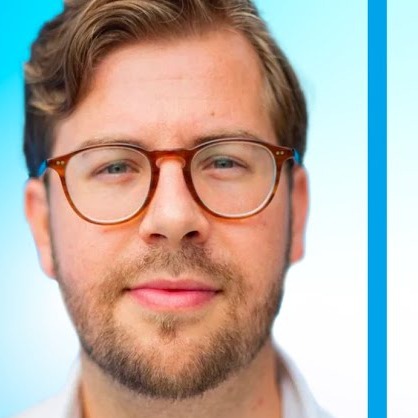
There is an old, slightly unfashionable idea that the best way to understand a job is to actually do it. Steijn Pelle took that idea, put it on a plane, and flew it to a dentist's office in Menlo Park. Before he wrote a single line of the software that would become Lassie, he and his co-founder talked a practice owner, Dr. Grace Kwon, into letting them work her nine-to-five. Not observe. Not "shadow." Work it. They sat down and reconciled insurance payments by hand, the way her staff did, until the problem stopped being an abstraction and started being a headache they personally owned.
Most founders build first and interview customers later. Pelle inverted the whole thing, which is either heroic or slightly mad depending on how you feel about spending your twenties doing someone else's accounts receivable. What he found was a number that would embarrass any industry that sends probes to Mars: independent practices were burning eighty to a hundred hours a month just chasing down what insurers owed them. That is not a rounding error. That is a part-time job invented by bureaucracy and paid for in evenings and weekends.
In a time we are ready to send people to Mars, our docs spend the entire day Jim Carrey-ing through life.Steijn Pelle
Lassie, the company he now runs as co-founder and CEO, is his answer. It is an AI back-office worker for small businesses, starting with medical and dental practices, that quietly handles the unglamorous machinery of running a shop: claims, payments, revenue reconciliation, the integrations that stitch it all together. The name is a wink. Lassie was the loyal dog who fetched help when you fell down the well. This Lassie fetches your money from the insurance company. Same energy, fewer paws.
Vegetables, weddings, and a suit-and-tie side hustle
To understand why a former fintech growth lead ended up obsessing over dental billing, it helps to know that Pelle has been selling things since before he could legally sign a contract. The first venture was vegetables, harvested from his parents' garden and sold at the age of eight, which is a business model with excellent margins and terrible scalability. In high school he DJ'd weddings, an education in reading a room that no MBA offers. In college he ran a fashion company hawking suits and ties. By the time he reached Silicon Valley from the Netherlands, roughly fifteen years of startup life ahead of him, the pattern was set: find a thing people quietly need, and hand it to them without fuss.
He spent those Valley years in the engine rooms of consumer growth. At HealthTap he worked on getting people to actually adopt digital health. At Coinbase and then Robinhood he built referral programs and onboarding flows during the years those companies were teaching millions of ordinary people to tap a screen and feel confident about it. It was the education of a growth operator, and it left him with a conviction that has now migrated, improbably, into the world of small-business software: people do not adopt what they do not love, and they do not love what they do not trust.
That last word matters more than usual in his current line of work. A back-office worker for a medical practice sits on some of the most sensitive information there is, and Pelle talks about the responsibility with a seriousness that would be tedious if it were not so obviously earned. You do not get handed the keys to a doctor's revenue by being charming. You get them by being right, repeatedly, in public, until the practice manager stops double-checking your work. The consumer-growth playbook told him that adoption is emotional. Healthcare told him that trust is the only currency that compounds.
He did not do it alone. Lassie was co-founded with Frederic Renken, an early product hire at Superhuman, the email company that turned inbox management into something close to a sport. Between them they carry a particular obsession that runs through both their old employers and their new one: the belief that software should feel less like a tool you operate and more like a colleague who quietly gets things done. Superhuman applied it to email. Lassie applies it to the least loved corner of any business, the part where money is owed and nobody has time to collect it.
The unglamorous art of showing up
Here is the part the pitch decks tend to skip. Pelle did not scale Lassie with a growth hack or a clever funnel. He scaled it by getting on planes. He personally flew to more than a hundred dental offices to implement the product, one waiting room at a time, and ran founder-led sales through hundreds of customers before he hired a single salesperson. A former track-and-field athlete, he treats the work like reps: show up, do the set, repeat until it is undeniable. There is nothing viral about it. There is only the slow accumulation of proof.
He was also, by his own account, ruthless about who he would sell to. Prospects who did not fit Lassie's ideal profile got a polite no, even when the revenue would have been welcome. This is harder than it sounds. Saying no to money is a discipline most companies discover only after they have said yes to the wrong customer a dozen times and lived to regret it. Pelle seems to have skipped that particular hangover.
The result of all that flying and refusing is a company that now runs quietly inside more than seven hundred practices across forty-nine states and, by its own count, gives business owners back over a quarter of a million hours of labor a year. Put differently, Lassie has quietly abolished a small mountain of evenings and weekends that would otherwise have been spent squinting at insurance remittances. There is no parade for this kind of victory. There is only a practice owner who got to go home on time, which, if you ask them, is the only parade that counts.
The hours nobody talks about
Figures reflect Lassie's stated findings and are illustrative, not audited.
The proof, eventually, attracted the kind of investors who tend to know a durable business when they see one. In June 2026 Lassie announced a $35 million Series A led by Andreessen Horowitz, lifting total funding to $47 million. The cap table reads like a reunion of people who have built the things founders study: Rahul Vohra of Superhuman, Zach Perret of Plaid, Taavet Hinrikus of Wise, Gokul Rajaram, and Brian Balfour of Reforge, alongside Night Capital. Operators, in other words, backing an operator.
Building something to last sixty years
What Pelle wants out of all this is oddly countercultural for a venture-backed AI company in 2026. He does not talk about a quick exit. He talks about keeping Lassie independent for fifty or sixty years, running on what he cheerfully calls "boring revenues." In an industry addicted to the next hype cycle, describing your revenue as boring is practically a provocation. It is also, if you have ever run a small business, exactly the adjective you want attached to your money.
His guiding line is borrowed from Steve Jobs: "Make something wonderful." His advice to other founders is blunter and cheaper to frame: "Stick to your guns. If you believe this is the way, don't let anyone tell you differently." Coming from someone who validated a company by manually clearing a dentist's backlog, it does not read as a slogan. It reads as a report from the field.
It helps to sit with his Mars line for a second, because it is funnier and sadder than it first appears. We live in an age of self-driving cars and models that can pass the bar exam, and yet a highly trained physician can still lose a full working day to the analog absurdity of getting paid. Pelle's word for that daily flailing is "Jim Carrey-ing through life," which is both an excellent description and a diagnosis. The gap he is attacking is not a lack of intelligence in medicine. It is a surplus of friction around it, the sort of friction that never makes the headlines because it is too boring to describe and too constant to notice. His entire company is a bet that boring, done properly, is worth billions and, more importantly, worth thanking someone for.
The pitch of Lassie is quietly radical without ever raising its voice. Let the machine do the paperwork so the doctor can go back to being a doctor. No manifestos about replacing the workforce, no breathless promises about a post-human clinic. Just the return of a few hundred thousand hours to the people who never wanted to spend them on hold with an insurer in the first place. It is, in the end, a very old idea dressed in new technology: do the tedious thing well, and do it for someone who will be grateful. Pelle has been running that business since he was eight. The vegetables were just the prototype.