OpenArt raises $30M Series A led by Canaan Partners $70M+ ARR in 2025 — 7x revenue growth 8 million monthly active users One-Click Story: sentence in, video out 20 people. Category-defining scale. Former Google PM turned visual storytelling founder First AI Influencer Summit, San Francisco 2026 Carnegie Mellon CS to $35M raised OpenArt raises $30M Series A led by Canaan Partners $70M+ ARR in 2025 — 7x revenue growth 8 million monthly active users One-Click Story: sentence in, video out 20 people. Category-defining scale. Former Google PM turned visual storytelling founder First AI Influencer Summit, San Francisco 2026 Carnegie Mellon CS to $35M raised
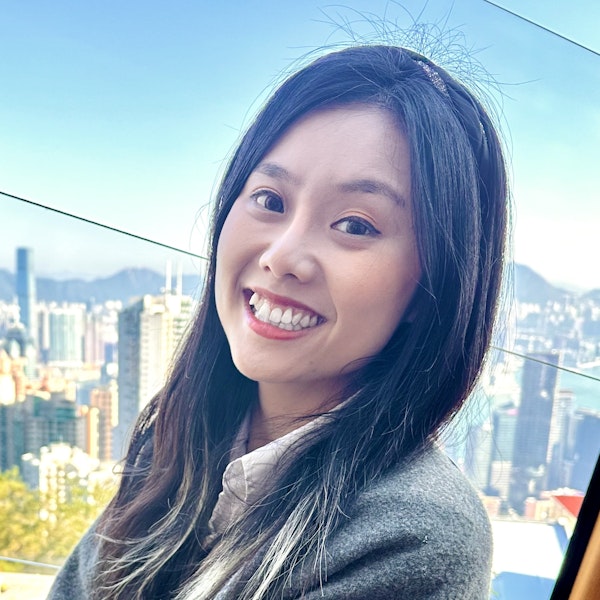
Coco Mao, CEO and Co-Founder of OpenArt AI
CEO & Co-Founder

YesPress Profile  /  Founder  /  AI  /  Visual Storytelling

Coco
Mao

CEO & Co-Founder, OpenArt AI  —  Redwood City, CA

She left Google after seven years, posted an idea to Hacker News, and woke up to a viral hit. Now she runs OpenArt - the creative platform 8 million people use to turn a sentence into a story.

$70M+
ARR (2025)
8M
Monthly Users
7x
Revenue Growth
~20
Person Team
$35M
Total Raised
$5M seed + $30M Series A
2022
Founded
From Hacker News post to company
7 yrs
At Google
Engineer, PM, Area 120 founder
50+
AI Models
Powering One-Click Story

Where the Story Starts: A Viral Hacker News Post


In the summer of 2022, Coco Mao and her co-founder John Qiao had just left Google. They noticed something strange happening across the internet: people were generating AI images everywhere but couldn't figure out how to write effective prompts. So Coco and John built the simplest possible fix - a browsing platform that paired AI-generated images with the exact prompts that created them. They called it "Pinterest for AI images" and posted it to Hacker News. It became the top story of the day.

Origin Story

"Pinterest for AI images" - that's how Coco described OpenArt's first version to Hacker News in 2022. It hit number one. What they'd built was a window: not an art tool, but a way to see how other people prompted AI. That window became a platform. That platform is now at $70M+ ARR.

Before that post, Coco spent seven years at Google moving from iOS software engineer to product manager - a rare transition that required proving she could think in systems, not just syntax. She worked on Google Photos, spent time as a senior engineer improving the product with machine learning, then made the leap to product management inside Area 120, Google's experimental startup lab. There she co-created Tangi - a short-form "how-to" creative video app that reached millions of monthly active users before being folded into Google Search.

Tangi was essentially a dry run. Short-form creative content, a community of people who wanted to make things, distribution that relied on the audience's desire to learn - and a founder who was already thinking about how technology lowers the bar for making. When Coco and John left Google to start OpenArt, they weren't starting from scratch. They were resuming a thesis.

"We believe everyone is fundamentally creative - but not everyone has craftsmanship." - Coco Mao, Product Hunt

The pivot that turned OpenArt from a prompt-browsing tool into a storytelling platform came from listening carefully to what users kept asking for. The single most-requested feature was consistent character generation - the ability to use the same character in multiple images. Coco realized the implication immediately: users weren't trying to generate isolated images. They were trying to tell stories. That insight rewrote OpenArt's entire product roadmap.

By 2024, OpenArt's character consistency feature had ranked number one on Product Hunt. Revenue climbed from $1M to $10M ARR in twelve months. The company had built something that the big foundation model players - Sora, Pika, Runway - weren't prioritizing: a simplified, workflow-first approach for creators who needed results, not controls. Coco's framework for this is direct: "Most users need the equivalent of Uber and Lyft - not to drive the car manually themselves."

Product Insight

When users kept requesting character consistency, Coco didn't just build the feature. She asked why. The answer changed everything: people weren't making art. They were trying to make characters - because characters are the unit of story. That realization turned an image tool into a narrative platform.

In July 2025, OpenArt launched One-Click Story: enter a sentence, a script, or a song lyric, and get back a one-minute video with a complete narrative arc and persistent characters. The feature runs on more than 50 integrated AI models. TechCrunch covered it. The AI community shared it. The company's monthly active user count was sitting at 6 million when the feature launched and kept moving. Revenue hit $70M+ ARR by year-end - a 7x increase in a single year - with a team of roughly 20 people. In January 2026, Canaan Partners led a $30M Series A. Total raised: $35M.

What Coco built isn't a Midjourney competitor or a Runway rival. It's infrastructure for a new category she describes as "AI-native IP" - persistent visual characters and story universes that live across social media, entertainment, and advertising. The bet is that as creation costs collapse, enduring characters become the scarce asset. OpenArt is positioned to be where those characters are born, trained, and deployed at scale.

"A problem that a lot of AI couldn't really handle well is to have the character consistent in the same video. If you don't have the same character, then it's hard to get immersed in the story." - Coco Mao, TechCrunch

In Q1 2026, OpenArt hosted the first AI Influencer Summit in San Francisco and produced "Bot House" - framed as the first AI reality television show. These are not product launches. They are cultural bets. Coco is positioning OpenArt not as a tool company but as the infrastructure layer for the next generation of creative IP - a place where AI characters have consistent identities, persistent narratives, and audiences that follow them.

Born in Shanghai on November 22, 1993, Coco studied computer science at Carnegie Mellon University with a minor in mathematics, graduating in 2015. She also studied at Jacobs University Bremen. Her early internships included LinkedIn and IMC Trading, where she built features and trading apps before Google recruited her. Outside work, she's been characteristically candid about her interests: "startups, the color pink, and goldendoodles." That combination of technical precision, aesthetic preference, and community warmth runs through everything OpenArt builds.

The company she's building is a direct answer to a belief she's held since before the company existed: that everyone is fundamentally creative, but the tools have always been gatekept by craftsmanship. AI doesn't replace the desire to create. It removes the technical barrier. Coco's job, as she sees it, is to build the simplest possible bridge between what someone imagines and what they can share with the world.

From CMU to Category Creator


2011 - 2015
Carnegie Mellon University - BS Computer Science, minor in Mathematics. Internships at IMC Trading and LinkedIn.
2015 - 2017
iOS Software Engineer at Google, working on Google Photos. Built features for photo management on mobile.
2017 - 2019
Promoted to Senior Software Engineer. Focused on improving Google Photos using machine intelligence.
2019 - 2021
Moved to Product Management. Led Tangi at Google Area 120 - a short-form creative "how-to" video app that reached millions of MAU. Acquired into Google Search.
2020 - 2022
Product Manager at Google Search. Left Google after 7 years to found OpenArt.
Aug 2022
Co-founded OpenArt AI with John Qiao (CTO). First product - "Pinterest for AI images" - goes viral on Hacker News as the top story of the day.
2023
Raised $5M seed round from Basis Set Ventures and DCM Ventures. Scaled from $1M to $10M ARR within 12 months.
2024
Character consistency feature launched and ranked #1 on Product Hunt. OpenArt reaches tens of millions of visits. Revenue scales past $10M ARR.
Jul 2025
Launched One-Click Story - enter a sentence, get a 1-minute video with narrative arc. TechCrunch coverage. Powered by 50+ AI models.
Jan 2026
Raised $30M Series A led by Canaan Partners. $70M+ ARR, 8M MAU, ~20-person team. First AI Influencer Summit in SF. Produced "Bot House," first AI reality TV show.

What Coco Actually Says


"

We believe everyone is fundamentally creative - but not everyone has craftsmanship.

"

My vision for OpenArt is to become a category-defining company ourselves, focused on visual storytelling rather than competing within existing image generation categories.

"

Most users need the equivalent of Uber and Lyft - not to drive the car manually themselves.

"

A problem that a lot of AI couldn't really handle well is to have the character consistent in the same video. If you don't have the same character, then it's hard to get immersed in the story.

"

While AI may soon surpass human intelligence, humans will always have a desire to create. OpenArt's mission is to use technology to help people all over the world express themselves through visual stories.

"

In terms of core functionality and technology, all the products are quite similar in my opinion. The real differentiation is in the workflow and who you're building for.

The Platform She Built


OpenArt started as a prompt library. It evolved into a character engine. Now it's a visual storytelling platform where 8 million monthly active users move from idea to image to video with persistent characters that maintain identity across every frame.

  • One-Click Story - input a sentence or script, output a 1-minute narrative video
  • Character Consistency - build and maintain a persistent AI character across an entire project
  • Image Generation - powered by Flux, Stable Diffusion, DALL-E 3, and 50+ integrated models
  • AI Editing Suite - inpainting, background removal, image upscaling, magic removal
  • Custom Model Training - fine-tune models on brand, character, or style
  • Video Creation Tools - lip-sync, scene pre-visualization, motion testing
  • Community Prompt Library - the original product, still running

One-Click Story

Enter a sentence, a script, or a song. Get a 1-minute video with a complete story arc. Three templates: Character Vlog, Music Video, Explainer. Powers viral content at scale.

Launched Jul 2025

Character Consistency

The feature that revealed what users actually wanted. Build a persistent character and use it across an entire narrative - images, videos, stories. Ranked #1 on Product Hunt.

#1 Product Hunt

Bot House

OpenArt's boldest bet: a full AI reality television show produced with the platform's own tools. The first of its kind. Announced Q1 2026.

First AI Reality TV

Coco Mao on Video


How OpenArt Got 7 Million Users So Fast
Sept 2025  •  Growth Story
Coco Mao Reveals OpenArt Stories
Jul 2025  •  Product Launch
Bring Your Imagination to Life With AI
Oct 2023  •  Talk

Things Worth Knowing


01
Loves the color pink. Owns a goldendoodle. Yes, both details made it into her Product Hunt bio.
02
OpenArt's entire company origin is a Hacker News post. Posted as "Pinterest for AI images." Hit #1. Rest is $70M ARR history.
03
Before OpenArt, she built Google Tangi inside Area 120 - a short-form creative video app that reached millions before Google absorbed it into Search.
04
OpenArt achieved $70M+ ARR with roughly 20 employees. That's a revenue-per-employee ratio most funded startups would genuinely kill for.
05
Born November 22, 1993, in Shanghai. Studied CS at both Carnegie Mellon and Jacobs University Bremen before landing at Google straight out of school.
06
One-Click Story runs on 50+ integrated AI models simultaneously. The user types a sentence. The machine orchestrates a short film.
07
She made the engineer-to-PM transition at Google - a move that requires relearning how you think about problems, not just how you solve them.
08
OpenArt produced "Bot House" - the first AI reality TV show - using their own platform. A company making content with the tools it sells to others is a very deliberate move.

Share This Profile

Spread the word about Coco Mao and OpenArt