Tagged: generative-ai
30 results
Hukumonline
Hukumonline is Indonesia's most established legal technology and regulatory-technology company. Founded in 2000 by a group of leading legal practitioners at the start of the country's reform era, it began as an online portal for legal news and grew into the archipelago's largest integrated database of laws, regulations and court decisions. Today it pairs that database with subscription products, expert-verified regulatory content, bilingual translations, a flagship AI-based Regulatory Compliance System, and Ask Hukumonline - billed as Indonesia's first generative-AI tool for legal research - serving corporations, law firms, government bodies and legal professionals.
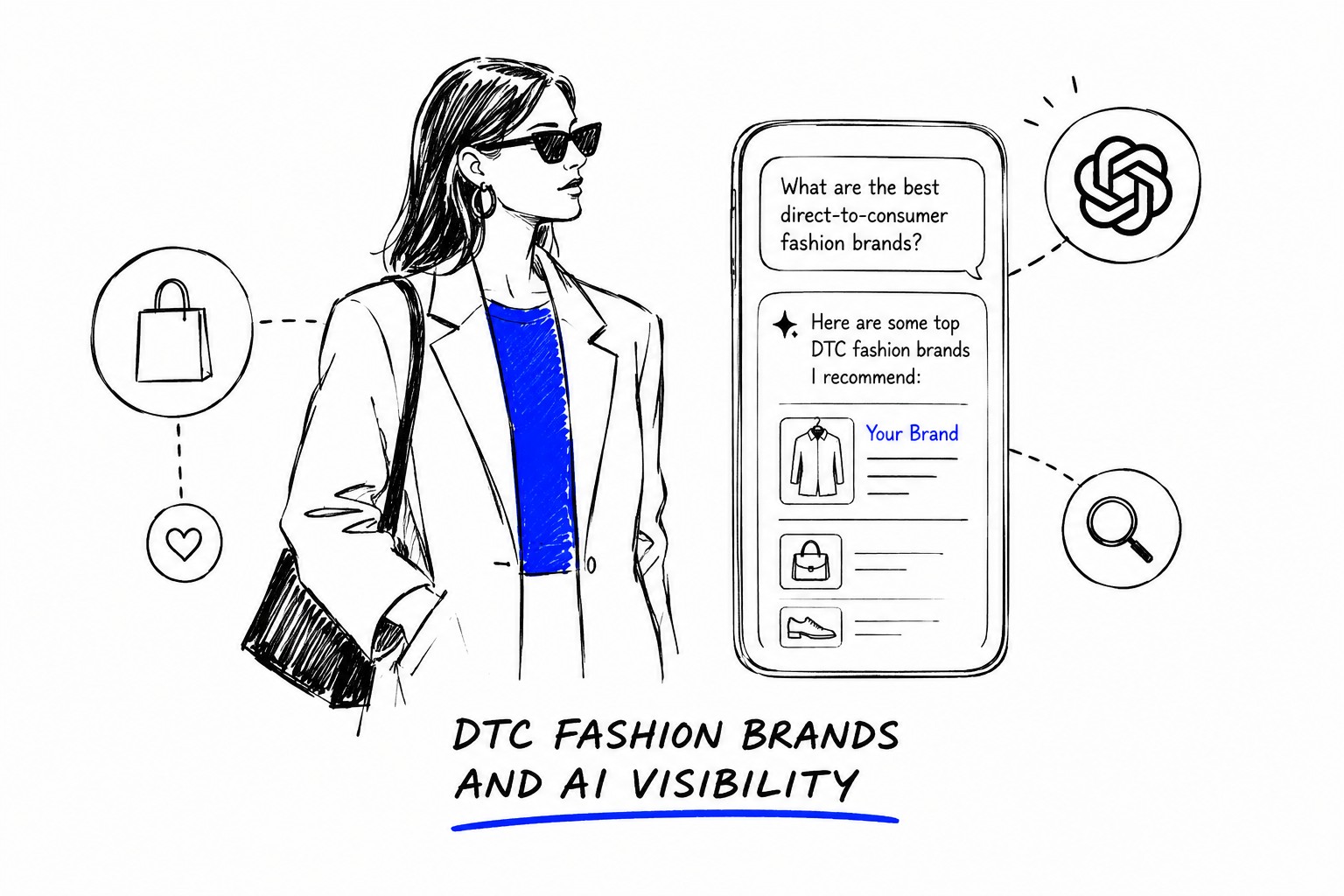
Popular on Instagram, Invisible to the Algorithm That Matters Next
This YesPress feature examines why many large direct-to-consumer (DTC) fashion brands — despite hundreds of millions in revenue and massive social followings — are underrepresented in AI-generated shopping recommendations. AI assistants tend to favor brands with strong editorial coverage, structured product data, and broad third-party authority over those that rely mainly on paid social, influencer, and email marketing. The piece maps the visibility gap across brands like Fashion Nova, Gymshark, Princess Polly, and Cuts Clothing, and outlines how DTC labels can close it without matching the marketing budgets of legacy giants.

MDClone
MDClone is a healthcare data company that lets clinicians, researchers, and analysts explore patient data without touching real patient records. Its ADAMS platform ingests structured and unstructured health-system data into a longitudinal database, then generates statistically faithful synthetic data that carries no risk to patient privacy. That combination turns months-long, IRB-heavy data requests into self-service exploration, letting front-line staff ask their own questions, run analyses, and share results across organizations. Founded in Israel in 2016 and used across the U.S., Canada, and 100% of the Israeli healthcare market, MDClone has raised roughly $112M to expand data-driven discovery in health systems, government, payers, and life sciences.

ByteDance
ByteDance is a Beijing-headquartered technology company behind TikTok, Douyin, CapCut, Lark, Toutiao and the Doubao family of AI models. Founded in 2012 by Zhang Yiming and Liang Rubo, it built one of the world's most powerful content recommendation engines and grew into the largest social-media company by revenue, surpassing Meta in early 2026.

RapidCanvas
RapidCanvas is an Austin-based enterprise AI company that helps businesses move from concept to production-ready AI solutions in weeks rather than months. Founded in 2021 by veterans of Simility (acquired by PayPal), it pairs a proprietary agentic AI platform with human experts through what it calls the Hybrid Approach - AI agents automate data preparation, modeling and workflow execution while human specialists handle strategy and governance. The company targets non-technical business users across manufacturing, financial services, retail, energy and logistics, and has raised over $23.5M including a $16M Series A led by Peak XV Partners.

Adobe
Adobe is a San Jose-based software company that builds the tools people use to create, publish, and measure digital content. Founded in 1982, it is best known for Photoshop, Illustrator, Acrobat, and the PDF format, and today sells its software largely through three subscription platforms - Creative Cloud, Document Cloud, and Experience Cloud - increasingly powered by its Firefly generative-AI models.

Infor
Infor is a multinational enterprise software company that builds industry-specific cloud applications - ERP, supply chain, human capital management, and financials - for more than 60,000 organizations across manufacturing, healthcare, distribution, hospitality, and the public sector. Headquartered in Atlanta and owned by Koch Industries since 2020, Infor differentiates itself with 'micro-vertical' CloudSuites purpose-built for narrow industry niches and delivered on Amazon Web Services.
Databricks
Databricks is a San Francisco-based data and AI company founded in 2013 by the original creators of Apache Spark. It builds the Data Intelligence Platform - a lakehouse architecture that unifies data engineering, analytics, and machine learning on open formats. Used by more than 10,000 organizations worldwide, Databricks helps enterprises store, govern, and analyze data and build AI applications on top of it, all under a single governance model.

Dataro
Dataro is a predictive AI platform that helps nonprofit fundraising teams turn their existing donor data into ranked, day-to-day actions. It analyzes data inside a charity's CRM to score every donor, flag who is at risk of lapsing or ready to give, and recommend the next best step - so teams can prioritize the right supporters without increasing outreach. Used by more than 300 organizations across 20+ countries, including World Central Kitchen, Amnesty International, Save the Children and Greenpeace, Dataro raised a $14.28M Series A in February 2026 led by Blueprint Equity.

ELSA, Corp
ELSA (English Language Speech Assistant) is an AI-powered English pronunciation and speaking coach built on proprietary speech-recognition technology trained on non-native accents. Founded in 2015 by Vu Van and speech scientist Xavier Anguera, the app gives learners real-time, phoneme-level feedback on how they actually sound - not just what they type. It has grown to tens of millions of users across 100+ countries and expanded from a consumer app into ELSA Business, ELSA Schools, an API, and a generative-AI conversation tool called ELSA AI Tutor.

Fullpower-AI
Fullpower-AI is a Santa Cruz, California science-and-technology company that builds real-time, contactless AI biosensing for sleep, remote patient monitoring, and longevity. Founded in 2005 by camera-phone pioneer Philippe Kahn and Sonia Lee, it operates the Sleeptracker-AI platform and the KOA Large Action Model, powering more than 300,000 Tempur-Pedic smartbeds and over 1.5 million connected devices across 60+ countries, backed by 135+ patents and ISO 27001 certification.

Sekai
Sekai is a San Francisco Bay Area consumer platform where anyone can build software just by describing it. Users type a prompt and get a playable, shareable mini-app - a game, quiz, utility, poll or interactive story - in seconds, then play, remix and share what others make. Founded in 2024 by serial entrepreneur Lucky Zhang, Sekai (Japanese for 'world') began as an AI anime fan-fiction tool and pivoted into general-purpose app creation as AI coding models improved. By mid-2026 users had created more than 15 million mini-apps, with roughly 200,000 new ones a day, and the company had raised about $26 million across Seed and Series A rounds from Khosla Ventures, Connect Ventures, a16z speedrun, Mayfield and others.

Vectara
Vectara is a Palo Alto-based enterprise AI company building a trusted, end-to-end platform for retrieval-augmented generation (RAG) and AI agents. Founded in 2022 by former Google AI researchers, it lets companies embed grounded, citation-backed GenAI - conversational assistants, semantic search, and agents - into their products while actively detecting and correcting hallucinations at runtime. Its stack includes the Boomerang embedding model, the RAG-tuned Mockingbird LLM, the open-source Hughes Hallucination Evaluation Model (HHEM), and a Guardian Agent layer, positioning Vectara as a leader in factual, secure, compliance-ready enterprise AI.

Ohad Rozen
Ohad Rozen is the co-founder and CEO of Tymely, a New York and Israel based startup building an AI agent that resolves complex e-commerce customer service tickets end-to-end. A former NLP research scientist at Amazon and Yahoo with a PhD from Bar-Ilan University, Rozen previously ran the guided-onboarding startup Toonimo. Tymely has raised roughly $15.25M across seed and Series B rounds, backed by Hetz Ventures, DESCOvery (D.E. Shaw's venture studio), and 97212 Ventures.

Shahar Chen
Shahar Chen is the CEO and co-founder of Aquant, a New York-based generative AI company that helps field-service teams diagnose and repair complex industrial equipment. He and co-founder Assaf Melochna launched Aquant in 2016 after Chen spent 14 years at ClickSoftware watching skilled technicians age out of the workforce faster than new ones came in. Aquant has raised $112.6M to date, including a $70M Series C in 2021.

Ability Biotherapeutics
Ability Biotherapeutics (also known as Ability Biologics) is a Montreal-based biotech founded in 2023 that engineers highly selective, immune-cell-modulating antibody therapeutics for cancer and autoimmune disease. Its AbiLeap discovery engine pairs continuously learning AI with one of the largest antibody-antigen interaction databases ever assembled to generate fully human, IgG-based multispecific antibodies that sense their environment and act only where intended - so-called logic-gated therapeutics. Backed by US$18M in seed capital led by Amplitude Ventures, the company is advancing a pipeline of immuno-oncology and autoimmune candidates toward preclinical readiness.

Axio Education
Axio Education is an AI-native learning platform, spun out of Arizona State University's Luminosity Lab in 2023, that helps colleges and universities design, deliver, and improve courses. It combines LMS, CRM, and SIS capabilities with agentic AI to compress course development from months to minutes, deliver personalized learning pathways, and give faculty real-time insight into how students are doing - while keeping instructors in creative control.

The Robots Read Your Press Releases Now, and They Never Skip a Line
For two decades companies built newsrooms so journalists could find press releases, bios, and logos. Now the primary reader is artificial intelligence. When customers, investors, and analysts ask ChatGPT, Gemini, Claude, or Perplexity about a company, the answer is assembled from whatever public record exists. Companies that publish constantly get learned, cited, and retrieved; companies that stay quiet get filled in by the AI's best guess. YesPress positions itself as the publishing engine that turns every announcement, customer story, and milestone into authoritative newsroom content, founding a new discipline it calls AI Reputation & Knowledge Management.

The Dashboard Knows You're Losing. It Can't Tell You What to Say.
An editorial argument that the marketing playbook is splitting in two. Semrush answers what is happening in search; YesPress answers what the world and AI should know about your company. As millions shift from searching Google to asking ChatGPT, Gemini, Claude and Perplexity, visibility is no longer enough — companies must become authoritative, citable sources. The piece frames Semrush as analytics (measuring demand) and YesPress as publishing (shaping perception), arguing the smartest companies use both.

Orama
Orama is an open-source search company building an 'answer engine' for developers - a lightweight, high-performance stack that bundles full-text, vector, and hybrid search with automatic embedding generation and built-in LLMs. Started as the open-source project Lyra and incorporated as OramaSearch Inc. in 2023 by Issac Roth and Michele Riva, its core library ships in under 2KB and runs in the browser, on servers, or at the edge. Orama powers site search and AI answers for developer platforms including nodejs.org, tanstack.com, and solidjs.org, and its OramaCore runtime packages a search engine, vector database, and LLM interface into one deployable unit.

Astrocade
Astrocade is an AI-powered social gaming platform that lets anyone build, remix, share and play casual games from natural-language prompts - no coding required. A coordinated team of generative AI agents handle art, sound, mechanics and UI, turning a sentence into a playable game in minutes. Co-founded by AI researchers Amir and Ali Sadeghian alongside Stanford's Fei-Fei Li, the company is backed by Sequoia, Google, NVIDIA and others.

Bifrost AI
Bifrost AI builds simulation and evaluation infrastructure for physical AI. Its platform generates photorealistic 3D synthetic data and stress-tests robotics and computer-vision systems across thousands of simulated scenarios - weather, sensor noise, rare edge cases - so teams can train and validate models in minutes instead of months. Used across maritime, geospatial, aerial, off-road, industrial, and off-world domains, with collaborators including NASA JPL and the U.S. Air Force. Founded in 2020 and backed by an $8M Series A led by Carbide Ventures with participation from Airbus Ventures and Peak XV's Surge.

FriendliAI
FriendliAI is a San Francisco-based AI inference cloud built by the researchers who invented continuous batching - the technique now standard across the industry. Its platform serves open-weight and custom generative AI models in production with high throughput, lower GPU costs, and 99.99% reliability, used by customers including LG and Twelve Labs.

GridCARE
GridCARE is a Redwood City, California company that uses generative AI to find hidden capacity inside the existing electric grid - turning data-center 'time-to-power' from a 5-to-7-year wait into 6-to-12 months. Founded in 2024 by Amit Narayan with co-founders from Stanford, the company is building what it calls 'power acceleration for AI,' partnering with utilities like National Grid and Portland General Electric and counting Sutter Hill Ventures, Xora, Emerson Collective and John Doerr among its backers.

Inception
Inception builds diffusion-based large language models (dLLMs) that generate text in parallel instead of one token at a time. Its flagship Mercury family is positioned as the first commercial-scale diffusion LLM, reporting 5–10x faster throughput than traditional autoregressive models at competitive quality, with Mercury Coder targeting code generation and Mercury 2 reasoning workloads.

Kaon (prev. FlowGPT)
Kaon (formerly FlowGPT) is a San Francisco AI-native content lab building consumer AI experiences. After scaling FlowGPT into a 4M+ monthly user prompt marketplace, the team shifted gravity to Emochi - an AI character roleplay app that has climbed into the top tier of consumer AI with millions of monthly users. Founded in 2023 by UC Berkeley dropout Jay Dang and co-founder Lifan Wang, the company raised $10M led by Goodwater Capital and DCM in early 2024 and added a strategic round backed by B Capital and Redpoint in 2025.

Napkin AI
Napkin AI turns plain text into editable visuals - diagrams, flowcharts, infographics, mind maps - in about five seconds. Built by two ex-Google engineers who previously co-founded the children's learning platform Osmo, Napkin uses an orchestrator LLM and a 'design agency' of specialized sub-agents to do the work most knowledge workers used to outsource to a designer or a PowerPoint smart-art menu.

Paxton AI
Paxton AI is an all-in-one generative AI assistant built for lawyers. It handles legal research, document drafting, contract review, and mass document analysis across U.S. federal and state law, with a published 94% non-hallucination rate benchmarked against Stanford research. Founded in 2023 by Tanguy Chau and Michael Ulin, the company is based in Palo Alto and has raised $28M total, including a $22M Series A led by Unusual Ventures in January 2025.

Sinai.ai
Sinai.ai is an AI-native reading platform turning books into interactive, multimodal experiences through its trademarked aiBook format. Readers can converse with the text, generate study guides and quizzes, translate into dozens of languages, and switch between reading and listening - all on fully licensed publisher content. Founded in 2024 and headquartered in San Francisco, the company closed a $1.45M pre-seed round in April 2026.

Spellbrush
Spellbrush is a San Francisco generative AI studio building anime games and AI tools for artists. The team behind niji・journey - the anime model co-developed with Midjourney - and games like Arrowmancer, Cake Duel, and Waifu Labs. A Y Combinator W18 alum led by Cory Li, focused on using deep learning to help human artists create high-quality anime visuals.