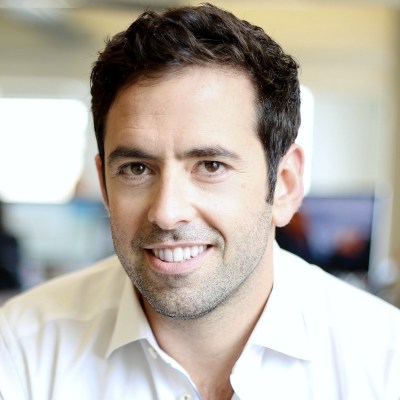
Will Villanueva is the co-founder and CEO of DELV (formerly Element Finance), a San Francisco-based decentralized finance company building fixed and variable yield markets on Ethereum. A physicist by training and former Ethereum researcher at ConsenSys, he co-founded Element Finance with Jonny Rhea in 2020 to bring fixed-rate income to DeFi. The company raised a $32M Series A in 2021 at a $320M valuation and later rebranded to DELV, whose flagship product Hyperdrive reimagines fixed and variable rate markets with an everlasting-liquidity AMM design.
Chris Yu is the co-founder and CEO of SignalPlus, a Hong Kong-based software firm building institutional-grade trading and risk-management infrastructure for crypto options and derivatives. A former macro trader at Goldman Sachs and Morgan Stanley, he spotted that crypto options represented less than half a percent of perpetual-contract volume and set out to close that gap. Since founding SignalPlus with James Shan in 2021, Yu has grown the platform into a tool used by firms including Cumberland, FalconX, Galaxy, and Goldman Sachs, and helped expand the crypto options market several times over.
Blackbird Labs is a New York-based restaurant technology company that pairs a consumer dining app with a blockchain-based payments and loyalty network. Founded in 2022 by Resy and Eater co-founder Ben Leventhal, Blackbird lets diners check in at participating restaurants, earn a rewards currency called $FLY, and pay their bill through the app, while giving restaurants lower payment-processing fees and direct ownership of their guest data. The company runs its own layer-2 network, Flynet, and operates in New York, San Francisco, and Charleston with roughly 1,000 restaurants on the platform.
Briya is a healthcare data company that connects hospitals, health systems, and researchers to life sciences organizations through a secure, privacy-preserving data exchange network. Its blockchain-secured infrastructure standardizes electronic health records and keeps data at its source, while its flagship product, Briya AIRE, is a clinical-grade conversational AI research platform that lets scientists query and analyze real-world medical data in plain language. Founded in 2020 by David Lazerson and Guy Tish, Briya spans a global network of more than 120 million patient records and aims to accelerate medical and epidemiological research without the friction of traditional data integration.
DeFi Devs is a Miami-based blockchain and AI development company that serves as the lead community developer of the Accumulate Protocol, an identity-based, delegated-proof-of-stake blockchain built for decentralized finance, digital identity, and enterprise tokenization. Founded in 2021 as a subsidiary of Inveniam Capital Partners and led by Factom founder Paul Snow, the firm builds infrastructure for cross-chain atomic transactions, human-readable addresses, and hierarchical key management, positioning Accumulate as an 'Internet of Blockchains' that bridges regulated real-world assets onto decentralized rails.
Embleema is a New York- and France-based healthcare technology company that builds a unified real-world data and evidence platform for clinical research. It aggregates clinical, genomic, and patient-reported data from electronic medical records, wearables, biospecimens, and patient apps into regulatory-grade datasets, and uses no-code protocol tools plus dynamic consent to help pharmaceutical sponsors, research sites, and patient groups run non-interventional and Phase IV studies faster and at lower cost. Founded in 2017 by Robert Chu, the company started with a patient-driven health blockchain and its analytics stack has been used by the FDA for genomic regulatory review.
Fintiv is an Austin-based fintech infrastructure company that builds patented, white-label digital wallet ecosystems for telcos, banks and brands. Formerly known as Mozido, it pioneered the Trusted Services Manager (TSM) system for NFC tap-and-pay and says it has deployed wallet ecosystems across more than 35 countries. Today it positions its stack as a bridge from Web2 payments to Web3, adding digital-asset tokenization, real-time clearing and cross-border rails alongside its long-held mobile-wallet patent portfolio.
Fnality is a London-based financial market infrastructure company building a network of regulated, blockchain-based wholesale payment systems that let banks settle transactions in a digital representation of central bank money. Its Sterling Fnality Payment System (£FnPS), launched in December 2023, is the world's first regulated distributed-ledger-technology wholesale payment system. Backed by a consortium of more than 20 global banks and market infrastructures, Fnality aims to enable 24/7 real-time, atomic settlement for tokenised asset markets, FX and repo, extending beyond Sterling into US Dollar, Euro and other currencies.
Dave Hendricks is the co-founder and CEO of Vertalo, an Austin-based platform that acts as an SEC-registered transfer agent and tokenization engine for real-world assets. He has spent close to a decade building infrastructure to turn illiquid private securities into compliant, transferable digital assets. A serial entrepreneur, he previously co-founded LiveIntent, the programmatic email advertising platform, and helped build CheetahMail into the world's largest email service provider before its 2004 sale to Experian. Earlier he ran the worldwide relationship between Arthur Andersen and Oracle and worked on large securitization projects. He is known for a pragmatic, institution-focused view of crypto and a habit of dismissing hype cycles in favor of durable financial plumbing.
Metaversal is a Miami-based Web3-native merchant bank for the digital culture economy. Founded in 2021 by Yossi Hasson and Daniel Schmerin, it acquires and builds around blue-chip NFT intellectual property and now originates NFT-backed art loans and on-chain GPU financing tied to the AI compute buildout. Backed by a $50M Series A led by CoinFund and Foxhaven, the firm sits at the intersection of NFTs, lending, and AI infrastructure.
Ohanae is a New York-based fintech company building regulated market infrastructure for tokenized securities. Its Web3-powered platform combines asset tokenization, a US-dollar-pegged stablecoin (Ohanae Coin), self-sovereign identity, and an alternative trading system with automated market maker technology to handle the full lifecycle of digital asset securities - from issuance and Regulation A+ crowdfunding through custody, clearing, settlement, and secondary trading. Founded by Greg Hauw, the company operates FINRA-registered broker-dealer Ohanae Securities LLC and targets the multi-trillion-dollar OTC securities market.
Startale Group is a Singapore-headquartered Web3 infrastructure company building the onchain stack for finance, entertainment, and consumer applications. Led by founder and CEO Sota Watanabe - who also created Astar Network - Startale operates a vertically integrated portfolio spanning the Sony-backed Ethereum Layer 2 Soneium, the Astar Network, the Strium blockchain for tokenized securities and real-world assets, the JPYSC and USDSC stablecoins, and a consumer Startale App. Backed by Sony and SBI, the company aims to bring Web3 to billions by bridging traditional finance with onchain systems.
Vertalo is an Austin-based fintech that operates an SEC-registered digital transfer agent and tokenization platform connecting the digital asset ecosystem. Since 2018 it has helped issuers, fund managers, broker-dealers and custodians move private securities on-chain - handling digital cap tables, investor onboarding, compliance and settlement across multiple blockchains. More recently it has pivoted toward 'agentic' infrastructure, exposing its regulated transfer-agency operations through APIs and an MCP server so AI agents can issue, record and transfer securities.
Greg Hauw is the founder, chairman and CEO of Ohanae, a New York based fintech building regulated infrastructure for tokenized securities. Through Ohanae Securities, an SEC/FINRA registered broker-dealer, he is working to bring blockchain settlement, digital custody and around-the-clock trading to the over-the-counter securities market. A veteran of venture-backed security and networking startups since the late 1990s, Hauw pivoted Ohanae into asset tokenization in 2018 and holds FINRA SIE, Series 82 and Series 24 licenses.
Jelena Djuric is the co-founder and CEO of Noble, a blockchain built for issuing and moving stablecoins natively across the interchain. She started Noble in early 2023 with Stefan Coolican and John Letey after years working across the Cosmos, Dfinity and Celo ecosystems, and after helping found the Canadian Web3 Council. Noble powers native USDC on Cosmos and now connects roughly 50 blockchains, has attracted hundreds of millions of dollars in assets, and raised a $15 million Series A led by Paradigm in late 2024. Djuric's stated ambition is to make stablecoins as easy to send as a Venmo payment.
Jing Wang (Jinglan Wang) is the co-founder and CEO of OP Labs, the company that builds and maintains Optimism, one of the largest Ethereum Layer 2 scaling ecosystems. She helped turn a small nonprofit research effort, Plasma Group, into the OP Stack, an open-source framework that now powers a majority of Ethereum's Layer 2 activity and is used by chains from Coinbase, Uniswap, World, Kraken, and Sony. Known for championing retroactive public goods funding and a collaborative, inclusive leadership style, Wang has guided Optimism through a $150M Series B and its evolution from a single chain into the vision of a networked 'Superchain.'
Maggie Wu is the CEO and co-founder of VelaFi, a stablecoin-powered payments infrastructure company that helps businesses move money across borders faster and cheaper than traditional banking rails. Born in China and now based in Frisco, Texas, she built her name in Latin America, where her earlier venture TruBit grew to more than 300,000 users. In January 2026 VelaFi raised a $20 million Series B led by XVC and Ikuyo, with backing from Alibaba Investment and BAI Capital, pushing total funding past $40 million as the company expands from Latin America into the United States and Asia.
CoinList is a San Francisco-based crypto platform that gives investors early access to new token sales and blockchain networks before they list on exchanges. Spun out of AngelList in 2017, it pioneered compliant token distribution with KYC/AML and accredited-investor verification, and has run primary sales for projects including Filecoin, Solana, Near and Algorand. In 2025 the company began shifting to a fully non-custodial, onchain model that delivers tokens directly into user-controlled wallets.
DPS (Digital Postal Service) is a Delaware-registered SaaS company that modernizes certified communications using AI, blockchain, and Web3. Its flagship platform, CaseMail, lets businesses send, track, and certify both email and postal mail with tamper-evident, court-admissible proof of content, mailing, and delivery. In 2021 the U.S. Postal Service certified CaseMail as the first producer of blockchain-generated ePostage labels, and the company has issued more than 3 million certificates used as evidence in U.S. courts.
Concept Labs (formerly Concept Art House) is a San Francisco-based creative and Web3 studio that builds NFTs, digital collectibles, and games for the world's biggest brands and IP. Founded in 2007 by James Zhang, the company spent over a decade producing art for AAA game franchises before pivoting to Web3, and has shipped more than 1,000 games and collectibles for partners including UFC, the NFL, the International Olympic Committee, Gucci, and Frank Miller's Sin City. It raised a $25M Series A in 2021 led by Dapper Labs.
DELV, formerly Element Finance, was a research-driven DeFi company that called itself 'the factory for DeFi.' Founded in 2020 by Will Villanueva and Jonny Rhea, it built open-source infrastructure for fixed- and variable-rate yield - most notably the Element Protocol, the Hyperdrive AMM, and the Council on-chain governance framework. Backed by a16z, Placeholder, and Polychain Capital with about $36.4M raised, the team pursued the idea that reliable fixed rates were essential to mainstream DeFi adoption. After a March 2025 Hyperdrive vulnerability and a conclusion that the product had not found market fit, DELV wound down operations in June 2025 with no reported loss of user funds.
Fabric Cryptography is a San Francisco hardware startup building the Verifiable Processing Unit (VPU) - a fully programmable custom-silicon chip with an instruction set designed specifically for advanced cryptography. Founded in 2021 by Michael Gao, Tina Ju, and Sagar Reddy, Fabric aims to do for cryptography what Nvidia did for AI: dramatically accelerate workloads like zero-knowledge proofs, fully homomorphic encryption, and multi-party computation compared with CPUs, GPUs, and fixed-function accelerators. The company has raised $39M total, including a $33M Series A in August 2024 co-led by Blockchain Capital and 1kx.
Huma Finance is the first PayFi (Payment Financing) network, a blockchain protocol that lets businesses and payment providers borrow stablecoin liquidity against real-world receivables and invoices, settling cross-border payments and card transactions in seconds instead of days. Liquidity providers deposit USDC and earn double-digit yield sourced from the fees borrowers pay for that instant settlement. Founded in 2022 and built natively on Solana, Huma has processed more than $4.5 billion in transaction volume and launched its HUMA governance token in May 2025.
PraSaga Foundation is a non-profit blockchain organization building SagaChain, a layer-one blockchain that replaces smart contracts with programmable 'smart assets' - first-class objects that model real-world things directly on-chain. Founded in 2017 by Michael Holdmann and David Beberman, PraSaga pairs a natively sharded architecture with a hybrid Proof-of-Work/Proof-of-Stake consensus and a Python-based developer stack (SagaOS, SagaPython) to target the scalability, cost, and usability limits of first-generation chains. Its native SagaCoin uses a dynamic monetary policy aimed at stable purchasing power. A public development testnet went live in 2025.

Mark Balovnev is the CEO of CYRISMA, a Rochester, New York cybersecurity risk-management platform built for MSPs and MSSPs. A serial founder who wrote his first line of code at nine and dropped out of business school at eighteen, he scaled the digital-credentialing company EduChain to more than 1.5 million users and a private-equity exit, co-founded the non-human identity security firm Vantyr, and took the top job at CYRISMA in January 2025 just after the company closed a $7 million growth round. He describes his work as operating in the gap between technical complexity and business urgency.
Michelle Neal is Group Chief Executive Officer of Fnality International, the London-based fintech running the first regulated DLT-based wholesale payment system. She joined Fnality in early 2025 after leading the Markets Group at the Federal Reserve Bank of New York, and previously ran BNY Mellon's global markets business as its CEO. Her mandate: extend Fnality's central-bank-backed settlement rails from sterling into dollar and euro, and turn a working pilot into the plumbing of 24/7 institutional finance.
Mike Love is the CEO and a founding team member of Fintiv, an Austin-based fintech that builds patented digital wallet infrastructure bridging traditional finance, loyalty, and Web3. A computer scientist by training and a career-long payments architect, he helped lead technology transformation at First Data (Fiserv) before joining Fintiv in 2012, and also founded Cloud Payments Network. He describes himself as a serial technology entrepreneur with over four decades in TMT and work across 75+ countries.
Mriganka Pattnaik is the co-founder and CEO of Merkle Science, a blockchain transaction monitoring and forensics company he started in 2018 after seeing, from inside crypto exchange Luno, how badly banks and regulators wanted a way to track illicit crypto flows. Under his lead, Merkle Science has raised over $24 million in Series A funding from investors including Kraken Ventures, Digital Currency Group, BECO Capital, and Susquehanna's Darrow Holdings, and now sells its 'Know Your Transaction' tools to VASPs, financial institutions, and law enforcement.
Paul Snow is the inventor of the Factom protocol and the architect of the Accumulate blockchain, currently building tokenization and digital-identity infrastructure at DeFi Devs and IDD Labs. He co-founded the Texas Bitcoin Conference, testified before the U.S. Congress on blockchain, and is listed as inventor on more than 40 patents that now underpin Accumulate.

Scott Keto is President of CoinList, the San Francisco token-launch and crypto fundraising platform. He joined in 2018 to run strategy and business development, became Chief Operating Officer in January 2021, and now leads the platform that has helped crypto projects raise hundreds of millions of dollars from a global investor base. Trained as a portfolio analyst before earning an MIT Sloan MBA, Keto pairs traditional finance credentials (Series 7, 24, and 79) with a builder's fluency in token design, distribution, and community-driven growth.