BREAKING DELV, formerly Element Finance, called itself "the factory for DeFi" $36.4M raisedfrom a16z, Placeholder & Polychain Series A hit a $320M valuation in October 2021 Hyperdrive shipped across Ethereum, Base, Gnosis & Linea Angel round included founders of MakerDAO, Aave, Balancer & Synthetix Wound down June 2025- funds reported safe
COMPANY PROFILE DEFI / BLOCKCHAIN Fort Worth, TX  ·  Est. 2020

DELV.

The factory for DeFi. A small research team that spent four years building fixed-rate plumbing for a market that wasn't quite ready for it.

$36.4M
Total Raised
4
Protocols Shipped
~13
People
2020–25
Operating Years
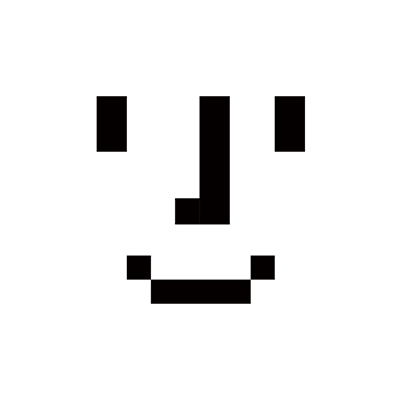
DELV logo - a pixelated smiley face

The logo. A smiley face, built from black blocks, sitting on a $320M valuation. Read it however you like - most DeFi research teams don't grin back.

The Story

A DeFi startup that knew how to stop

Here is a thing that almost never happens in crypto: a company raises tens of millions of dollars, builds some genuinely clever financial machinery, decides it isn't working, and then just - calmly, publicly, with the money intact - turns the lights off.

DELV started life in 2020 as Element Finance, the work of two engineers - Will Villanueva and Jonny Rhea - who had come out of the trenches of Ethereum 2.0 research at ConsenSys. Their pitch was almost boring, which in DeFi is a compliment. They wanted fixed rates. Not the double-digit, blink-and-it's-gone yields that made 2021 crypto feel like a casino, but the kind of predictable, know-what-you'll-earn instrument that makes a mortgage or a bond possible in the real world.

The argument went like this: you cannot build a grown-up financial system on variable rates alone. Every serious market eventually needs someone willing to say "you will earn exactly this much, for exactly this long." That's harder than it sounds on a blockchain, where liquidity is fickle and everything is priced by an automated market maker rather than a person. Element set out to build the primitive anyway.

Investors liked it. In early 2021 the company raised a $4.4M seed co-led by Andreessen Horowitz and Placeholder. By October it had closed a $32M Series A led by Polychain Capital at a $320M valuation. The angel list read like a DeFi hall of fame - the founders of MakerDAO, Aave, Balancer, Synthetix, and UMA all wrote checks. When the people who built the neighborhood invest in your house, that usually means something.

Then Element did something unusual. In 2022 it handed its flagship protocol to a community-run DAO and stepped back. In 2023 it discontinued the front end entirely and renamed the parent company DELV - "the factory for DeFi." The idea was that Element the protocol belonged to the community, while DELV the company would go on building the rest of the stack: new AMMs, governance frameworks, simulation tools. Founders are famously bad at letting go of their first product. DELV gave its away on purpose.
"Since the beginning, we've envisioned Element as an open, self-sustaining, and community-governed protocol that will hold strong to the principles of decentralization that make DeFi so powerful."

- Will Villanueva, Co-Founder & CEO
What They Built

Four protocols and an NFT drop

DELV described itself as a factory, and the metaphor mostly held. It shipped a stack of interlocking, open-source pieces - some of which outlived the company that made them.

// 01

Element Protocol

2021

The flagship. A fixed- and variable-rate yield protocol that let users lock in fixed income or trade yield without a middleman. Handed to the Element DAO in 2022.

// 02

Hyperdrive

2024

A novel AMM with on-demand terms. Positions are minted when you want them and redeemed 1:1 at maturity, so liquidity providers earn without ever rolling over. Live on Ethereum, Base, Gnosis, and Linea.

// 03

Council

2022

A modular, open-source on-chain governance framework for DAOs. Adopted well beyond DELV - Gyroscope and Arcade both ran on it.

// 04

agent0

2023

A Python simulation library that could pit human, AI-powered, and hybrid trading agents against Hyperdrive to stress-test it before real money showed up.

// 05

Elfiverse

2022

A community NFT collection minted to commemorate the day the Element Protocol became a community-owned DAO. Part celebration, part on-chain memory.

// THESIS

The through-line

Every piece pointed at one bet: that fixed rates are the missing primitive DeFi needs to graduate from speculation to infrastructure. Right about the problem. Early on the timing.

How It Worked

The clever bit: Hyperdrive

Most fixed-rate DeFi products force you into fixed windows - a term starts, a term ends, and if you miss it you wait for the next one. Hyperdrive's insight was to remove the calendar. Terms were minted on demand, at the moment a user wanted one, and every position redeemed at face value when it matured. Liquidity providers, meanwhile, could park capital once and earn passively without the tedious, gas-guzzling ritual of rolling positions forward.

In plain terms: it tried to make a bond market feel as frictionless as a swap. That is a genuinely hard piece of financial engineering, and DELV open-sourced the whole thing - Solidity contracts, a Rust implementation, a front end, and the agent0 simulation harness used to poke holes in it.

The holes, unfortunately, were real. In March 2025 the team discovered a vulnerability that, in low-liquidity conditions, could let a liquidity provider withdraw more than their share. All pools were paused. No funds were reported lost. But it was the kind of discovery that forces a hard conversation about whether the thing is worth rebuilding.

Approximate figures Traction stayed modest throughout - total value locked sat in the single-to-low-double-digit millions across pools, and DELV was candid that it "did not find product-market fit." Treat any specific TVL number as a snapshot, not a headline.
The People

Who ran the factory

WV

Will Villanueva

Co-Founder & CEO

Founding CEO, based in San Francisco. Came out of Ethereum 2.0 R&D; studied at New Mexico Tech.

JR

Jonny Rhea

Co-Founder & CTO

Ex-ConsenSys protocol engineer, ex-USAA data scientist. MS in Operations Research from SMU.

CS

Charles St. Louis

CEO (Wind-Down)

Led governance and, ultimately, the company's orderly close in June 2025. Author of the closing note.

The Money

$36.4M, two rounds, a legendary cap table

RoundAmountDateLead & Notable Investors
Seed
$4.4M
Mar 2021
a16z & Placeholder (co-lead), SV Angel, A.Capital, Scalar Capital, Robot Ventures
Series A
$32M
Oct 2021
Polychain Capital (lead), a16z, Placeholder, Ethereal Ventures, Republic - plus angels Rune Christensen, Stani Kulechov, Fernando Martinelli, Kain Warwick, Hart Lambur

The Series A valued DELV at $320M. The angel roster is the tell: when the founders of MakerDAO, Aave, Balancer, Synthetix, and UMA all put personal money into your fixed-rate startup, the category insiders clearly believed the problem was real.

"This is not giving up. It's a clear and thoughtful choice, made with a full heart and clear perspective. We didn't find product-market fit - but fixed rates are essential to real adoption in DeFi."

- Charles St. Louis, CEO, from DELV's closing note, June 2025
The Arc

Six years, start to finish

2020

Element Finance founded

Will Villanueva and Jonny Rhea leave Ethereum 2.0 research to build fixed-rate DeFi.

2021

Seed, then a $32M Series A

a16z and Placeholder seed it; Polychain leads a Series A at a $320M valuation. The Element Protocol goes live on mainnet.

2022

Handed to the DAO

Control of the Element Protocol moves to the community-run Element DAO. Council and the Elfiverse NFTs launch.

2023

Rebrand to DELV

The company becomes DELV - "the factory for DeFi" - and starts building Hyperdrive.

2024

Hyperdrive on mainnet

The on-demand-term AMM ships across Ethereum, Base, Gnosis, and Linea, with sDAI and stETH integrations.

2025

Vulnerability, then wind-down

A March vulnerability pauses Hyperdrive. In June, DELV winds down operations with user funds reported safe.

Ecosystem

Partners & adopters

Hyperdrive plugged into Spark (the MakerDAO/Sky ecosystem) for sDAI yield and Moonwell for ETH strategies. The Council framework was adopted by outside DAOs.

Spark / sDAI Moonwell Gyroscope Arcade Element DAO
The Field

Who else played here

DELV shared the fixed-rate and yield-tokenization category with a handful of rivals. Same problem, different endings - Pendle went on to define the space.

Pendle Notional Finance Yield Protocol Sense Finance Spectra Voltz IPOR
Odds & Ends

Five things worth knowing

Watch & Read

Demos, docs & deep dives

Questions

The short answers

What was DELV?
DELV, formerly Element Finance, was a research-driven DeFi company that built open-source infrastructure for fixed- and variable-rate yield - including the Element Protocol, Hyperdrive, and the Council governance framework. It described itself as "the factory for DeFi."
Who founded DELV?
It was founded in 2020 by Will Villanueva (CEO) and Jonny Rhea (CTO), both formerly involved in Ethereum 2.0 research at ConsenSys. Charles St. Louis later served as CEO and led the wind-down.
How much funding did DELV raise?
About $36.4M total - a $4.4M seed led by a16z and Placeholder in early 2021, and a $32M Series A led by Polychain Capital at a $320M valuation in October 2021.
Why did Element Finance rebrand to DELV?
After handing the Element Protocol to a community DAO, the parent company rebranded to DELV in 2023 to reflect a broader, multi-protocol "factory for DeFi" identity distinct from the community-owned protocol.
What happened to DELV?
Following a March 2025 vulnerability in Hyperdrive and a conclusion that the product had not found market fit, DELV wound down operations in June 2025, reporting that user funds remained safe.

Share this profile