rust
(52)
Dennis Zhuang and the trouble with a convincing answer
After years building systems that explain what software is doing, Greptime’s founder began asking the same questions of AI agents. The answers took him from monitoring at Ant Group to an experiment involving 23 billion tokens.

Ellipsis Labs built an exchange. Then it went after the clock.
Phoenix put the order book on-chain. Now Ellipsis Labs is working on the machinery underneath finance - and the milliseconds that decide who gets a fair price.
Deno tried to leave Node behind. Its users brought npm.
The creator of Node.js built Deno to make JavaScript simpler. The revealing part is what his second act learned to keep - and why its next customer might be an AI agent.

Apriorit makes software work where the manual ends
A drone, a closed platform, and no instructions: welcome to Apriorit’s corner of software engineering. Its business is making difficult systems cooperate, from device drivers to private AI.
Futurewei and the business of agreeing
A Huawei affiliate works on the code and conventions that let rival technologies cooperate. Its story reveals both the value of shared infrastructure and the expense of keeping it alive.

SDF Labs and the expensive art of finding out too late
A Seattle compiler startup asked why data developers had to send SQL to the cloud just to discover a mistake. Its answer ended up inside dbt - and changed the machinery beneath analytics engineering.

The engineer behind the uptime
Kyle Kosic helped keep GPT-4 training steady, joined xAI at its launch, and now works on personal AI at River. His career follows the infrastructure that makes ambitious models possible.
The observability bill that made less data look like a feature
OpenObserve wants engineers to keep the logs, metrics and traces they need without treating every new byte as a financial emergency. Its wager is a Rust engine, compressed Parquet files and object storage - plus a business built around making that machinery usable.

Paul Dix Put Time in a Bottle - Then Rebuilt the Bottle
A failed monitoring product left Paul Dix with five weeks, a stubborn hunch and the beginnings of InfluxDB. Thirteen years later, his career is a study in the useful art of rebuilding before comfort hardens into doctrine.

Parity built the machinery. Now comes the human part.
The engineers behind Polkadot spent a decade making blockchains work together. Their next test is whether people can use the result without needing a blockchain education.

Narayana Aaditya Wants Your Coding Agents to Remember the Good Bits
The Skillsync co-founder spent years helping payment systems talk to one another. Now he is trying to make coding agents, teammates and their hard-won context speak the same language.

Ockam Spent Years Making Networks Disappear. Then the Company Did Too.
The San Francisco startup raised $17.6 million to turn zero-trust plumbing into a developer primitive. Its sharpest lessons survive in open source - including the costly rewrite that finally made the idea click.

Cliff Crosland Put the Missing Index on the Data Lake
A million-dollar log bill became the design brief for Scanner. Now the engineer who once taught Stanford students and rendered black holes in WebGL is building a faster memory for security teams - and for the agents arriving beside them.
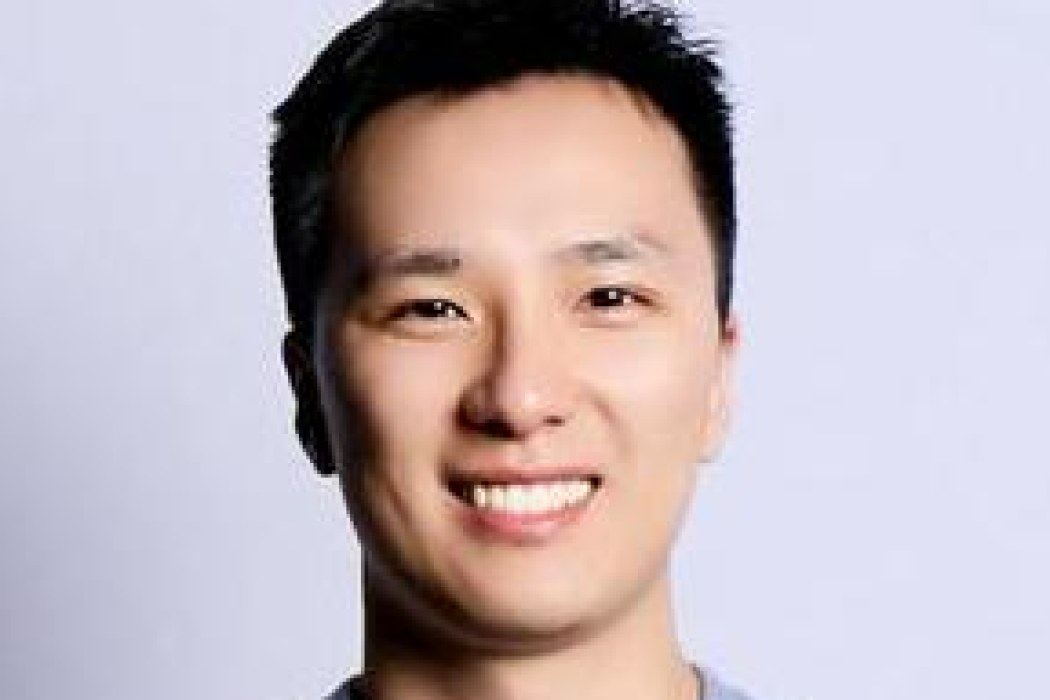
Xin Ding
Xin Ding is the cofounder and CEO of Attune (YC X25), a San Francisco startup building blazingly fast, drop-in build tools that speed up compilation without any migration effort. After more than a decade shaping developer-tools products - as Head of Product at FOSSA and VP of Product at Teleport, where he helped scale the company to unicorn status - he teamed up with longtime colleague Eliza Zhang to attack one of the least glamorous but most universal engineering headaches: slow builds. Attune's first product lets Rust developers prefix an existing command with 'hurry' to get dramatically faster builds through distributed caching, remote execution, and compiler-native optimizations.
Attune
Attune is a San Francisco developer-tools startup (YC X25) building drop-in build acceleration for engineering teams. Its tool, invoked by prefixing existing commands with 'hurry' (e.g. 'hurry cargo build'), delivers up to 20x faster builds through incremental compilation, remote execution, and distributed caching - with zero migration and no new config language to learn. Attune started with Rust and is expanding to Docker, npm, GitHub Actions, Swift, and Python. It also maintains an open-source project for fast, secure Linux package publishing. Founded by Xin Ding (CEO) and Eliza, who worked together for three years at FOSSA on build systems.

Skillsync
Skillsync is a Y Combinator W26 startup building 'GitHub for agent sessions.' It captures the work of AI coding agents like Claude Code, Codex and Cursor, stores every session in one searchable place, and turns the best sessions into reusable skills any agent on a team can load. Founded by ex-Juspay Rust engineers Narayana Aaditya Ganeshkumar and Nishant Joshi, the company started as a tool for finding elite engineers by their GitHub code and evolved into infrastructure for sharing agent knowledge across teams.
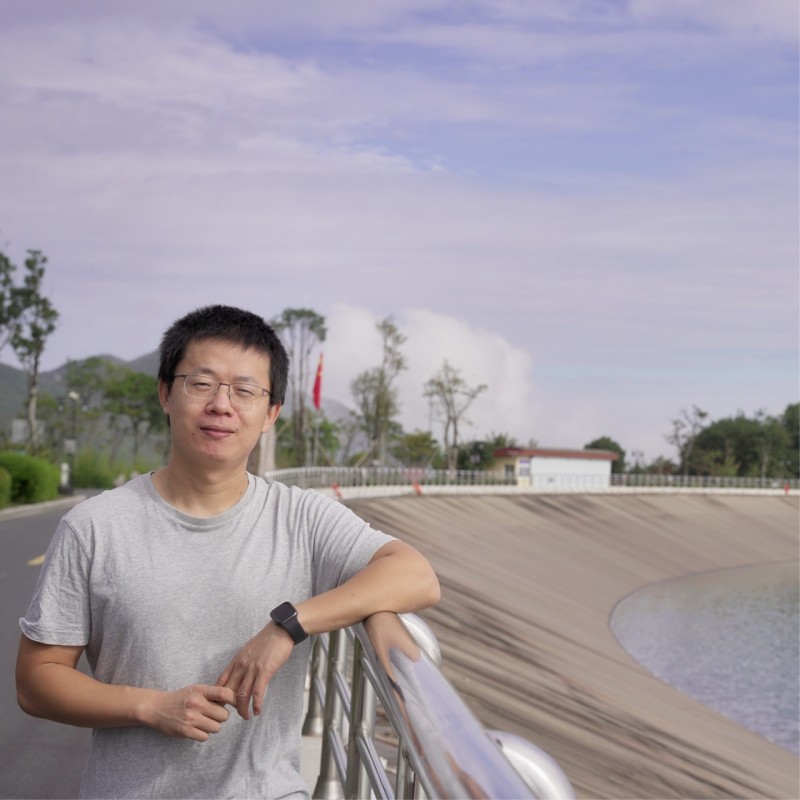
Xiaodan Zhuang
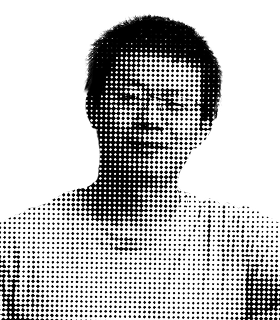
Xiaodan Zhuang, who also goes by Dennis, is the co-founder and CEO of Greptime, a company building GreptimeDB, an open-source observability database written in Rust that unifies metrics, logs, and traces. Before starting Greptime in 2022, he spent roughly 18 years in software infrastructure, including leading the intelligent monitoring team at Ant Group where he built ultra-large-scale time-series platforms for AIOps, plus earlier stints at Taobao/Alibaba and LeanCloud. He is a long-time open-source contributor (GitHub handle killme2008) behind projects like Aviator and xmemcached, and a self-described car enthusiast who races on tracks.
Diode Computers, Inc.
Diode Computers is a New York-based startup building an AI-powered, code-first platform for designing and manufacturing custom printed circuit boards. Its open-source toolchain - a Rust-based PCB compiler that treats schematics as Python-readable code - lets AI agents and engineers generate, validate, and manufacture boards in days rather than months, with human-in-the-loop verification. Founded in 2024 and backed by a $11.4M Series A led by Andreessen Horowitz, Diode serves hardware teams in aerospace, robotics, and defense.

Davide Asnaghi
Davide Asnaghi is the co-founder and CEO of Diode Computers, a startup rebuilding how printed circuit boards are designed and manufactured. An Italian-born engineer trained at UC Berkeley, he spent years building hardware at Apple's Special Projects Group and medical-device companies before starting Diode to replace legacy EDA tools with open-source, AI-friendly software: a Python design language backed by a Rust compiler that turns requirements into manufacturable circuit boards in a fraction of the usual time. Diode raised an $11.4M Series A led by Andreessen Horowitz and partners with Anthropic to make Claude a more capable electrical engineer.

Materialize
Materialize is a New York-based data infrastructure company that builds a streaming SQL database. It continuously ingests data from operational systems, incrementally maintains the results of complex SQL queries as always-fresh materialized views, and serves them with low latency. Built on the open-source Timely Dataflow and Differential Dataflow engines and written in Rust, Materialize looks and behaves like Postgres, letting engineers use standard SQL to power real-time analytics, automation, personalization, fraud detection, and - more recently - a live context layer for AI agents and applications.
InfluxData
InfluxData is the company behind InfluxDB, the open source time series database purpose-built for high-volume, timestamped data from sensors, applications, infrastructure, and IoT devices. Founded in 2012 and led by CEO Evan Kaplan and founder/CTO Paul Dix, InfluxData rebuilt its engine in Rust on the Apache Arrow, DataFusion, Flight, and Parquet stack for InfluxDB 3. The platform is used by more than 1,900 paying customers - including Tesla, IBM, Cisco, PayPal, and Nordstrom - to collect, store, and analyze real-time data at scale.

LiveKit
LiveKit is an open-source platform and global edge network for building real-time voice, video, and physical AI applications. Born as a WebRTC media server for livestreaming and conferencing, it has grown into the infrastructure layer that lets AI agents see, hear, and speak with sub-100ms latency. Its technology powers ChatGPT's Advanced Voice Mode and is used by developers at OpenAI, xAI, Salesforce, Tesla, and Spotify, collectively facilitating billions of real-time calls each year.

Greptime
Greptime is an open-source database company building GreptimeDB, a unified observability database that stores metrics, logs, traces, and wide events in a single engine on object storage like Amazon S3. Written in Rust and built on Apache Arrow and DataFusion, it separates compute from storage to cut costs at scale and speaks both SQL and PromQL. Founded in 2022 by ex-Alibaba and Ant Group engineers, Greptime positions GreptimeDB as a drop-in replacement for the Prometheus, Loki, and Elasticsearch stack, serving customers across connected vehicles, IoT, and observability.
Oxide Computer Company
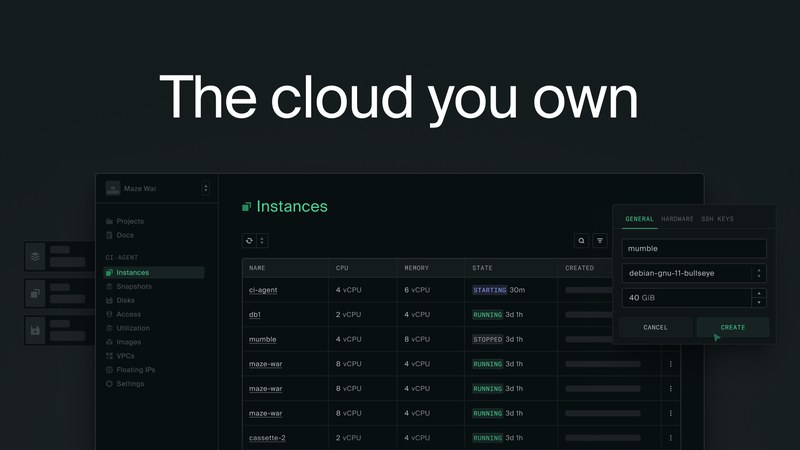
Oxide Computer Company builds the Oxide Cloud Computer, a rack-scale system that fuses purpose-built hardware with open-source software to give enterprises the elastic, API-driven experience of a public cloud inside their own data centers. Founded in 2019 by Joyent and Docker veterans, Oxide designs everything from the sheet metal, power distribution, and boot firmware up to the hypervisor and control plane, selling a single integrated rack rather than a pile of parts. It has raised over $577M, counts national labs and Fortune 1000 enterprises among customers, and is known for radical engineering transparency including a uniform company-wide salary.
Scanner
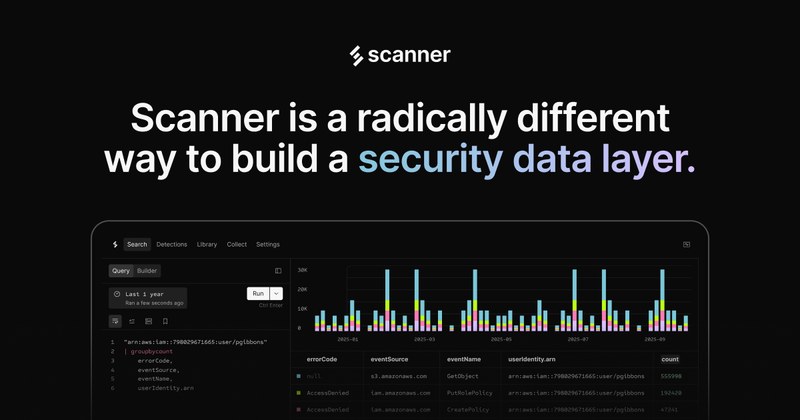
Scanner is a San Francisco cybersecurity company that turns the log data companies already dump into Amazon S3 into a fast, searchable security data lake. Instead of paying traditional SIEM prices to keep only a few weeks of logs, security teams use Scanner to index petabytes of data directly in object storage, run continuous threat detections, and search years of history in seconds - now increasingly driven by AI agents. Founded by ex-Cisco and Dropbox engineers Cliff Crosland and Steven Wu, the company raised a $22M Series A led by Sequoia Capital in March 2026.
Orama
Orama is an open-source search company building an 'answer engine' for developers - a lightweight, high-performance stack that bundles full-text, vector, and hybrid search with automatic embedding generation and built-in LLMs. Started as the open-source project Lyra and incorporated as OramaSearch Inc. in 2023 by Issac Roth and Michele Riva, its core library ships in under 2KB and runs in the browser, on servers, or at the edge. Orama powers site search and AI answers for developer platforms including nodejs.org, tanstack.com, and solidjs.org, and its OramaCore runtime packages a search engine, vector database, and LLM interface into one deployable unit.
Shuttle
Shuttle is a Rust-native cloud platform that lets developers ship backends without writing infrastructure files. You annotate what you need in code - a database, secrets, a web server - and Shuttle provisions it and deploys to the cloud. Founded in 2019 and shaped by Y Combinator's Summer 2020 batch, the company is now repositioning as an 'AI platform engineer' that handles the deployment step where AI coding tools like Cursor, Copilot and Lovable leave off. It has drawn more than 20,000 developers and over 120,000 deployments, and raised a $6M seed round in October 2025.
Succinct
Succinct is a San Francisco cryptography company building SP1, an open-source zero-knowledge virtual machine that lets developers prove the correct execution of any Rust program, and the Succinct Prover Network - a decentralized marketplace where independent provers compete to generate ZK proofs for rollups, bridges and onchain applications.

Nodar Daneliya
Nodar Daneliya is the co-founder and CEO of Shuttle, an open-source cloud platform that lets developers build and deploy backends without writing infrastructure files. A former quant trader and investment banker who taught himself the cloud, he traded London trading desks and Harvard finance classes for a Rust developer-tools company that more than 20,000 engineers now use across 120,000+ deployments. After raising a $6M seed round in October 2025, he is pointing Shuttle squarely at the messiest part of AI coding: what happens after the AI writes the code and someone still has to ship it.

Sammy Sidhu
Sammy Sidhu is the co-founder and CEO of Eventual, the company behind Daft, an open-source, Python-native data engine built to wrangle messy multimodal data like images, video, audio and LiDAR at petabyte scale. A UC Berkeley EECS grad with a background in high-performance computing and deep learning, he cut his teeth on Wall Street high-frequency trading and then on the perception stacks of self-driving cars at DeepScale (acquired by Tesla), Lyft Level 5 and Woven Planet (Toyota). After repeatedly watching brilliant engineers burn 80% of their time fighting data plumbing instead of building, he and Jay Chia turned that frustration into Eventual. Daft now processes petabytes daily at Amazon, CloudKitchens, Together AI and Essential AI, and the company has raised roughly $30M from investors including CRV, Felicis, Microsoft's M12 and Citi.