The drone could fly. The awkward part was getting its pictures onto a customer’s screen. A US manufacturer built industrial drones for inspecting energy infrastructure, but its customers used a closed proprietary platform on their tablets and control stations. The platform’s developer supplied no firmware, source code, or documentation. A perfectly serviceable aircraft had encountered an obstacle that could not be flown over.
- Apriorit builds and repairs complex software, with cybersecurity and system-level engineering at its core.
- Its distinctive work includes undocumented protocols, device drivers, and compatibility across platforms.
- Clients buy projects or dedicated teams. The practical lesson: prove the difficult connection before expanding the feature list.
Apriorit investigated the screen-mirroring protocol and reconstructed its key exchange and handshake. The manufacturer used the resulting prototype as the basis for integration. In this case, the missing ingredient was knowledge of how another system expected to be addressed. Think of a dinner guest who can speak eloquently but has never learned the host’s language.
That assignment makes a useful introduction to Apriorit. Plenty of software firms offer attractive interfaces. Apriorit has built a business around the less photogenic questions underneath them: what happens inside the operating system, what an undocumented program actually does, and why two pieces of otherwise competent technology refuse to cooperate.
The market hiding beneath the interface
The company’s service catalogue travels from kernel and device-driver development through cloud infrastructure, SaaS applications, security testing, and AI. It also offers embedded and IoT work, blockchain engineering, and maintenance. The breadth matters most when a single problem crosses those boundaries. A customer should not have to discover, halfway through an integration, that its new development partner stops precisely where the operating system begins.
A kernel is the operating system’s core. Drivers help software interact with devices. Reverse engineering investigates a system’s behavior when its original design is unavailable. None of those activities guarantees a successful product. But they can make a product technically possible when ordinary application work reaches a locked door.
Apriorit fits among specialist engineering providers for technology companies. The alternatives include recruiting an internal systems team, hiring a broader development consultancy, or splitting research and implementation between suppliers. Its pitch is the ability to keep research, development, and testing together. For a buyer, the sensible comparison is a completed assignment resembling the actual problem. A long list of programming languages makes a rather poor reference check.
A rewrite with a memory
Consider its work for Devolutions, the Canadian remote-access and credential-management company. Apriorit ported the IronVNC implementation from C to Rust, including an MVS codec associated with Apple Remote Desktop extensions. The assignment also required WebAssembly support, allowing the implementation to operate in a browser as well as on native platforms.
Porting sounds tidy. In practice, the customer wanted existing logic preserved while adding broader protocol support and separating it from particular input and output mechanisms. The resulting implementation became part of Devolutions Gateway, supporting browser-based VNC and Apple Remote Desktop connectivity.
The interest here lies in the obligations of a rewrite. New code still has to respect old behavior. An engineer may enjoy replacing an implementation; the customer needs the replacement to keep speaking to the machines already in service. Compatibility is where technical fashion must acquire manners.
New code still has to respect old behavior.
THE ENGINEERING PROBLEM IN ONE SENTENCE
Eight people, then a company of specialists
Apriorit began in Dnipro, Ukraine, in 2002. Dennis Turpitka was 24 when he assembled the original eight-person team. The company initially concentrated on corporate security, drivers, and software research, later expanding into additional domains. Turpitka died in January 2022. Today, the business has its headquarters in the United States and engineering operations in Europe.
Its current leadership includes CEO Klaudia Zaika, whose career at Apriorit began in quality assurance. The company describes her progression through delivery and project management into the chief executive role. That is an intriguing route to the top of an engineering business: testing teaches a person to ask what happens after the demonstration has gone well.
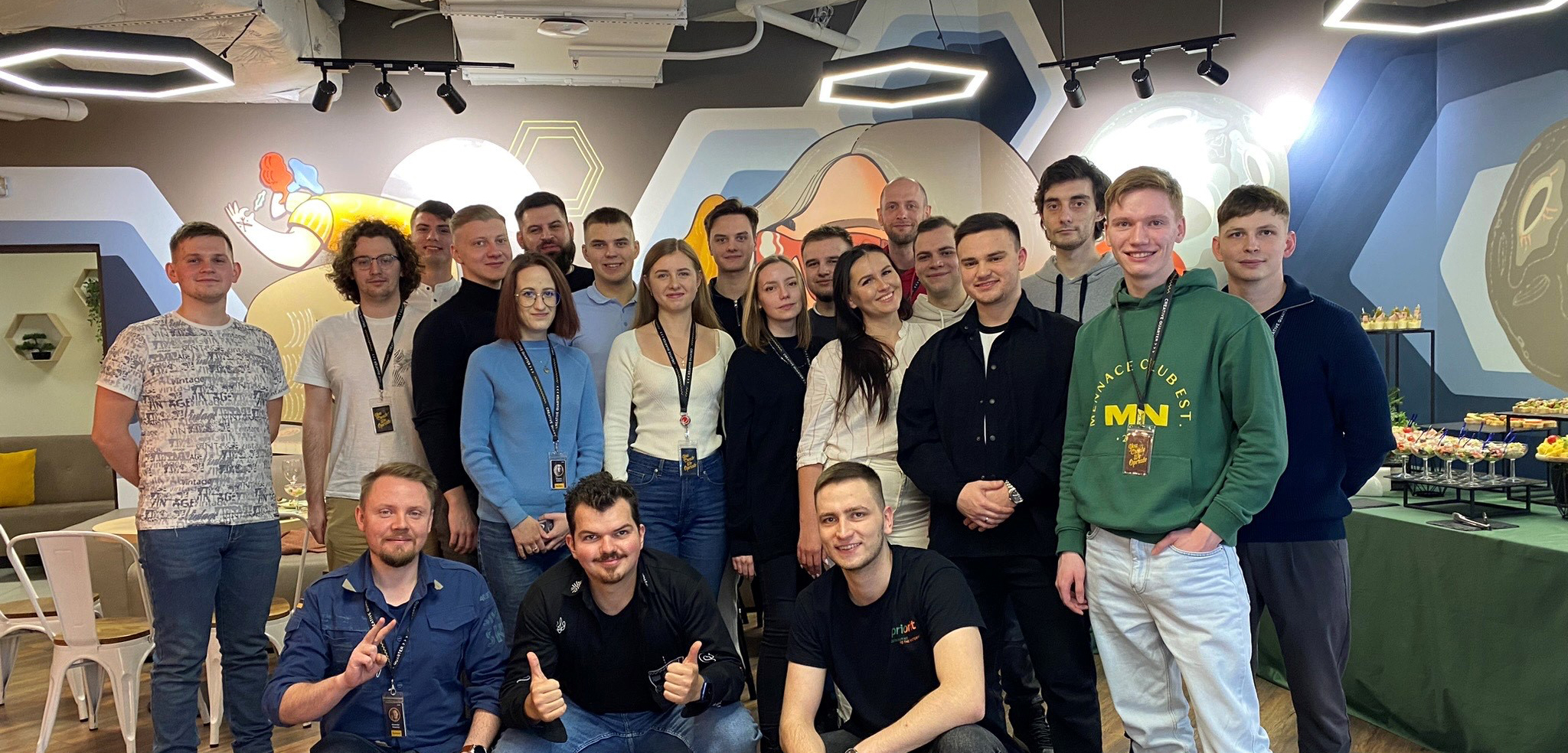
The employer profile describes paid study time and mentoring for entry-level developers, alongside internal technical materials and lectures for experienced staff. Such arrangements have a practical purpose in a company selling unusual expertise. Knowledge must be passed on, or every difficult project becomes dependent on whichever specialist happens to remember the answer.
The chatbot had a second customer: security
Apriorit’s AI work offers another version of the same problem. A UAE consulting firm wanted an internal chatbot for research and content work. Employees needed to upload files and use the system inside corporate infrastructure. The requirements included keeping search history and generated information private, with a target of supporting 15 simultaneous users.
Apriorit built a chatbot and web application, deployed them in the client’s Google Cloud environment, and trained the team on code and deployment. The design brief was about governing access to useful technology as much as producing answers. A business can admire an AI demonstration and still have several quite reasonable questions about where its documents will travel.
Internal AI chatbot and web application
April-August 2024 engagement
The consulting firm’s CTO reported spending about $33,000. A tangible demonstration helped win the contract. An early version had issues, but it arrived quickly enough to invite feedback. The initial project shipped within budget; later usage exposed improvements the client made itself. A proposed second iteration stalled amid unclear scope and budget constraints.
The CTO’s advice was specific: move development into the final infrastructure and repository early. Waiting until the end created deployment delays. This is a useful lesson for any outsourced project. The environment is part of the assignment, and a prototype’s comfortable temporary home can conceal the problems awaiting it at its permanent address.
Buy the uncertainty in sensible portions
Apriorit offers fixed-price, time-and-materials, and dedicated-team arrangements. A fixed-price engagement suits a defined deliverable with an agreed deadline. Time and materials permits scope to develop while billing for work and resources. A dedicated team provides continuing capacity for a longer product programme.
The choice is consequential. Research can reveal that the original task was underspecified. In a published cybersecurity-platform case, support for more processor architectures also required backend changes. An initial vulnerability-engine assignment grew into continuing collaboration with Python developers, reverse engineering, QA, and the customer’s internal team. The unit of work had become larger than the first feature request.
- Can it work?Isolate the risky connection and commission a feasibility result.
- What counts as done?Agree on observable behavior, test conditions, and ownership.
- Where will it run?Exercise the real deployment environment before the final handover.
Those questions are an interpretation of the cases, rather than a promise that every engagement follows the same path. They also describe the conditions a buyer must supply. A fixed budget paired with shifting requirements will strain any contract. Specialist engineering makes little economic sense for a routine task already covered by a suitable standard product. Reverse engineering also depends on access, feasibility, and a legitimate purpose; Apriorit says its legal team reviews requests.
Apriorit’s delivery process includes requirements analysis, team selection, estimates, documentation, code review, and testing. Customers still have decisions to make. Outsourcing can supply expertise; someone must decide which outcome deserves that expertise and how to recognize it.
The drone case ends with a connection. The Rust case ends with old capabilities finding a new setting. The AI case ends with a working tool and a lesson about deployment. Each offers a modest, useful idea: before requesting more software, investigate the particular thing that prevents the software you need from working.
Follow the engineering
Apriorit website ↗ · Project archive ↗ · Engineering blog ↗ · GitHub ↗
LinkedIn · X · Instagram · Facebook
Watch: AI in Driver Development ↗
More Apriorit engineering videos ↗