A processor can obey every instruction you give it and still be wrong. The trouble is finding the instruction you have not thought to give it. In Futurewei’s orbit, there is a tool for that: FORCE-RISCV, a generator that produces instruction sequences for testing RISC-V processor designs. Its repository credits Futurewei with the initial contribution. It is a wonderfully unglamorous object. Before someone can sell you a chip, someone else must make a serious attempt to embarrass it.
That is a useful entrance to Futurewei, a US corporation and Huawei affiliate founded in 2001. The company works on information and communications technology, but much of its public activity sits underneath the things people ordinarily recognize as products. Think standards, research artifacts, programming-language work and the arrangements that allow several companies’ equipment to cooperate. The product launch gets the applause. The agreement about how the products talk deserves some of the credit.
- Its work: ICT research, open standards and reusable code for developers and industry partners.
- Its position: a Huawei affiliate participating in shared technology communities.
- A concrete contribution: FORCE-RISCV helps generate processor-verification tests.
- The catch: useful open technology still depends on funding, maintenance and cooperation.
A business several floors below the shop window
Futurewei’s stated mission combines innovation with open source, standardization and collaboration. These words acquire meaning when you look at the work. Its standards activity extends across wireless, internet protocols and optical networks. Its chip research includes RISC-V architecture, machine learning and graphics. Storage and device ecosystems add another layer: helping organizations build with technology that can work beyond a single vendor’s walls.
The immediate audience is correspondingly technical. A chip designer may use a verification tool. A network operator benefits when equipment from different suppliers interoperates. A developer can work with a shared language or reusable software component. A researcher can reproduce an experiment. These are different relationships, and they should not be flattened into a glamorous list of “customers.” Foundation co-members and research collaborators are not automatically buyers.
The business is best understood as investment in the technical foundations of a market. That is an interpretation of the public portfolio, rather than a claim about a particular sales contract. Futurewei’s website invites collaboration; its open-source page describes contributions to communities. The value can arrive when somebody else adopts a design, implements a standard or improves a common tool. It takes patience to pursue a return that may turn up in somebody else’s repository.
The gift that asks a chip awkward questions
FORCE-RISCV makes the model tangible. It uses randomization to select instructions, registers, addresses and data, while giving users APIs and Python templates to control generation. Its output can feed a verification environment. The repository is licensed under Apache 2.0 and hosted by the OpenHW Foundation.
A designer can take the tool, examine its behavior and adapt tests to a processor under development. The practical benefit is a starting point for difficult verification work. The boundary is equally practical: generated tests need an appropriate test environment and useful coverage. Downloading a generator does not certify a processor. The generosity is in making the machinery available; the engineering remains the user’s responsibility.
For someone trying to copy this approach, the lesson is pleasingly specific. Publish the instrument that makes your research useful, alongside enough explanation for another person to operate it. A declaration of openness is cheap. A runnable test generator gives the declaration something to stand on.
Rust is a language, not a house brand
Futurewei features Rust on its open-source page. The Rust Foundation lists the company as a member that joined in May 2021, separately from Huawei. Rust’s emphasis on performance, type safety and concurrency fits the company’s interest in infrastructure software.
Membership matters, but it is not ownership. A shared language is useful precisely because its life extends beyond one participant. The same care applies to Futurewei’s other featured projects: the company’s involvement tells you something about its priorities, not that every listed project is a proprietary product with a Futurewei price tag.
A wallet without a checkout button
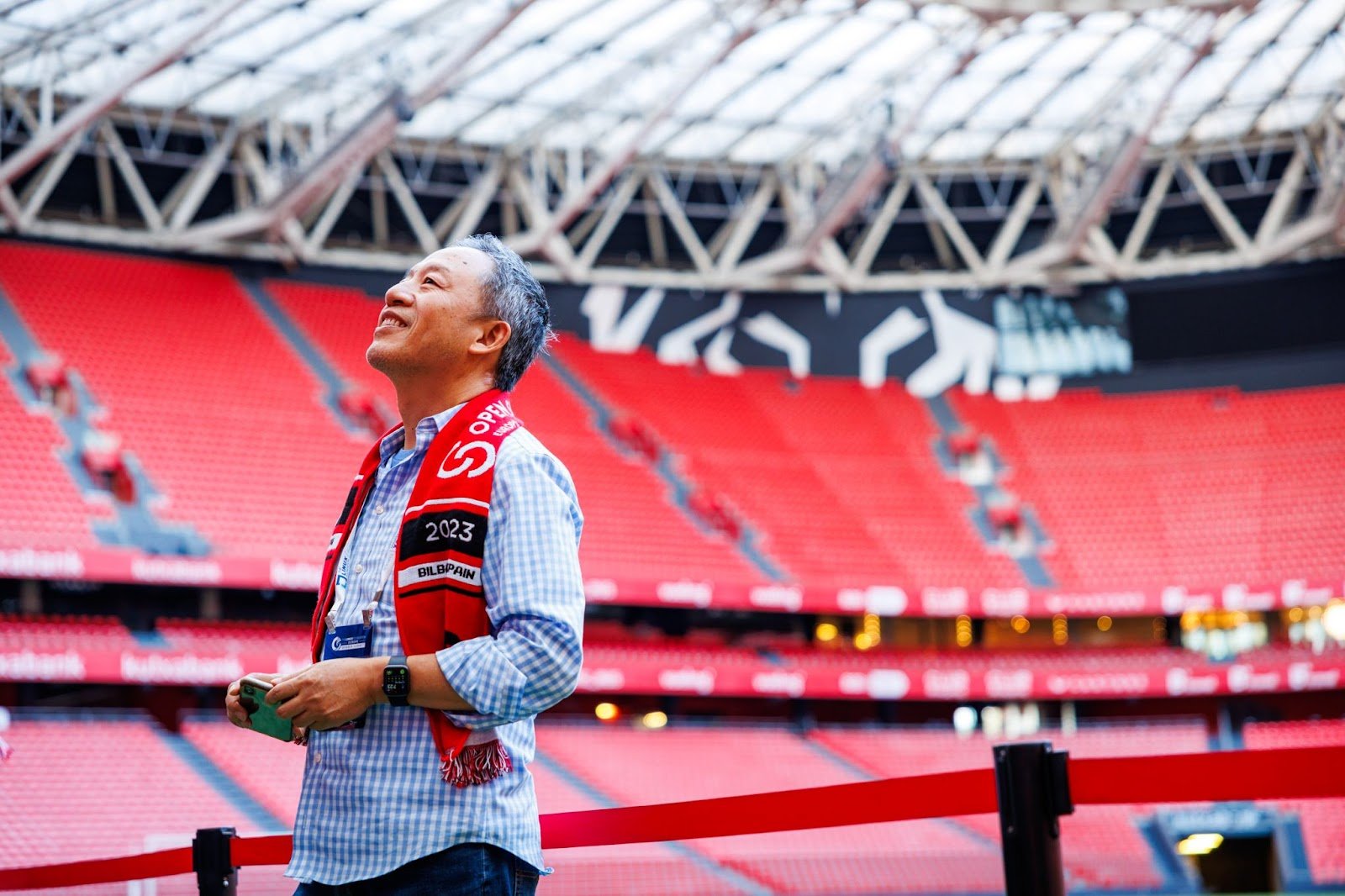
In February 2023, Futurewei became an inaugural Premier member of the OpenWallet Foundation alongside Accenture, Gen and Visa. The foundation’s launch announcement made an illuminating distinction: it would develop shared wallet software rather than publish a wallet of its own, issue credentials or create new standards.
That puts the effort upstream of the familiar app. A wallet can hold identity documents and credentials as well as support payments. Infrastructure that different organizations can build on addresses a basic irritation: your perfectly good credential is of little use if the other party cannot accept it.
OpenWallet’s published 2026 annual Premier-tier fee. A membership price, not a measure of Futurewei’s total research spending or proof of a particular payment.
The fee provides a concrete reminder that shared infrastructure has an institution behind it. There are committees, people and recurring obligations. From the outside, open source can look like an endless cupboard of free ingredients. Someone has to keep replenishing the cupboard.
Then the partners changed their plans
Wolvic, another project Futurewei features, offers a sharper version of that lesson. Maintained by Igalia, the browser brings web experiences into immersive headsets. Its public screenshot is almost comically literal: a wolf video playing inside a browser window, suspended in a forest. Even in virtual reality, apparently, we want another tab.
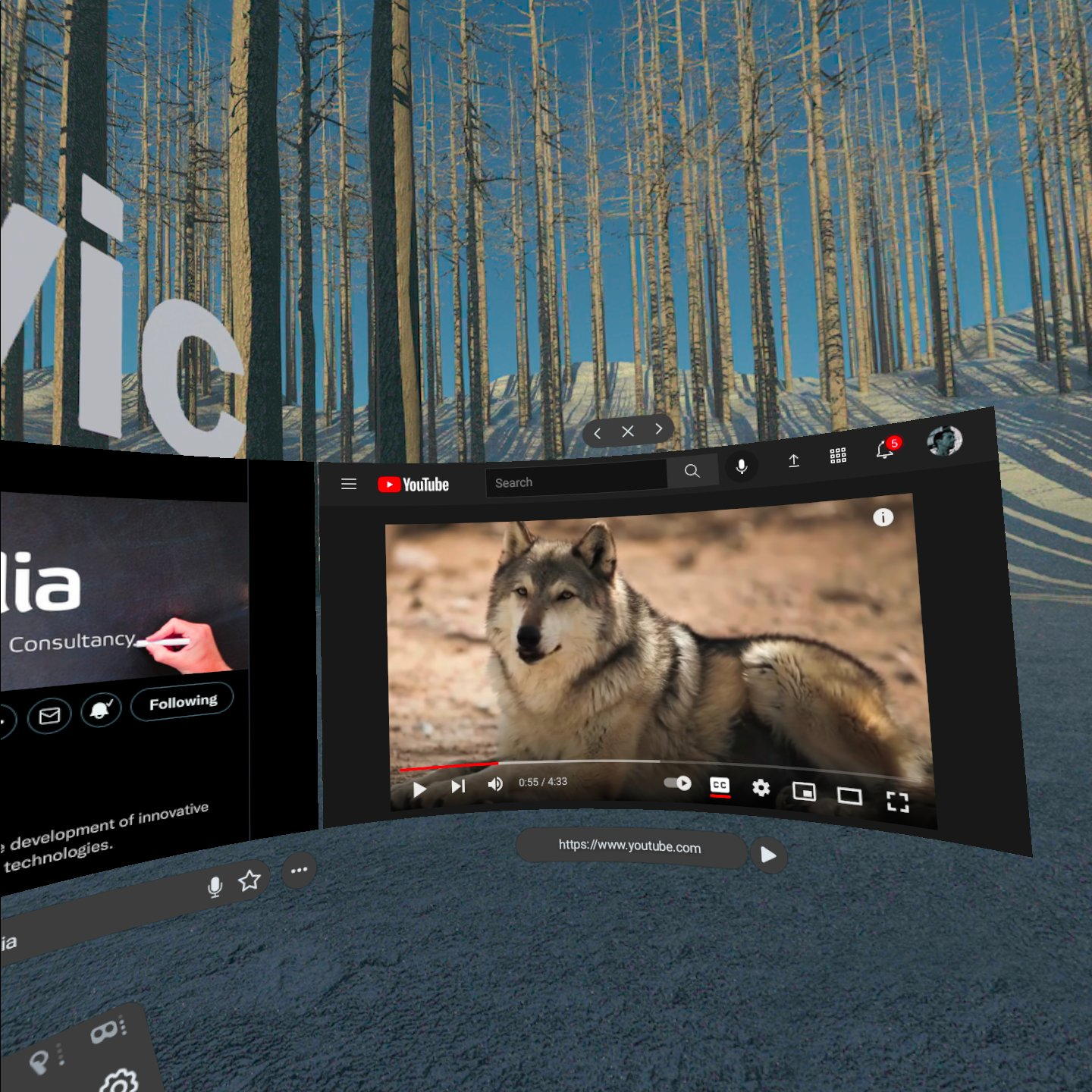
Igalia took over stewardship of the Firefox Reality successor in early 2022. Its FAQ answers the question of what Mozilla paid for the takeover with a single word: “Nothing.” The browser grew through investment and partnerships. In November 2025, however, Igalia announced that the main project would move into maintenance mode.
Its explanation is instructive. Partners had changed strategies or left XR, and partnerships had ended. Browser-engine investment and emerging platform conventions also changed the economics of the original architecture. Igalia planned security updates and minor maintenance, with collective funds covering part of the cost and Igalia covering the rest. Those are Igalia’s reported circumstances; they do not establish which decision Futurewei made.
An open license can preserve access to the code. It cannot guarantee a team will keep improving it.
An implication of Wolvic’s maintenance decision
For a prospective user, that changes the decision. You can still investigate the browser and its code, but you should evaluate the current maintenance commitment against your intended deployment. A promising demonstration and a dependable long-term platform ask different things of their sponsors.
The research had a route home. Then it narrowed.
Futurewei’s own history supplies a larger financial scale. Reuters reported that the operation had recorded $510 million in operating costs in 2018. In July 2019, following Huawei’s US trade blacklisting, Futurewei announced more than 600 job cuts from a workforce of roughly 850.
Historical figures reported by Reuters. Operating costs are an expense figure, not revenue; these cuts do not describe today’s headcount.
The critical failure was a channel for using the work. Restrictions on transferring US-originated technology to Huawei undermined the research operation’s original purpose. That is a different problem from a weak prototype or an unpopular feature. An organization can possess expertise and still lose the institutional conditions that make the expertise commercially useful.
The affiliation remains central. Futurewei’s current website identifies it as a Huawei affiliate. In September 2025, a bipartisan House Select Committee letter requested information about its governance, funding, Huawei relationship and technology activities, including open-source work and standards participation. The lawmakers’ allegations should be understood as allegations, not adjudicated findings. The inquiry nevertheless belongs in the company’s story: technical openness does not settle questions about governance or influence.
Copy the handoff. Inspect the dependencies.
Futurewei fits in the market beside research organizations, standards participants and infrastructure developers. Relevant alternatives depend on the job: telecom research groups such as Nokia Bell Labs or Ericsson Research, internal chip-design teams, or another browser on your chosen headset. A single competitor list would hide more than it explains.
What a reader can borrow is the habit of separating the shared foundation from the finished offering. Find a problem several organizations repeat. Turn a solution into usable code, tests or a specification. Give outsiders a way to examine and improve it. Then ask who will maintain it, where it can be deployed and what happens if a major partner leaves.
This approach is most persuasive when interoperability and reuse are real needs and participants can sustain the work. It is less persuasive when a user needs a guaranteed support contract, when a research artifact lacks production maturity, or when legal and organizational constraints obstruct cooperation. Futurewei’s story makes those conditions visible. The clever idea is only part of the bargain. Someone still has to agree to keep the lights on.
Follow the work
Explore Futurewei, its open-source projects, standards and research, and LinkedIn profile. For code, visit Futurewei Cloud on GitHub and FORCE-RISCV.
Read Wolvic’s November 2025 project update or explore the OpenWallet Foundation. Watch Wenjing Chu discuss open edge computing, an interview filmed in 2019.