When an ambulance operator has to put part of its dispatch console in a box and send it away for repairs, the relationship with the supplier has acquired a rather unfortunate metaphor. Rural/Metro Medical Services, in western New York, found itself doing just that. Its equipment was ageing. Problems were becoming more frequent. Support came from another state, over the telephone or by remote connection. Hardware repairs meant shipping the equipment.
“This was a nightmare,” recalled Steven Pollard, who had managed the company’s communications. Rural/Metro’s eventual choice was a seven-position Zetron MAX Dispatch system, installed by local partner Saia Communications. Dispatchers worked temporarily from Saia’s office while technicians completed the replacement overnight. In Zetron’s account of the project, the next shift arrived to find the new equipment ready.
- Zetron connects emergency calls, radios, mapping and alerts.
- Its customers include public safety agencies, utilities and transport operators.
- Existing equipment and operator habits shape each installation.
- The handover and support plan deserve a place in the buying decision.
The revealing detail is the temporary workplace. The customer was buying somewhere to go while the technology changed. That makes Zetron a useful company to study even if you never intend to purchase a dispatch console. Anyone who has moved a busy organisation between systems knows the awkward bit: tomorrow’s equipment must arrive while today’s work continues.
A pager business beside a hair salon
Zetron began in 1980 with Milt Zeutschel and John Reece, a small office in an Issaquah strip mall, and an ambition to improve paging systems for volunteer fire departments. The neighbours were a hair salon and a Christian Reading Room. An emergency communications business could hardly have asked for a more unassuming entrance.
That origin explains the company’s place in telecommunications. Paging volunteers is a problem of reaching the right people when they are needed. A modern command centre faces a larger version of it, involving callers, dispatchers, radio users and several systems that must exchange information. Zetron’s portfolio has followed those connections into emergency services, transport, utilities, healthcare and natural resources.
Reece’s University of Washington biography describes work on voice scramblers, encryption equipment and communications modems before Zetron. There is a practical engineering lineage here: signals have to get through, and somebody has to make the different pieces cooperate. The glamour, such as it is, comes later.
A call, a map, a radio, a bell
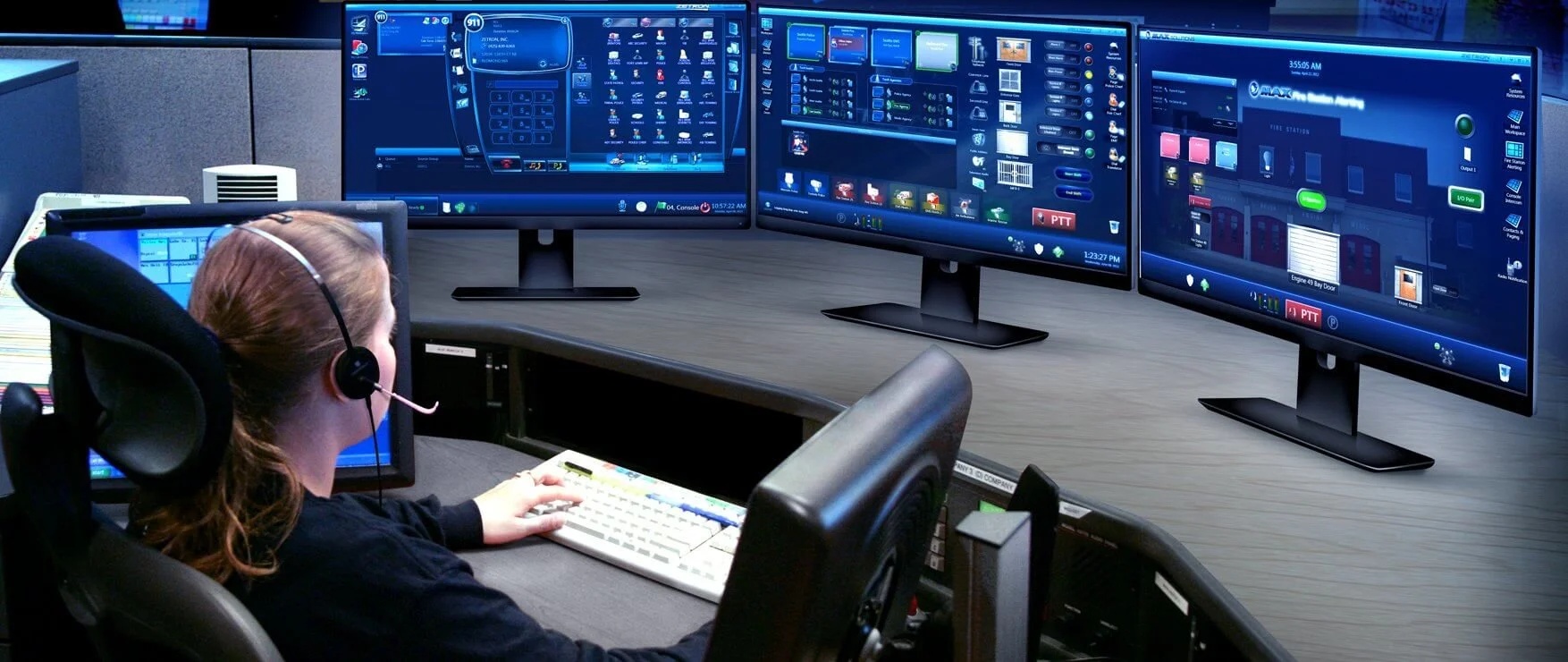
Consider the jobs around an emergency response. Someone receives the call. Someone establishes where help is needed. Resources must be assigned and contacted. A station may need an alert. Conversations may need to be retrieved later. Zetron sells technology across those jobs, along with the work of configuring and maintaining it.
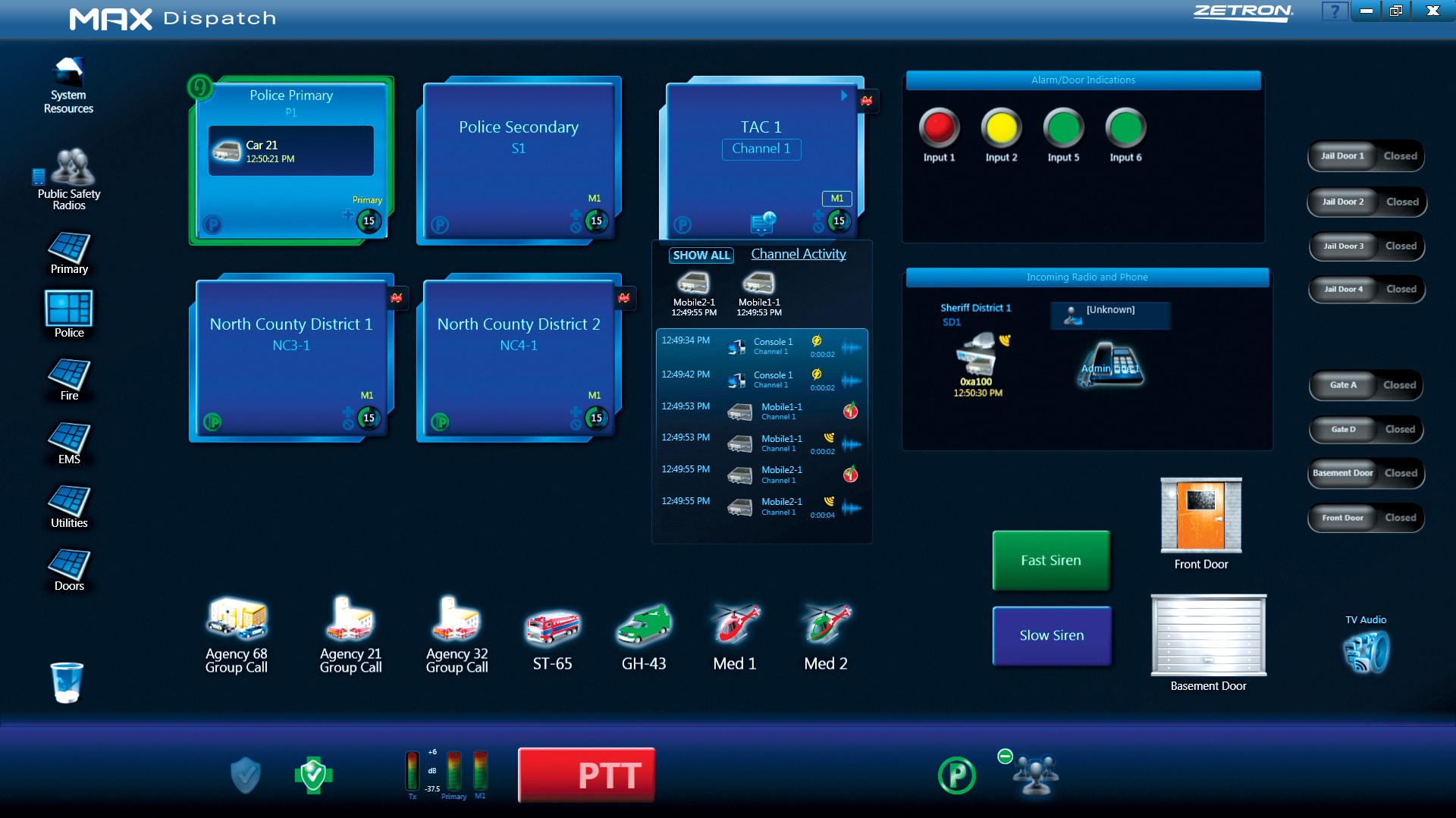
MAX Call Taking handles emergency voice and text workflows, with call queues and routing. Its RapidSOS integration can provide device-based location and additional data from enabled smartphones. MAX Dispatch manages communications with field resources and offers interfaces to radio systems and broadband push-to-talk services. MAX CAD and GIS address incident management and mapping; MAX Fire Station Alerting addresses the notification step.
ACOM serves integrated radio and telephone control-room operations. The wider range includes land mobile radio infrastructure, Cortex communications control and professional services. A buyer can therefore need one console, a linked suite or a larger integration project. The product names are less illuminating than the boundary between them: each boundary is a place where an operator might otherwise have to move information by hand.
Twenty-eight seats and one familiar vocabulary
Yarra Trams offers a particularly instructive example. Its project began in late 2014 because an analogue dispatch system was nearing the end of its life and could not expand. The replacement had to accommodate existing radios, a new operations centre and disaster recovery.
Zetron’s ACOM deployment comprised 28 console positions: 16 in the operations centre, 11 in recovery and one for administration. The old centre stayed active during installation, with radio resources connected to both systems until the changeover.
One small design choice deserves attention. The new screens kept the old radio-channel names. Familiar vocabulary survived a change of architecture. For an operator, that meant fewer things to relearn while doing the job.
The lesson travels well beyond tram dispatch. Preserve the conventions people already use successfully. Test the new environment while the old one remains available. A migration can introduce enough novelty without renaming the doors on the way out.
The US$45 million route to a wider portfolio
In 2021 Codan agreed to buy Zetron from JVCKENWOOD for US$45 million upfront. The completed transaction was announced in May. Codan combined the business with its North American critical communications operation, extending the offering from control-room systems into radio infrastructure. The price was an acquisition payment, rather than a venture round.
Zetron then acquired GeoConex in February 2023. The CAD and integration business had been a partner since 2009. Buying a long-standing collaborator brought development and services expertise into the company.
That August, Zetron added the Eagle business from NEC for approximately US$15 million. Eagle supplied control-room software and services to more than 100 emergency-services and transportation customers across the UK, Europe and Middle East. The addition included Cortex and other applications. The acquisitions help explain why today’s Zetron extends beyond the radio console familiar to older customers.
The handover belongs in the specification.AN EDITORIAL LESSON FROM THE CUSTOMER PROJECTS
A platform meets the installed world
In September 2025 Zetron announced SALUS, a platform intended to bring radio, telephony, broadband mission-critical communications and data together. It described cloud, on-premises and hybrid choices, with an iterative rollout through its command and control portfolio. That is a direction of travel, rather than proof that every component has already arrived.
The 2026 announcements show the variety of the installed world. In April, Zetron and GeoComm announced indoor mapping content inside Map Viewer for Iowa public safety workflows. A street address becomes more useful when an emergency occurs inside a complicated building and the operator can see relevant building information.
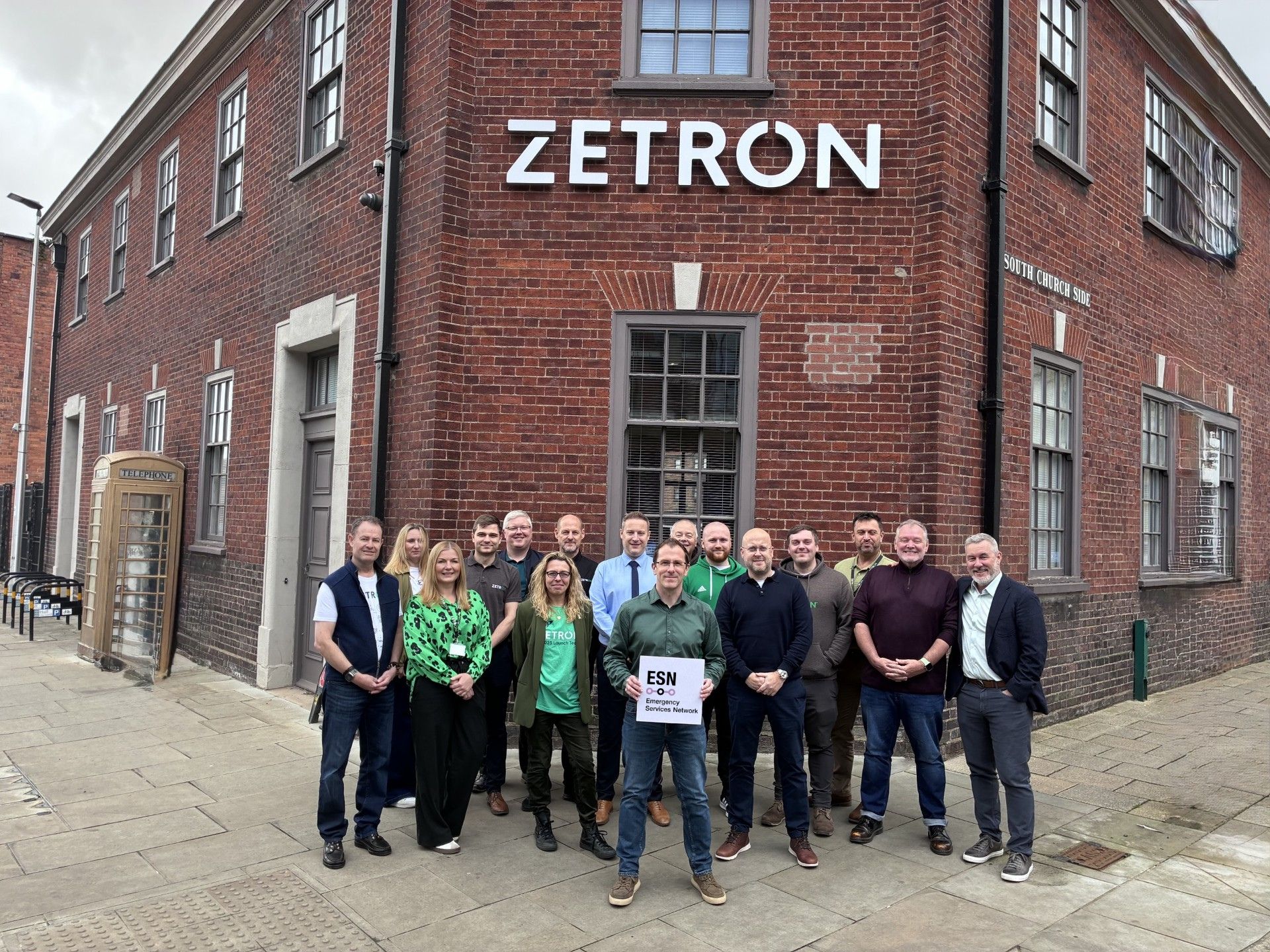
In June, Zetron announced specialist control-room work as a subcontractor to Softcat on Britain’s Emergency Services Network programme. Its scope includes development, testing, certification and deployment of an ESN-compatible upgrade.
Also in June, Esharah selected ACOM for Dubai Metro’s Blue Line. The planned solution links Airbus TETRA, TASSTA mission-critical broadband technology and telephony across primary, backup and remote locations. These are announced projects and integrations, each with its own delivery obligations.
Buy the handover, too
Zetron occupies a market with substantial alternatives. Motorola Solutions offers the MCC 7500E dispatch console; L3Harris offers Symphony. Reliability features and integrated workflows are concerns across the category. Zetron’s case for consideration rests on the combination of interfaces, configurable operator screens, a broad portfolio and a partner network that can handle installation and support. The right comparison depends on the buyer’s existing radio network and operational requirements.
Its business model follows that reality. It sells systems, software and infrastructure directly and through resellers and integrators, then supplies implementation and ongoing services. Public-sector buyers can also use listed cooperative and state contract vehicles. Standard support hours and service-contract arrangements vary by region. That detail belongs in the budget conversation.
The practical buying questions follow from the projects: which existing devices must connect, who owns each integration, where operators will work during the cutover, and who answers when equipment needs attention. A backup position is useful only when its network, access and procedures are ready. A familiar screen still needs training. Open standards still require compatibility checks.
These are also the conditions that limit the approach. An organisation cannot expect integration alone to compensate for an unprovisioned network, an untested recovery site or unclear support responsibilities. This is an inference from the implementation work, rather than a claim that any particular installation failed.
For anyone changing a busy system, the copyable idea is modest: include operators before the switch, preserve useful habits and arrange a place for the work to continue. Zetron’s more interesting product is the transition between two working days.
Zetron website · MAX Dispatch · MAX Call Taking · Yarra Trams project · Rural/Metro project · Company blog · Newsroom
LinkedIn · X · Facebook · YouTube: demos & interviews · Watch the MAX Call Taking demo