On January 25, 2024, Sejong Telecom did something that rarely earns a company a triumphant photograph. It stopped bidding. Korea was auctioning 28 GHz spectrum to would-be mobile-network entrants. By the end of the first day, the highest bid stood at KRW 75.7 billion. Sejong had left.
Its explanation was wonderfully prosaic: the price had passed the level at which it believed the business could be profitable. There were concerns about competition, too. The interesting detail in this story is a price ceiling calculated before the bidding, which the company was prepared to obey. The market offered Sejong a bigger identity. Sejong declined the asking price. The contemporary account of its withdrawal makes the reasoning plain.
- Sejong now emphasizes electrical and communications infrastructure construction.
- The fixed-line business became Sejong Networks in April 2024.
- Its industrial private 5G business transferred to SMEC in 2025.
- Snowman, its consumer mobile brand, entered a phased wind-down in 2026.
Read those changes together and an unusual company comes into focus. Sejong sits between the engineering that makes a connection possible and the services sold over it. The customer might need a building wired, a business connected to a cloud, or a broadcasting system supplied with software. These jobs belong to different parts of the corporate family. Putting them all under “telecommunications” saves space while losing much of the plot.
01 / The ambition had a price ceiling
A spectrum auction encourages an expensive kind of imagination. The licence is available now; the revenue arrives later. Once the bidding begins, the next increase can feel smaller than the ambition already invested in the room. Sejong’s departure provides a useful counterexample: a commercial threshold set before the excitement was allowed to determine the decision.
The highest bid at the end of day one, when Sejong had withdrawn. This was the auction’s reported bid level, not money Sejong paid.
The distinction matters. A bid is only one piece of a network’s economics. Equipment, deployment, operation and customers still have to follow. It is easy to admire a company for entering a market and harder to evaluate its refusal. Here, the company’s stated objection was specific enough to be useful: rising spectrum cost had undermined its profitability calculation.
Set the ceiling while the room is quiet. An auction is a poor place to discover your budget.
An editorial lesson from Sejong’s withdrawal
This is an interpretation of the decision, rather than a claim that every later restructuring sprang from that afternoon. The observable pattern is narrower, and more interesting: Sejong has repeatedly changed where a business sits, and whether it should remain in its portfolio at all.
02 / A telecom name, an electrician’s workload
The listed legal entity dates to 1992 and began trading on KOSDAQ in 2000. It adopted the Sejong Telecom name in 2015. Electrical construction became a substantial part of the story through JoilECS, acquired in 2018 and absorbed in 2019. The 2025 annual report describes construction as the parent’s principal business. That history helps explain why a familiar telecom name now appears above a rather different workload.
Its construction offering covers electrical, telecommunications and fire-protection work across power plants, public infrastructure, housing, production facilities and other buildings. The customer’s problem is concrete: systems must be installed and made to function in a physical place. Engineering experience, site coordination and safety practices belong close to the product.
There is no mystery subscription hiding inside a fire-protection installation. Construction earns money through projects. Network access earns money through service relationships. Enterprise software introduces yet another set of purchasing decisions. A company can participate in all three, but its competence in one does not automatically settle the economics of the others.
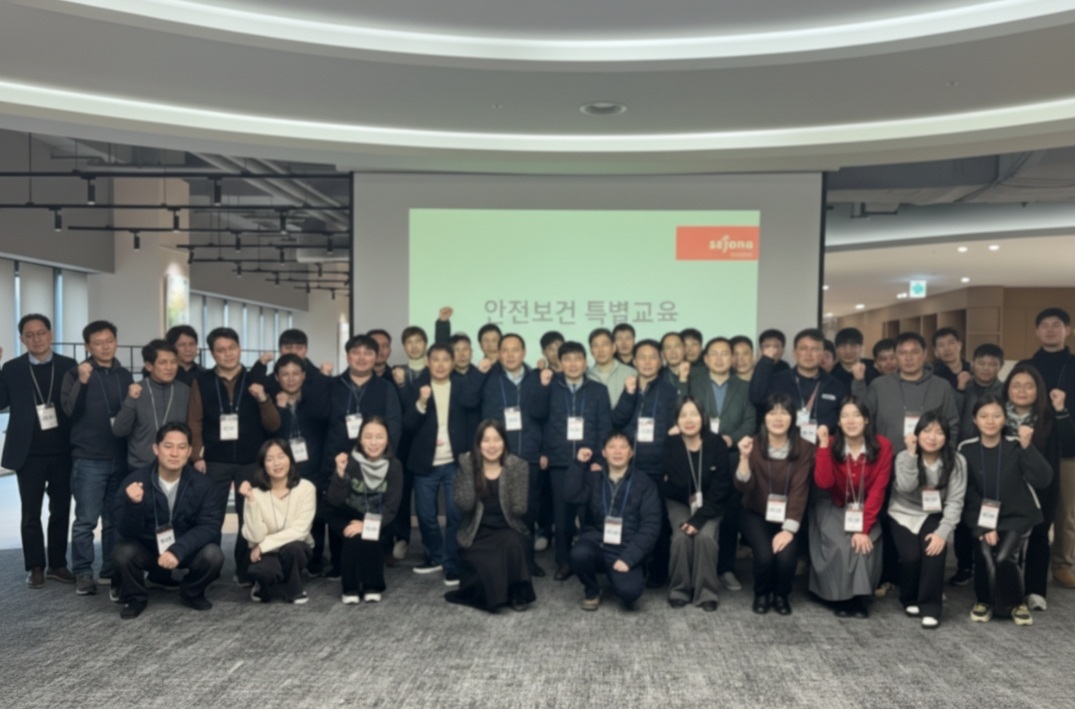
That February event offers a small, observable detail about the company’s priorities. Sejong brought site safety and health managers together for training and recognized strong safety-management performance. Its published values also emphasize autonomy, learning and cooperation. Policies are aspirations; the training is an activity. The two should be read with appropriately different confidence.
03 / Follow the business, not just the name
On April 1, 2024, the fixed-line division became Sejong Networks. Its catalogue is the infrastructure buyer’s version of a department store: domestic and international leased circuits, cloud connections, data-center space, internet exchange services and business telephony. It positions itself as a carrier-neutral operator, with services for enterprises and network customers.
For a buyer, neutrality is a question worth investigating. Which networks can connect? Which cloud destinations are available? What happens when a fault crosses a supplier boundary? Alongside alternatives such as KT, SK Broadband, LG U+ and Dreamline, Sejong Networks offers a specialist enterprise-connectivity proposition. The sensible comparison is made circuit by circuit, service commitment by service commitment.
Separate destinations: subsidiary creation, a business transfer, a sale and a service wind-down are different corporate actions.
The family also includes Aircode, acquired in 2021, with broadcasting and T-commerce software expertise. Sejong DX took over the blockchain business in April 2025. These distinctions have practical consequences. A company researching a vendor needs the actual contracting entity, the team responsible for delivery and the current owner of the service. A remembered brand is an inadequate purchasing specification.
04 / The shipyard made the network make sense
Sejong’s historical private 5G work provides a more vivid illustration of its integration skills. At HD Hyundai Heavy Industries and Hyundai Mipo, the applications included transmitting camera footage from cranes and giving workers access to drawings on tablets. The technology had an industrial assignment. Sejong’s deployment page identifies the shipbuilders as partners.
The lesson for a prospective industrial buyer is to begin with the workload. Camera video goes toward the control system; a drawing travels toward the worker. Coverage must follow the places where those devices operate. A busy production site is a better requirements document than a slogan about speed.
Workload illustration, not a technical diagram of a particular installation.
A private network still requires equipment, maintenance and operational responsibility. Its appeal depends on a sufficiently demanding local use case. For a modest site with little mobile traffic, existing wired connections or Wi-Fi may be perfectly adequate. The copyable practice is the requirements exercise: count devices, map movement, specify traffic direction and compare the complete operating cost.
Then came another boundary change. SMEC announced final approval of its acquisition of Sejong’s private 5G business in July 2025, following a May agreement. The machinery and robotics company gained an industrial communications business. Sejong’s deployments remain part of its history; they should not be mistaken for a current invitation to buy that same business from Sejong. SMEC records the transfer.
05 / Snowman melts; the cables remain
Snowman launched in 2012 as Sejong’s MVNO brand. It addressed a familiar consumer problem: the monthly mobile bill. An MVNO sells service using another operator’s network, making its proposition quite different from owning a national radio network. By July 2026, Sejong was pursuing phased termination and subscriber transfer to GoGo Factory. The July announcement described recommended GoGo Mobile plans intended to help customers move.
For those customers, the immediate question becomes continuity: the account, the plan and the transfer procedure. For anyone studying Sejong, the change shifts the emphasis toward infrastructure and the remaining group businesses. It also illustrates why a product catalogue needs dates. A mobile brand can linger in a company’s public description while its subscribers are being prepared for a different provider.
The newer software branch pursues another kind of connection. BlueBrick is described as an enterprise blockchain platform based on Ethereum and Hyperledger. BBRIC advertises indirect property investment from KRW 10,000, while TokenTrust concerns tokenized-securities technology. Sejong DX also has an enterprise AI offering, Trolley AI. These are distinct product propositions, with adoption and regulatory questions of their own.
The most useful reading of Sejong is therefore a dated map. Construction buyers should examine its delivery capabilities. Enterprise-network buyers should follow Sejong Networks. Industrial private 5G buyers should recognize the SMEC transfer. Snowman customers should follow the migration arrangements. The company’s value to a reader lies in that specificity: connection is a business with several addresses, several price structures, and occasional exits.
Sejong’s auction departure supplies the memorable image. A company saw a price it disliked and left the room. The subsequent portfolio changes make the image more useful. Ambition needs somewhere to live, and a business needs a reason to keep paying its rent.