mvno
(13)
The Smart Lock That Became an Insurance Company
Jared Brier and Eric Schneider set out to build a smart lock. The warranty research sent them somewhere stranger: a business that lets a cracked phone, a school laptop and a carrier checkout share the same machinery.

The Phone Plan That Was Too Clever for the Store
ItsOn made the wireless bill adjustable from the phone in your hand. Its own carrier disappeared, its software traveled the world, and then the company behind both ran out of road.

The Phone Company That Sold Its Phones
Helium built a phone carrier to prove a stranger-owned network could work. Then it sold the carrier and kept the network - a peculiar way to win a telecom argument.
The Phone Plan Hiding in Your Banking App
Gigs sells the machinery that lets a bank, airline or device maker become a mobile provider. The curious part is where the idea began: with eSIM codes in a spreadsheet.
Eseye Starts Where Most IoT Plans Go Wrong: Inside the Device
The British connectivity specialist sells a useful heresy: when an IoT project keeps dropping offline, the carrier may not be the first thing to blame. Eseye begins with the hardware, then makes hundreds of mobile networks behave like one managed system.
Tracey Weinberg Wants Telecom to Stop Treating Payments Like Plumbing
After years marketing the machinery behind digital commerce, the Vesta executive has a blunt thesis: approval rates deserve the same attention as customer acquisition. A single percentage point can be worth $300,000 a year to a 100,000-subscriber operator.
The Colorado Startup Teaching Your Phone to Diet on Netflix
Video eats the wireless network alive. A husband-and-wife team on Colorado's Western Slope built AI that puts it on a diet - on the device, before it ever clogs the tower.
The Biggest Cable Company You Forgot Was Family-Owned
For 60 years Cox stayed private, poured billions into cable, and let louder rivals grab the headlines. Then it agreed to a $34.5 billion merger that puts its name on the country's largest broadband network.
The Challenger Optus Couldn't Beat - So It Bought Instead
amaysim spent a decade undercutting Australia's big telcos with no-contract SIM plans and a name that promised things stay amazingly simple. In 2021 the network it rode on paid A$250 million to own it.
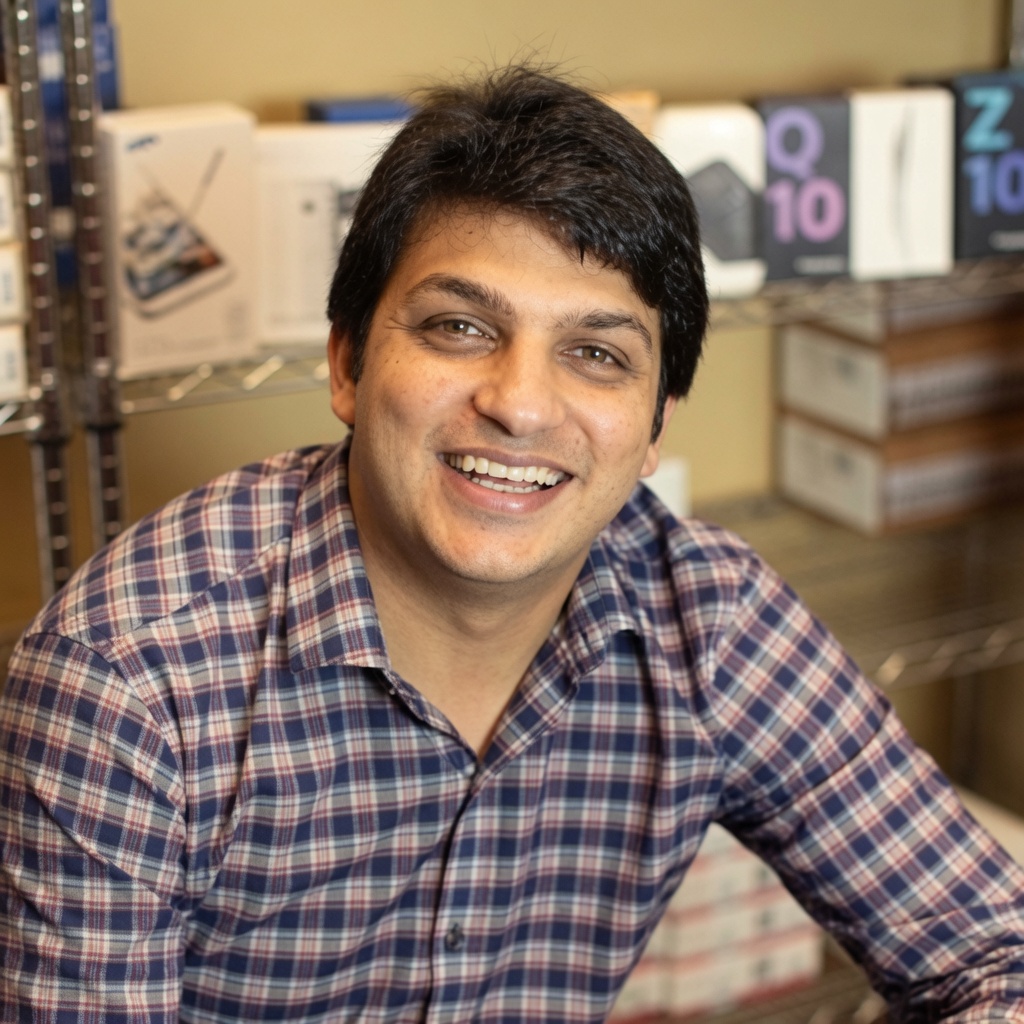
Ahmed Khattak
Ahmed Khattak is the founder and CEO of US Mobile, the only American carrier built natively on the public cloud that lets customers ride and switch between all three major networks (Verizon, AT&T, T-Mobile) on demand. A Pakistani immigrant who landed on an F1 student visa, he spent a decade clawing US Mobile to $100M in annual recurring revenue, then doubled it to $200M in nine months. Before that he co-founded GSM Nation, a $130M unlocked-phone marketplace that taught him how the carriers really make money.

TextNow
TextNow is a Waterloo-born wireless company that gives people phone service for free by letting advertisers, not subscribers, foot the bill. Started in 2009 as a way to dodge texting fees, it has grown into the largest provider of free mobile phone service in the United States, offering unlimited talk, text, and free essential data over a nationwide 5G network through its app-based MVNO. With roughly 10 million monthly active users and revenue north of $100 million, TextNow built a real telecom business on a simple bet: communication should be a right, paid for by ads rather than by the people who can least afford a phone bill.
US Mobile
US Mobile is a New York-based mobile virtual network operator that lets customers build their own wireless plans and switch between Verizon, AT&T, and T-Mobile on a single line. Branded internally as Warp (Verizon), Dark Star (AT&T), and Light Speed (T-Mobile), its 'Teleport' multi-network technology and eSIM-first approach have pushed it toward a self-styled 'Super Carrier' that now also bundles Starlink home internet. Founded in 2015 by Ahmed Khattak, it has grown from a niche unlocked-phone reseller to roughly a million customers.

Derek Ting
Derek Ting is the co-founder and CEO of TextNow, the Waterloo-based company he started in 2009 at age 19 with classmate Jon Lerner while studying computer engineering at the University of Waterloo. What began as a scrappy solution to outrageous carrier text messaging fees has grown into the only U.S. mobile provider offering unlimited talk, text, and free essential data on a nationwide 5G network. The TextNow app has been downloaded more than 200 million times worldwide, making Derek one of the most consequential quiet disruptors in American telecommunications - building a profitable, venture-light company that serves millions of users who can't afford traditional phone service.