The Biggest Cable Company You Forgot Was Family-Owned
For 60 years Cox stayed private, poured billions into cable, and let louder rivals grab the headlines. Then it agreed to a $34.5 billion merger that puts its name on the country's largest broadband network.
Ask most Americans to name a cable company and they'll say Comcast or Spectrum. Ask them about Cox and you'll get a shrug - even though Cox Communications wires roughly 6 million homes and businesses across more than 30 states, and even though it holds a title neither of those giants can claim. It is the largest privately held broadband company in the United States, and it has been controlled by the same family since 1898. The anonymity is not an accident. It is close to a strategy.
The story starts nowhere near a fiber trench. In 1898, James M. Cox bought the Dayton Evening News in Ohio for $26,000. Cox went on to serve as governor and, in 1920, ran for president of the United States with a young Franklin D. Roosevelt as his running mate. He lost to Warren Harding. What he built instead - a media company that would eventually become Cox Enterprises - outlasted the politics. In 1962 the company bought its first cable television systems. By 1982 the cable arm had a name: Cox Communications.
01 / What it doesFive ways into your home and office
At its core Cox sells connectivity by subscription. Residential broadband is the flagship, delivered over a hybrid fiber-coaxial network with multi-gig tiers and ongoing DOCSIS upgrades. Around it Cox stacked the rest of the bundle: cable and streaming TV on its Contour platform, digital home phone, Cox Homelife home security and automation, and - since 2023 - Cox Mobile wireless. On the commercial side, Cox Business serves roughly 355,000 accounts, and its RapidScale unit sells managed cloud and IT services to enterprises.
02 / The customersSix million connections, mostly out of the spotlight
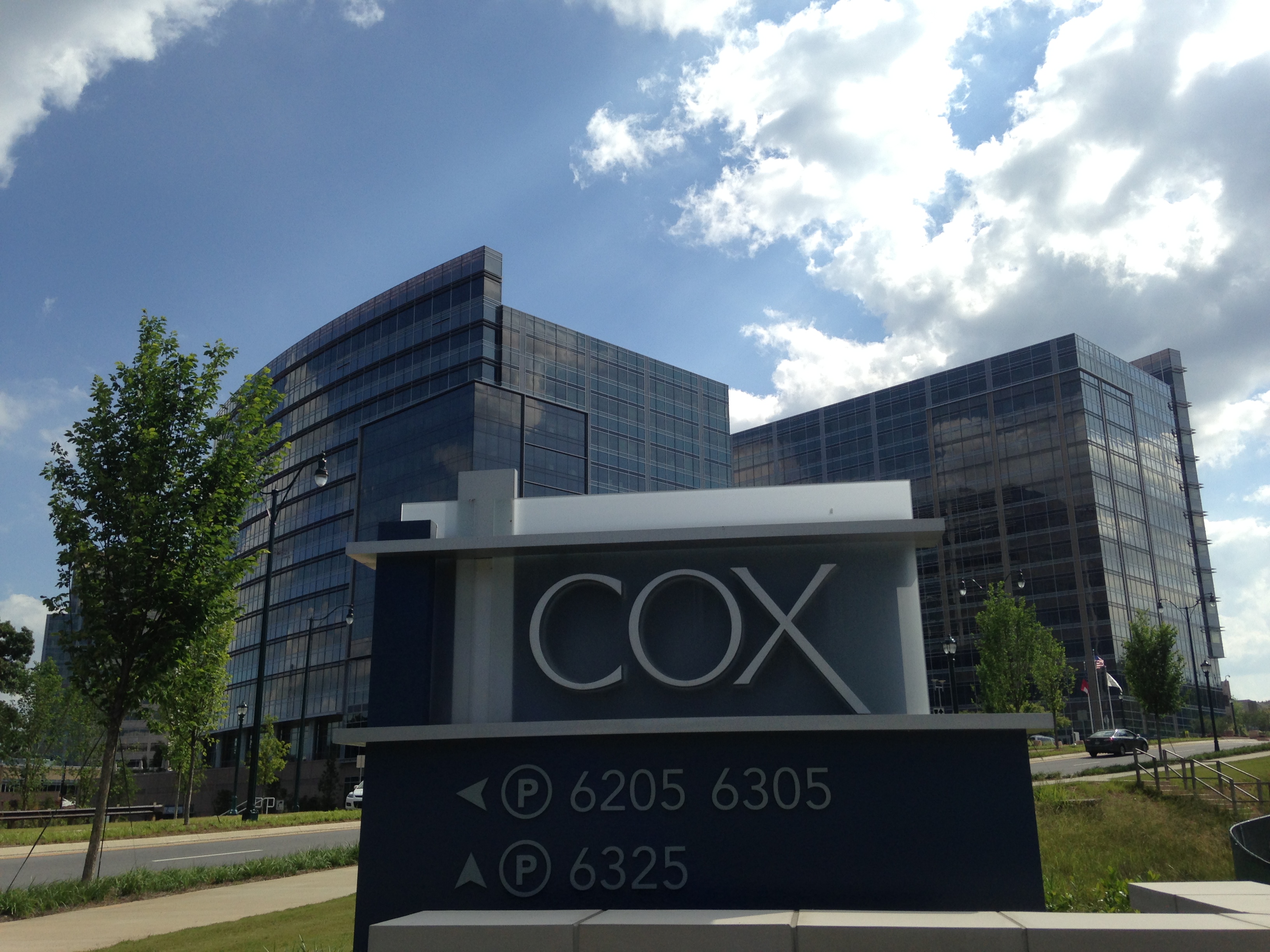
Cox's map skips the biggest coastal metros and concentrates on markets like Phoenix, San Diego, Las Vegas, Omaha, Wichita and Hampton Roads. About 5.9 million households take its internet; hundreds of thousands of businesses take Cox Business. That footprint - dense in the places it serves, absent almost everywhere else - matters for more than marketing. It is exactly why regulators found little to object to when Cox agreed to merge with Charter, whose Spectrum territory barely overlaps.
Our family has always believed that investing for the long-term and staying committed to the best interests of our customers, employees and communities is the best recipe for success.Alex Taylor, Chairman & CEO, Cox Enterprises
03 / The problem it solvesSomeone has to actually own the wire
Broadband is a capital problem before it is a customer problem. Trenching fiber, upgrading nodes and maintaining a network across 30 states costs money years before it earns any back - which is punishing for a public company managed to the next earnings call. Cox's answer was structural: stay private. With no shareholders demanding dividends, it says it plowed more than $15 billion into its network over the past decade, including DOCSIS 4.0 upgrades slated for the second half of 2025 and fiber runs to roughly 60,000 previously unserved rural households.
04 / How it's differentThe quiet operator in a loud industry
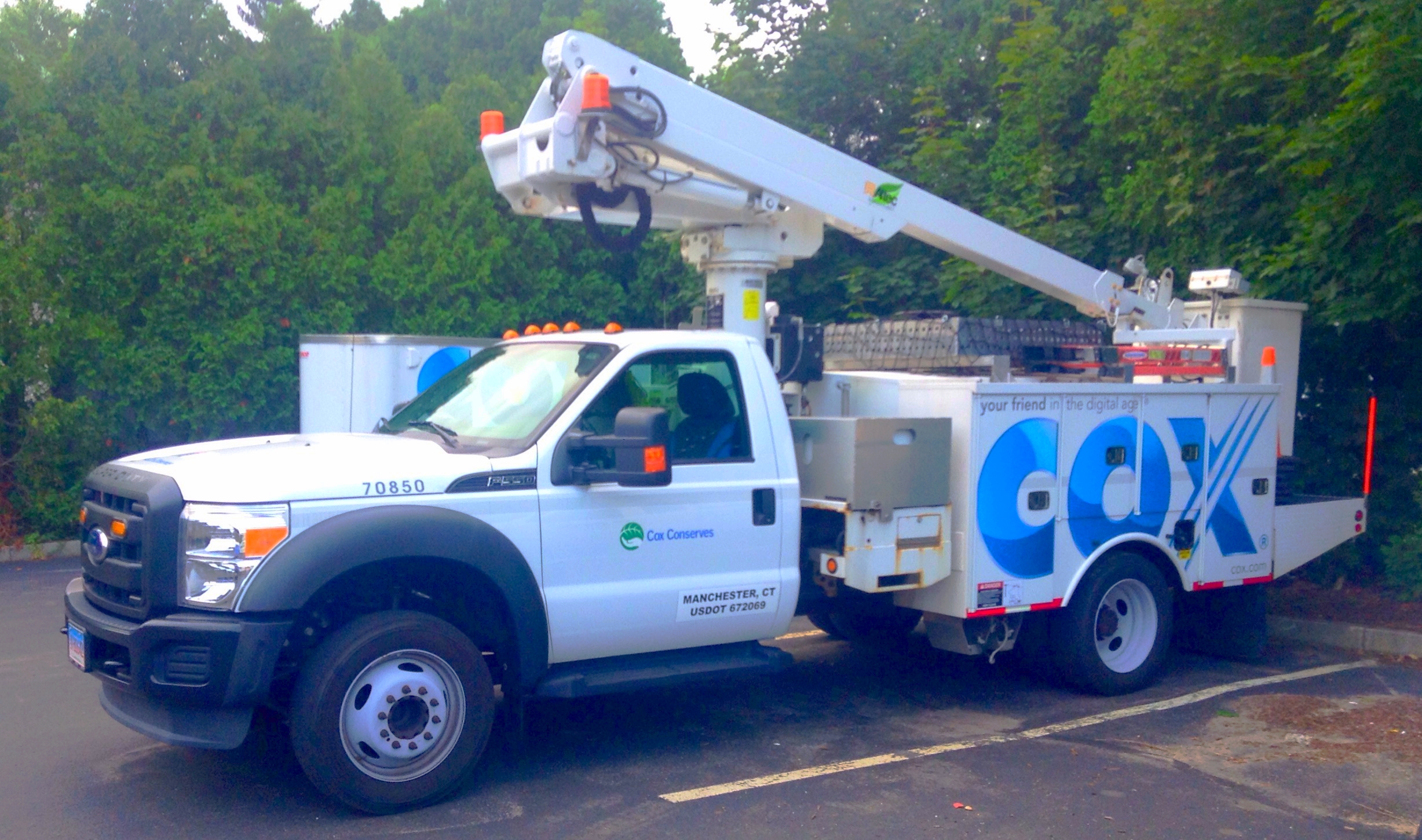
Cable is not known for restraint, yet Cox has collected 34 J.D. Power awards for customer satisfaction - including ten consecutive wins in residential phone - with almost none of the advertising theatrics of its rivals. It entered wireless without building a single cell tower, renting Verizon's network as an MVNO. It moved into enterprise cloud not by launching a product but by buying RapidScale in 2018. The pattern is consistent: borrow what you can, buy what you need, and skip the noise.
- Ownership shapes what you can build - private capital buys patience for infrastructure a public balance sheet punishes.
- Enter saturated markets by renting, not building: Cox Mobile runs on Verizon's towers.
- Buy your way into a new category quickly - RapidScale turned a cable company into a cloud provider overnight.
- Performance can beat promotion: 34 awards, almost no viral marketing.
- Structure deals around low overlap - it's what got the merger past regulators.
05 / Business modelRecurring revenue, reinvested
The money is monthly and sticky. Residential and commercial customers pay for standalone or bundled internet, TV, voice, mobile and home security; Cox Business adds higher-margin enterprise connectivity and managed IT through RapidScale. Cox Communications generated roughly $13 billion in 2024, with parent Cox Enterprises near $23 billion. Because there are no public shareholders to satisfy, more of that revenue can cycle back into the network - the flywheel that private ownership is built to protect.
We're honored that the Cox family has entrusted us with its impressive legacy.Chris Winfrey, President & CEO, Charter Communications
06 / The $34.5B twistThe buyer takes the seller's name
In May 2025, Charter Communications agreed to combine with Cox in a deal valuing Cox at $34.5 billion. The combined company will pass nearly 70 million homes and businesses across about 46 states, edging past Comcast as the largest broadband provider in the country. The most telling detail is the name. Charter is the acquirer - and it agreed to rename the merged company Cox Communications, keeping Spectrum as the consumer brand. When the buyer adopts the seller's name, the legacy was worth more than the balance sheet. The Department of Justice cleared the deal in September 2025 and the FCC followed, with the close expected in mid-to-late 2026.
07 / Where it fitsSmall by size, singular by structure
Measured in subscribers, Cox trails Comcast and Charter and sits ahead of players like Altice. Measured by ownership, it stands alone - the largest broadband company in America that never answered to Wall Street. That distinction is about to become the industry's defining brand: once the merger closes, the name on the country's biggest network will belong to a family that got its start selling newspapers in Dayton, Ohio, more than a century ago. The quiet company, it turns out, gets the last word.