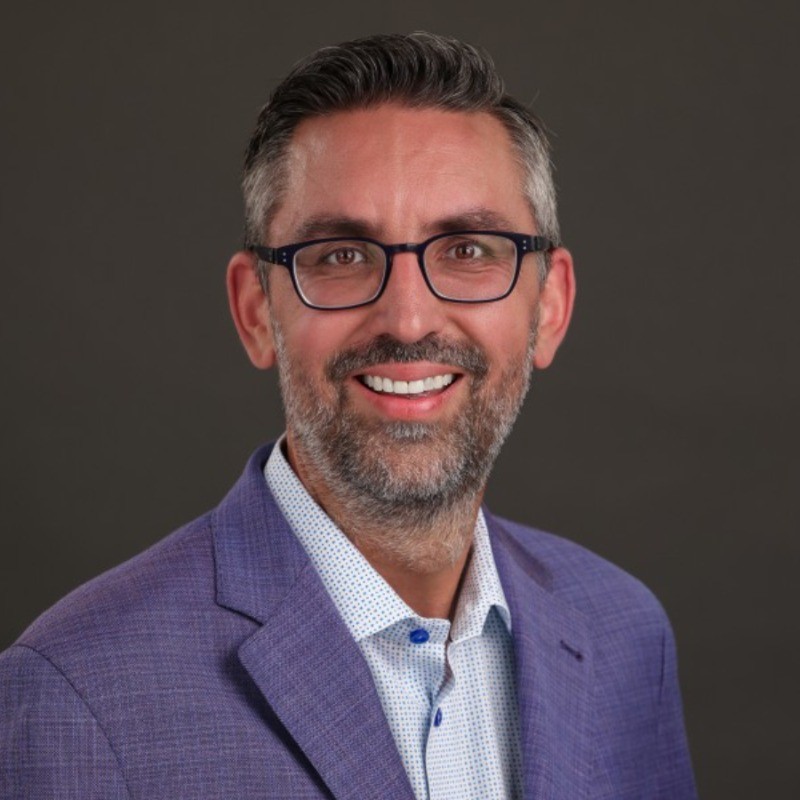
Running the Wire Everyone Else Won't
In 2016, Nathan Patrick stood at a podium in Nashville at the FTTH Connect conference and accepted the FTTXcellence Award - the industry's recognition for the person who has done the most to advance fiber-to-the-home deployment. He was the 13th person ever to receive it. He was Sonic's CTO. A $5,000 donation was made in his name to U.S. Ignite, a non-profit building next-generation internet applications.
Eight years later, he runs the whole company.
Sonic operates in territory most ISPs skip over or ignore. While the cable giants count subscribers in the millions and compete primarily on contract complexity and promotional pricing, Sonic has spent three decades wiring Northern California with fiber - the actual physical infrastructure, owned by Sonic, running to actual homes and businesses - and telling customers exactly what they're paying and why.
Patrick came up through the technical side. As CTO, he was responsible for Sonic's network engineering, the operations center, and both inside and outside plant construction - the unglamorous, expensive, relentlessly physical work of digging trenches and pulling cable. He didn't inherit a fiber network. He helped design and build one.
LA and Dallas residents have been overpaying for internet that underdelivers for too long. Sonic is here to change that by offering the fastest possible speeds at the lowest possible price we can in each market. We've been proving this model works in California for 30 years, and we're just getting started.
- Nathan Patrick, CEO of Sonic (2026)The quote lands harder when you know the context. Sonic is not a startup with runway and ambition. It is a 30-year-old company in Santa Rosa with 2,800 employees and $1.4 billion in annual revenue, expanding into two of the country's most competitive broadband markets - Los Angeles and Dallas - in 2026. Patrick isn't pitching venture capitalists. He's making a business case to consumers who have been burned by every ISP they've ever had.
Sonic's proposition is deliberately straightforward: symmetrical fiber speeds, no data caps, no contracts, free installation, and a privacy stance that treats customer data like it belongs to the customer. These aren't marketing differentiators bolted on top of a cable product. They're structural commitments that require building the infrastructure to honor them.
Software Company. Fiber Company. The Same Thing.
One of Patrick's most revealing framings of Sonic - carried consistently through his time as CTO and into his CEO tenure - is that Sonic is "a software company that happens to be an internet provider." The line isn't false modesty about the hardware. It's a statement about where Sonic's competitive advantage actually lives.
Most ISPs are infrastructure companies that provide software as a side effect. They own coaxial cable or cellular towers or satellite networks, and the customer-facing product is essentially a wrapper around access to that physical layer. Sonic's model inverts this: the infrastructure is the means, and the software-defined experience - the billing, the support, the speed management, the privacy commitments - is the product.
Patrick has been building that dual identity for years. In 2021, as CTO, he oversaw Sonic's Oakland expansion using ADTRAN's 10G Combo PON technology - a forward-looking choice that avoided locking the network into speeds it would outgrow. While major carriers were still debating fiber deployment timelines, Sonic was installing infrastructure capable of handling 10 gigabits per second in a mid-sized California city.
FTTXcellence Award - 13th Recipient
Awarded at the FTTH Connect conference in Nashville, Tennessee. The annual award recognizes leadership in fiber-to-the-home deployment. A $5,000 donation was made in Patrick's name to U.S. Ignite, a non-profit focused on next-generation internet applications. At the time of the award, he was Sonic's Chief Technology Officer.
The Oakland network expansion mattered not just for the customers who got faster internet. It demonstrated a model - community-scale fiber deployment, owned by a regional operator, using best-available technology - that Patrick is now replicating in much larger markets. Los Angeles and Dallas are not San Francisco Bay Area adjacencies. They are major metros with entrenched cable incumbents and decades of underinvestment in physical broadband infrastructure.
Taking that model to Texas and Southern California is the most ambitious version of Nathan Patrick's thesis about what a good internet company looks like.
Thirty Years. One Principle.
Sonic was founded in 1994 by Dane Jasper and Scott Doty, years before Google existed and a decade before social media changed how people thought about the internet. The company started as a dial-up ISP in Sonoma County and has continuously reinvented its technical stack as the medium evolved - from dial-up to DSL to fiber - without abandoning the foundational commitment to customer-first service.
Patrick inherited that legacy and appears to have absorbed it completely. His public statements on pricing, privacy, and network quality read less like messaging and more like engineering requirements: this is what the product has to do, so build it that way.
The no-data-caps policy is one example. For Sonic, eliminating data caps isn't a promotion. It's a design decision. When a network is properly provisioned, artificial consumption limits exist to extract money, not to manage congestion. Patrick's infrastructure background makes this argument from the inside - he knows what the network can carry and what the caps are actually for.
The privacy stance is another. Sonic has publicly resisted government data requests and advocated for digital privacy protections at the policy level. For an ISP - a company whose core product is routing your internet traffic - privacy commitments are not incidental. They are structural. Patrick has continued this posture as CEO.
The expansion into LA and Dallas in 2026 is the test of whether the model scales. Sonic is not a national carrier. It does not have the capital base of AT&T or Comcast. But fiber buildouts in California have consistently outperformed the competition on customer satisfaction, churn, and net promoter scores. The question Patrick is betting on is whether that performance advantage is repeatable in new geographies - and whether customers in Dallas and Los Angeles have grown frustrated enough with their current options to switch.
Given the current state of American broadband, that's probably not a long bet.
Building Block by Block
The Record
2016 FTTXcellence Award
Named the 13th recipient of the annual FTTXcellence Award at FTTH Connect in Nashville. Industry recognition for outstanding leadership in fiber-to-the-home advancement.
Gigabit Fiber Platform
As CTO, led development of Sonic's Gigabit Fiber Internet service and associated products including Fusion and FlexLink - the technical backbone of Sonic's competitive position.
10G Oakland Deployment
Oversaw Sonic's Oakland expansion using ADTRAN's 10G Combo PON technology - a future-proof infrastructure choice well ahead of what most regional ISPs were deploying.
National Expansion
As CEO, directed Sonic's 2026 push into Los Angeles and Dallas - the most ambitious geographic expansion in the company's 30-year history.
CTO to CEO Trajectory
Rose from technical leadership to the chief executive role, bringing a rare engineering-first perspective to ISP strategy and customer commitments.
Privacy-First ISP Model
Championed Sonic's positioning as a privacy-respecting ISP - no selling user data, resistance to government overreach, and transparency about what the network does and doesn't do.