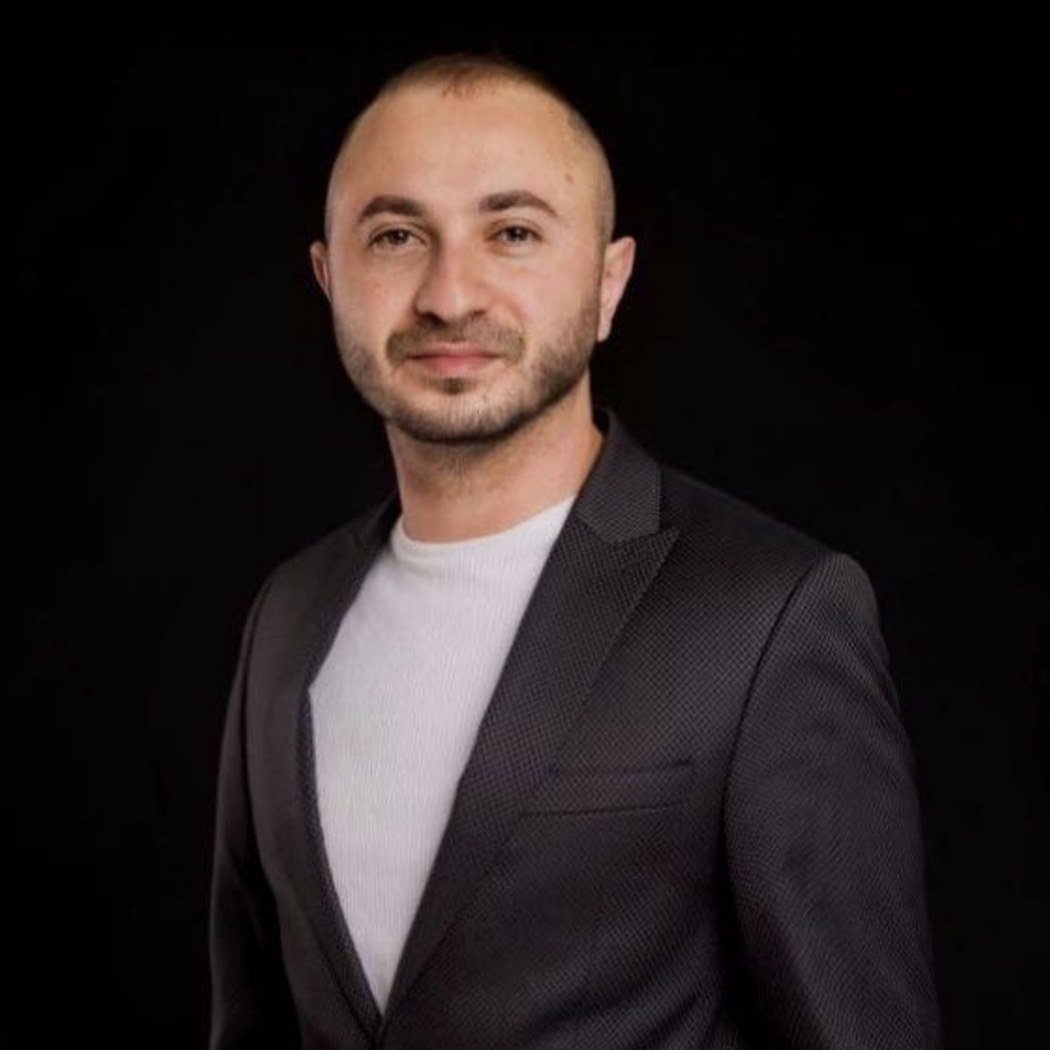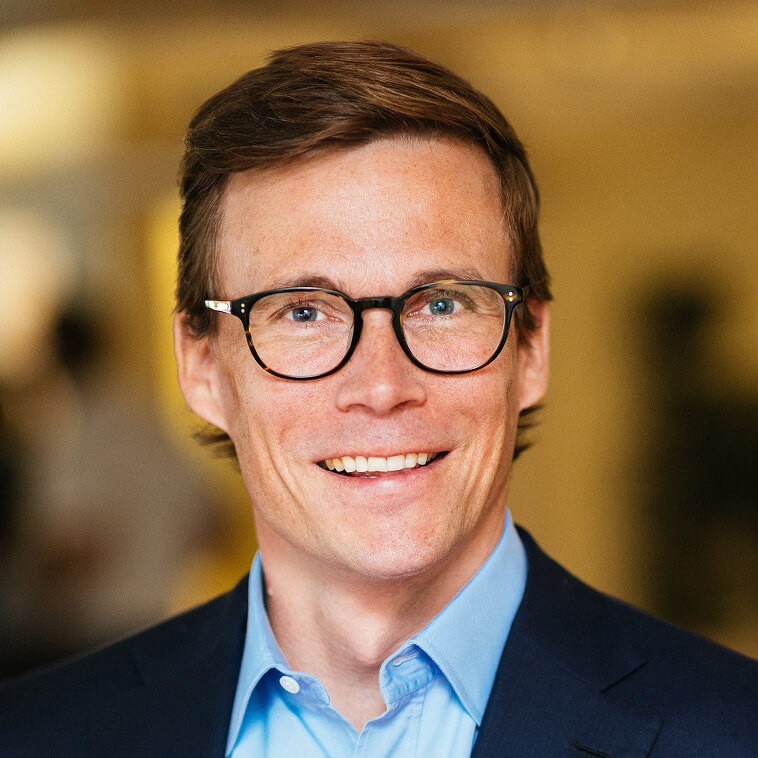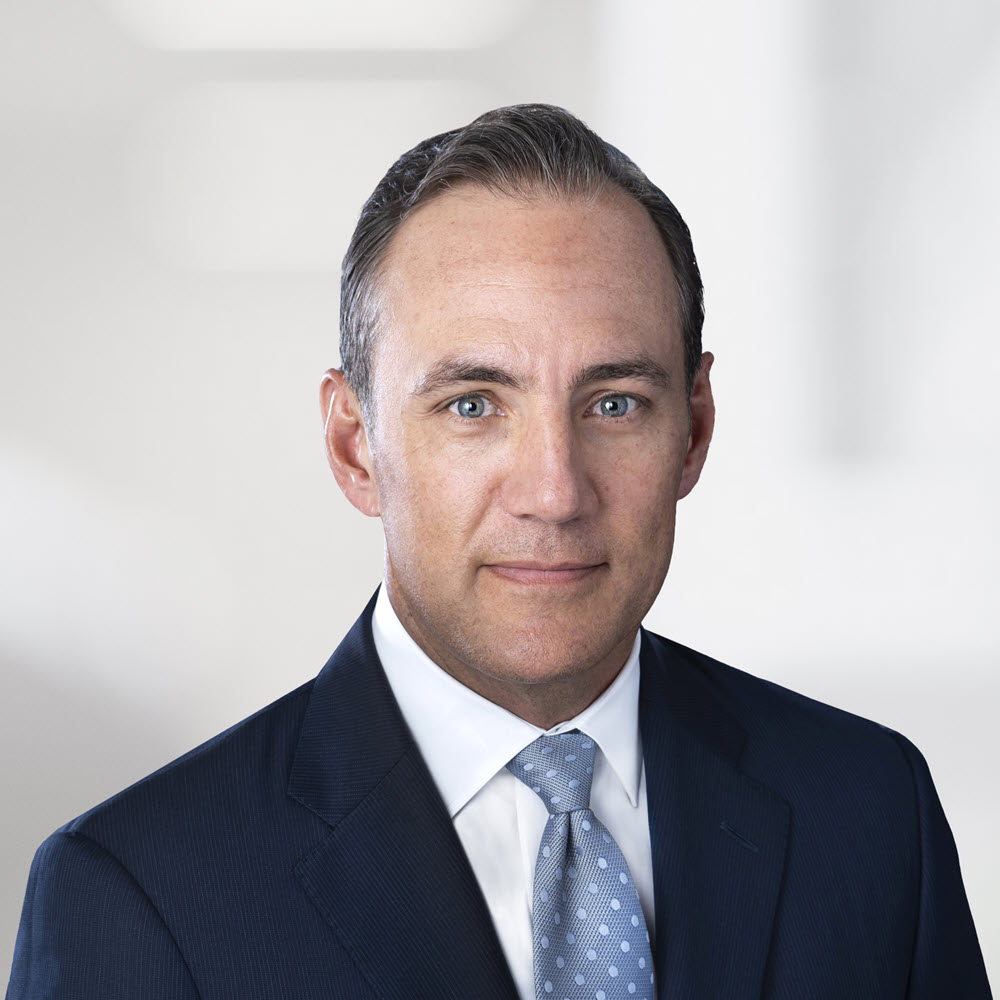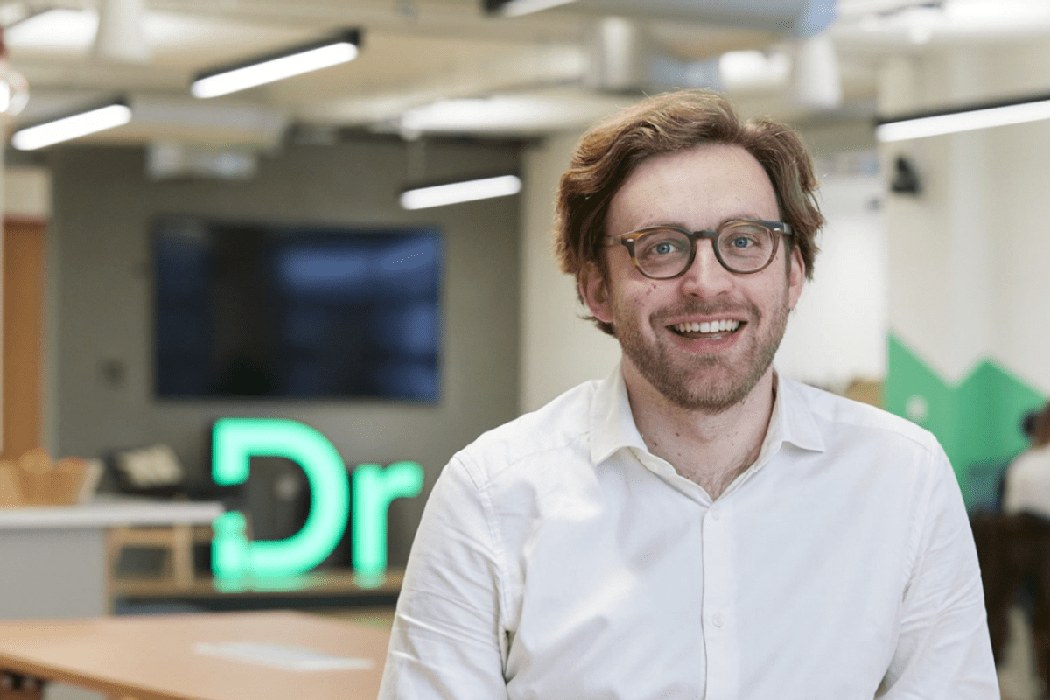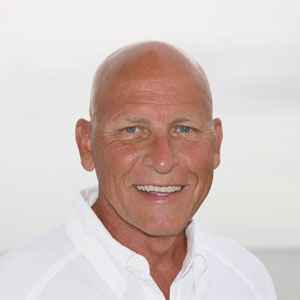
Wayne Osborne is the co-founder and CEO of Way2B1, a San Francisco-based software company building an integrated operating platform for families and family offices. He spent roughly 25 years working inside the family office world, including running the office of a high-net-worth family in the San Francisco Bay Area, before turning those firsthand frustrations into a product. Way2B1 unifies people, services, documents, and approval workflows behind bank-level security so family offices can make faster, more confident decisions. Osborne, who holds a Master of Divinity from Princeton Theological Seminary, also serves on the board of the San Francisco Child Abuse Prevention Center.

Walter Wu is the founder and CEO of Hirey, a Palo Alto based recruiting technology company he started in 2021. A Tsinghua University graduate who cut his teeth on the chat-based hiring app Hirect, Wu built Hirey into a platform that pairs recruiters with vetted candidates and, more recently, uses AI to compress time-to-hire in high-volume sectors like home care and healthcare staffing. Backed by roughly $14M in disclosed funding, Hirey has since leaned into AI-native recruiting and an agent-mediated introduction network for founders, early hires, and collaborators.

Will Lawrence is the co-founder and CEO of Bretton AI, the San Francisco company formerly known as Greenlite AI that builds AI agents for financial crime and compliance operations. After leading anti-money laundering product work at Facebook/Meta and building compliance infrastructure at Paxos, he started the company in 2023 to automate the slow, manual investigative work behind KYC, AML and sanctions checks. In February 2026 the company rebranded to Bretton AI and raised a $75 million Series B led by Sapphire Ventures, bringing total funding to roughly $90 million, with customers including Robinhood, Mercury, Ramp, Gusto and a set of OCC-, FDIC- and Federal Reserve-regulated banks.

Will Villanueva is the co-founder and CEO of DELV (formerly Element Finance), a San Francisco-based decentralized finance company building fixed and variable yield markets on Ethereum. A physicist by training and former Ethereum researcher at ConsenSys, he co-founded Element Finance with Jonny Rhea in 2020 to bring fixed-rate income to DeFi. The company raised a $32M Series A in 2021 at a $320M valuation and later rebranded to DELV, whose flagship product Hyperdrive reimagines fixed and variable rate markets with an everlasting-liquidity AMM design.

Wonjun Jeong is the co-founder and CEO of Supermove, a San Francisco software company that replaces the paper contracts and typewriters still common in the moving industry with a single cloud platform for sales, dispatch, scheduling, signatures, payments, and payroll. A UC Berkeley computer science graduate who wrote code at Facebook and Pinterest, he started Supermove in 2019 after moving 21 times and watching movers scratch his credit card number into a paper form with a fingernail. The company raised an $18 million Series A led by Andreessen Horowitz in 2022 and works with more than 100 moving and storage firms.

Xiaodan Zhuang, who also goes by Dennis, is the co-founder and CEO of Greptime, a company building GreptimeDB, an open-source observability database written in Rust that unifies metrics, logs, and traces. Before starting Greptime in 2022, he spent roughly 18 years in software infrastructure, including leading the intelligent monitoring team at Ant Group where he built ultra-large-scale time-series platforms for AIOps, plus earlier stints at Taobao/Alibaba and LeanCloud. He is a long-time open-source contributor (GitHub handle killme2008) behind projects like Aviator and xmemcached, and a self-described car enthusiast who races on tracks.
Woodrow 'Woody' Levin is the founder and CEO of Extend, a San Francisco company that built an API-first platform letting online merchants offer extended warranties, product protection, shipping protection and post-purchase solutions. Often described as 'AppleCare for everything else,' Extend raised a $260M Series C led by SoftBank's Vision Fund 2 in 2021 at a valuation above $1.6 billion. A serial entrepreneur, Levin previously founded BringIt (acquired by International Game Technology), Estate Assist (acquired by DocuSign, where he became VP of Growth), and the crypto asset fund 3.0 Capital. He also sits on the board of DraftKings.

Xin Du (Steven Xin Du) is the founder and CEO of WONZ Technology, a medical-device and digital-health startup building consumer devices for smokers and non-invasive bioelectronic products. A trained scientist with postdoctoral research experience tied to Dana-Farber Cancer Institute and Harvard Medical School, Du crossed from the lab into venture capital as a founding partner of Niniu Capital and founder of Neeo Fund before starting WONZ in 2020. He splits his world between a San Francisco base and a Hong Kong-registered company, running a small team that has filed more than a hundred patents and raised through Series A.
Yang Cai is the co-founder, chairman, president and CEO of VisualOn, a San Jose video technology company he started in 2003. A computer scientist with a Ph.D. from the University of Texas at Austin, Cai built his career in digital media engineering, including work on one of the industry's first real-time software MPEG-2 encoders. At VisualOn he has guided the company from cross-platform media player SDKs into AI-driven video compression, notably the Optimizer content-adaptive encoding engine that cuts streaming bitrates by 40 to 50 percent while lowering energy use.
Yifeng Zhang is a Silicon Valley semiconductor entrepreneur and the co-founder, President and CEO of Mauna Kea Semiconductors (MKSemi), a fabless chip company building the industry's lowest-power ultra-wideband (UWB) system-on-chip solutions for wearables, IoT, smartphones and automotive. Before MKSemi he co-founded Quintic, a low-power Bluetooth and wearable SoC maker whose BLE and wearable business was acquired by NXP in 2015. He holds 15 patents in IC design and UWB technology and has spent more than two decades in digital, analog and mixed-signal design across Philips Semiconductors, NXP and ams.

Giacomo Cambiaso is the co-founder and CEO of Public Technologies (PUBT, publicnow.com), a New York news-technology company that collects, organizes and distributes tens of thousands of press releases, company announcements and government statements every day in dozens of languages. A former newspaper journalist who spent about a decade reporting before turning to automation, he built and exited an earlier content-clipping venture and now focuses on making publicly disclosed information from companies, governments and economic organizations accessible to media outlets, information providers and financial institutions.
Yingqi Wang is the founder and CEO of ONES.com, an all-in-one software development and R&D management platform used by teams to plan, track, test, and ship software. A self-taught programmer since fifth grade, he spent seven years at Kingsoft working on WPS and antivirus products, then founded Zhengdian Technology, whose Zhengdian Alarm Clock app reached over 100 million users. After a stint as an entrepreneur-in-residence at Morningside Venture Capital, he launched ONES in 2015 to give engineers and technical managers a single connected toolchain. ONES has raised roughly $100M+ across rounds and serves large enterprises across China and beyond, positioning itself as a direct challenger to Atlassian.

Bruno Lempernesse is the CEO of MDClone, an Israeli-founded healthcare data platform that lets organizations explore and share sensitive patient data using synthetic data that preserves privacy. A 25-year veteran of healthcare technology, data science, and life sciences, he joined MDClone as President of North America in September 2024 and stepped up to Chief Executive Officer in 2025. Before MDClone he was CEO of Carevive, a cancer-care and real-world-studies company acquired by Health Catalyst in 2024, and earlier spent two decades at Cegedim building its data and research business, plus leadership roles at SHYFT Analytics and Acorn AI (a Medidata company). He is an early pioneer of longitudinal patient data drawn from electronic medical records across Europe and the United States.

Yogi Goel is the co-founder and CEO of Maxima, an agentic AI platform that automates the month-end accounting close for enterprises. He spent two decades in the office of the CFO - auditing at EY, running M&A and IPOs at Citi and Barclays, and seven years at Rubrik as a strategic finance leader, where he helped scale the company from $5M to $900M in ARR through its 2024 NYSE IPO. In 2024 he founded Maxima with Akshaya Srivatsa and Jack Liao, raising $41M from Redpoint Ventures, Kleiner Perkins, and Audacious Ventures to rebuild accounting operations around AI agents that reconcile, post journal entries, and co-prepare financial reports alongside human teams.

Yong Kim is the co-founder and CEO of Wonolo, an on-demand staffing marketplace that connects businesses with more than one million frontline workers across the United States. Born in Seoul, he moved alone to a New Hampshire boarding school at 15, graduated as valedictorian, and went on to the University of Chicago and Harvard before a career in tech investment banking at Deutsche Bank. A stint at a Coca-Cola innovation accelerator exposed the broken state of hourly staffing and led him to launch Wonolo in 2014. The company has raised roughly $200 million, including a Sequoia-led round, and Kim has become a prominent voice for treating gig and hourly workers with dignity, flexibility, and fair pay.

Zouhair Belkoura is the founder and CEO of Keepsafe, a San Francisco company that builds a family of consumer privacy apps used by tens of millions of people worldwide. A former electrical engineering PhD who researched mobile video coding, he has built Keepsafe around the idea that privacy is a form of freedom and that ordinary people deserve simple tools to control their personal photos, messages, and browsing. He is a frequent writer and speaker on the difference between abstract data privacy and the content privacy that actually matters to people's daily lives.
Yu-Sung Chang is the co-founder, CEO and CTO of Vivity AI, an industrial AI company building software for heavy industries like petrochemicals, shipbuilding and manufacturing. A computer scientist with a Ph.D. from Stony Brook University, he spent years at Wolfram Research working on Mathematica's graphics and geometry systems before moving into e-commerce technology leadership as CTO of Korea's SSG.COM and co-founding the healthcare AI startup Huma.AI. In 2022 he founded Vivity AI, which raised roughly $8.4M in a round backed by Hanwha Systems, to close the gap between the physical and digital worlds on the factory floor.
Zack Kanter is the founder and CEO of Stedi, an API-first, cloud-native healthcare clearinghouse that routes eligibility checks, claims, and electronic payments between providers and insurers. He started his first company at 16, building a bootstrapped auto-parts wholesaler (Proforged) that he ran for roughly 13 years before selling it to Huron Capital. He then spent years wrestling with electronic data interchange (EDI), the arcane plumbing of business-to-business transactions, rewriting Stedi's codebase about eight times before finding extraordinary traction in healthcare. Along the way he became widely read for essays like 'Why Amazon is eating the world.' In March 2026 Stedi raised a $50M Series C led by Addition, bringing total funding to about $142M.
Brian Stempeck is the CEO and co-founder of Evertune AI, a New York startup that helps brands measure and improve how they show up inside AI models like ChatGPT, Gemini, Claude and Perplexity. He spent 11 years on the executive team of The Trade Desk as employee number eight, serving as Chief Client Officer and later Chief Strategy Officer and a board member, and helped grow the company from a tiny team to a public company worth tens of billions. Before adtech he was a management consultant at Bain & Company and, earlier still, a political journalist. He founded Evertune in 2024 with former Trade Desk colleagues to build the category he calls Generative Engine Optimization.
Brian Tervo is the Boston-based Chief Executive Officer of ThirdChannel, a retail execution and merchandising technology company that pairs on-the-ground field teams with real-time software so brands can see and improve how their products show up in physical stores. A longtime operator in the B2B software and retail space, he spent roughly 14 years at supply-chain integration firm TIE Kinetix in senior North American and global roles before leading ThirdChannel. He writes regularly about closing the gap between retail strategy and what actually happens on the store floor.
Brian Wilson is the Chief Executive Officer of Kion, a cloud governance and management software company based in Columbia, Maryland. He was appointed CEO in October 2025 after more than two decades leading SaaS, observability, and customer experience companies, including roles as CEO of Monetate, COO of Kibo Commerce, and Chief Customer Officer at Zenoss. At Kion he is driving a 'FinOps+' strategy that combines cloud cost management, governance, and policy automation for multicloud and AI-driven workloads. He is based in Austin, Texas, and is a member of the Forbes Technology Council.
Bryce Jones is the CEO and co-founder of Flash Forest, a Toronto-based cleantech startup that uses autonomous drones, AI, GIS mapping and biodegradable seed pods to replant forests faster and more cheaply than traditional hand-planting. A former tree planter and biology graduate from British Columbia, Jones launched Flash Forest in 2019 after seeing how far reforestation methods lagged behind industrial logging technology. The company's stated goal is to plant one billion trees by 2028, with a focus on land that is unsafe or uneconomical for human crews, including post-wildfire terrain.
Caroline Hodge is the co-founder and CEO of Dimer Health, a clinician-led company building a technology platform for the fragile period right after a hospital stay. A physician associate with 18 years of emergency medicine experience, she previously ran national clinical operations at DocGo and Envision Healthcare before starting Dimer in 2023 with Team8. Under her, Dimer has raised $13.5M in Series A funding and is trying to establish a new care specialty she calls the Transitionist.
Caroline Shleifer is the founder and CEO of RegASK, a Singapore-based regtech company that pairs an AI engine built for regulatory content with a global network of 1,800+ subject matter experts. A pharmacist and scientist by training with a PharmD-PhD in medical physics from the University of Paris V, she spent years leading regulatory and scientific affairs across Asia Pacific at SPRIM before founding RegASK in 2018 to bring regulatory work into the AI era.
Cayce Ullman is the CEO and co-founder of ListingSpark, an Austin-based real estate technology company that lets homeowners list, market, and sell their properties for a flat daily fee instead of a traditional agent commission. Before ListingSpark he spent more than two decades building software and engineering teams, including co-founding the media platform Plex, leading product development at security firm AlienVault, and holding engineering roles at Cisco's IronPort division and E*TRADE. He holds a computer science degree from the University of Southern California and blends deep technical experience with a consumer-first approach to selling homes.
Cédric Kovacs-Johnson is the founder and CEO of Flume Health, a New York-based software company that connects the fragmented healthcare data ecosystem so payers and employers can build and run health plans more efficiently. A chemical engineer by training, he first made his name as co-inventor of Spectrom, a full-color 3D printing technology that won the 2014 Collegiate Inventors Competition and was acquired by MakerBot. He founded Flume Health in 2017 and has raised more than $40 million in venture funding, including a $30 million Series A in 2022.
Charles Bonello is the co-founder and CEO of Vivvi, a New York-based company reinventing child care and early learning by partnering with employers to make full-time and backup care more accessible and affordable for working families. Before Vivvi, he co-founded Grand Central Tech, one of New York's largest and most selective startup communities, and worked in investment research and venture financing. His work is driven by a conviction that child care is the single biggest pain point for working parents, and he has built Vivvi into a network of NYC campuses backed by $17.2 million in funding.
Chase Garbarino is the co-founder and CEO of HqO, a Boston-based proptech company whose software helps commercial landlords manage the tenant and workplace experience across hundreds of buildings worldwide. Before HqO, he built and sold Streetwise Media, the company behind local innovation-news brands like BostInno and AmericanInno, and later founded VentureApp. A lifelong Boston sports fan and runner with an entrepreneurial streak going back to reselling Pogs in fifth grade, Garbarino has spent more than a decade using technology to build networks and communities for startups, small businesses, and now the commercial real estate industry.
Ché Wijesinghe is the CEO of Cape.ai (formerly Cape Privacy), a New York and Halifax based company that builds AI for confidentially processing sensitive data across vision, voice and language models. A 25-year veteran of the enterprise software industry, he has led field operations and revenue at data and analytics companies including Cisco, Composite Software, OmniSci/HEAVY.ai and Neokami before taking the helm at Cape, where he has steered the company from an encrypted machine learning platform toward AI tools for document validation, compliance and financial services.
Cheng Zhang is the co-founder and CEO of Character Biosciences, a precision-medicine biotech that flips traditional drug discovery on its head by starting with patients instead of targets. Trained in mathematics and philosophy at Duke and shaped by years at UBS, Oliver Wyman, and Pfizer, Zhang built Character around a proprietary database of thousands of patients with age-related macular degeneration, combining genomics, longitudinal clinical data, retinal imaging, and machine learning to reclassify common diseases of aging into genetic subtypes. In 2025 the company raised an oversubscribed $93 million Series B to move its lead eye-disease candidates into the clinic.