cloud-migration
(79)
The Machine That Refuses to Guess
Mechanical Orchard found a lucrative use for AI: distrusting it. Its software rewrites the mainframe one proven behavior at a time - because the old machine, however awkward, is still the only witness everyone believes.
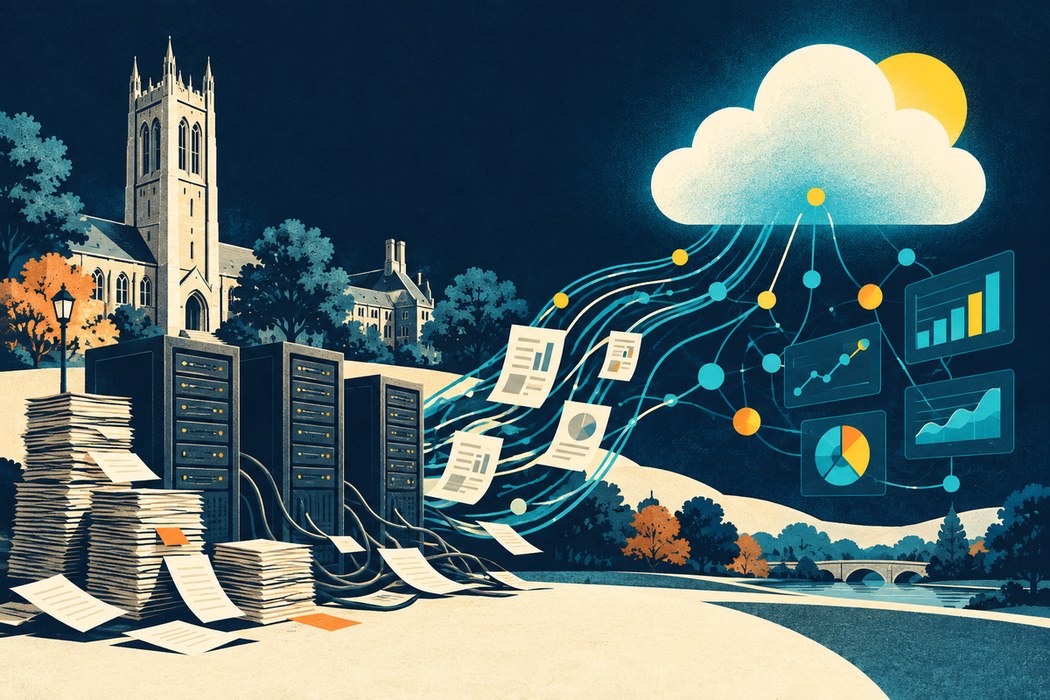
UMass Broke the Reporting Bottleneck for 70,000 Students
Aging infrastructure made routine answers slow and expensive. Pythian helped UMass move analytics to Oracle’s cloud without disruption—and put self-service reporting in staff hands.

Switch Software Knows Where the Hours Go
Idle cloud servers. Repeated invoice entry. Timesheets nobody enjoys. The Uruguayan software company has built a business tackling the expensive chores hiding inside banks, insurers and retailers.

Loka stopped chasing a hit. It started building yours.
The Silicon Valley consultancy found its business in other people’s hard problems. Today, its work runs from investment proposals to drug discovery, with an unusually concrete test for AI: does it make it into use?

Adaptavist sells the work that comes after the software
Buying Jira is the easy part. Adaptavist has built a business around the migrations, integrations and human habits that determine whether enterprise software earns its keep.

Made Tech wants government to work. Start with the wrong queue.
The British consultancy builds the digital plumbing behind public services. Its most revealing lesson: before speeding up a process, check whether it sends people to the right place.

Applicable does the Microsoft work nobody puts in the launch video
Splitting a 60,000-person company’s Microsoft environment takes more than moving mailboxes. Applicable has built its business around the migrations, permissions and midnight support that keep corporate life running.

Cloudreach and the art of moving less to the cloud
At Kurtosys, Cloudreach identified 39 applications to move and 19 to retire. That tells you more about this cloud consultancy than a wall of partner badges ever could.

Infinite Lambda Wants to Fix AI’s Plumbing
Before an AI agent can give a useful answer, somebody has to sort out the data. Infinite Lambda turns that unglamorous job into software, migration projects, and teams that can run the result.

Tribal Group’s £66.5 Million Bet on Making University Software Boring Again
After one costly implementation failed and a £172.3 million takeover fell short, Tribal found a less theatrical growth plan: move the software universities cannot switch off into the cloud - carefully, repeatedly and on subscription.

The 4,000-Person Insurance Specialist Hiding Behind Your Policy
ValueMomentum spent 25 years learning the unglamorous machinery of property and casualty insurance. Its wager is that knowing where policies, claims and customer letters actually jam is more valuable than being the biggest consultant in the room.

The 30-Year-Old Google Cloud Shop That Stopped Selling Hours - and Started Selling Birds
Onix spent decades helping enterprises move into Google Cloud. Then it bought a flock of migration tools, rolled them into Wingspan, and made a pointed bet: the next consulting giant will need fewer billable hours and more software that remembers what the consultants learned.

The SAP Upgrade Bottleneck smartShift Turns Into a Five-Week Job
Its target is not SAP itself. It is the decades of custom ABAP code wrapped around SAP - the technical debt that turns a necessary upgrade into a risky, expensive rewrite.

The Oracle Whisperer Behind America's Unflashiest Cloud Migrations
Mythics built a durable business in the least glamorous corner of cloud computing: moving the databases, payroll systems and public records that cannot be allowed to blink. Now private-equity backing and a pair of acquisitions are turning an Oracle specialist into a full-stack modernization shop.

Appfire Killed Its Side Projects - Then Built a $200M Software Shelf
The company spent 12 years mixing software with services. Then it made one sharp bet on marketplace apps, raised $149 million, and turned the missing pieces inside Jira into a profitable portfolio with more than $200 million in annual recurring revenue.

Kanerika Wants to Turn the $80 Change Request Into a 12-Week Migration
The Austin consultancy built software to automate the least glamorous work in enterprise tech. Its real test is whether FLIP can make migrations faster without turning governance into cleanup duty.

Muhammad Haq Is Betting the AI Boom on the Boring Part
The OnStak founder spent more than a decade in enterprise infrastructure. Now he argues that AI's decisive contest will be won after the demo - in the untidy work of data, governance and organizational change.

Arvind Rajan Is Teaching Old ERPs New Tricks
After two decades inside enterprise software, Astute Business Solutions co-founder Arvind Rajan is betting that the useful future of AI will arrive through live demos, trusted data and upgrades to systems companies already depend on.

Humayun Sohel Built the Invisible Systems - Then Built a Business Around Them
Before cloud migration became a boardroom phrase, Humayun Sohel was working closer to the machine. His path from embedded systems and optical-network firmware to Questivity offers a useful lesson in turning technical depth into practical judgment.

Prasad Rao Built a Career by Finding Better Words for Hard Problems
Before the awards, public listings and decades in enterprise technology, a Telugu-medium engineering student solved a vocabulary problem with three improvised words. That instinct - work with what you have, then make the system better - still explains Prasad Rao's career.

Jira Won the Cloud Race Microsoft Project Never Finished
Jira made its cloud edition the destination. Microsoft folded Project for the web into Planner while its desktop product kept specialist powers - a split that shows what a finished cloud migration really requires.

The Microsoft Cloud Has a Fine-Print Problem - Interlink Built a Business Translating It
The Mason, Ohio consultancy found its lane between Microsoft's sprawling catalog and the people expected to make it all work. Its pitch is less cloud cheerleading than practical translation: buy less, secure it properly, and get employees to use it.

Damovo’s $140 Million Bet on Keeping Enterprise Tech Boring - and Why Its No-Rip-and-Replace Playbook Works
Most digital transformations begin with a demolition fantasy. Damovo makes its money on the harder promise: keep the phones ringing, the network breathing and the auditors calm while old infrastructure learns new tricks.

AllSaints Cut Cloud Costs 75% Without Going Dark
AllSaints rebuilt its digital backbone on Google Cloud, trading idle servers for elastic infrastructure. The result: lower costs, faster pages and a migration customers never saw.

The Cantu Brothers Sold Used Servers From a Basement. Now They Wire the Cloud for the FIFA World Cup.
For 29 years, two brothers from Bellevue have made a business out of the boring middle - the wiring, racking, migrating, and securing that every enterprise needs and few can do end to end.
The Company That Maps the Machines Nobody Remembers Buying
Raj Jalan spent most of every IT migration just figuring out what his clients actually owned. So he built the tool that does it automatically - and sold it to Freshworks for $230 million.
The Cloud Was Supposed to Cut Costs. Escala 24x7 Built a $50 Million Business Making Sure It Did.
Alejandro Planas spotted the cloud's hidden catch early: renting infrastructure was easy, but running it safely and economically was not. Thirteen years, 19 countries and a majority acquisition later, Escala 24x7 has turned that gap into an enterprise cloud-operations business.

Langate Spent 30 Years Learning What Old Software Won’t Tell You
The New York-born, Ukraine-powered engineering company has built a quiet specialty: modernizing the healthcare and enterprise systems that cannot afford to stop working while they change.
The Company That Makes 12 Business Systems Behave Like One
Net at Work has spent 30 years becoming the general contractor for the mid-market tech stack - the firm called when ERP, CRM, payroll, cloud, and security need to stop arguing and start working together.

The 6,000-Engineer Firm That Bet Its Whole Business on Treating People Like People
For nearly three decades DataArt has quietly engineered the software behind trading floors, booking engines, and clinical trials - and it did it by building the company around retaining people, not just billing hours.