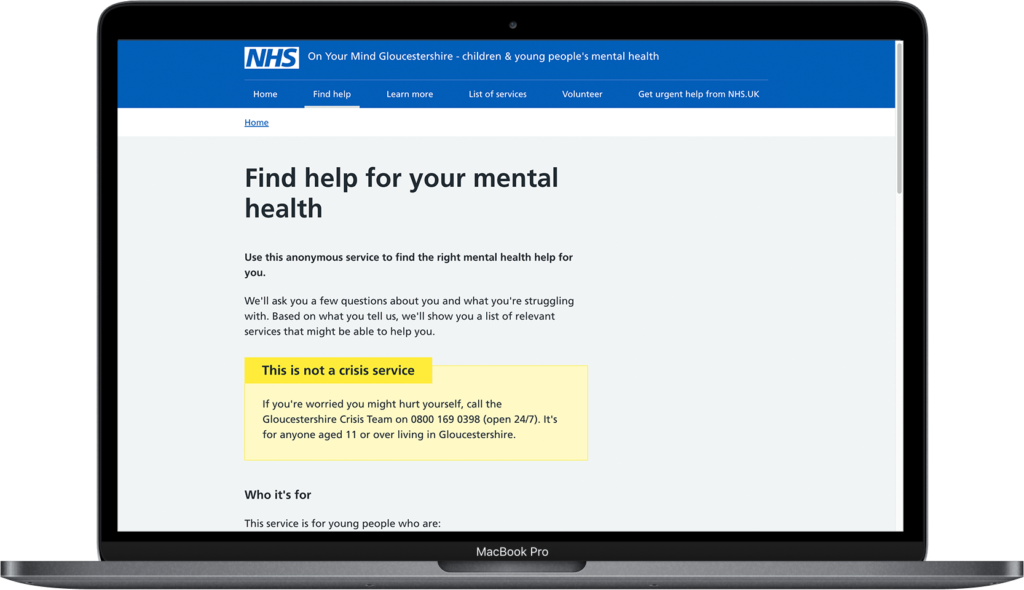
A teenager asks an adult for help. The adult points them toward a familiar mental-health service. There is a wait, then an assessment, then the discovery that this was the wrong service. In Gloucestershire, researchers working with Made Tech found a digital problem hiding inside that human sequence: getting through the first door did not necessarily lead to the right room.
That is a useful introduction to a company whose name rarely appears on the public services people use. Made Tech builds and improves the software behind government, healthcare and council work. Its territory includes cloud infrastructure, data systems, housing repairs and the deceptively difficult business of asking a clear question on a screen.
The stakes are practical. A badly designed journey can waste a resident’s afternoon or an official’s working week. A better one can make an existing service easier to reach. Made Tech’s proposition is that careful design and competent engineering deserve a place in the same conversation.
The queue was the wrong problem
The initial Gloucestershire brief included supporting young people while they waited for treatment. Research led by Mace & Menter changed the emphasis: help people reach appropriate support earlier. Adults were a common first contact, but did not always know where to send someone. Better signposting became the intervention.
The resulting service took eight months to develop. It offered a website and a text-message route to more than 100 support services. Users answered straightforward questions; the system suggested relevant options. NHS staff could update the underlying information through a content-management system. AWS supplied infrastructure, while GOV.UK Notify helped handle messages and replies.
SMS mattered because internet access, computer access and private access are different things. A service available on the family laptop may still be difficult to use. Building another route acknowledges that distinction. The company says the software can also be reused by other NHS teams. These are design and delivery achievements, not evidence that treatment capacity increased.
The lesson for another organisation is specific: investigate the point where people get diverted before deciding what to automate. Give the team permission to change the brief. A faster route into the wrong service still ends at the wrong service.
A startup supplier takes the government brief
Rory MacDonald founded Made Tech in 2008 to work with venture-backed UK startups. In 2017, the business redirected its attention toward the public sector. That history matters: the company took practices associated with building software quickly into organisations where changing a service also involves procurement, public accountability and established operations.
Its September 2021 AIM listing raised £15 million in gross new capital for the company. The admission plan included expanding services and regional reach, entering additional markets and repaying a £1.25 million bank loan. In a post explaining the flotation, MacDonald presented going public as a way to preserve independence and reassure clients about the firm’s long-term commitment.
Today, buyers include government departments, NHS organisations, councils and housing providers. GDS, the Ministry of Justice, the Department for Education and the Met Office appear among its public customer references. The person benefiting may be a patient or tenant, but the organisation commissioning the work is the customer. That separation shapes the whole business.
“We judge the value of our work by the extent to which it improves people’s lives.”Made Tech’s published purpose
Made Tech occupies the space between a small project studio and a large systems integrator. Its argument for being chosen combines public-sector experience with research, engineering and ongoing support. Buyers can alternatively assemble an internal team, commission another specialist consultancy or use an established software supplier. The sensible comparison is who can handle the actual service, including what happens after launch.
Repairs, rent and the cost of waiting
Housing makes that argument tangible. Made Tech Repairs lets residents report a problem and manage an appointment, connecting with housing management systems and scheduling tools. Camden, Barking & Dagenham and Redbridge are among its named references. Allowing residents to cancel or reschedule is an ordinary feature with an obvious operational purpose: avoid sending somebody to a home when nobody can let them in.
Evidence handles another familiar irritation: obtaining documents and photographs from residents. It supports online requests, verification and reminders. For housing teams, this can turn repeated chasing into a defined process; for residents, it gives paperwork a digital route. The point is less time spent moving information between people who already have too much to do.
Voids addresses empty homes waiting to be relet. Made Tech markets an algorithm that prioritises the work, claiming an average 21 percent reduction in reletting time and £573 more rent per property. Those are supplier figures, not guaranteed savings for every landlord. Whether prioritisation helps depends on what is holding the homes up: the order of jobs, available tradespeople, materials or something else.
For a buyer, the useful next step is a baseline. Count repair-related calls, missed visits or empty-property days before changing the workflow. Then compare the same measures afterwards. An attractive interface is easier to demonstrate than a reduction in wasted effort. The latter is what makes a purchase worth defending.
Made Tech has encountered that distinction itself. Its 2024 results acknowledged that housing software commercialisation was taking longer than expected, with extended sales cycles and investment written down. Management reorganised the division and put Chris Blackburn in charge of the effort. The company’s account identifies a commercial timetable that failed to match expectations, rather than a documented collapse of the software.
What the public sector actually buys
The main business remains services. A client can buy help defining a problem, designing a service, building applications, modernising infrastructure or keeping a live system running. Managed services extend the relationship into maintenance and support. Housing SaaS offers a different possibility: sell a repeatable solution to a problem shared by many organisations.
Public purchasing routes are part of the machinery. Made Tech lists frameworks including G-Cloud 14 and Digital Outcomes 6. These provide routes to buy specified capabilities; inclusion is not a promise of work. A supplier still needs to match the requirement and get through the relevant buying process.
A concrete price tag arrived in April 2026: a three-year, £19 million GDS contract. Made Tech will support the technology used by GDS staff, with goals including stronger security, better collaboration and lower cyber risk. This is internal government infrastructure. The award value covers that defined programme over time; it is not a price list for hiring Made Tech.
Its cloud practice includes migration, application development, automation and helping client teams improve their engineering methods. Partnerships span AWS, Microsoft, Google Cloud and Databricks. AWS credentials include Advanced Partner status and Government Competency. The breadth allows work across platforms, though a partnership badge by itself says little about whether a particular project will go well.
One unusually concrete element is the published legacy-modernisation method. Made Tech maps applications and dependencies, assesses systems against 36 maturity factors, and ranks opportunities by business value and technical effort. Migration and further improvements follow, along with coaching. That sequence recognises that moving an application and making it easier to operate are separate jobs.
The data and AI offering begins with similarly foundational work: data health checks, mapping, strategy and platforms. It also covers analytics, machine-learning pipelines and document analysis. An organisation can commission those capabilities, but needs a clear operational question and information it can trust. Automating an ambiguous process may simply make its ambiguities travel faster.
A growth chart with a dip in it
The public-sector focus has produced a substantial business, with an uneven growth path. Revenue fell from £40.2 million in FY2023 to £38.6 million in FY2024 as procurement slowed. The company reported a £3 million statutory pretax loss for FY2024, despite £2.4 million in adjusted EBITDA. The distinction matters: an adjusted operating measure does not erase the costs in the statutory accounts.
Audited FY2025 revenue recovered to £46.4 million, with adjusted EBITDA of £3.5 million. The June 2026 trading update then reported unaudited FY2026 revenue of £58.9 million and adjusted EBITDA of £5.9 million. Net cash reached £14.5 million, and the group said it remained debt-free. These figures describe a supplier growing while improving its reported operating economics.
The next assignment is larger. On 18 August 2026, Made Tech announced a consortium contract with an unnamed UK government department. Approximately £40 million is attributable to Made Tech across four years. The company expects revenue to begin in FY2027, with a larger contribution in FY2028. Backlog reached approximately £115 million. That is contracted future revenue, not money already earned.
Scale changes the test. Winning an assignment creates a staffing and delivery obligation. A growing order book is useful only if the company can turn it into dependable work without losing control of costs. The outcomes of the new contracts will reveal more than the announcement-day totals.
The handbook is open. So is the homework.
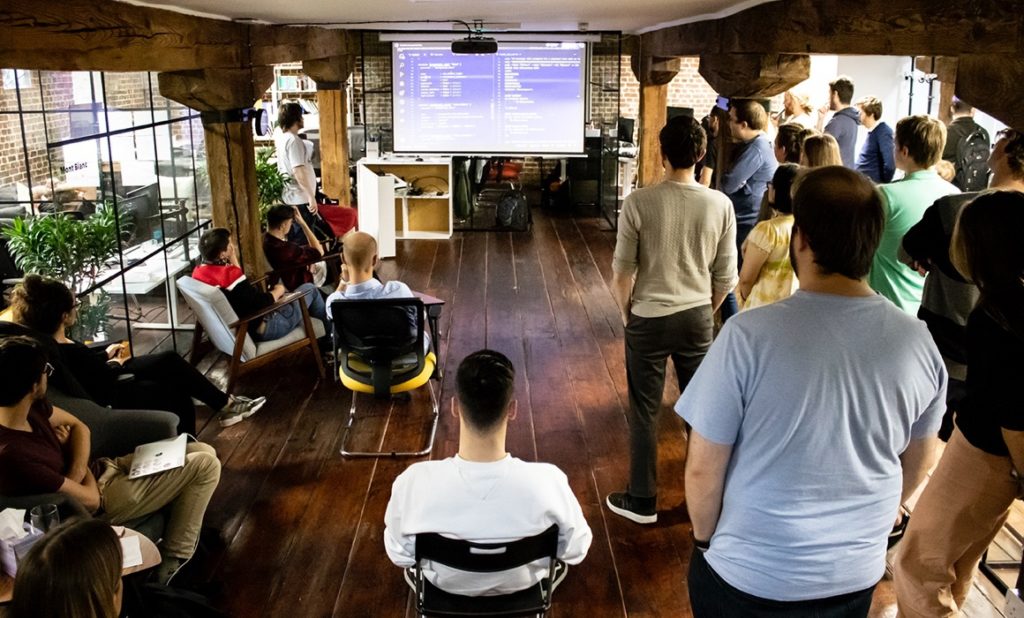
Made Tech’s culture has a public paper trail. Its GitHub handbook covers salary bands, benefits, team practices and policies. Employees and outsiders can propose edits. That makes transparency inspectable: a candidate can read how the company describes work before entering an interview.
The handbook lists 30 days’ paid annual leave, flexible working and a learning budget. The February 2026 interim report counted 433 employees at the previous November’s end. Those people, and their ability to work with clients, remain central to a company whose product is often a team’s judgement over many months.
For readers, the most portable idea is to make the work visible. Publish the rules. Map the system before replacing it. Measure the service before announcing improvement. Keep the people who use it involved when the brief changes. None requires buying Made Tech’s software. All require an organisation willing to learn something inconvenient about how it currently works.