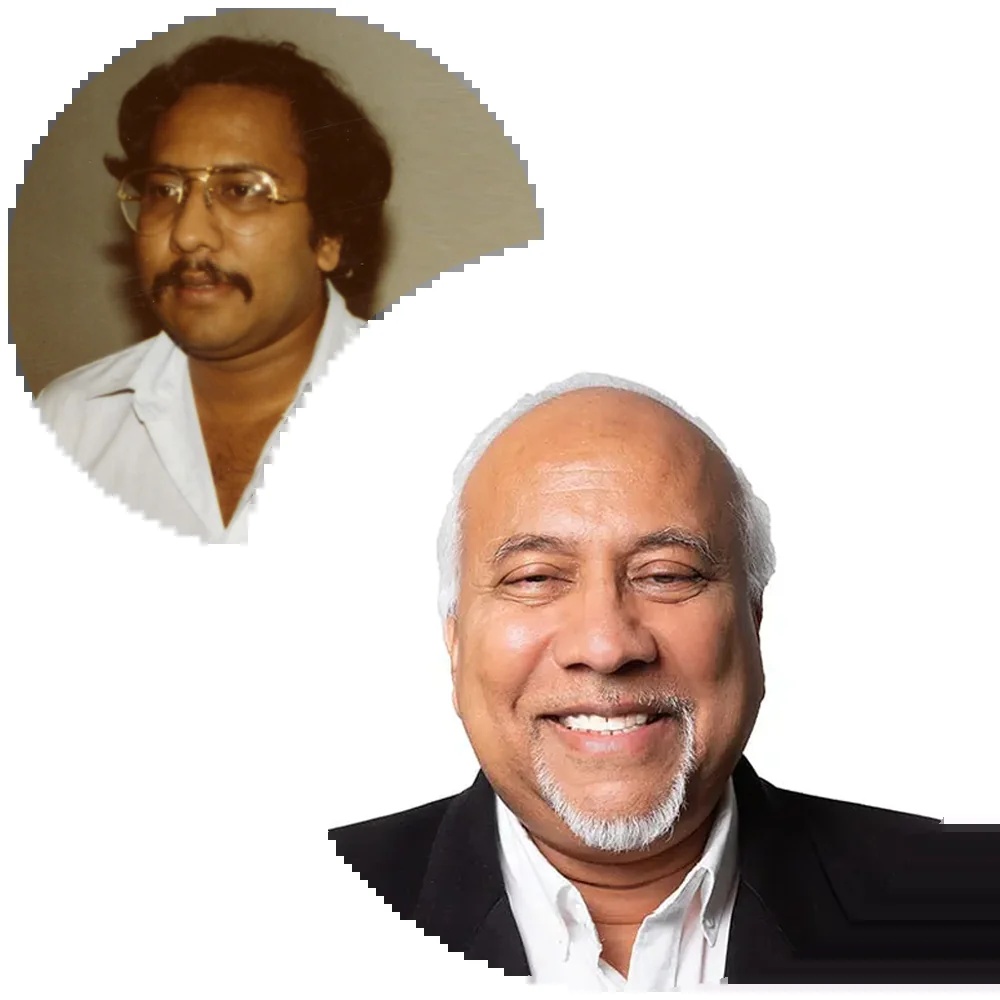
Shyam Salona had reached a senior technical position when the advice became awkward. To move further up, colleagues suggested, he would have to get better at office politics. He had another idea: leave. In 1989, he and Veer Bhartiya started REI Systems in the basement of Salona’s townhouse. The new company would give him a chance to test whether work could be arranged more agreeably.
He had been part of a hundred-person team split between New Hampshire and Colorado Springs. Smaller groups appealed to him: people helping one another, caring about what they were making, feeling close enough to the work to take responsibility. A basement imposed its own limits on the organization chart. The harder question would arrive when the company could afford more rooms.
That question gives Salona’s career its particular shape. Plenty of founders want their companies to become larger. He has repeatedly returned to the conditions under which people work together. How much freedom can a team have? What makes a technical assignment meaningful? What should survive when the first office becomes a memory?
An idea gets a government job
Salona’s preparation crossed disciplines and continents. He completed graduate study in operations research at St. Stephen’s College in Delhi in 1977, followed by a computer science research diploma at IIT Delhi in 1978. In 1980, he moved to the United States, earning a computer science master’s degree in Lafayette, Louisiana, in 1982. Before REI, his career included a principal engineering role at Digital Equipment Corporation in Nashua, New Hampshire.
Operations research concerns how complicated activities can be organized and decisions made. Computer science supplies ways to put an arrangement into practice. Looking across his later work, the pairing is apt: a public program has rules, participants, documents and decisions, all of which have to meet somewhere.
An early NASA small-business research grant gave REI an opening. Salona had been developing an information-management approach since graduate school. It became the Electronic Handbook, the basis of the company’s early workflow automation. The name had the useful modesty of office furniture. Its job was to help people navigate a process.
By the company’s twenty-fifth anniversary in 2014, REI employed 500 people. The early idea had opened doors at NASA and the Justice Department. A piece of graduate thinking had acquired customers, colleagues and responsibilities. Research occasionally takes a long route to the working day.
The Electronic Handbook also provides a way to picture the work. NASA applicants could learn about a program, register and submit proposals online. Reviewers and program managers had their own tools. At the Justice Department, the Bulletproof Vests Partnership system supported applications and payment requests. The software connected stages that otherwise demanded considerable movement of paper.
In 2000, NASA’s small-business research process involved roughly 3,000 proposals a year and more than 6,000 reviewers. Those are historical figures, but they explain the attraction of an electronic approach. A proposal has to reach the right person; that person has to know what happens next. Multiply those ordinary requirements a few thousand times and the administrative problem becomes substantial.
NASA SBIR, as described in 2000. The early Electronic Handbook helped organize this distributed work.
One later assignment brought a different sort of visibility. In 2008, Salona received a Federal 100 award for REI’s work on USAspending.gov. Public spending information turns an administrative system outward, toward people seeking to understand government. It adds another dimension to his technical career: software that helps an agency carry out a program can also help make its activity visible. The award belongs to that period of his work as CTO, before the broader responsibilities of the chief executive role.
Learning to run the room
Salona served as REI’s chief technology officer before taking the CEO role. His appointment was publicly announced in August 2016, with fellow co-founder Bhartiya becoming executive chairman. The assignment enlarged the field of view. Alongside the engineering came responsibility for the organization doing it.
At the transition, Salona identified preserving company culture and responding more quickly to a changing market as concerns. These belong together awkwardly enough to keep a chief executive occupied. Continuity asks what must remain. Agility asks what must change. Both questions arrive at the same desk.
His interest in leadership training was already concrete. In a public testimonial for trainer Chalmers Brothers, Salona described 78 senior and middle managers participating in SOAR. He pointed to communication, teamwork and self-awareness as benefits. For an organization employing technical specialists, he was making a case for studying the conversations around the technical work.
There is something pleasantly practical about an engineer paying attention to language. A request can be vague. A commitment can be misunderstood. Two capable people can leave a meeting with incompatible ideas of what they agreed to do. More technical ability will not necessarily clear up the confusion. Someone has to ask another question.
“You have to work really hard every day to sustain it.”
Shyam Salona on company culture, 2019
When discussing delegation in 2019, Salona described the need to establish expectations, obtain a commitment and help the person succeed. He also acknowledged the isolation of the CEO role and said peer groups offered useful company. These are candid admissions from someone whose job is often imagined as an uninterrupted supply of answers.
His approach to hiring included learning agility and ownership. Candidates, he argued, should examine the organization’s values as carefully as the organization examines their skills. It gives the interview table two active sides. A person is considering where to spend years of working life; a list of software competencies cannot settle the whole question.
In April 2024, REI created a chief people officer position and hired Shawn Julien, reporting directly to Salona. The company then described a workforce of more than 800 professionals. The responsibilities included talent strategy, recruitment, retention and the employee experience. Work once handled in a tiny organization now required a dedicated executive remit.
When the employees become the owners
REI became fully employee-owned in 2025. For a founder who had talked for years about employees making decisions and taking responsibility, the change supplies a particularly concrete chapter. Ownership enters the story as a formal arrangement, with consequences beyond the language of a culture statement.
It is useful to keep the scale and the working unit separate. Hundreds of people can belong to a company while a smaller group carries a particular assignment. Salona’s original question therefore remains available to a larger organization. The company can change its ownership and its size; teams still have to work out how to work.
Employee-owned since 2025
A company-wide ownership transitionIn June 2025, REI announced its ninth Washington Post Top Workplace recognition. The award rested on employee feedback. Such recognition records a particular kind of response from employees, rather than settling every question about a workplace. Alongside the ownership transition, it offers another point at which the company’s stated priorities met an external process.
The personal details around Salona are quieter than the corporate milestones. He enjoys music, hiking and reading, and mentors entrepreneurs. His public professional profile also lists leadership coaching and SOAR facilitation. They give the technical founder a recognizable set of interests: time outdoors, other people’s businesses, and continued attention to how people learn.
New tools, familiar obligations
The NASA relationship continued long after REI’s beginnings. In February 2023, the company announced a five-year blanket purchase agreement for NASA’s Early Stage Innovation and Partnerships program, with an estimated value of $47.5 million. The scope included program operations, planning, helpdesk services and organizational change. It was a continuation of a customer relationship reaching back to the company’s earliest period.
In May 2026, REI launched GovOrch AI. The company described a platform for using information across disconnected government systems without first moving or rebuilding those systems. Salona’s explanation centered on making existing information more usable. The problem sounds familiar to anyone who has waited while an answer is assembled from several places.
The tools have acquired a new vocabulary: natural-language queries, agents and governed data pipelines. The underlying questions remain plain enough. Where is the information? Who may use it? Can someone understand how an answer was produced? A useful interface has to live with the obligations of the institution behind it.
- 01ConnectData in existing systems
- 02OrchestrateGoverned workflows
- 03QueryQuestions in ordinary language
A simplified view of REI’s published GovOrch AI approach.
On October 21, 2026, REI announced GovGrants Public Sector on Salesforce. The offering covers the grants process from planning and review through financial oversight and closeout, with GovOrch connecting information across systems. Grants administration remains part of the company’s present, decades after the Electronic Handbook helped establish its business.
Salona’s own June 2026 essay placed public servants at the center of the AI discussion. He argued that efficiency belongs alongside fairness, transparency, accountability and public trust. He described human judgment and institutional knowledge as necessary to making technology useful. For a company selling government software, these principles describe demanding obligations.
There is a line from the basement to that argument, though it has plenty of turns. Salona began by asking whether a small team could have meaningful work and the freedom to do it well. Now the company’s tools address institutions whose decisions reach far beyond an office. The task keeps returning to people: the ones building a system, the ones using it, and the ones waiting for it to work.