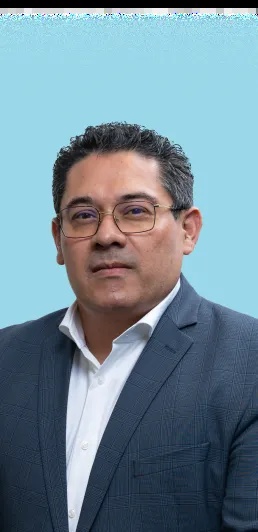
At a La Puente council meeting in March 2022, two numbers gave a municipal consulting assignment its shape: $6,000 and $3.6 million. The first was the city’s allocation to the grant-writing process. The second was a state youth workforce award. Omar E. Hernandez and his team at Global Urban Strategies had helped write the application. The money was intended for jobs, programming, and youth development. For a business built around paperwork, this was a useful reminder of what the paperwork was for.
Hernandez thanked the council for the opportunity to prepare the proposal and expressed excitement about what the award could bring to the community. A grant announcement has an appealing finality. There is a number, an award, a reason to applaud. His firm’s work, however, extends into the less photogenic territory beyond the announcement: administering programs, communicating with residents, and keeping the operation moving.
The distance between an approved application and an actual opportunity is the territory he has chosen to occupy. It suits a career that crosses community outreach, government advocacy, technical writing, and business ownership. Those disciplines share a practical difficulty: someone must make a complicated institution understandable to another human being.
Before the council chamber
Hernandez grew up in Nickerson Gardens in South Central Los Angeles and served in the United States Marines. His later business conversations return to the military as a route toward education and entrepreneurship. The path joins places that rarely appear together in a neat corporate biography: a Los Angeles public housing community, military service, college classrooms, and the meeting rooms where cities decide what they can afford.
His educational record includes East Los Angeles College and studies in political science, with a business minor, at the University of Southern California. A professional résumé submitted in 2021 also lists completed USC MBA coursework. It is a combination with an obvious relevance to his working life: how public decisions are made, and how an organization gets its work done.
He works in English and Spanish. In community engagement, that ability has consequences beyond conversation. A technical explanation may be perfectly grammatical and still leave its audience wondering what will happen to their street, their rent, or their journey to work. Hernandez’s professional work has involved translating complicated projects into terms residents can examine and question.
A company with several kinds of hands
Global Urban Strategies was established in 2016. Its founding account describes three people from South Central Los Angeles, East Los Angeles, and the San Gabriel Valley forming a business to better represent California’s diverse communities. Hernandez became its president and chief executive. The geographic detail matters: the company’s starting point was familiarity with communities that public agencies needed to reach.
Today, the firm’s headquarters is in Monterey Park. Its services include grant acquisition and administration, program management, community outreach, graphic design, social media, and web development. Put together, they cover several of the steps between a public agency’s intention and a resident’s experience. An application needs an argument. A program needs a process. A public message needs an audience.
The current team includes operations director Cinthia Iniguez, senior program and grant administrator Domonique Dunnick, and creative director Jackie Landa, alongside program, design, development, and marketing staff. The range helps explain why Hernandez’s public appearances can concern grants one day and a city’s social media another. In May 2023, he presented an update covering both to La Puente’s council.
The pairing is less odd than it first appears. Cities can secure resources and still struggle to explain a service. They can also communicate energetically without having the money or staff to deliver it. Hernandez’s business puts those problems in the same room, where they have a better chance of being discussed together.
- 01Find fundingApplications & strategy
- 02Run programsAdministration & records
- 03Reach residentsOutreach & engagement
- 04Explain the workDesign & digital media
The grant writer applies for a grant
There is a smaller financial episode in Hernandez’s career that offers a different view of the same business. Global Urban Strategies received support through Farmers & Merchants Bank’s 2021 micro and small business grant program. Here, the person helping other organizations seek funding was also an applicant.
He described a period when cash flow had stopped and the business had worked through cash reserves and savings. The bank’s grant helped keep employees paid on time. His explanation was direct: “We have to invest in our people.” The sentence is short enough to fit on a management poster. Meeting payroll gives it a rather more demanding meaning.
He also spoke about how easily microbusinesses are overlooked, despite the number of people they employ. The experience places a useful limit on the grand language of consulting. A company can help public agencies pursue large awards while still facing the ordinary arithmetic of wages and available cash. For Hernandez, access to funding has appeared on both sides of the desk.
Four people do not make a community
In March 2026, Hernandez recounted an outreach meeting attended by three city staff members and one resident. The resident complained about a pothole outside the project area. Notices had been posted and materials printed; the administrative requirements had been satisfied. In his telling, the affordable housing project later became entangled in lawsuits, while the community felt it had been managed rather than heard.
He offers the episode as a warning about confusing attendance procedures with public engagement. His alternatives are pleasingly unglamorous. He describes holding office hours in laundromats, talking with people outside grocery stores with a tablet, and going to church basements and community barbecues. A washing machine is unlikely to care about a consultant’s presentation. The person waiting for it might have something useful to say.
His argument also concerns who can make it to a formal meeting. Work schedules, family commitments, and language can determine which residents appear at a microphone. He advocates explaining drawbacks plainly and listening for the worry beneath a complaint. These are his stated methods and lessons, rooted in a willingness to take the conversation somewhere more convenient for the people being consulted.
“I actually enjoy the messy parts.”
Omar Hernandez, February 2026
The file that will be read five years later
Hernandez’s recent writing is impatient with reports that never lead to action. He calls their resting place the “PDF Graveyard.” His prose borrows freely from military experience: consultants should be prepared to join the work, take responsibility for an outcome, and remain involved when a program becomes difficult. It is a forceful sales argument, delivered with the vocabulary of someone who has served in uniform.
Another March 2026 essay concentrates on documentation. He describes his approach to compliance changing over time, toward clearer procedures, regular internal file checks, and records that will remain intelligible years later. He treats missing signatures and incomplete eligibility records as practical threats to a public program. The message is that administrative care has to survive staff turnover and the passage of time.
That emphasis also sits beside a difficult earlier chapter. Before Global Urban, Hernandez headed Arroyo Strategy Group. A 2017 State Controller review of South El Monte found that Arroyo billed approximately $1.039 million between July 2013 and June 2016 without submitting time cards supporting labor charges. The review found weekly summaries inadequate and criticized the city’s contracting and oversight practices.
In a 2019 response about Arroyo, Hernandez said the final state report found no criminal wrongdoing by the company and argued that the firm was not responsible for the city’s internal controls or contracting practices. That was his response to the criticism. The audit findings remain part of the record. Public consulting brings a continuing obligation to account for both the money obtained and the work billed.
Still willing to take a seat in class
In October 2024, Hernandez appeared on the roster of Syracuse University’s Breaking Barriers in Entrepreneurship cohort, identified with Global Urban Strategies and the Marine Corps. The eight-week virtual program offered business tools, mentorship, capital opportunities, and a peer network for veteran and military spouse entrepreneurs from underrepresented communities.
It is a useful detail in the life of an established company president. He was participating in a program designed to help business owners develop their organizations, years after forming his firm. The roster places him alongside other entrepreneurs, each bringing a business and a military connection. There is something refreshingly practical about an executive continuing to turn up as a participant.
His work has continued to connect him with public agencies. He delivered a grant update to La Puente’s council in March 2025. Gilroy’s 2025 Station Area Visioning Study also credits him, Dunnick, and Landa among its contributors. These are collaborative settings: city staff, planners, communications specialists, and consultants sharing responsibility for pieces of a larger undertaking.
Hernandez’s career is easiest to understand at that scale. A city has a proposal. A resident has a question. An employee expects to be paid. Somewhere between them are the application, the conversation, and the file that must still make sense later. He has built his working life around those connections. The interesting number may begin with a dollar sign. Its meaning arrives when somebody can use it.
Follow the work
Conversations, public records, and more from Hernandez.