Jake Frenz chose an anvil. For a founder building a company around software, it was an object with a pleasing lack of novelty: heavy, familiar, and unlikely to require a password reset. When he explained the choice in 2018, he talked about the precision of a smith. SmithRx’s name and symbol were meant to evoke someone who understood a trade and took care over what came off the bench.
The choice offers a useful entrance into his career. Frenz’s public biography includes military service, finance and economics, an MBA, a large corporate employer and an early startup. It eventually reaches the founder’s chair. Along the way, much of his work concerned operations, the part of an organization where an intention has to acquire a schedule, a team and someone responsible for the result.
There is a temptation to make such a career sound inevitable. It becomes tidier that way. Every job points toward the next; the founder appears to have been waiting inside the young officer all along. Frenz’s own recollections suggest something less polished and more interesting: responsibility arrived early, experience accumulated, and the opportunity to put his own imprint on a company came later.
Responsibility arrived before the résumé
At 22, Frenz recalled, he had never led or managed anyone. Then he had a Marine platoon to lead. It is a brisk way to discover that people do not become manageable simply because someone has given you responsibility for them. Whatever ideas a young officer brings to the job must meet the people already standing there.
He served as a logistics officer with 3rd Battalion, 5th Marines, completed two tours in Iraq and reached the rank of captain. Logistics puts a particular kind of work in the foreground: supporting other people’s ability to do theirs. Its importance becomes conspicuous when something fails to arrive. When everything works, it can attract rather less conversation.
In 2019, looking back on five years in the military, Frenz spoke about learning what kind of leader he was and what kind he wanted to become. He also described missing the camaraderie and shared mission. Those are specific things to miss. They concern the relationship between people working together, rather than the authority attached to a position.
“I like big, complex, messy problems.”
Jake Frenz, 2019
That description has the advantage of sounding like a preference someone might actually have. Plenty of people would prefer a small, well-behaved problem with a clear deadline. Frenz’s subsequent career gave him ample opportunity to test his appetite. It also gave him several different settings in which to learn how an organization behaves.
The apprenticeship inside other people’s companies
Frenz holds a bachelor’s degree in finance and economics from the University of Colorado and an MBA from UCLA. His professional experience added an education in organizations of very different sizes. At WellPoint, later known as Anthem, he worked on product initiatives and led large program teams. In a July 2026 conversation, he put his time there at seven years.
A large company gives an operator an existing structure to work through. Decisions have histories. Teams have established responsibilities. A new proposal enters a place where plenty of other work is already underway. For someone interested in building, that setting can offer a close view of both the resources an institution provides and the coordination it demands.
Collective Health presented another setting. Frenz built its operations organization, helping assemble the infrastructure and teams. He later described himself as the ninth employee. The number makes the scale of that earlier chapter easier to picture: an organization still small enough for a new hire to alter its headcount visibly, with much of the operating machinery yet to be built.
- Marine CorpsLogistics and leadership
- AnthemProgram teams
- Collective HealthBuilding operations
- SmithRx · 2016A company of his own
That distinction matters when considering the founder he became. There are ways to understand a business from its strategy, and ways to understand it from the work required to keep it running. Operations supplies the second view. It asks how separate promises connect, who takes responsibility at each handoff, and what happens when the expected process meets an unexpected day.
By 2016, Frenz was ready to start SmithRx. He brought experience from a large incumbent and a young company, as well as the earlier experience of military leadership. Those chapters did not guarantee anything about the new venture. They did mean he had already encountered several versions of the problem every founder eventually faces: getting a group of people to accomplish something together.
An anvil in a software business
The company’s craft imagery becomes more interesting against that background. An anvil is an unusually workmanlike symbol in an industry fond of clouds, arrows and suggestive gradients. It directs attention toward making. The smith has to know the material, understand the intended use and accept responsibility for the object that leaves the workshop.
For a software company, the parallel has limits, of course. A blacksmith can pick up the finished article. A founder may have to open several dashboards. Still, the attraction is understandable: craft makes a claim about the standard of the work, and about the builder’s relationship to it. Frenz chose a name that gave him an uncomplicated way to explain that intention.
It would be a mistake to treat a company symbol as evidence that every working day fulfills its promise. Symbols are invitations to judge. A customer can reasonably ask whether the actual experience resembles the care suggested by the name. The useful thing about a craft metaphor is that it keeps that question close to the finished work.
The company grows, the questions remain
SmithRx announced a $20 million Series B in 2022, followed by a $60 million Series C in January 2024. Venrock led both rounds. Financing brought a different set of milestones into the story: dates, dollar amounts and an investor relationship that continued beyond a single announcement. The company said the later funding would support technology and the customer experience.
Announced round sizes. Venrock led both rounds. These figures represent capital raised, not revenue or personal wealth.
The figures tell us something definite about resources. They leave the daily work of the company to be understood separately. More capital creates room to hire and build; it also creates choices about what deserves attention. For a founder with an operating background, those choices sit close to familiar questions about people, responsibilities and execution.
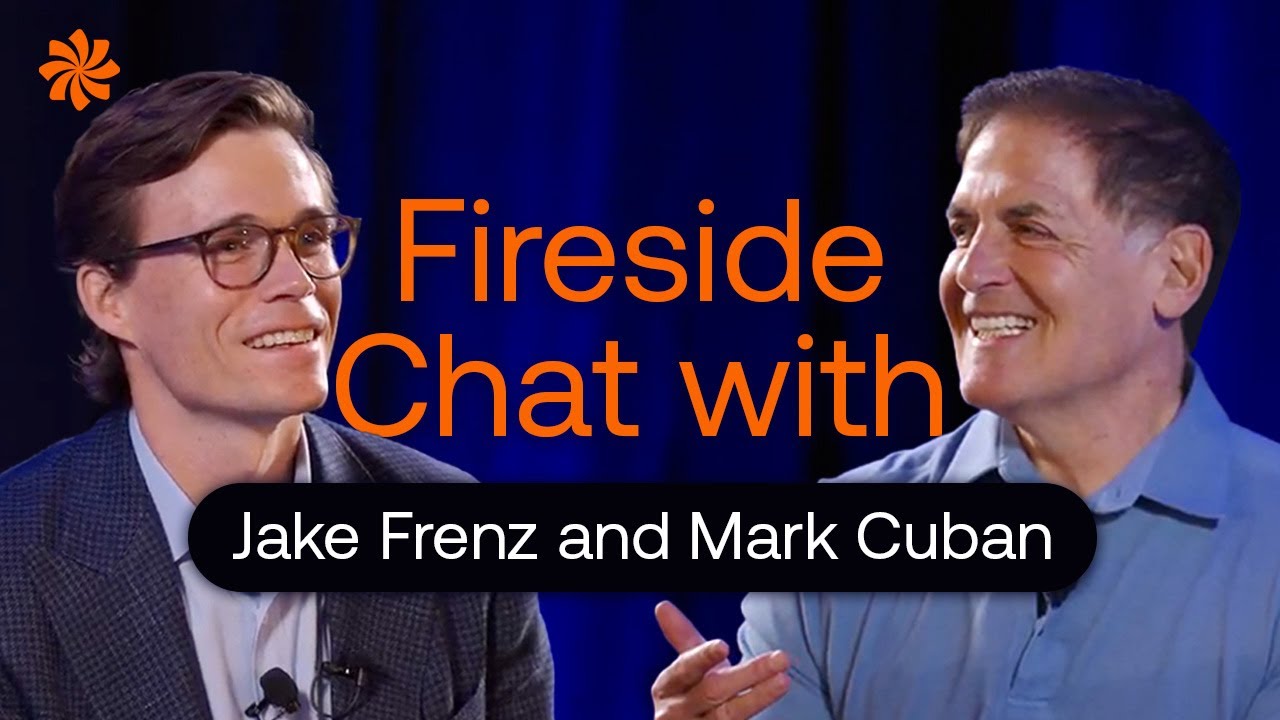
Frenz’s public role widened alongside the business. In 2024, he appeared with Mark Cuban at Brown & Brown’s Benefits Evolved event in Dallas. The filmed conversation put him beside an entrepreneur whose public profile extends well beyond a single industry. It also placed Frenz in the role founders often acquire as their companies develop: explaining an approach to people outside the organization.
The audience changed again in 2026. SmithRx’s published client summit agenda listed Frenz for opening remarks, a keynote called “What’s Your Why,” and moderation of a roadmap session with other company leaders. The gathering was scheduled for September 29 to October 1 in Deer Valley. Its design gave clients a place in conversations about the company’s direction.
A roadmap discussion adds a useful discipline to a statement of purpose. It asks what the organization plans to do next. Bringing clients into that discussion gives them a chance to question the priorities and describe what working with the company feels like from their side. The agenda records an intention to make that exchange part of the business.
A place for people to do the work
Frenz has spoken about wanting a company whose culture reflects the shared purpose he valued in the Marines. That ambition is easy to state and difficult to maintain. A founder can set expectations, choose colleagues and reward particular behavior. As the organization grows, other people increasingly determine how those choices are experienced by everyone else.
There was a public indication of employee sentiment in 2025, when SmithRx announced his inclusion on Comparably’s Best CEOs list, based on anonymous employee feedback. An award captures a particular kind of response at a particular time. It gives the cultural ambition a point of contact with people working inside the company, without answering every question about their experience.
In a 2026 conversation with Venrock’s Siobhan Nolan Mangini, a SmithRx board member, Frenz returned to the reasons behind decisions. He wanted people to explain their thinking and the inputs they had considered. The request is revealing because it asks for more than a confident conclusion. It asks a person to show how they arrived there.
“I want people to tell me a story about why.”
Jake Frenz, 2026
There is room in that request for an operator’s curiosity. A result matters, but understanding the reasoning makes it possible to question, repeat or improve the work. Frenz’s career has repeatedly put him near the places where those explanations become necessary: a team receiving direction, an organization being assembled, a company deciding where to spend its next year.
Seen this way, the anvil is a fair place to begin and end. It expresses an intention to make something carefully. The interesting part of Frenz’s story is the experience he brought to that intention: years of responsibility before the founding date, followed by the longer task of building an organization that can carry the work forward.
Continue the conversation
Explore the work and hear Frenz in his own words.