Brian Chesky had a website, credit-card debt, and a glue gun. The website was supposed to help people rent somewhere to sleep. The glue gun was for breakfast cereal. In the first episode of Masters of Scale, the Airbnb co-founder describes folding collectible election-themed cereal boxes by hand to keep the business alive. Entrepreneurship, at this particular moment, smelled less like disruption than hot adhesive.
- Free founder interviews turn growth decisions into stories.
- The same body of ideas has powered a book, courses, and live events.
- Use a lesson to design an experiment. Keep your own customers in the picture.
It is a shrewd opening for a company teaching ambition. The listener meets the famous founder before success has made his choices look inevitable. Here is somebody improvising, hurting his fingers, and wondering whether other entrepreneurs have to do this. The distance between that person and a household-name business becomes the story.
01 / A theory needs a human being
Masters of Scale launched on May 3, 2017, created by June Cohen and Deron Triff, the former TED executives who founded its parent, WaitWhat. Reid Hoffman, LinkedIn’s co-founder, became the founding host. The original format gave him a theory about growth to test against a founder’s experience, with music and storytelling doing some of the explanatory work.
That choice gives the interview a job. A celebrated executive can talk for an hour without helping anyone decide what to do on Monday. A theory creates something to examine: does the story support it, complicate it, or suggest an exception? The guest’s reputation gets you interested. The episode’s construction gives that interest somewhere to go.
The launch also included a commitment to gender balance among guests. That matters to a business built on examples. Choosing who gets to explain entrepreneurship helps define what entrepreneurship looks like. Production and selection are part of the product, alongside the questions.
02 / The objection that became the lesson
In Chesky’s account of meeting Paul Graham, the Airbnb founders were in Mountain View while some of their users were in New York. Graham wanted them to visit those users. Chesky objected that meeting customers individually could never work at enormous scale. Graham’s answer was that smallness made such visits possible now.
“Go to your users. Get to know them.”Paul Graham, recalled by Brian Chesky
The founders went. Their work included photographing homes themselves, then bringing in photographers, then managing the process through spreadsheets and an intern. Automation followed the manual work. The episode’s useful sequence is observation, service, friction, system. A reader can copy that sequence without opening a travel marketplace or buying cereal packaging.
- 01Observe
- 02Serve
- 03Find friction
- 04Build a system
This is where founder storytelling earns its keep. The first thing struggling was the business’s traction; the next step required accepting apparently inefficient work. The cost included founders’ time and hands-on effort. The change of mind concerned when efficiency mattered. Those are decisions a small company can actually recognize.
03 / Give the archive another job
Masters of Scale belongs to WaitWhat, rather than operating as a separately disclosed startup. Its ambition extends beyond a podcast feed. The company’s own terms describe an enduring collection of entrepreneurial wisdom intended for reuse across formats. An interview can become a lesson, a chapter, or a conversation onstage.
The 2021 book, by Hoffman with Cohen and Triff, gave that material a 304-page home; its publisher lists the hardcover at $28. The Courses app, also launched in 2021, tried shorter daily listening practices. The question shifted from getting somebody to finish an episode to helping them develop a repeatable learning habit.
The app’s development contains a practical detail. In Toptal’s case study, research into expensive mobile internet helped prioritize offline listening. The team also included transcripts and accessible visual design. A minimum viable product was ready in fewer than seven months. These decisions address the circumstances of learning: available time, bandwidth, and ability. For anyone building educational media, that is a more useful checklist than adding another celebrity.
04 / Free listening. A paid seat.
The business has several buyers. Listeners want ideas; sponsors want their attention; event attendees want conversations and connections. Sponsorship, partnerships, paid events, and learning subscriptions are different ways of earning from the same intellectual material. The economics depend on making each experience worth choosing.
The first Summit happened in 2022. The 2026 gathering is scheduled for October 20-22 in San Francisco. Its general application path lists $3,750, with a $3,000 path for selected nonprofit and culture leaders. The site advertises 800 hand-selected attendees. This is a different proposition from pressing play: the people around you become part of what you buy.
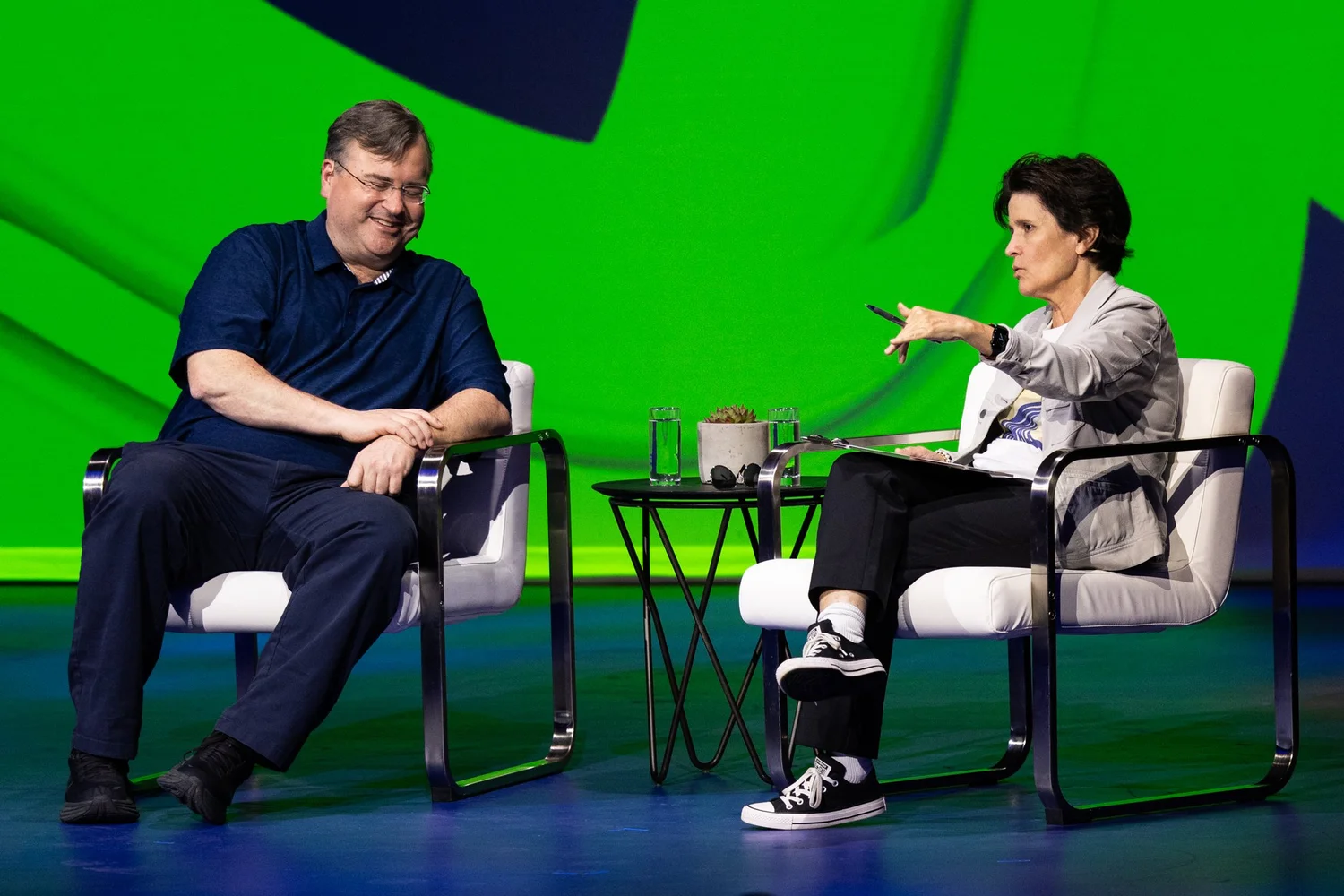
As an editorial alternative to company-history shows such as Acquired or founder interviews such as How I Built This, Masters of Scale puts growth lessons at the center. Its particular appeal is the combination of an operator-investor host, crafted storytelling, and places for the audience to keep engaging. A listener can begin cheaply and stay there.
05 / One episode. One experiment.
The sensible way to use this material is to arrive with a problem. Choose an episode about customer experience, hiring, or a pivot. Write down the assumption behind the advice. Then design the smallest test that could tell you whether it applies to your business. For the Airbnb lesson, that might mean serving a handful of customers personally and recording where they struggle.
A founder’s remembered success remains one account, shaped by its circumstances. Personal service needs access to users and enough room to experiment; it cannot waive safety requirements or repair a product nobody wants. Listening helps generate questions. Customers supply evidence.
That is the lasting attraction of Masters of Scale. It lets you hear the hesitation inside a decision that later looks obvious. Keep that hesitation. It is often the part you need.