Two dollars looked like a considerate price. Gusto would handle an employee’s payroll for $2 a month, while competitors charged $20. A young company had removed a reason to say no. It had also given business owners a reason to worry. Would a service this cheap still exist when payday arrived?
- A free archive of founder, operator, and investor interviews.
- Published by a venture firm whose private product is capital plus connections.
- Most useful when you bring a specific decision and leave with an experiment.
On Village Global’s podcast, Gusto co-founder Tomer London describes that early price as a mistake. “The price is a message,” he says. The detail makes an abstract discussion about pricing unexpectedly concrete. You can picture the customer doing the arithmetic, then deciding that the arithmetic itself feels suspicious.
This is a good reason to listen to Village Global’s Venture Stories, now listed as the Village Global Podcast. Its useful moments concern decisions with consequences. Someone tried something. The customer interpreted it differently. The lesson arrives with a receipt, even when that receipt is measured in years rather than dollars.
The network behind the microphone
Village Global is an early-stage venture firm. Venture Stories is its public conversation archive. The distinction matters. You can listen without pitching a company, joining a portfolio, or knowing anybody important. Listening gives you the discussion; the firm’s investment relationships offer a different kind of access.
The podcast’s original host was co-founder Erik Torenberg. Village’s founders also include Anne Dwane, Ben Casnocha, and Ross Fubini. Casnocha had started an enterprise software business at fourteen and later co-authored books with Reid Hoffman. Torenberg came from Product Hunt’s founding team. Their backgrounds help explain an institution interested in both building companies and connecting the people who build them.

The firm invests at pre-seed and seed, including before revenue, across sectors and geographies. Alongside money, it advertises founder conversations, expert advice, fundraising help, and introductions. Its website describes a network of more than 400 founders, operator angels, and prominent limited partners. The podcast lets a much wider audience hear people operating in that world.
That arrangement gives the show its market position. It competes for listening time with investor interview programs such as The Twenty Minute VC and The a16z Show. Village’s particular attraction is the connection between its conversations and its founder community. The audio travels freely. The relationships take work.
The expensive art of explaining yourself
Consider another interview, with former Gainsight CEO Nick Mehta. Category creation sounds attractive in a fundraising presentation. Mehta’s account supplies the calendar: the Gartner Magic Quadrant he imagined took ten years to appear. His recommendation is to try redefining an existing category, then combining categories, before inventing one.
“in case of emergency, break glass”
Nick Mehta’s description of category creation
There was an operating cost, too. Early sales hires struggled to reproduce his approach because customers still needed to understand the category. Mehta continued taking sales calls throughout his thirteen years running Gainsight. A story about creating a market becomes a story about how long the founder may have to keep explaining it.
The transferable question is wonderfully unglamorous: can a buyer already name your product’s budget? If the answer is yes, borrowing that language may save months of explanation. If the answer is no, the company needs enough time and money to educate buyers. A category strategy that worked for one business can exhaust another.
An archive that keeps changing its questions
Apple’s listing places the show’s beginnings in 2017 and displays 708 episodes at research time. The catalog now includes several voices. Anne Dwane interviews founders; Amrit Rao talks with investors and operators; Somrat Niyogi, founder of Recall Capital and a Village Network Investor, hosts Recall Sessions.
Recent conversations follow the problems their guests face. In September 2026, Rao interviewed Maple VC’s Andre Charoo about founder archetypes. An October episode features Legato’s Mehul Trivedi discussing glasses that double as hearing aids. An April conversation with Emergence Capital’s Jake Saper examines AI businesses whose apparent automation still depends on people doing the work.
That last discussion gives listeners something to inspect beyond a revenue chart. Saper recommends tracking a service-specific product measure, revenue per employee, and gross margin that includes delivery labor and token costs. His warning concerns a financing mismatch: a labor-intensive service can grow while failing to develop the economics its investors expect.
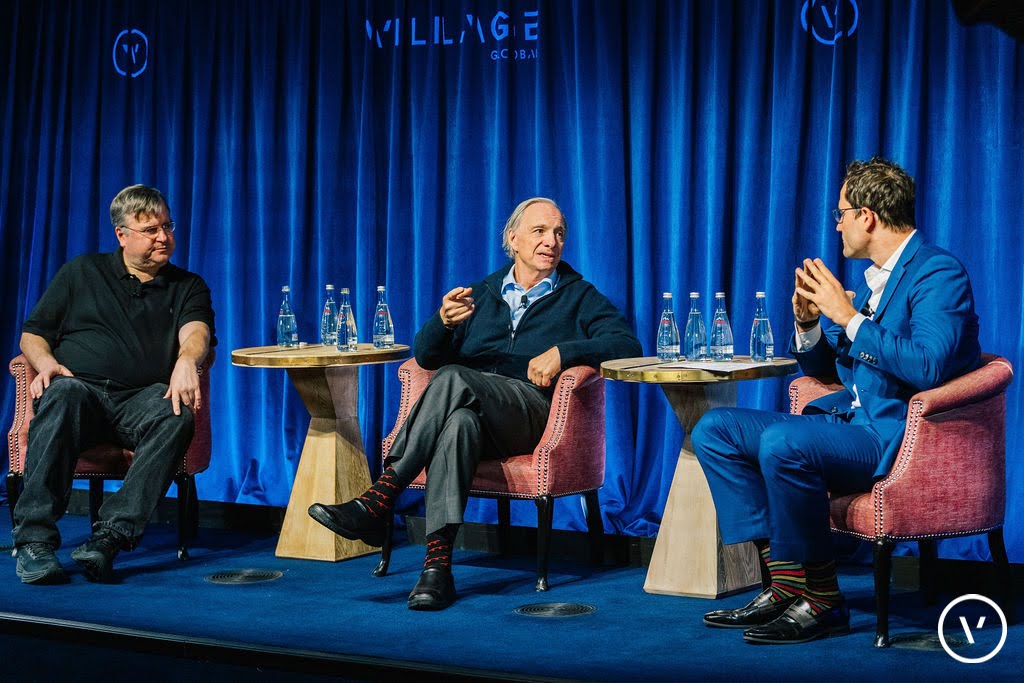
The publisher has interests of its own. Village announced a roughly $250 million third fund in November 2023. Free interviews plausibly help people understand the firm and remember its partners. That is an editorial inference about the business model. Listeners should evaluate the advice with the same independence they would bring to an investor meeting.
Listen with a decision in mind
Start with a live problem: pricing, a first customer, a hiring choice. Find a relevant conversation. Write down the guest’s assumption and the evidence that changed it. Then ask whether your buyer, risk, and resources resemble theirs. A payroll company’s trust problem may tell you little about an inexpensive entertainment app.
Turn the idea into a small test. Ask five customers what a price signals. Rewrite a sales page using the category buyers already recognize. Measure how much human work remains behind an automated service. Set a date to review the result. The interview has done its job when it improves the question you ask next.
Take a conversation with you
Listen on Apple Podcasts or Spotify. Watch Tomer London, Nick Mehta, or Jake Saper.