Tagged: entrepreneurship
30 results
Harish Abbott: Building the AI Teammate Rewiring Global Logistics
On Joe Lonsdale's American Optimist podcast, serial entrepreneur and billionaire Harish Abbott, co-founder and CEO of Augment, explains how his AI teammate 'Auggie' is transforming the fragmented $10 trillion global logistics industry. Abbott, who previously built Deliverr (sold to Shopify for roughly $2.1 billion) and helped build Amazon's fulfillment network, argues that AI's reasoning models and expanding context windows finally make it possible to automate the endless emails, phone calls, and texts that move freight. Auggie already helps manage roughly $25 billion in freight, works 24/7 across email, phone, Telegram and WhatsApp, and follows written workflows like a human employee. Abbott lays out a massive opportunity: not just tens of billions in productivity gains, but a $300 billion U.S. (nearly $1 trillion global) chance to cut waste from an industry hobbled by low-bandwidth, asynchronous communication.

Step
Step is a new-media and events company that runs one of the largest technology festivals in the Middle East and North Africa. Founded by Ray Dargham in 2011, it stages the annual Step Conference in Dubai and Saudi Arabia, publishes tech newsletters and social platforms like StepFeed, and connects founders, investors and builders. From a first edition of roughly 100 people, it has grown to draw more than 8,000 attendees, with startups featured on its stages collectively raising billions in funding. In 2026 the company extended its model to San Francisco with an AI-focused edition.

Po-Shen Loh on Education, Opportunity, and Humanity After AI
Mathematician Po-Shen Loh, the longtime U.S. International Math Olympiad coach, argues that AI is about to erase the promise of a 'stable life' and that the way humanity thrives afterward is by building high-trust networks of curious, caring people. Drawing on visits to a high-poverty fourth-grade classroom in rural South Carolina and to Africa, he describes vast untapped pools of authentic talent, a coaching pipeline where students mentor younger students across borders, and a new 'economic flow system' powered by trust and remote work. He warns about the risks of an interconnected, AI-written, robot-run world, and reframes education around intention, curiosity, and the ability to solve non-standard problems. A brief closing segment features a Stanford instructor describing the rise of the 'AI-native engineer.'

Po-Shen Loh
Carnegie Mellon math professor and former U.S. Math Olympiad coach Po-Shen Loh argues that as AI surpasses humans at logic and language, the most important skill young people can develop is autonomous thinking. He warns that using AI to do school writing is 'like driving a car one mile for exercise,' explains why AI now solves original Olympiad problems he couldn't, and lays out a win-win-win education ecosystem that pairs middle schoolers, high-school math talent, and Broadway-caliber acting coaches to teach kids how to generate their own ideas, empathize, and think critically in an age of biased information.

Startup Secrets: How to Build a Winning Value Proposition with Michael Skok
In this Harvard Innovation Labs 'Startup Secrets' workshop, veteran venture capitalist and Underscore VC founding partner Michael Skok walks a room of founders through how to define, evaluate, and build a compelling value proposition. Arguing that the number-one reason companies fail is not solving a valuable enough problem, Skok lays out a practical toolkit: nailing the 'for who,' finding a minimum viable segment, testing pain with the 'Four Us' (Unworkable, Unavoidable, Urgent, Underserved), distinguishing latent/aspirational needs from blatant/critical ones, replacing 'faster, better, cheaper' with the '3Ds' (Disruptive, Discontinuous, Defensible), and measuring the 'gain/pain ratio.' Real founders from Kazakhstan, Kenya, South Africa, and beyond pressure-test their ideas live as Skok returns again and again to one refrain: stop pitching, and go ask your users.

Seth Godin on the Future of Marketing: Better, Not Louder
In an in-depth virtual conversation on the Entrepreneur Studio podcast, marketing legend Seth Godin joins host Chris Allen to redefine what marketing actually is in the age of AI. Godin argues that marketing was never about hype, ads, or hustle, but about creating the conditions for other people to eagerly spread your idea. He unpacks permission marketing, why a brand is a promise rather than a logo, why authenticity is a trap that should be replaced with consistency, how false proxies mislead companies, and why the real opportunity with AI is to make things better rather than cheaper. Threaded with vivid stories about Carmine's restaurant, a slipper-wearing boiler technician, Volkswagen's emissions scandal, and the wine merchant Garagiste, Godin makes the case that in a world of infinite noise, the winning move is to be better, not louder.

How the Best Startups Really Begin — YC Office Hours
In this episode of Y Combinator's Office Hours, a rotating cast of YC group partners pulls back the curtain on how legendary startups actually began. Using real interview memories of companies like Solugen, CaptivateIQ, Amplitude, Segment, Brex, Jeeves and Nourish, the partners argue that companies such as Airbnb, Stripe and Dropbox looked indistinguishable from every other early-stage startup on day zero. The through-line: greatness comes not from a magical origin but from tens of thousands of decisions, a bias for action, obstinate conviction, clear and honest communication, and the willingness to pivot until you build something people want.

Only in America: My Conversation with Jensen Huang
In an interview for the 'Only in America' series, former Secretary of State Condoleezza Rice sits down with Nvidia founding CEO Jensen Huang at Nvidia's new California campus. Huang recounts his journey from a nine-year-old immigrant sent from Thailand to a boarding school in Oneida, Kentucky, through Oregon State University and Stanford, to founding Nvidia on a business plan many considered impossible. He reflects on the chicken-and-egg problem of introducing a new computing architecture, the decades of grit before AI validated his vision, cautious optimism about artificial intelligence, and why he considers himself the embodiment of the American dream.

David Senra breaks down Peter Thiel's Zero to One
In this episode of the Founders podcast, David Senra revisits Peter Thiel and Blake Masters' book 'Zero to One: Notes on Startups, or How to Build the Future' after a four-year gap, deliberately re-reading a fresh copy so his old highlights wouldn't influence him. He argues the book isn't a how-to manual but a prompt for your own thinking, whose central message is that founders should aim to build a 'creative monopoly'—a business so good no one else can offer a close substitute. Threading examples from Apple, Amazon, PayPal, Polaroid, Howard Hughes, and Steve Jobs, Senra explores Thiel's key ideas: thinking from first principles, the contrarian question, secrets, the power law, durability over growth, sales and distribution as product design, and the irreplaceable value of the founder.

ODF (On Deck Founders)
ODF (On Deck Founders) is a San Francisco-based founder fellowship that helps aspiring entrepreneurs go from idea to conviction. Its signature offering is an intense one-week in-person experience in SF where 80-100 pre-vetted builders meet potential co-founders, pressure-test ideas, and commit to starting a company - followed by lifelong access to an alumni community, mentorship, and hundreds of thousands of dollars in startup perks. Unlike a traditional accelerator, ODF takes no equity. More than 1,000 startups have launched through On Deck, collectively raising over $2 billion from investors including Sequoia, a16z, Khosla and Founders Fund.

Tom James
Tom James is a Certified Franchise Consultant and the founder of Prophecy Consulting, a Fort Worth, Texas advisory practice that helps corporate executives and military veterans decide whether to buy a franchise, and if so which one. A FranServe affiliate and member of the International Franchise Association, he matches candidates across 700-plus franchise brands through a free, structured coaching process. His approach is shaped by having owned a franchise himself, a SpeedPro large-format printing operation in the Los Angeles area, and by a corporate career spanning HR, IT, operations, project management, finance, and sales and marketing.

David Senra
In this episode, podcaster and biography obsessive David Senra (host of the 'Founders' podcast) sits down with Brian Halligan (HubSpot co-founder and Sequoia partner) to distill what more than 400 studied founders have in common. Senra argues the single defining trait is extreme focus bordering on obsession, captured in his maxim 'mute the world and then build your own.' The wide-ranging conversation covers founder archetypes, the influence of fathers, why co-founder duos rarely endure, disagreeableness versus taste, the myth of the broken-home genius, whether AI is genuinely a different kind of platform shift, and the sobering finding that of the 400+ founders Senra has studied, only about three had genuinely well-balanced lives.

Kayla Rodriguez Graff
Kayla Rodriguez Graff is the co-founder and CEO of SweetBio, a Memphis-based medical device company bioengineering Manuka honey, collagen, and hydroxyapatite into FDA-cleared, Medicare-covered wound care products (APIS and VERIS). She runs the company with her brother, scientist Dr. Isaac Rodriguez, and has raised more than $10M to expand access to affordable wound care, especially in communities hit hardest by diabetes.

CoffeeSpace
CoffeeSpace is a mobile-first, AI-powered matchmaking platform that helps founders, talent, and startups find each other - swiping their way to a cofounder, a first hire, or a team to join. Often described as 'Hinge for cofounders,' it uses granular filters and dual-sided compatibility matching to pair ambitious builders by skills, working style, time commitment, and equity preferences. Founded in 2024 and based in San Francisco, the app has grown to 30,000+ users across 100+ countries.
Hanz Panther
Hanz Panther is listed as Co-Founder and CEO of NewCo, a business-event production company built around an 'inside-out' festival format that swaps the convention-hall stage for the open doors of working companies. Operating at the intersection of media, publishing, and live events, NewCo turns cities into temporary campuses where the public walks into real offices instead of watching keynotes. Panther's public footprint is thin, but the role places him inside one of the more distinctive experiments in how modern business gatherings are produced.

Simon Glass
Simon Glass is the founder and CEO of Qodeo, a UK and US based platform that uses proprietary algorithms to match entrepreneurs with venture capital and private equity firms - with a deliberate focus on diverse, regional and female founders who sit outside the traditional venture network. A Cambridge BA, MA and MBA who trained in corporate finance at London Business School, Glass spent years in venture capital (including Amadeus Capital Partners, the first backer of ARM), banking, academia and media before building Qodeo to end what he calls the needle-in-a-haystack approach to finding investment. The platform now tracks tens of thousands of organizations and connects 20,000+ entrepreneurs with 7,400+ investors across multiple markets.

OneValley
OneValley is a San Mateo-based global entrepreneurship platform that helps founders launch and scale startups while giving universities, accelerators, enterprises and governments the software to run their own innovation communities. Born from the Silicon Valley accelerator GSVlabs, it rebranded to OneValley in 2020 after its online Passport platform exploded in growth, and today it pairs that software with OneValley Ventures, a $25M seed and pre-seed fund. The mission: take the resources and connections traditionally locked inside Silicon Valley and make them reachable to innovators anywhere in the world.

Dale Dougherty
Dale Dougherty is the founder of Make: magazine and Maker Faire, and widely credited as the father of the Maker Movement. A co-founder of O'Reilly Media, he launched the internet's first commercial web portal (GNN) in 1993, helped popularize the term 'Web 2.0' in 2004, and coined the word 'makers' to describe hands-on creators and tinkerers. Today he leads Make: Community LLC, an organization that inspires millions through DIY technology, education, and events spanning 40+ countries.

David Lester
David Lester is the co-founder and former President of OLIPOP PBC, the prebiotic soda brand that grew from a $100,000 bet into a $1.85 billion company in under seven years. A former Diageo brand marketer who worked with Smirnoff, Gordon's Gin, and Johnnie Walker across three continents, Lester paired his CPG expertise with co-founder Ben Goodwin's scientific formulation genius to create a soda that supports gut health without sacrificing the nostalgia of a cold fizzy drink. OLIPOP now generates over $425 million in annual revenue, holds 65,000+ retail doors, and controls 87% of the functional soda category - a category it essentially invented.

Gadi Shamia
Gadi Shamia is the CEO and co-founder of Replicant, a voice AI platform that automates customer service calls at enterprise scale. A serial entrepreneur who sold his first company (TopManage) to SAP, helped EchoSign sell to Adobe for $400M, and scaled Talkdesk from seed to unicorn as COO, he brings two decades of building and scaling B2B software companies to the challenge of replacing traditional IVR systems with natural-sounding, AI-driven conversations. Under his leadership, Replicant has automated over 1 billion minutes of customer interactions and raised $113M in funding.
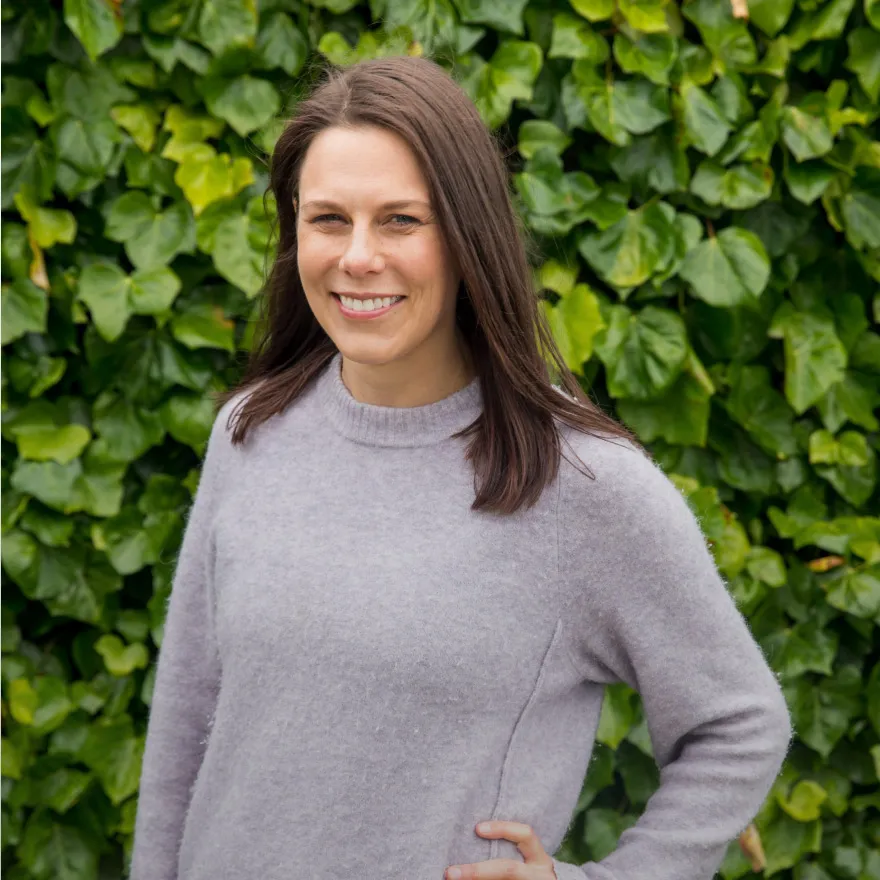
Lauren Myrick
Lauren Myrick is the CEO and Co-founder of Found, a San Francisco-based fintech company building the all-in-one financial platform for self-employed workers and small businesses. After eight years at Square - joining as the company's second product manager and eventually running Square Payroll as General Manager - she co-founded Found in 2019 alongside Connor Dunn. The company has raised $125M+ across six rounds (most recently a $50M Series C led by Sequoia Capital in 2024) and now serves 770,000+ small business owners with integrated banking, bookkeeping, invoicing, and tax tools.

Kshitij Jain
Kshitij Jain - widely known as KJ - is the Founder and CEO of Joveo, a Menlo Park-based AI-powered programmatic recruitment advertising platform that serves Fortune 500 employers including Wells Fargo, Barclays, Rolls-Royce, and Sony. A two-time founder with 20-plus years in the recruitment industry, he previously built MoBolt, a job application optimization startup acquired by Indeed in 2014 for a double-digit million dollar sum in under two years of operation. Before that he spent roughly eleven years at Monster Worldwide across roles spanning Asia Pacific, the Middle East, Africa, and India. KJ's driving mission - delivering the right job to every person - is embedded in Joveo's name itself, and his 4-3-2-1 model (four clicks, three applies, two shortlists, one hire) defines his philosophy on making recruitment humane at scale.

Paulo Martins
Paulo Martins is the Brazilian-born founder and CEO of Arena (arena.im), a San Francisco-based AI-powered community engagement platform that lets brands embed live chat, live blogs, and audience interaction tools directly on their own websites with a single line of code. After stints at NASA, Ubisoft, and Hulu — where he helped grow the streaming company from 100K to 7 million paying subscribers — Martins founded Arena in 2017 with a clear thesis: businesses should own their audience, not rent it from social platforms. By 2022, Arena had grown to 25,000 customers across 150 countries and closed a $13.6M Series A led by CRV, with backing from heavyweights like David Sacks, Des Traynor, and Olivier Pomel.
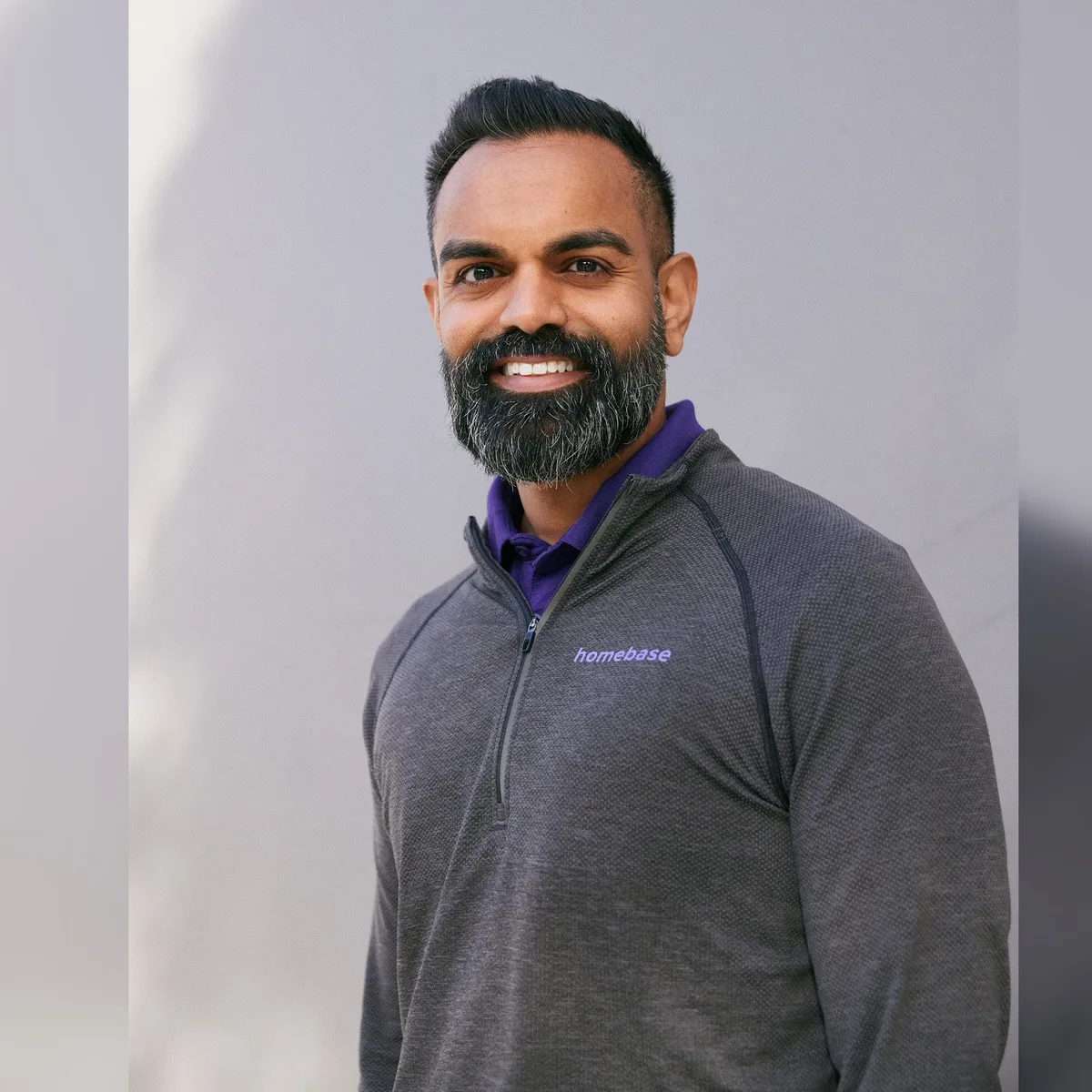
Rushi Patel
Rushi Patel is the Co-Founder and COO/CRO of Homebase, the all-in-one workforce management platform serving 100,000+ small businesses and 2+ million hourly workers. With a background spanning McKinsey, KKR, and Microsoft, Patel co-founded Homebase in 2014 alongside John Waldmann to give local business owners - restaurants, retailers, and service businesses - the same quality workforce tools that enterprise companies take for granted. Under his leadership, Homebase has raised $198M in funding including a $60M Series D in April 2024, and grown to 1,900 employees while generating approximately $180M in annual revenue.

Stanford University Graduate School of Business
Stanford Graduate School of Business is the graduate business school of Stanford University, headquartered at the Knight Management Center in Stanford, California. Founded in 1925, it offers the two-year MBA, the one-year MSx, a PhD, and Executive Education, and is consistently ranked among the most selective business schools in the world. Its mission is to change lives, change organizations, and change the world.

Giulianna Crivello
Giulianna Crivello is the Founding General Partner of DSH Ventures, the pre-seed investment arm of Draper Startup House — the global co-living and coworking network for entrepreneurs backed by legendary VC Tim Draper. A 2018 valedictorian from Sierra Nevada College, she went from research analyst in Nevada to directing investments across 14 countries in her first year at DSH Ventures. She co-manages the fund with Vikram Bharati and has facilitated over 215 investor introductions to startups spanning the US, Singapore, India, and beyond, while helping build Draper Startup House into a presence spanning 25 embassies across 5 continents.
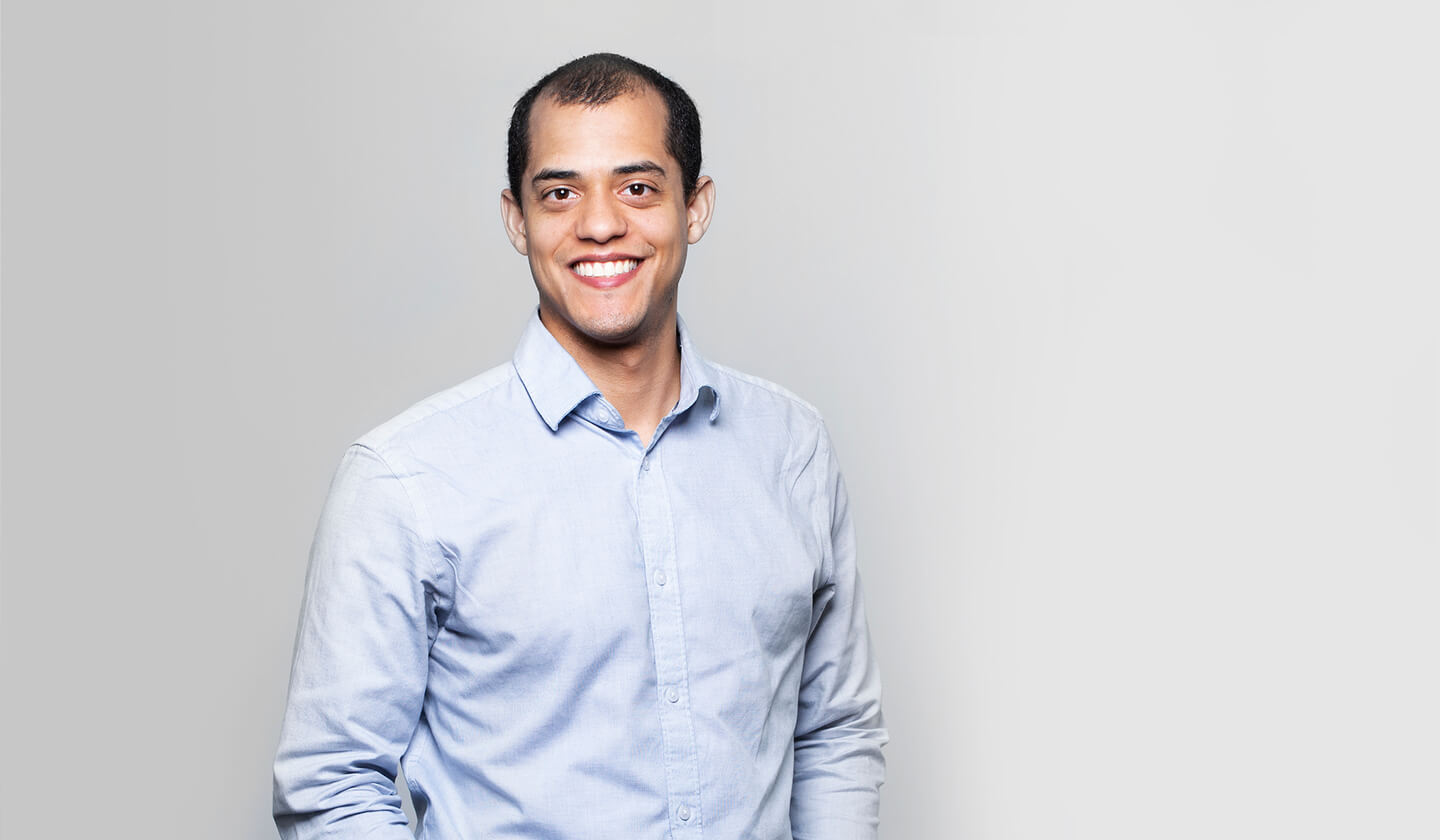
Michael Fanfant
Michael Fanfant is a General Partner at Runa Capital, a $200M+ early-stage VC firm, where he backs B2B SaaS and regulated-industry startups in fintech, edtech, and digital health. Before turning investor, he co-founded Octane Lending — a point-of-sale financing platform for powersports vehicles that hit a $900M+ valuation in 2021. A Stanford economics graduate, Kauffman Fellow (Class 27), and Events & Community Chair at BLCK VC, Fanfant brings the operational credibility of a builder and the pattern-recognition of an investor to every check he writes.

Ilana Stern
Ilana Stern is a General Partner at Peterson Ventures, a seed-stage venture firm based in Salt Lake City, Utah. A Stanford GSB alumna and former founder, she built and sold Weddington Way - a direct-to-consumer bridal fashion platform - to Gap Inc. in 2016 before joining Peterson Ventures in 2019 as its first San Francisco-based partner. She invests primarily in early-stage consumer, enterprise, and healthcare technology companies, while also lecturing at Stanford GSB and writing a Substack newsletter called 'View from the Bottom.'

Jon Eberly
Jon Eberly is a serial entrepreneur and digital marketing thought leader turned venture capitalist, serving as General Partner at Sentiero Ventures, a Dallas-based $10M AI-focused seed fund. He founded Clock Four in 2006, built it into a 50-person San Francisco digital agency serving U.S. Bank and Juniper Networks, then sold it to Hero Digital in 2018 — one of multiple self-funded exits in his career. Today he backs early-stage AI-enabled SaaS companies alongside David Evans and Kishore Khandavalli, bringing deep operator experience in digital strategy, customer experience, and adtech to founders navigating the earliest chapters of company building.

Mohan Iyer
Mohan Iyer is a General Partner at SOSV's IndieBio SF, the world's leading biotech accelerator. With 25+ years operating life science startups across Genentech, Tethys Bioscience, Second Genome, and Pendulum Therapeutics, he brings rare bench-to-boardroom experience to pre-seed biotech founders. Trained as a chemical and biomedical engineer before earning his MBA from Yale, Iyer has spent his career translating disruptive biology into products the world actually needs — and now bets on founders doing the same.