gig-economy
(52)
Zego put insurance on the clock. Now it wants to watch you drive.
Zego won delivery drivers with cover that clocks on when they do. After an expensive retreat from fleet insurance, it is betting on phone data, safer driving and a much bigger audience.

Rota Put the Staffing Agency Inside the App
Rota began by filling last-minute hospitality shifts. The more durable business was the machinery behind the marketplace - software that lets employers, agencies and workers arrange an unruly week from the same screen.

Dustin Walsey Learned Insurance From the Back Seat
Before Buckle became a fronting platform for MGAs, its idea was tested one ride at a time. Dustin Walsey’s route from Atlanta newspaper kid to insurance CEO is a study in listening closely, explaining simply and learning where the old categories fail.

Relay Cut the Apps Out of Delivery - Then New York Repriced the Ride
Relay gave restaurants a clever bargain: keep the customer, rent the courier. Its rise, acquisition and New York exit show both the power - and the hard limit - of unbundling food delivery.
The Empty Shift Is Qwick's Whole Business - and It Fills One in 30 Minutes
A Charleston startup called Gigpro merged with its better-funded Phoenix rival, took the rival's name, and built a marketplace where a short-staffed restaurant can post a shift and have a vetted bartender walking in before service.
Buckle Raised $106 Million to Insure Uber Drivers. It Survived by Becoming Insurance's Plumbing.
The Atlanta startup wanted to be the USAA of the gig economy. When the rideshare math refused to cooperate, it traded a consumer dream for a quieter, colder business - renting out its insurance license to other people's ideas.
Latin America's Freelancers Needed a Home. Workana Built One, Then Took It to Asia.
Founded in Buenos Aires in 2012, Workana turned a region full of remote talent and no dedicated marketplace into the largest freelance platform in Latin America, with more than two million professionals and a growing outpost in Southeast Asia.

The Delivery App That Lets the City Name Its Price
MRSOOL made a Saudi habit - asking, bargaining and helping - into software. Its open request-and-bid model explains how a simple errand app became a regional logistics network with nearly 15 million customers.

The $5 Gig Grew Up. Now It's Teaching the Robots to Ask Permission.
A marketplace born on a $5 promise now sits at the center of the AI-and-work fight - and it is trying to hand the paintbrush to the people, not the machine.

How a Stanford Class Project Became the Way America Gets Dinner
It started as a phone number taped to a flyer on a Palo Alto campus. A decade later, DoorDash carries more than $100 billion in orders a year and is quietly rebuilding itself into the plumbing for local commerce.

FirstWork
FirstWork is a San Francisco-based, YC S24 enterprise AI company building autonomous agents that automate workforce operations for frontline and seasonal labor. Its platform handles document verification, credentialing, continuous compliance, and worker onboarding inside a company's existing systems, cutting time-to-hire and onboarding by up to 80%. Founded in 2024 by Vardhan Kapoor (ex-Remitly, Deliveroo) and Shubham Choudhary (ex-Deel, Rippling), FirstWork raised a $5M seed round led by Gradient and serves staffing, logistics, delivery, and care companies including Deel, Job&Talent, Relay, and Wonolo.

Shirley Romig
Shirley Romig is a consumer, technology and operations executive with more than two decades of experience across the full company lifecycle. She is Chief Operating Officer at Techstars, the global pre-seed accelerator, after joining as Chief Accelerator Investment Officer in late 2023. Before that she co-founded and ran Mixo, a video platform for global food creators, and held senior operating roles at Lyft, Equinox, SapientRazorfish and Saks/Hudson's Bay, where she led omnichannel transformation. She sits on the boards of Lovesac and Mama's Creations.

Sivo
Sivo is a debt-as-a-service platform that lets fintechs, neobanks and platforms lend money to their users at scale without raising their own debt capital. Founded by serial operator Kate Hiscox and part of Y Combinator's Winter 2021 batch, Sivo pitches itself as a 'Stripe for debt' - turning a debt facility that traditionally takes months to close into an API call. It has since expanded into instant payouts, embedded capital, and tokenized real-world receivables.

Global Mobility Service Inc.
Global Mobility Service Inc. (GMS) is a Tokyo-based FinTech and mobility company that gives people locked out of traditional credit a path to vehicle ownership. By pairing its proprietary IoT device, MCCS, with a cloud platform called MSPF, GMS lets lenders remotely manage and, if payments stop, safely disable a financed vehicle - turning driving behavior and payment data into a new form of creditworthiness. The model has extended auto loans to gig drivers, taxi operators and delivery workers across Japan, the Philippines, Cambodia and Indonesia who would otherwise be rejected by conventional screening.

Moove
Moove is an African-born global mobility fintech that finances vehicles for gig-economy drivers who are shut out of traditional bank lending. Using alternative, revenue-based credit scoring built on ride-hailing and delivery earnings, Moove lets drivers on platforms like Uber lease brand-new cars and pay them off through a share of their weekly income - a 'drive it, own it' model. Founded in Lagos in 2020 by Ladi Delano and Jide Odunsi, it now operates one of the world's largest managed ride-hail fleets and has become Waymo's autonomous-fleet operations partner across major US and UK cities.

Outsized
Outsized is a curated talent-on-demand platform that connects large enterprises and consulting firms with vetted independent consultants, subject-matter experts, interims and fractional professionals across Asia-Pacific, Africa and the Middle East. Founded in 2016 and focused on financial services, it pairs management-consulting rigor with deep industry domain expertise, handling matching, contracting, invoicing and payments so clients can staff transformation, risk, data and digital projects in days rather than months.

Yong Kim
Yong Kim is the co-founder and CEO of Wonolo, an on-demand staffing marketplace that connects businesses with more than one million frontline workers across the United States. Born in Seoul, he moved alone to a New Hampshire boarding school at 15, graduated as valedictorian, and went on to the University of Chicago and Harvard before a career in tech investment banking at Deutsche Bank. A stint at a Coca-Cola innovation accelerator exposed the broken state of hourly staffing and led him to launch Wonolo in 2014. The company has raised roughly $200 million, including a Sequoia-led round, and Kim has become a prominent voice for treating gig and hourly workers with dignity, flexibility, and fair pay.
Workers Benefit Fund
Workers Benefit Fund is a New York-based, mission-driven company that closes the benefits gap for gig workers, freelancers and independent contractors. Acting as a PEO-style solution for the gig industry, it builds the technology, outreach infrastructure and partnerships that platforms, labor unions and public institutions need to connect non-traditional workers with health, wellness and financial benefits. Its flagship work powers the Drivers Benefits program alongside The Black Car Fund, which has enrolled tens of thousands of New York for-hire drivers at no cost to them.

HyperTrack
HyperTrack is a San Francisco developer platform that turns a phone's raw location signal into structured, usable data for the people who move goods and staff shifts. Founded in 2015, it started as live-location APIs and SDKs for delivery and fleet apps, then shifted toward workforce automation - planning, assigning, tracking, and verifying work for gig and shift labor. Its building blocks power staffing marketplaces, field-service tools, and last-mile logistics operators, and the company says its software touches over two million gig workers in the U.S. alone. In short: HyperTrack sells the plumbing that lets other companies know, reliably, whether the work actually happened.
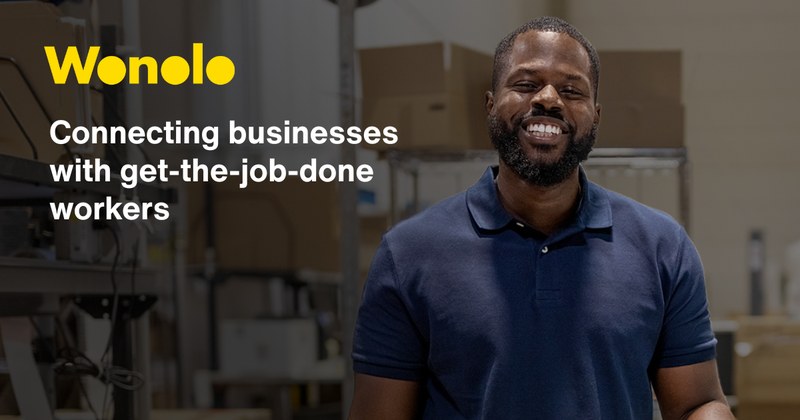
Wonolo
Wonolo is an on-demand staffing marketplace whose name stands for 'Work Now Locally.' Founded in 2013 out of Coca-Cola's Founders program, it connects businesses that need workers for warehousing, delivery, merchandising, event staffing, and general labor with a pool of more than one million registered workers ('Wonoloers'). Employers post shifts that can be filled in minutes, and workers browse and accept nearby gigs through a mobile app with fast payouts. The company has raised over $200 million in venture funding and is used by thousands of companies across the United States.

Mike Shebat
Mike Shebat is the co-founder and CEO of Traba, a New York-based labor marketplace that supplies vetted on-demand workers to warehouses, distribution centers, and light industrial employers. He started the company in 2021 after seeing, from inside a McMaster-Carr shipping floor and later Uber Eats, how often temp workers simply don't show up. Traba has raised roughly $46 million from Founders Fund and Khosla Ventures, and Shebat, a Forbes 30 Under 30 honoree, runs it on a famously intense in-office schedule.
Nick Abramovich
Nick Abramovich is the CEO of Workers Benefit Fund, a New York-based benefits platform that builds the plumbing between gig workers, freelancers, independent contractors and the government, union and private benefits they are eligible for but almost never enroll in. He has been running the company since 2019, when WBF acquired BeneStream, the Medicaid-for-the-workplace outfit he ran as President. Under him, WBF added Upward Finance in December 2024, extending the platform from healthcare enrollment into tax and earnings tools for gig workers. Before benefits, he was CEO of Synaptic Digital and CMO of Ditech Holding Corporation, with earlier stops at MetLife, MoveOnIn.com, and BizSlate. Columbia MBA, Tulane BS.

illuno
illuno is a Plano, Texas technology company that runs an on-demand marketplace connecting businesses, schools, houses of worship and event organizers with fully certified, off-duty police officers. Working like a ride-share app for policing, it lets a business post an event and have local officers claim the shift within minutes, while illuno handles compliance, insurance, scheduling and payments. Backed by Mark Cuban Companies and co-developed with input from the Fraternal Order of Police, the platform reports a 99% fill rate and roughly 24-hour turnaround versus an industry norm of 3-5 days.

Poplin
Poplin is a nationwide app-based laundry marketplace that connects households with vetted, background-checked local 'Laundry Pros' who pick up, wash, dry, fold, and return laundry - typically within 24 hours - for about $1 per pound with free pickup and delivery. Founded in 2018 as SudShare by father-and-son duo Mort and Nachshon Fertel, the company rebranded to Poplin in 2023 and now spans 500+ cities and 8,000+ zip codes, powered by a network of over 100,000 independent Laundry Pros who work from home using their own washers and dryers.

Swipecast
Swipecast is a New York-based fashion-tech marketplace that lets brands, designers, photographers and stylists discover and book models and creative talent directly, bypassing traditional agencies. Founded in 2015 by former hedge-fund manager and modeling-agency owner Peter Fitzpatrick with developer Matthias Wickenburg, the platform pays talent 90% of their fee (versus the ~67% left after agency commissions) and settles payments within one to two days. It has served clients like Estee Lauder, Tommy Hilfiger, Ralph Lauren, Victoria's Secret, Nike and Vogue across cities including New York, LA, London, Paris and Milan.

Jason Chicola
Jason Chicola is the founder and CEO of Rev, the Austin-based speech-to-text company that pairs 50,000 freelance transcriptionists with best-in-class AI to turn spoken words into searchable text. An MIT-trained engineer who became the third employee at oDesk (now Upwork), he built Rev on a simple bet: people will pay for curated quality, and people everywhere want to work from home. Today Rev serves over 100,000 clients including 60% of the Fortune 500, and Chicola is steering the company toward AI tools for the legal system, where accuracy is not optional.

Craig Peus
Craig R. Peus is the CEO of illuno, a Plano, Texas technology company building the first purpose-built staffing marketplace for off-duty law enforcement officers. Backed by Mark Cuban Companies, illuno lets businesses hire certified, on-duty-grade police officers through an app in minutes, while handling compliance, insurance, and payments and giving departments visibility into officer moonlighting. Peus brings a wide-ranging executive resume - a Stanford biology degree, leadership roles in energy midstream (Gravity Midstream), agtech (Tree3), and capital advisory (Blossom Street Capital) - to a sector he argues is two decades behind on technology.

Mort Fertel
Mort Fertel is the co-founder and CEO of Poplin (formerly SudShare), a nationwide peer-to-peer marketplace often called the 'Uber for laundry,' which connects customers with independent Laundry Pros across 500+ markets and 8,000 zip codes. Before laundry, he spent two decades as a globally known relationship expert and author of the Marriage Fitness system, used by millions in marital crisis and the subject of the documentary 'Back from the Brink.' He started Poplin in 2018 alongside his teenage triplet sons after his wife, drowning in laundry for their five kids, asked why she was still washing clothes like her grandmother.

Dots
Dots is a San Francisco-based global payouts infrastructure company that lets marketplaces, platforms, and service businesses pay workers, sellers, and creators anywhere through a single end-to-end API. One integration unifies bank transfers, PayPal, Venmo, Cash App, and stablecoins, and bundles recipient onboarding, KYC/anti-fraud, and tax form collection so platforms can move money to over 1 million payees across 190+ countries without building payment rails themselves.
KarmaCheck
KarmaCheck is an AI-driven background check and credentialing platform that makes employment screening faster, cheaper, and more accurate. Founded in 2019 by LinkedIn co-founder and founding CTO Eric Ly, the company combines real-time identity verification, criminal and credential checks, drug screening, and occupational health into an API-first platform that plugs into the ATS, HRIS, and HCM systems staffing and healthcare teams already use. In 2025 it launched the industry's first MCP server, letting AI agents run verifications through plain-language prompts.