contact-center
(190)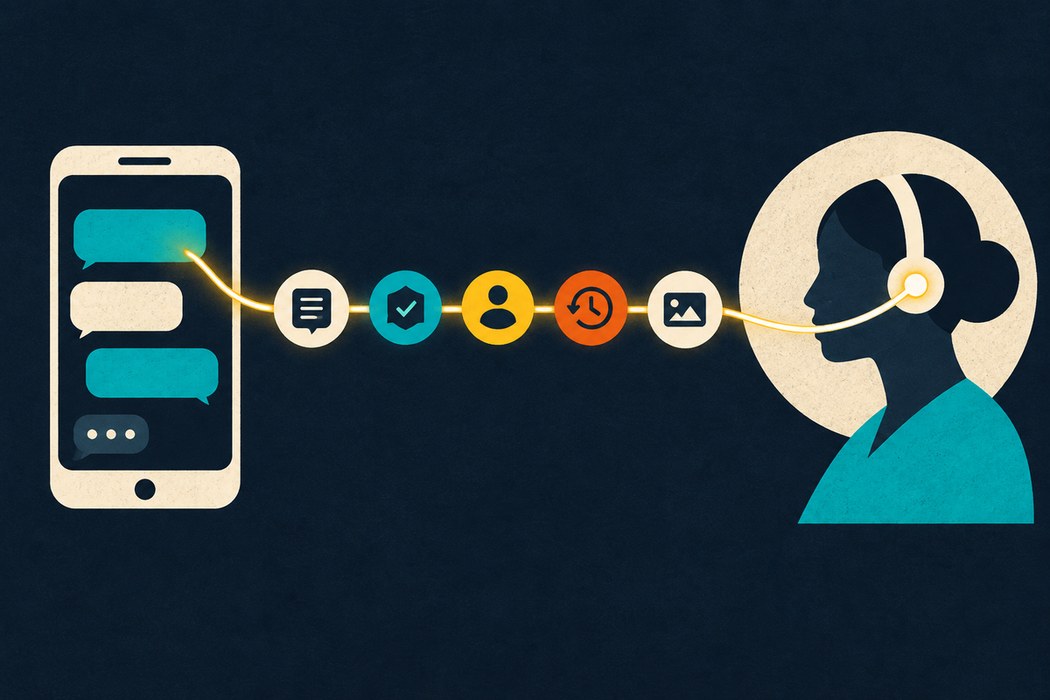
The Chat-to-Voice Handoff Stress Test
A support platform can promise omnichannel everything. The real test is what reaches the agent when a chat becomes a call—and whether the customer has to tell the story again.

The Acquisition Hangover in Your Contact Center
CCaaS acquisitions buy breadth fast. They can also leave seams in data, workflows and support—making a platform’s family tree a surprisingly useful buying guide.

Political Connection puts a campaign on the line in two hours
The product is not a ringing phone. It is the controlled sequence behind it - scripts, lists, live agents, quality checks and a clean report before the next campaign decision.

PCI Pal makes money from the card details its customers never see
The British software company keeps payment secrets out of contact centers while agents stay on the line. Now it is bringing the same idea to AI conversations.

Natterbox wants your phone calls to do their own paperwork
The London company put business telephony inside Salesforce. Now it is teaching AI to answer routine questions, qualify callers and leave the customer record in better shape.

Bruno Bertini Wants B2B Software to Make You Feel Something
His route to the C-suite began beside contact-center agents, not in a brand studio. Two decades later, the 8x8 CMO is still listening for the human signal inside the technical noise.

Kelly Maiden Wants Marketing to Give You Goosebumps
The Aspect CMO has a simple test for creative work: it should make somebody feel something. Her route from a teenage auditorium to a global technology rebrand explains why she still steps away from the laptop to find the idea.

Synthflow AI Put Hold Music on Notice
Synthflow turns the phone queue into software: build an agent, rehearse the awkward calls, connect the CRM, then let it answer. The clever bit is not the voice. It is everything wrapped around the voice.

Gridspace Put Grace on the Phone - Then Gave Developers Guava
Gridspace spent a decade teaching software to survive real phone calls. Its next act, Guava, turns that hard-won voice stack into something developers can actually ship.

Bandwidth Built the Phone Network Your Software Forgot It Needed
Most communications software companies rent the road. Bandwidth spent decades laying its own - then turned that network into APIs for Google, Microsoft, Zoom and the coming wave of voice AI.

The Chat Company That Was Too Early - Then Found 15 Million Leads Hiding in Plain Sight
Blazeo began with a smartphone idea the market did not want. The useful discovery was hiding inside the failure: advertisers did not need another inbox - they needed somebody to turn expensive clicks into actual conversations.

Glia Put the Bank Branch Inside the Call Center - Then Gave It an AI Coworker
Regional banks cannot outspend megabanks, but they can stop making customers repeat themselves. Glia built a $1 billion software company around that stubbornly practical idea - and its next bet is an AI workforce with guardrails.
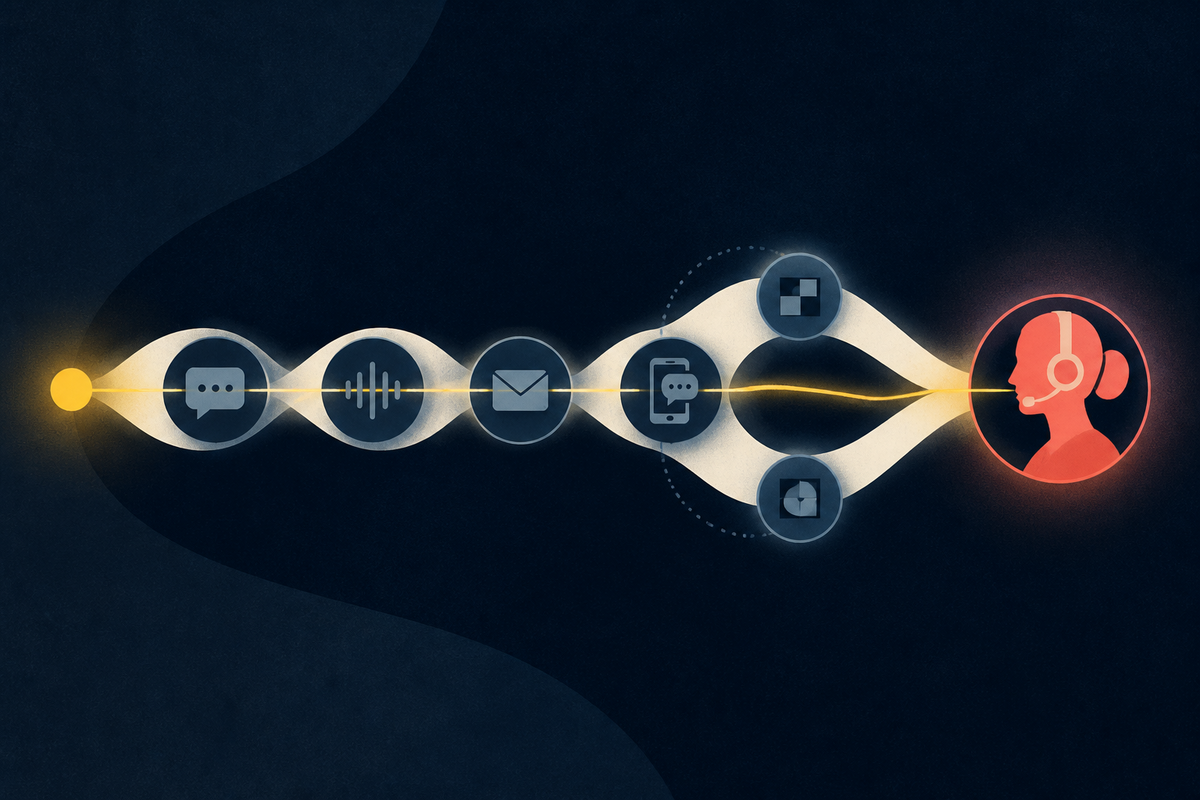
Gupshup or Yellow.ai? Which One Keeps the Customer Whole
Both platforms promise one conversation across every channel. The real choice comes down to where identity lives, what survives a handoff, and whether the reporting can reconstruct the customer’s complete journey.
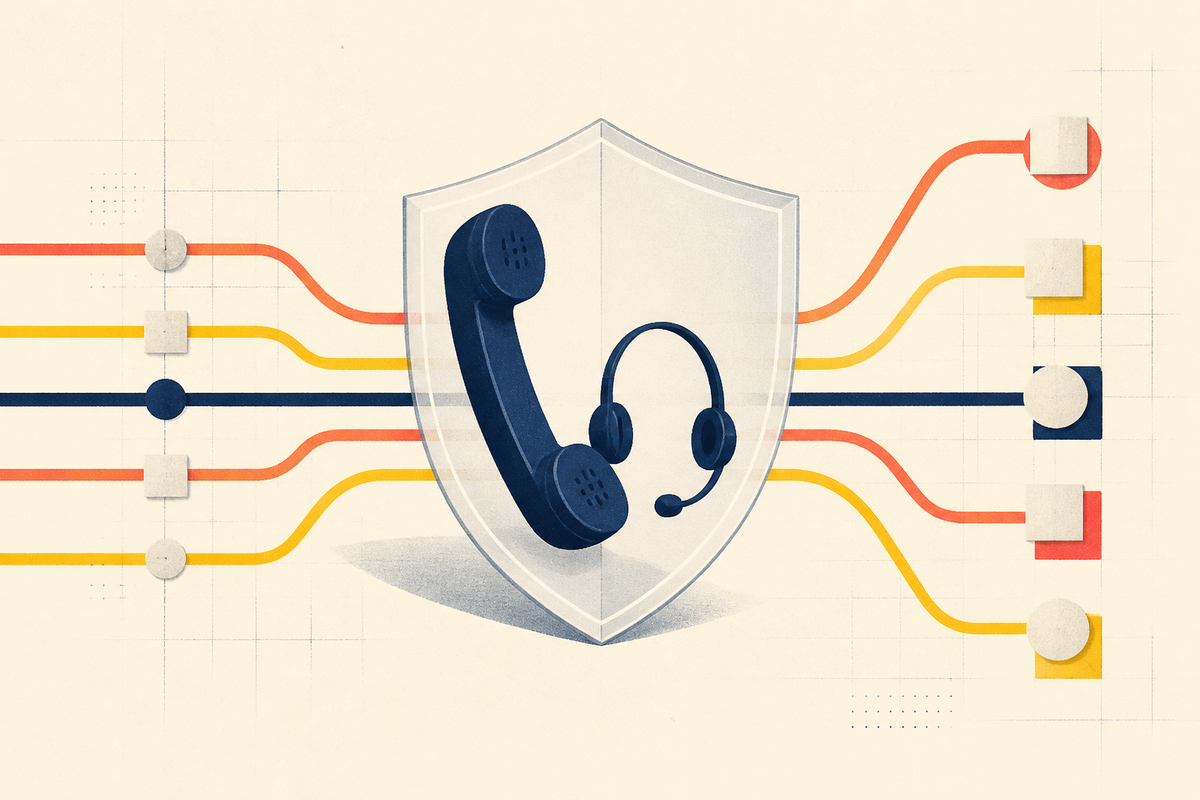
The Contact Center Compliance Shortlist Is Smaller Than It Looks
Eight cloud contact center vendors promise control. The real divide appears in audit evidence, data architecture, accessibility and the fine print around recordings, payments and resilience.

ArenaCX Put the Call-Center RFP on a Diet - Then Built a Marketplace Around It
The Raleigh startup turned an internal customer-support fix into a marketplace of BPOs, software vendors and specialists. The useful idea is not simply outsourcing - it is making vendors easier to compare, contract and change.

85% of Your Customers Still Want a Human. Draw the Matrix.
The automate-everything camp and the automate-nothing camp are both wrong, and most teams have no framework for deciding. The fix isn't a philosophy — it's a matrix: volume against emotional stakes, frequency against how much context a resolution needs.

The 95% Blind Spot Every Contact Center Pretends Isn't There
Most contact centers score under 5% of their calls and guess at the rest. Spiral by UJET reads 100% of conversations — and Turo used it to cut handle time by 28 seconds.

The Quiet Company Teaching Retailers to Answer 50% of Their Customers With a Bot
Leon Chaddock spent 15 years watching contact centers drown in tweets, DMs and chat windows. Sentiment is his answer - one inbox, a low-code bot builder, and a bet that AI can handle half the queue without anyone noticing.

The Ohio Firm That Bought a 1,200-Store Retailer to Feed Its Algorithms
Most investment firms buy a stake and hope. IQVentures buys the whole company, plugs in its own payment rails and risk models, and runs it - a bet that grew into a $504 million take-private of a national retailer.

The Call Center That Wants to Know More Than the Call
Avantive Solutions runs the conversations large brands cannot afford to mishandle - then turns those calls, chats and signals into data for the next one. Its wager is that the useful contact center is neither fully human nor fully automated, but measured in real time.

The Chatbot Company That Bet Against the Chatbot Hype
Inbenta spent nearly two decades teaching machines to actually understand a sentence. When the generative-AI gold rush arrived, that patience turned out to be the moat.

Fusion CX Is Turning the Call Center Into an AI Test Kitchen
The global outsourcer built its reach one delivery center and acquisition at a time. Now it is using millions of real customer interactions to turn contact-center software into an operating advantage.

The Call Center Disappeared. Alta Resources Kept the Conversation
Alta Resources built an 8,000-person outsourcing business by treating customer service as part of the product. Now it is threading conversational AI through a model designed around dedicated human teams.

The Support Desk That Became a Global Operating System
SupportYourApp grew from a three-person software help desk into a 1,500-plus-person support operation. Its next act is less like a call center and more like a human-and-AI operating layer for global tech companies.
The Call Center Giant Teaching AI When to Hand the Phone Back
Konecta grew from seven telemarketing clients into a 109,000-person service network. Its next act is a careful wager: automate the routine, keep humans close, and sell the orchestration layer in between.

Which UJET Are You Looking For?
One UJET runs cloud contact centers; the other engineers electric scooters. The quickest way to tell them apart is the address bar.

Jay Lee Wants Marketing and Revenue to Speak the Same Language
The Five9 growth chief trained as an engineer, learned marketing inside payments giants, and now runs a job that most companies keep in two separate offices.

KMS Lighthouse Puts the Answer Inside Zendesk
The integration brings governed enterprise knowledge into the ticket screen, giving support agents a faster route from customer question to approved answer without another tab.

RingCentral
The company that dragged the office phone into the cloud is now betting the whole switchboard on AI agents that answer, route, and read the room.

Quiq
The Bozeman company that started with text messages now runs AI agents in production for 150-plus global brands - on a platform built so the enterprise, not the algorithm, stays in charge.