hvac
(57)
Joblogic wants to close the gap between job done and invoice paid
A repair can be finished long before the paperwork is. Joblogic has built a business around that delay, and more than £100 million in fresh backing is financing its next move.

Anthony Vigilante Built a Modern Business Around a 1927 Brooklyn Name
The Brooklyn operator inherited nearly a century of family history. His real work has been turning that inheritance into a system that can still answer when the boiler quits.

Ben Schuler Bet That the Electric Motor Wasn't Finished Yet
A lesson about 30 seconds on a factory line led Ben Schuler toward a much larger question: what if the ordinary motor could do more with less material, power and waste?
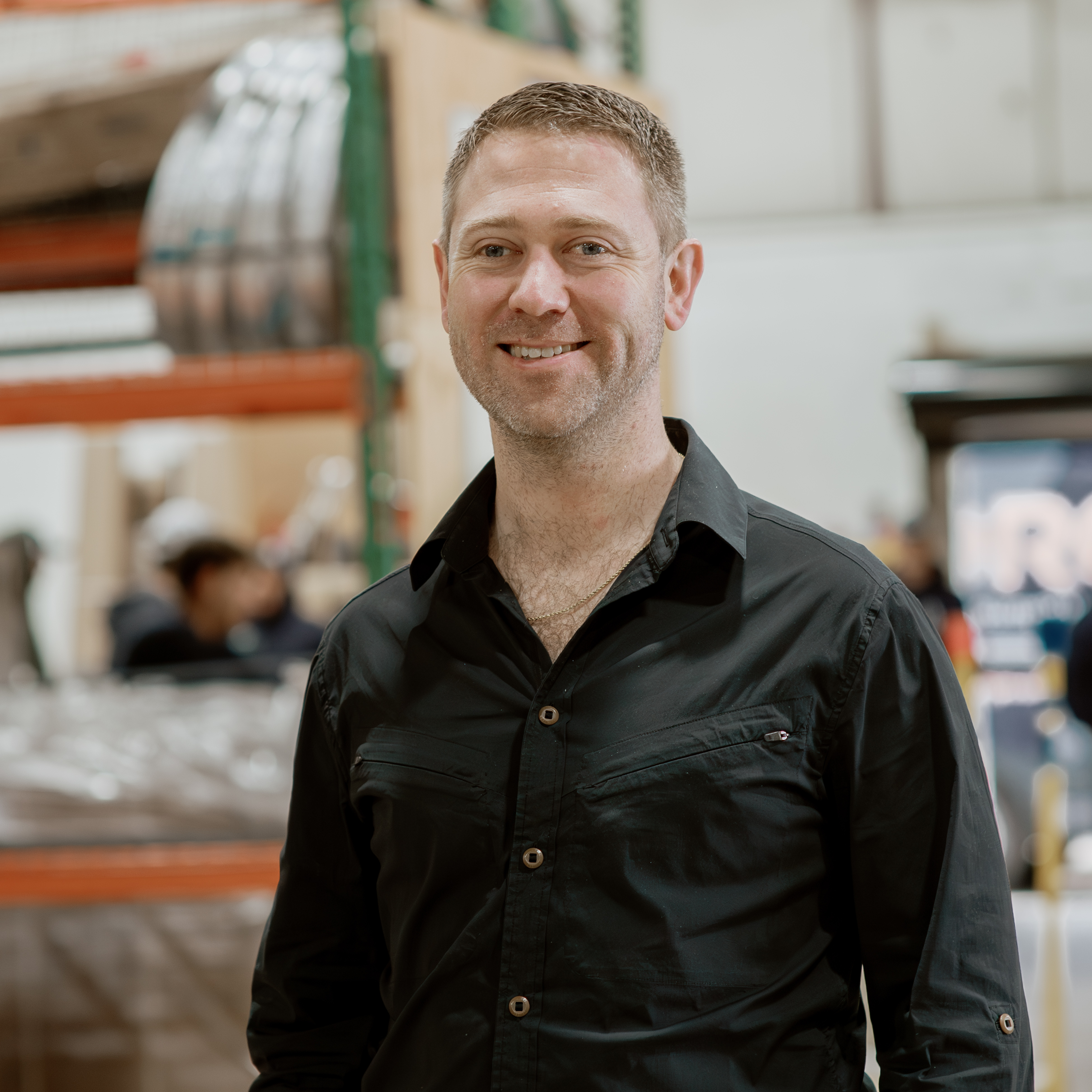
Mark Kasdorf Left the App Economy to Build a Heat-Pump Workforce
After bootstrapping a mobile studio to $25 million and selling it to Accenture, the serial founder chose a harder interface: houses, crews and the stubborn shortage of skilled labor.

François Séguin Is Building the Factory Behind the Thermostat
The products promise comfort. François Séguin's job is to make the machinery, data and people behind that promise work at industrial scale - from a Saint-Bruno factory floor to a 17-site North American manufacturing network.

How GDI Turned a Broom Into a C$2.5 Billion Building Machine - and What Operators Can Copy
GDI spent a century moving from janitorial work into the machinery, data and energy systems behind a building. Its playbook is unflashy, acquisition-heavy and surprisingly useful: own more of the work, make one person accountable and know when to sell the pieces that no longer fit.

The App That Wants HVAC Reps to Close the Deal Before They Leave Your Driveway
Sales Builder Pro turns the messy kitchen-table HVAC quote into a five-minute, signed, financed proposal. A look at how a small Ohio software company built a business inside one stubborn trade.
Abt Built One Store. Then It Outlasted Everyone Who Built a Thousand.
A family-owned retailer in the Chicago suburbs has spent nearly 90 years betting everything on one store - dancing fountain, saltwater shark tank and all - while national chains opened, expanded, and disappeared around it.

How the Company That Made Korea's First Radio Quietly Became a Software Business
It started by building Korea's first radio in a country still rebuilding from war. Nearly 70 years later, LG's fastest-growing money comes from the software inside the TV, not the TV itself.
The Fan Brand That Went to War With Noise - and Won a Third of Amazon
It sells fans, heaters and air conditioners - the least glamorous corner of the appliance aisle. So why does DREO now command roughly a third of the category on Amazon, and what did it figure out that Lasko and Honeywell didn't?
The Ski Bum Who Put NASA's Coldest Material Into Your Winter Boots
Michael Markesbery took $10,000 from an astronaut scholarship and a material NASA uses to insulate spacecraft, and spent a decade figuring out how to make it bend. Now Solarcore® sells that trick to boot brands, the Air Force, and battery makers.
The $1.1 Billion Roll-Up That Says ‘Centralization’ Is a Four-Letter Word
Redwood Services has built a national home-services platform by promising not to sand the personality off local contractors. Its wager is that capital, coaching, and shared data can scale a business without replacing the name on the truck.
The Home-Service Rollup That Lets Local Operators Keep the Keys
Legacy Service Partners is building national scale behind local HVAC, plumbing and electrical brands. Its wager is that shared systems and patient capital can travel farther when the name on the service van stays familiar.
The SEER Group Is Buying the Companies You Call When the House Breaks
The home-services platform has a deliberately quiet pitch: keep the name on the truck, keep the operator in the driver’s seat, and put a larger machine behind both.

Carrie Ruddy Sells the Climate Story One True Sentence at a Time
How a former bank communicator turned a maker of air conditioners into one of the more convincing climate stories in industrial America - and why she insists credibility is the only currency that matters.
The $4.5 Billion HVAC Empire Two Guys Named Johnson and Stone Never Saw Coming
It started as one refrigeration shop in Portland with a name stitched from its two founders. Seventy years later it moves heat pumps, compressors and thermostats through 450-plus branches - and the contractors who buy from it once owned the whole thing.
The Company Behind the Gauge on the Wall
Dwyer Instruments has been making the little pressure gauges bolted to industrial walls since 1931. In 2022 it swallowed OMEGA Engineering - a company twice its public profile - and became a measurement conglomerate hiding in plain sight.
The 140-Year-Old Thermostat Company Cooling the AI Boom
Johnson Controls began with a classroom that was too hot. Today, its chillers, controls and service crews sit at the intersection of two expensive problems: buildings use too much energy, and AI infrastructure produces too much heat.

HomeWorks Energy, Inc.
HomeWorks Energy built a sizable climate business around an unglamorous truth: before a house can go electric, somebody has to find the drafts, explain the rebates and do the work.
Sila Services
Sila Services is assembling a regional home-repair network without sanding the names off the trucks. Its bet is that the best way to scale HVAC, plumbing and electrical work is to keep local trust out front - and put recruiting, technology and capital behind it.
Hiller Plumbing, Heating, Cooling & Electrical
Hiller started with $500, one truck and a promise to leave the work area clean. Thirty-six years later, its real product is bigger than plumbing or HVAC: a repeatable system for making an anxious homeowner feel in control.
Trane Technologies
The company behind Trane and Thermo King is turning a century of cooling know-how into an energy-management business for buildings, refrigerated fleets and AI data centers. Its wager is simple: the cheapest new energy is often the energy a machine stops wasting.
Lennox
A 130-year-old furnace maker has become a $5.2 billion climate-control platform. Its real advantage is not the metal box outside the house - it is the dealer network, parts shelf and service loop wrapped around it.

Winston Chi
Winston Chi is the co-founder and CEO of NOSO Labs, a Y Combinator (Summer 2025) startup building AI agents that help home-services field technicians diagnose problems, close sales, and handle paperwork. A two-time founder focused on vertical AI, he previously started Butter Technologies, a food-wholesale software platform acquired by GrubMarket in 2024. With NOSO he is aiming the same playbook at the trades, starting with HVAC.
Axross
Axross is a Singapore-based, Y Combinator W22 climate-tech company that builds AI-driven HVAC control systems for industrial facilities. By layering machine-learning optimization, IoT sensing, and building-management-system integration on top of existing cooling infrastructure, Axross helps manufacturers in energy-intensive sectors like pharmaceuticals, semiconductors, and precision manufacturing cut HVAC energy use by up to 30%, lower Scope 2 emissions, and hold production environments precisely stable - without ripping out the equipment they already own.

Cheers
Cheers is a Y Combinator (S24) startup building a full-stack Generative Engine Optimization (GEO) platform for local service businesses. It helps HVAC, plumbing, roofing, solar and smart-home companies get recommended by AI assistants like ChatGPT and by Google, by auditing their AI visibility, fixing their web presence, and turning frontline employees into a review engine using NFC tap tools with per-employee attribution.
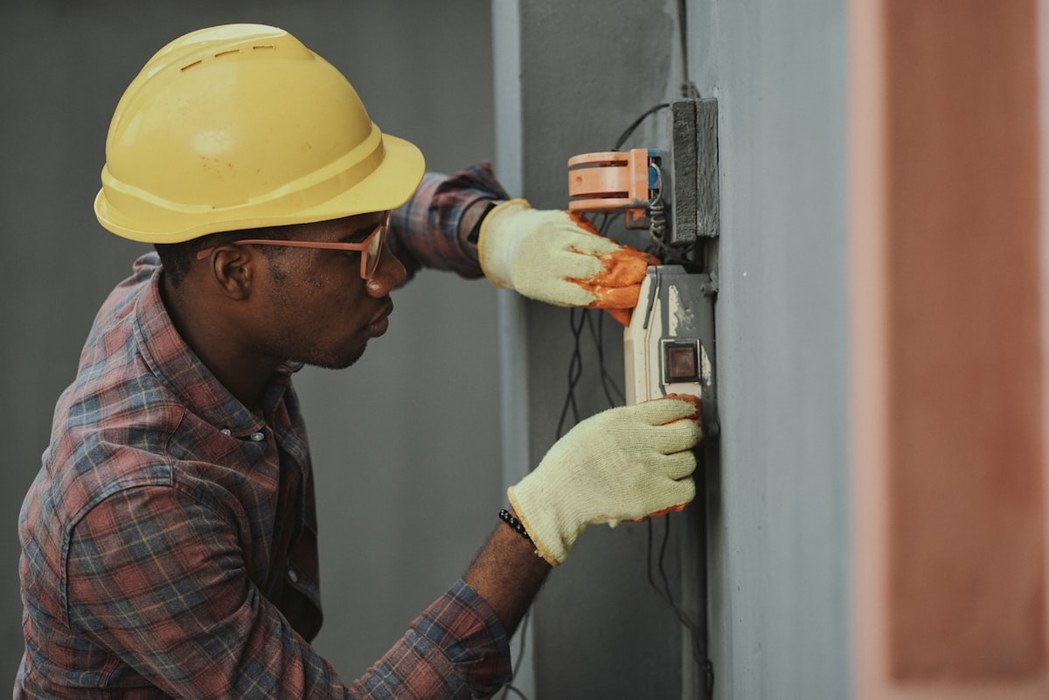
Why Everyone Is Building the HVAC Chatbot
Five AI-native startups and every major field-service platform are racing to build the same product: an AI assistant that sits in a technician's pocket and answers questions about the air conditioner in front of them. The technicians are a proxy. The real contest is whether a thin AI layer on an underserved dataset can survive once the platform that already owns the customer relationship copies the feature for free. HVAC is the smallest, clearest test of a question every vertical AI founder is asking: does depth beat distribution?

NOSO LABS
NOSO LABS builds AI agents for field-service technicians in home-services trades - starting with HVAC, plumbing, electrical, and pest control. Its agents automatically follow up on unsold estimates over text, sync notes to the CRM, and route complex jobs to a back-office dashboard, aiming to recover revenue that would otherwise slip through the cracks without adding headcount. Founded in 2025 by Winston Chi and Alex Xi, the San Francisco company is part of Y Combinator's Summer 2025 batch.
SensorFlow
SensorFlow is a Singapore-based proptech company that uses wireless IoT sensors and AI to help hotels monitor, analyze and automate their energy use - primarily air-conditioning. Its retrofit-ready hardware installs in minutes with no upfront cost and typically cuts HVAC energy consumption by around 30%, letting properties lower operating costs and carbon emissions while keeping guest rooms comfortable. Founded in 2016 and backed by investors including Openspace Ventures and Gaw Capital, the company serves hospitality brands across Asia-Pacific and beyond.

Blue Box Air
Blue Box Air is a Dallas-based cleantech company that restores and maintains commercial HVAC heat-transfer coils using a patented, enzyme-infused bio-treatment process. By cleaning coils from the inside out - with no downtime and no equipment removal - Blue Box improves airflow and heat transfer, cutting building energy consumption and carbon emissions while improving indoor air quality. Its Bio-Automation system keeps coils continuously clean, and the company markets a 'self-cleaning deep coil' that promises far greater heat-transfer surface area than conventional systems.