Profile
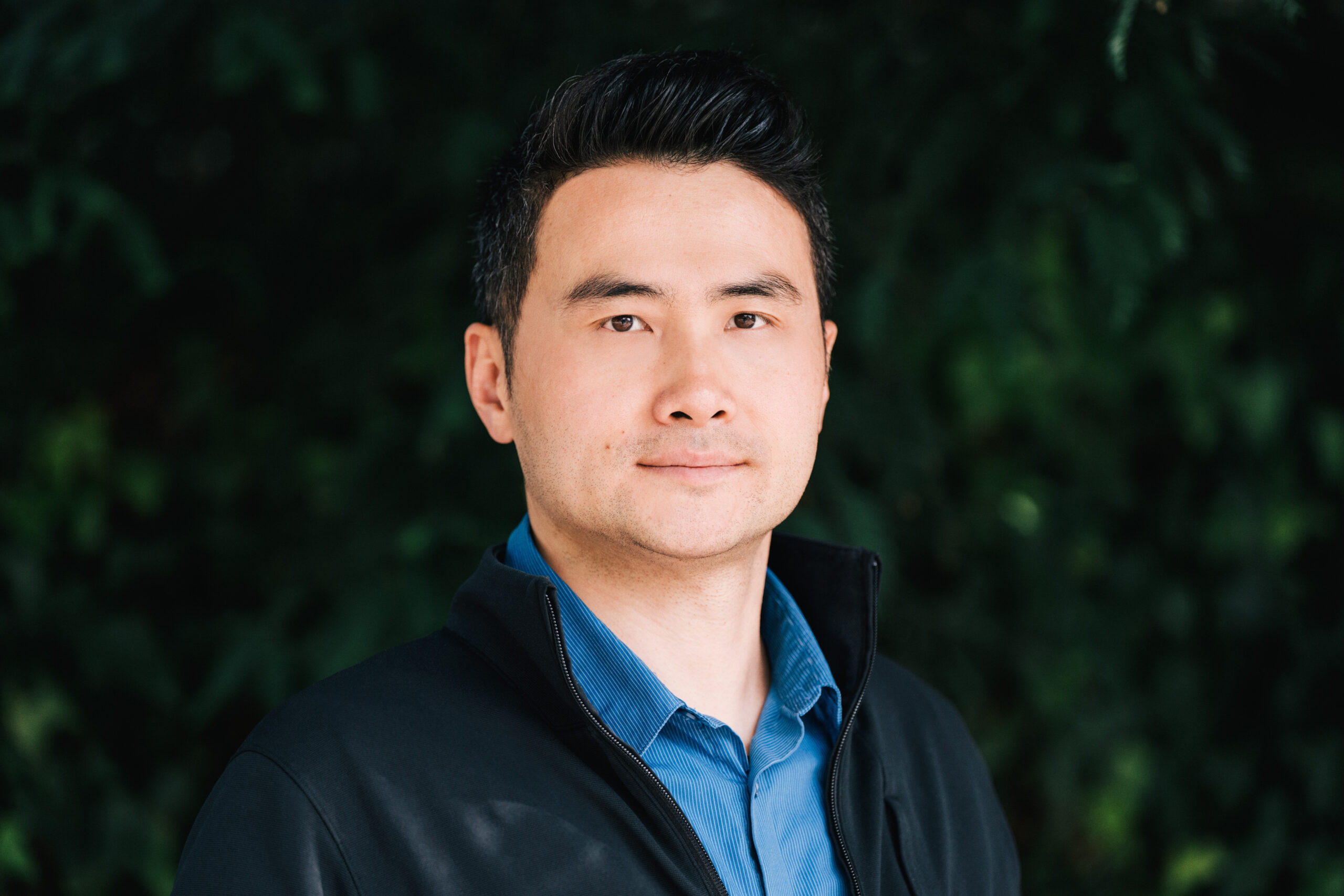
The Engineer Who Keeps Building the Next Thing
In 2007, Ping Wu joined Google as the second engineer on its mobile ads team - before mobile ads were a real business, before smartphones had taken over, before anyone used the word "ecosystem" unironically. He helped build AdMob into a multi-billion dollar operation. Then he moved on to build something bigger.
By 2017, Wu had co-founded Google's Contact Center AI Solution - an enterprise product that gave call centers access to the same conversational AI tools Google used internally. He then co-founded Vertex AI, the machine learning platform that became a cornerstone of Google Cloud. Two platforms. Both still running, both still generating hundreds of millions in revenue. Then, again, he moved on.
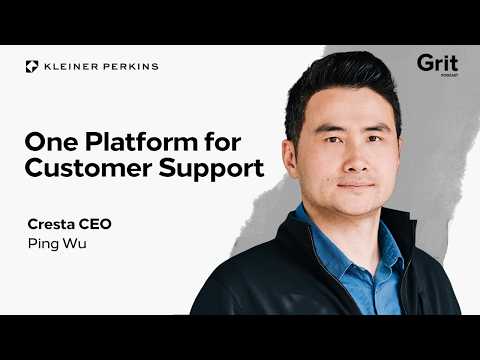
In 2021, Wu joined Cresta, a Sunnyvale startup backed by Sequoia Capital and Andreessen Horowitz, as VP of Engineering and Product. Two years later, he was CEO. The transition wasn't accidental - Wu had been building toward it, learning the difference between engineering at Google's scale and selling to Fortune 500 companies as a startup without a trillion-dollar brand behind you.
Cresta makes AI software for contact centers. That description undersells it. What Wu is building is a unified layer that sits between companies and their customers - real-time AI coaching for human agents, virtual AI agents for fully automated interactions, and a continuous feedback loop that learns from every conversation. The architecture is deliberate. The timing, in a market where "AI contact center" has become every vendor's pitch, even more so.
"The vision is really about empowering people - democratizing knowledge and expertise, and unlocking the potential of humans and AI working together."
- Ping Wu, CEO of Cresta
Background
Fourteen Years, Two Platforms, One Pattern
Wu arrived at Google in late 2007 after completing a PhD in Computer Science at UC Santa Barbara, where he focused on data systems and analytics. Before that: Fudan University in Shanghai for his undergraduate degree, internships at Microsoft Research Asia and IBM Almaden Research Center. The trajectory was research-to-engineering, a path that left him with deep technical instincts and a preference for building things that actually ship.
The AdMob chapter is often treated as a footnote in his biography. It shouldn't be. Wu's early work on Google Mobile Ads came at exactly the moment mobile was becoming the dominant computing platform - and he helped make the advertising infrastructure work at scale. The lessons in building for a market that doesn't fully exist yet stayed with him.
The contact center AI chapter at Google was a different kind of bet. In 2017, contact centers were seen as cost centers, not technology opportunities. Wu saw the AI opportunity embedded in those millions of daily human conversations - the structured data, the knowable patterns, the computable expertise of top-performing agents. He built Google's CCAI into an enterprise product. Then he watched from the outside as that market matured.
Cresta was founded in 2017 by Zayd Enam and Tim Shi from Stanford's AI Lab, operating in the same space Wu had been building for Google. By 2021, Wu was ready to stop advising from the inside of a tech giant and start building from a startup. He called it wanting "a smaller, faster-moving environment." Those who know him would call it pattern recognition: the next wave was visible, and he wanted to be on it.
Career Timeline
The Sequence
1999 - 2003
Bachelor of Science in Computer Science, Fudan University, Shanghai
2003 - 2007
PhD in Computer Science (Data Systems & Analytics), UC Santa Barbara; internships at Microsoft Research Asia and IBM Almaden Research Center
2007 - 2013
Software Engineer then Senior Software Engineer at Google; one of first engineers on mobile ads, helped scale AdMob into a multi-billion dollar business
2013 - 2017
Advanced to Staff and management roles at Google and YouTube; built products across multiple platforms
2017
Co-founded Google's Contact Center AI (CCAI) Solution as Senior Director of Engineering at Google Cloud AI
2018
Co-founded Vertex AI and AutoML at Google Cloud - now foundational ML infrastructure for thousands of enterprises
2021
Joined Cresta as VP of Engineering and Product; left Google after 14 years
Feb 2023
Appointed CEO of Cresta, succeeding co-founder Zayd Enam; had served as interim CEO
Nov 2024
Led Cresta's $125M Series D, co-led by WiL and QIA; Cresta ARR has quadrupled under his leadership
Company & Vision
What Cresta Is Actually Building
The contact center market - often called "customer experience" in politer company - is a $26 billion industry that has been chronically under-served by technology. Most of what passes for innovation is routing logic dressed up in modern interfaces. Cresta's argument is that the real opportunity is not the software around the conversation but the conversation itself.
Wu's platform does three things simultaneously. It coaches human agents in real time, surfacing the right response, the relevant knowledge, the behavioral nudge that turns a good agent into a great one. It powers fully automated virtual agents for interactions where humans add no marginal value. And it closes the loop - using every conversation to improve both the AI models and the human performance benchmarks that the next training session will be built on.
Enterprise clients like United Airlines and Cox Communications are not running pilots. They're running production workloads. That distinction matters in an industry where "AI-powered" often means "we ran a demo and it looked good." Wu is consistently pointed about the gap between demonstration and production readiness: "There's a huge gap between the demo and production."
The $125M Series D closed in November 2024, co-led by World Innovation Lab and QIA (Qatar Investment Authority), with participation from Accenture, Qualcomm, Workday Ventures, and returning investors Andreessen Horowitz, Greylock, J.P. Morgan, Sequoia Capital, and Tiger Global. Total funding reached $406M. The capital is earmarked for R&D expansion and two new engineering hubs - Romania and India - adding to existing offices in Palo Alto, San Francisco, New York, Berlin, and Toronto.
"The transformation, especially for existing Fortune 500 companies, will probably take way longer than a lot of people think."
- Ping Wu, on enterprise AI adoption
Wu's Three-Stage AI Transformation in Contact Centers
1
Foundation
Incremental improvements in speech-to-text and text-to-speech - making conversations machine-readable at scale
2
Agentic
AI that can see screens and interact with interfaces - enabling autonomous agents to take action, not just speak
3
Memory
Transformative systems that eliminate customer data silos - enabling personalized, proactive, cross-journey support
Perspective
The Abundance Mindset
Wu talks about AI and automation in a way that's rarer than it should be: without anxiety. Where most enterprise AI executives feel obligated to address job displacement fears first, Wu goes to abundance - imagining new categories of customer experience that don't exist yet because they've been too expensive to staff.
What if you could have a real conversation with an airline's AI before, during, and after your flight? What if high-touch customer care - currently rationed to premium customers because it's too labor-intensive - could be available to everyone? Wu frames Cresta not as a cost-cutting tool (though it does cut costs) but as infrastructure for experiences that have never been possible before.
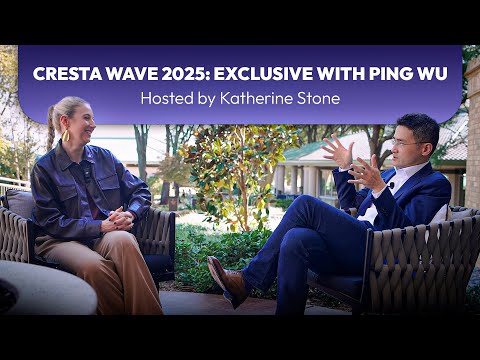
He's also unusually clear-eyed about human irreplaceability in high-emotion interactions. "Human-to-human interaction predates fire, electricity, deep learning and coding," he said in a 2025 interview. "The need to be heard by our own species in high-emotion moments is how we are wired. This is a biology problem, not a technology problem." That's why Cresta's architecture keeps humans in the loop - not as a concession to adoption hurdles, but as a deliberate design choice grounded in how people actually work.
Wu describes his approach as "automating what's ready while using AI to assist humans with the rest" - and forming a feedback loop that continuously improves both. It's an engineering philosophy applied to an organizational problem, which is exactly what you'd expect from someone who spent 14 years building platforms at Google.
Achievements
The Record
🏗️
Two Google Platforms
Co-founded both Contact Center AI (2017) and Vertex AI (2018) - two enterprise products that now serve thousands of organizations worldwide
📱
AdMob Scale
One of Google's first mobile ads engineers; helped transform AdMob into a multi-billion dollar enterprise revenue stream
💰
$406M Raised
Led Cresta's $125M Series D in 2024, backed by Sequoia, a16z, Greylock, J.P. Morgan, and Tiger Global
📈
4x ARR Growth
Quadrupled Cresta's annual recurring revenue under his leadership as CEO since February 2023
✈️
Fortune 500 Clients
Deployed at United Airlines, Cox Communications, and other major enterprise clients running production workloads - not pilots
🌍
Global Engineering
Expanded Cresta's footprint with engineering hubs in Romania and India, alongside offices in SF, NYC, Berlin, and Toronto
Cresta at a Glance
By the Numbers
Character
How He Operates
Wu is a systems thinker with a bias for the practical. Those who've worked with him describe someone who asks "why" until he reaches a root cause - and then fixes that, rather than the symptom. His description of the contact center AI opportunity is typical: rather than starting with "AI can automate this," he starts with "what does a customer actually need in this moment, and what's currently in the way."
Pragmatic systems thinker - root cause over symptom
Abundance mindset: AI creates new experiences, doesn't just cut costs
Technical depth with clear business translation
Prefers production over demos - "shipping beats showing"
Human-centric: keeps people in the loop by design, not concession
Patient on enterprise timelines, impatient on product quality
Feedback-loop thinker: everything should learn from itself