contact-center-ai
(29)
Your AI Agent Is Failing Quietly
The most dangerous contact-center failures do not crash. They complete the wrong task, lose the customer, and report success—unless you instrument the system to see what the dashboard misses.

Swapnil Jain Listened to the Calls Nobody Else Wanted to Hear
Before Observe.AI analyzed millions of customer conversations, its founder spent two years searching for a problem worth solving. He found it under fluorescent lights, on call-center floors where almost every useful conversation disappeared into the archive.

Russell Banzon Markets AI With a Dancer’s Timing and an Economist’s Eye
The Cresta CMO has built a career where spreadsheets meet stagecraft - from Morgan Stanley and Gong’s mini-gong campaigns to a new argument for humans and AI working in step.
Invoca Put a Price Tag on the Phone Call - Now It Wants an AI Agent to Answer It
Invoca spent years teaching marketers what happened after a customer picked up the phone. Its next bet is more ambitious: use that same first-party conversation data to make sure someone - human or machine - answers at all.

CallMiner Spent 24 Years Teaching Companies to Listen. Now It Wants the Bots to Answer.
The Waltham software company built its business by finding patterns in calls that nobody had time to replay. Its next act is riskier: using those patterns to decide what humans should say - and what software should handle without them.
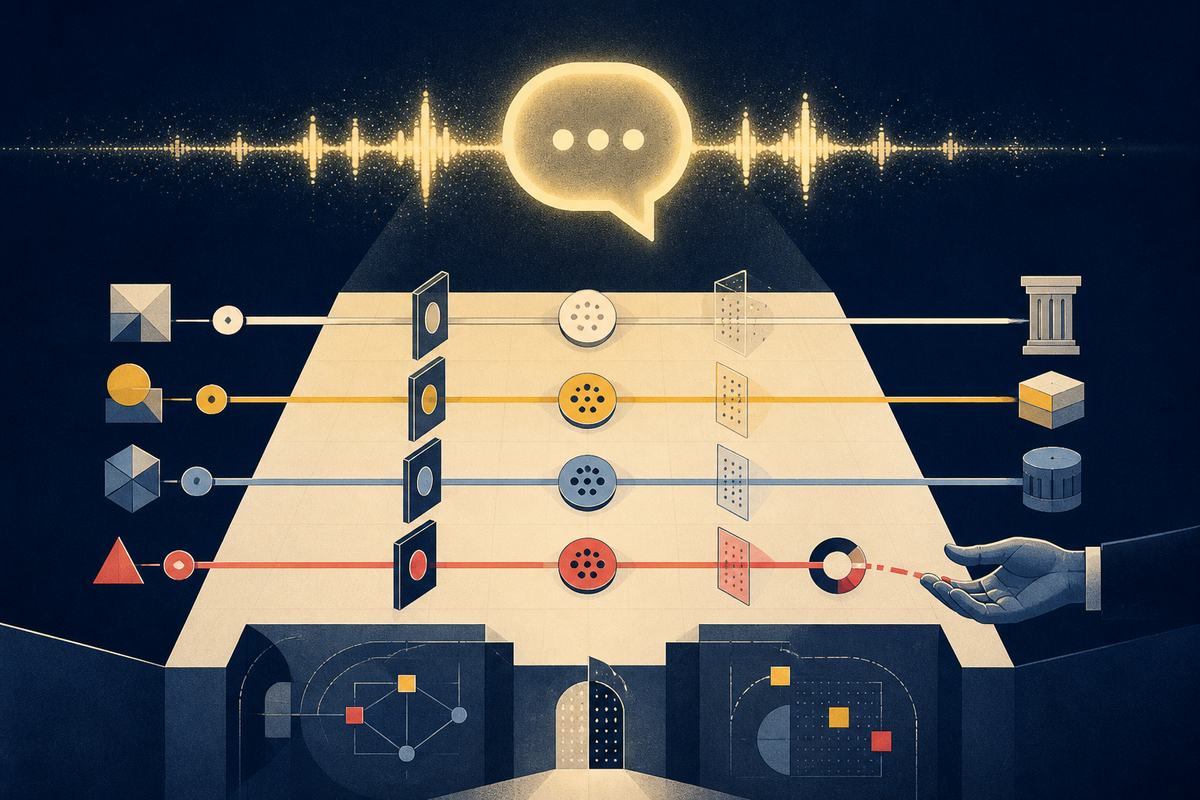
Which AI Agent Platform Survives the Compliance Room?
Pypestream, Teneo.ai, Microsoft Copilot Studio and Parloa can all automate customer conversations. The harder question is which one gives security, legal and operations enough evidence to approve the agent and keep it under control.

Dave Rennyson Built a Career Listening to the Calls Nobody Else Heard
Before AI learned to talk, Dave Rennyson spent decades learning how companies listen. His playbook is disarmingly practical: join the data, coach the people, and never let the dashboard become the work.

Marc Bernstein Built Balto in the Five Seconds Before Regret
A forgotten sales lesson, an Excel macro, and 82 early demos gave Marc Bernstein the blueprint for Balto. His larger bet is that AI should carry the repetitive work while people handle the conversations worth remembering.

NQX Put 10,000 People Behind a Simple Bet: AI Should Make Call Centers More Human
The company formerly known as Nordia is trying to modernize a stubbornly human business without automating away the humans. Its playbook - better onboarding, mixed-shore teams, and carefully placed AI - offers a useful counterweight to the contact-center hype cycle.
Balto Put a Coach Inside the Call - Now 500 Million Conversations Later, the Hard Part Is Knowing When AI Should Speak
A forgotten sales script became an Excel macro, then a $52 million bet on fixing conversations before they go wrong. Balto's lesson for AI builders is simple: start with one measurable moment - and earn the right to automate the rest.

Virtual Agent or Chatbot? Make It Pass These Four Tests
The label is cheap. Four practical tests reveal whether support AI can act, remember, escalate and hand a human the full story.

Priya Vijayarajendran Is Going Back to the Work
After leading ASAPP from the technology seat to the CEO’s office, Priya Vijayarajendran is returning to the identity that has followed her through SAP, IBM and Microsoft: a builder who wants enterprise AI to survive contact with reality.

Your Contact Center Is Quietly Asking to Be Replaced
The warning signs rarely arrive as one spectacular failure. They show up as extra tabs, stalled AI pilots, spreadsheet reporting and channels that still cannot carry a customer's context.

Your Contact Center Is Telling You to Leave
The loudest warning signs are not missing features. They are the daily workarounds that reveal a platform built for another era—and a bolt-on architecture that cannot keep up.

The Conversation Intelligence Buyout Map
Conversation intelligence did not disappear; it moved inside bigger platforms. This field guide tracks who bought whom, what survived, and why Spiral by UJET is a rare acquired product still standing on its own.

Why 200 Agents and 5,000 Agents Buy Different AI
The same AI pitch lands in two entirely different buying machines. Here is how to choose a contact center platform for the operation you actually run—not the logo you hope to resemble.
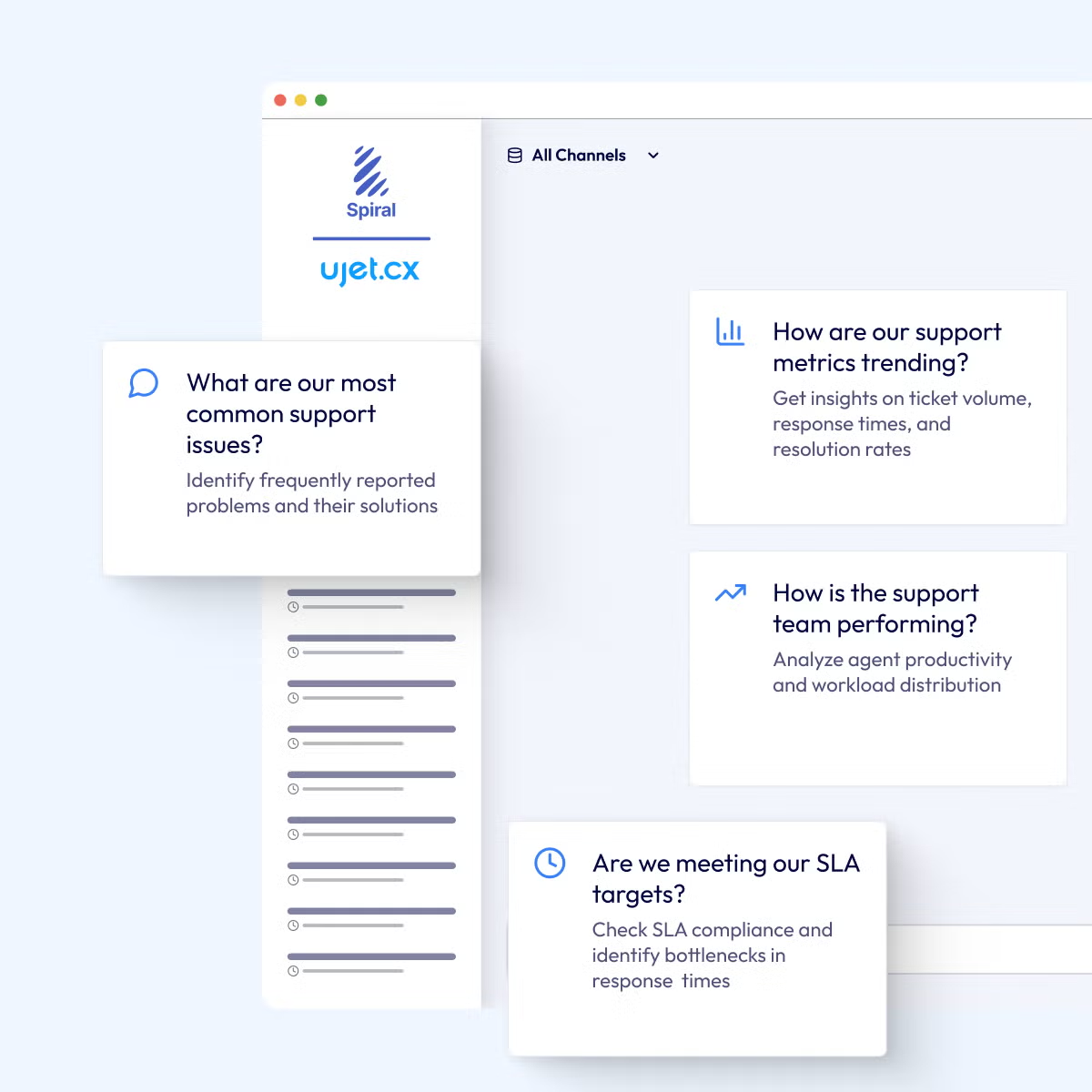
Spiral by UJET Wants to Make Support Tickets Disappear
Spiral reads every customer conversation to find the trouble upstream. Turo's first three months suggest the useful metric is not how fast support answers, but how often customers never need to ask.

Cresta Wants Every Agent to Sound Like Your Best One
Born in Stanford's AI lab and now worth $1.6 billion, Cresta listens to every call in a contact center and coaches humans in real time - while quietly building the AI agents meant to replace some of those calls entirely.

Observe.AI
The company wants to turn every customer service call into something a machine can hear, judge, coach and eventually handle on its own.
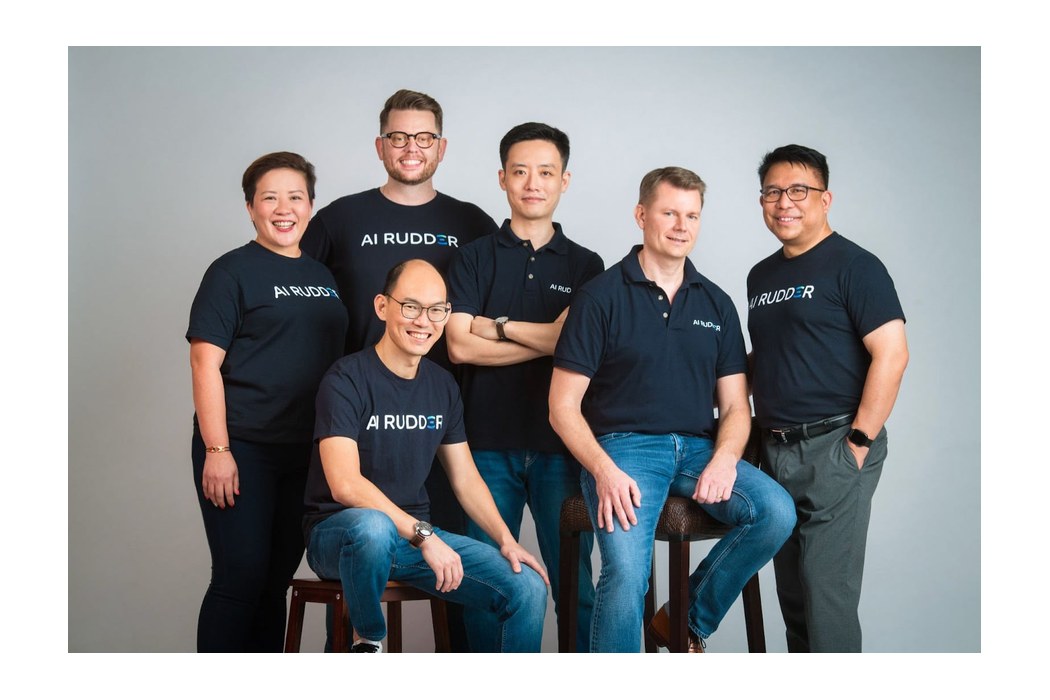
AI Rudder
AI Rudder is a Singapore-based voice AI company that automates high-volume customer phone calls and chats for banks, lenders, insurers, e-commerce and logistics firms. Its human-sounding voice agents handle payment reminders, verification, surveys, telemarketing and customer service across 15+ languages and regional accents, letting enterprises scale contact-center work without adding headcount. Backed by Sequoia, Tiger Global and Coatue, it serves 500+ enterprise clients concentrated in Southeast Asia and Latin America.

The Google CX Product Maze, Finally Mapped
A plain-language map of Google's confusingly named customer-experience AI portfolio. It untangles CCAI, Agent Assist, CX Agent Studio and Gemini Enterprise for CX, explaining what each one actually is and what a buyer gets. It also clarifies UJET's unusual position: Google Cloud sells Google Cloud CCaaS powered by UJET as a first-party offering, which is a different relationship than being one of many logos in a marketplace.

Three Words, Three Meanings: The Quiet Fiction of 'Built on Google Cloud'
"Built on Google Cloud" gets stamped on countless vendor slides, but the phrase hides at least three very different relationships: renting infrastructure as an ordinary GCP tenant, holding a Google Cloud Marketplace listing, or being co-built and resold by Google as its own first-party product. Buyers can't tell them apart from a logo. This piece unpacks the distinction and shows where UJET actually sits: Google sells Google Cloud CCaaS, powered by UJET, as its own contact center offering, managed, delivered and supported by Google, a level of commitment that a marketplace listing or shared hosting does not confer.

Skit.ai
Skit.ai is a New York-based conversational AI company that automates debt collection and accounts receivable operations for banks, agencies, fintechs, healthcare systems, and utilities. Founded in 2016 as Vernacular.ai and rebranded to Skit in 2021, it runs a generative-AI-powered platform of voice, SMS, email, and chat assistants plus a Collection Intelligence Platform and an ecosystem of specialized AI agents that negotiate payments, capture dispositions, and enforce federal and state collection compliance at scale.

Tim Moss
Tim Moss is the Chairman and CEO of Talkmap, a Dallas conversational-intelligence company that turns raw call-center calls and chats into structured, real-time customer insight using patented AI. A Texas A&M political science graduate with more than 30 years in technology and financial services, he previously ran the turnaround of the $800M+ carrier services company Syniverse as COO, launched a new organization as an Ericsson senior vice president, and founded IMG Venture Group and the consultancy Integrity Management Group. Talkmap raised an $8 million Series A led by Stage1 Ventures in February 2022, part of roughly $17.6 million total.

VoiceOps
VoiceOps is a New York-based AI company that turns customer conversations into structured, decision-ready intelligence. Its platform listens to every call, email, SMS, and chat a B2C business handles, then automatically grades quality, flags compliance risks, coaches reps, and surfaces the patterns that separate top performers from everyone else - no manual prompt-writing required. Founded in 2016 out of Y Combinator, VoiceOps started as a coaching tool for call-center sales teams and has grown into a broader conversation-intelligence agent used by companies in lending, healthcare, education, and home services.

ScoreData Corporation
ScoreData Corporation is a Palo Alto-based AI/ML company that helps consumer-facing businesses turn legacy and external data into real-time predictive decisions. Its ScoreFast platform builds and continuously updates machine learning models with minimal manual work, powering omni-channel customer engagement, caller-to-agent mapping, fraud detection, churn management and cross-sell for financial services, insurance and healthcare contact centers.

Malte Kosub
Malte Kosub is the co-founder and CEO of Parloa, a Berlin-born enterprise AI company building agentic AI for customer service. He started his first company in 11th grade, founded the conversational AI agency Future of Voice in 2017, and spun out Parloa in 2018. In January 2026 Parloa raised a $350M Series D at a $3 billion valuation - tripling its worth in eight months. Kosub has stated his ambition to build a $100 billion company out of Germany.
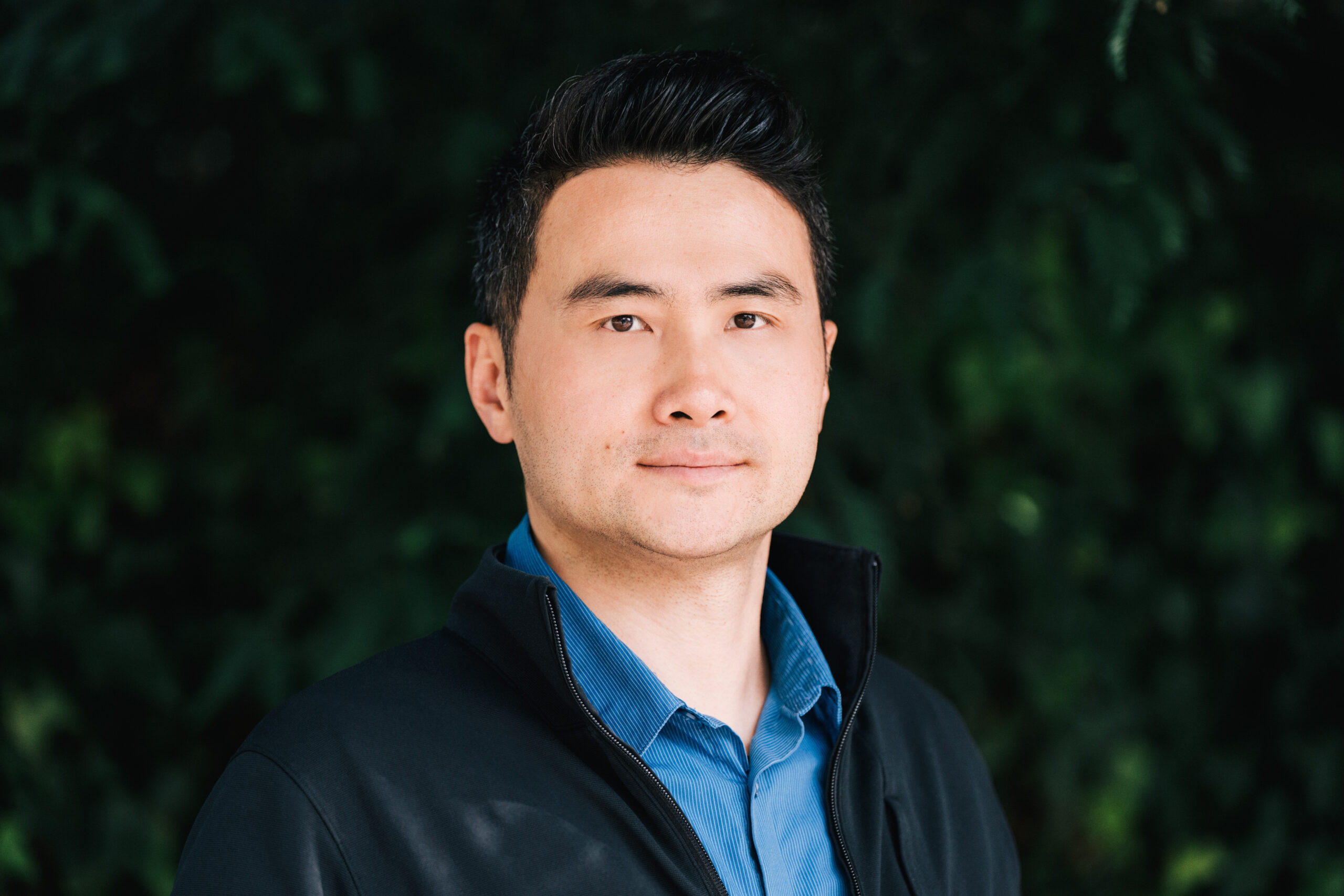
Ping Wu
Ping Wu is the CEO of Cresta, a Sunnyvale-based AI company transforming contact centers with generative AI. Before leading Cresta, Wu spent 14 years at Google where he co-founded the Contact Center AI (CCAI) Solution and Vertex AI platform. He holds a PhD in Computer Science from UC Santa Barbara and a BS from Fudan University. Under his leadership, Cresta raised a $125M Series D in November 2024 and quadrupled its ARR, serving enterprise clients like United Airlines and Cox Communications.

Level AI
Level AI is a Mountain View-based enterprise AI company that builds conversational intelligence for contact centers. Its platform listens to every voice, chat, and email interaction, automates quality assurance with generative AI, coaches agents in real time, and surfaces the Voice of the Customer for executives. Founded in 2019 by ex-Amazon Alexa engineer Ashish Nagar, Level AI has raised about $74M and powers customer operations at brands like Affirm, Carta, Vista, Penske and ezCater.