The most expensive hole in a digital marketing dashboard can sound like this: ring, ring. A shopper clicks an ad for a mortgage, a dental implant, a new roof, or a car. Then the tidy online trail ends. They call. The marketing team knows what the click cost, but not whether the caller was a serious buyer, whether the agent said the right thing, or whether anyone answered. Invoca built its business in that gap.
The company assigns trackable phone numbers to campaigns and individual web sessions, then joins the call with the digital path that preceded it. Its software transcribes and analyzes the conversation, identifies intent and outcomes, scores the person handling it, and sends useful events - qualified lead, appointment, sale - back to advertising, analytics, and CRM systems. In plain English: it helps a brand stop rewarding an ad merely for making the phone ring.
That sounds like a niche until you look at the customers. Invoca is built for considered purchases, where a conversation often sits between curiosity and money: hospitals, insurers, banks, telecom companies, auto retailers, home-service networks, and other multi-location businesses. Mayo Clinic, Verizon, Mutual of Omaha, AutoNation, DISH, and University Hospitals have all been publicly named. For these organizations, a missed or poorly routed call is not a support annoyance. It is paid demand leaking out of the funnel.
The first product was a receipt for a ringing phone
Invoca began life in 2008 as RingRevenue. Co-founders Jason Spievak, Colin Kelley, and Robert Duva had worked at communications company CallWave, where they had seen both sides of performance marketing: buying customers through affiliate networks and serving advertising themselves. Clicks could be attributed and paid for. Calls were harder. RingRevenue gave publishers, advertisers, and agencies a way to track and manage inbound calls with the rigor they already applied to web traffic.
The timing was comically hostile. Spievak later recalled sending bridge-financing documents to six handpicked people on the day the market fell 500 points in September 2008. All six funded the round. The first thing to wobble, then, was not the basic customer problem. It was the financial world outside the office.
The more instructive failure arrived in the name. RingRevenue accurately described a pay-per-call tool, but focus groups did not reliably understand it, and accuracy became a cage as the product expanded. During a naming session, Spievak combined “inbound” with “voca,” a reference to voice. The company formally emerged as Invoca in 2014. It was a fuzzy name with a useful property: it left room.
That larger job unfolded one layer at a time. Call attribution answered where the caller came from. Signal AI, launched in 2017, began classifying what callers wanted and whether they converted. PreSense carried pre-call digital context into routing and the agent desktop. Signal AI Studio let business users train custom models by labeling examples from their own calls. Quality Management automated scorecards that contact-center supervisors once assembled by listening to tiny samples.
The Invoca loop
Then the dashboard learned to pick up
Invoca's newest chapter changes the verb. Conversation intelligence observes and recommends. An agent acts. The company introduced a two-way AI Messaging Agent in late 2025, expanded into voice in 2026, and named the combined revenue-conversion agent Nico. Nico responds to forms, texts, and calls; asks qualifying questions; books or reschedules appointments; answers routine questions; and routes a valuable caller to the right human.
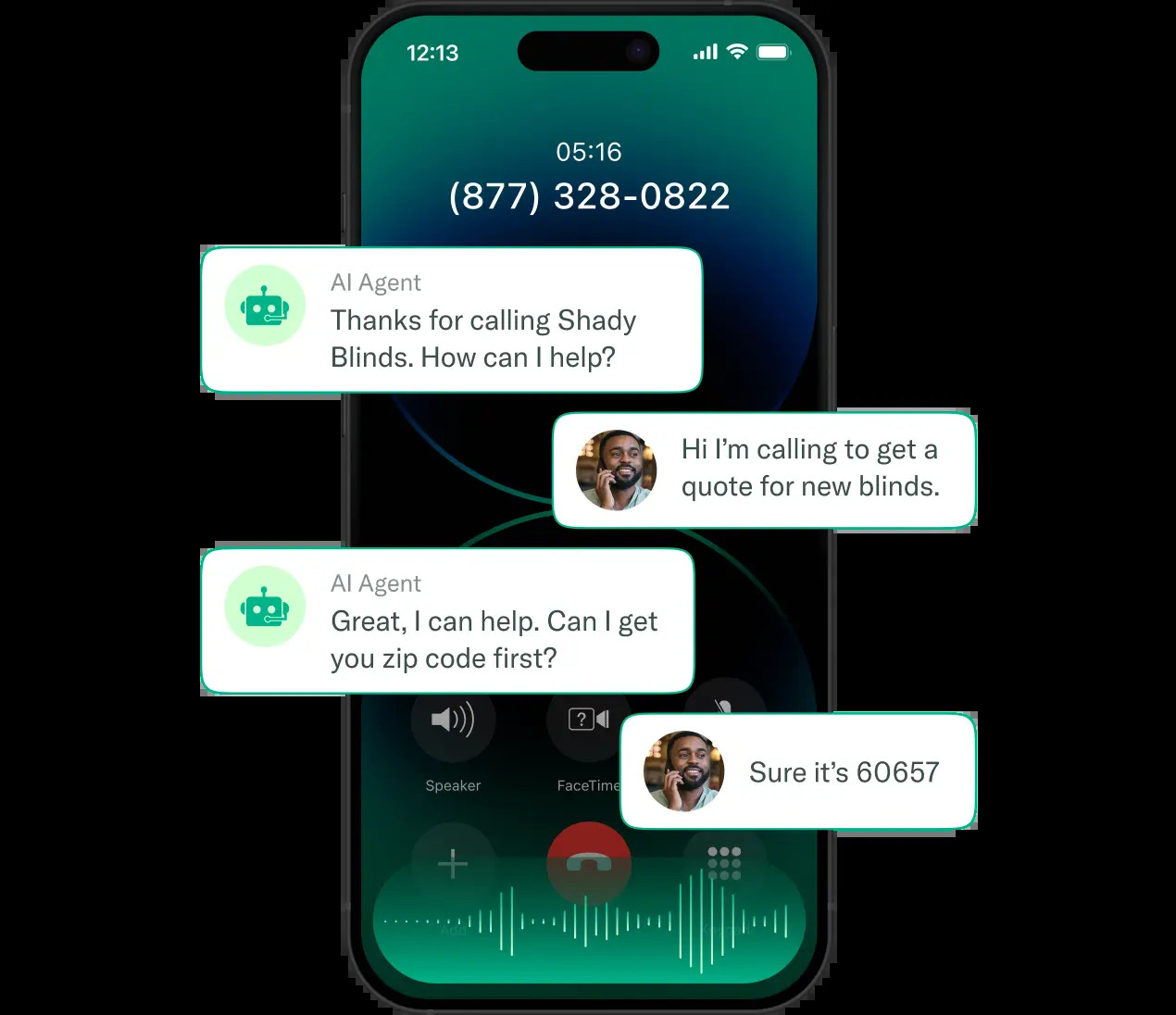
The differentiation is less about a synthetic voice than the context behind it. A generic voice bot begins with what the caller says. Invoca can begin earlier, with the ad clicked, pages visited, previous interaction data, and patterns in a brand's better-performing calls. Every outcome can then be tied back to the campaign that generated it. The company is trying to close a loop that point products often leave as a pile of integrations.
University Hospitals offered the neatest early proof point. Its digital marketing vice president said Nico recovered 25 appointments on the first night. He also described a patient who texted from inside a hospital asking for help; the agent directed that person to on-site staff rather than improvising. The second anecdote matters more than the first. A useful agent needs a conversion instinct and a firm idea of when not to continue.
What it costs - including the part procurement cannot quote
Invoca publishes Pro, Enterprise, and Elite packages, but no current dollar prices. Each tier bundles allowances for local or toll-free numbers and custom “Signals,” while advanced conversation analytics, quality management, routing, and premium integrations appear as included features or add-ons depending on the package. Contracts are quote-based and generally annual. Usage, telecom, integrations, and product mix shape the price.
The less visible cost is implementation. A company must place dynamic number insertion on its sites, size number pools, connect ad platforms and CRM data, define what a lead and conversion actually mean, label examples, handle recording consent and retention, and give someone authority to change campaigns or coach agents. Reviews commonly praise the analytics and support while flagging a learning curve and complex setup. The product is not a magic ear dropped into a call queue.
Where the work hides
The business model works because Invoca aims at large pools of costly demand. If a home-services chain runs paid search across hundreds of locations, improving the qualified-call rate or saving a small fraction of missed appointments can pay for enterprise software. The same pitch is much weaker for a tiny business receiving a dozen low-value calls each week. CallRail and other lighter tools may be simpler for basic attribution; contact-center suites may already own quality and routing; CRM or communications platforms may be “good enough” when the joining of digital and call data is not the main problem.
The move that readers can steal
The portable lesson is not to build a voice agent. It is to find the handoff where measurement disappears. Invoca chose the jump from a browser into a phone conversation. It attached an identifier, captured the outcome, returned that outcome to the system that created demand, and only later automated the response. Each product widened the value of the same underlying event.
The blind-spot playbook
- Find an expensive workflow that leaves software and enters an opaque human channel.
- Create a durable link between the upstream action and the downstream outcome.
- Define success in business language before training a model to recognize it.
- Push the result back into the tool where budget or behavior can change.
- Automate only after the escalation path and economics are visible.
Invoca also offers a useful lesson in changing minds without abandoning a wedge. RingRevenue's early job was narrow but real. The company did not discard it when “conversation intelligence” became a larger category. It kept call tracking underneath Signal AI, quality management, and agents. The new products could borrow customers, data, integrations, and credibility from the old one.
Conditions that fit
- High call or form volume
- Large value per conversion
- Paid media drives offline action
- Clean CRM outcomes exist
- Marketing and operations can cooperate
Conditions that break it
- Calls are rare or low value
- Recording rules cannot be operationalized
- No stable definition of conversion
- Data stays trapped in team silos
- Nobody owns action after insight
A crowded market, with one unusually long memory
Invoca now sits at the intersection of call tracking, marketing attribution, speech analytics, quality management, and AI engagement. That puts it against specialists such as CallRail, Marchex, CallMiner, and Observe.AI, plus broad platforms from NICE, Genesys, Twilio, Salesforce, and HubSpot. The boundaries will keep blurring because every analytics vendor wants to act and every agent vendor wants better context.
Its defense is history used correctly. Invoca has been building the campaign-to-call-to-outcome graph since before “agentic” became a slide-deck reflex. It acquired DialogTech in 2021, passed $100 million in run-rate revenue, and raised an $83 million Series F at a $1.1 billion valuation in 2022. The funding gave it room to expand internationally, integrate the acquisition, and keep moving across the marketing and contact-center seam.
That does not guarantee Nico wins. Voice and messaging agents will be judged on messy edge cases, latency, compliance, appointment-system failures, human handoffs, and whether buyers actually tolerate them. The platform is strongest when the customer's journey is already instrumented and the organization is prepared to act on what it learns. Without those conditions, AI merely answers faster into the same operational fog.
Still, the arc is unusually coherent: first count the calls, then understand them, then improve the people handling them, then let software handle the moments people miss. Invoca found a black box hiding behind the most ordinary object in business - a telephone - and has spent eighteen years making it smaller.
Keep the conversation going
See the product in motion, inspect the underlying APIs, or revisit the scrappy RingRevenue years.