ai-agents
(1,112)
Yuriy Sorokin and the trouble with putting a market on autopilot
He started with mining rigs that overheated the office and a trading tool his friends wanted to borrow. Nine years later, the 3Commas co-founder is still working on automation - with harder lessons about trust, scale and who holds the controls.

Carlos Vega and the price of waiting
Before Tesorio, Carlos Vega financed businesses waiting to get paid. Then he began asking why they were waiting in the first place.

Christian Kletzl and the customer who came back
Before UserGems, Christian Kletzl tried helping people sell their unwanted belongings. The business that stuck began with a simpler discovery: a customer could leave a company without leaving the relationship.

Paul Klein IV’s One-Trick Theory of the Internet
He helped sell a livestreaming startup, then returned to the browser problem buried inside it. At Browserbase, Paul Klein IV is betting that software needs to use the same messy web as the rest of us.

Vrajesh Bhavsar and the art of stopping things in time
From the machinery inside the iPhone to the decisions made by AI agents, the Operant AI co-founder has kept returning to one question: when should software be stopped?

Yair Kuznitsov and the Million-Hour Problem
An audit full of screenshots helped send Yair Kuznitsov from security engineering into entrepreneurship. The Anecdotes co-founder is still working on the same question: how much time should people spend proving what their software already knows?

Max Yankelevich and the Work Between the Work
Before AI agents became a business pitch, Max Yankelevich was teaching software to learn from office workers. The WorkFusion co-founder’s career follows a persistent question: which parts of a working day deserve a person?

Caleb Peffer and the trouble with a working business
Mendable had customers and $250,000 in annual recurring revenue. Caleb Peffer and his co-founders chose to start again with Firecrawl, following a problem they understood rather too well.
Dave Sifry and the conversation that wouldn’t sit still
A basement experiment helped bloggers find one another. Two decades later, Technorati’s founder is still building ways to turn scattered information into a useful human connection.

Nikita Shamgunov and the customer who never sleeps
He helped build SingleStore for a world drowning in data. At Neon, Nikita Shamgunov discovered a different customer: software that builds more software, and needs somewhere to put its things.

Guy Tytunovich and the problem with a perfect customer
A curious child, an intelligence officer, an advertising founder. Guy Tytunovich built CHEQ around a question businesses had been paying to ignore: who, exactly, is clicking? Now the answer might be an AI agent with a shopping list.

Shrav Mehta and the business of getting unstuck
Before Secureframe, Shrav Mehta shared compliance spreadsheets with people in his network. One impatient phone call helped turn that habit into a company.

Vincent Weisser’s Case for a Thousand AI Labs
Vincent Weisser wants more people to shape the intelligence they use. At Prime Intellect, that conviction has taken him from scattered GPUs to the machinery of an AI laboratory.
Position² and the art of counting what counts
A ringing phone can fool a marketing dashboard. Position² builds its growth business around a harder question: which signals actually lead to a sale?

Semos Cloud makes thank you part of the system
A forgotten thank-you looks like a small problem. Semos Cloud has built an enterprise business around what happens when recognition, feedback and rewards become easier to give.
Ridgeline’s big idea: fewer moving parts.
Investment managers have spent decades making separate systems agree. Dave Duffield’s latest company asks what happens when they share the same facts from the start.
PeerIslands found the bottleneck.
Before it put AI to work on legacy software, PeerIslands moved engineers to Cayman to get around a different kind of delay. Now part of Winter, the company is betting that faster delivery starts with finding what holds the work up.

Orange Logic makes final mean final.
The company behind Lionsgate’s marketing library and Headspace’s content archive sells a deceptively difficult idea: every file should arrive with its context intact.

Addo AI makes AI do the day job
A healthcare transport provider had 50,000 daily customer interactions and a contact centre struggling to keep up. Addo AI’s answer reveals where enterprise AI earns its keep: inside the workflow.
Logz.io wants to give engineers their night back.
The company began by taking care of the logging stack. Its next bet is bigger: AI agents that investigate the incident before an engineer opens a dashboard.
SmartBug Media follows the click.
A click is easy to count. What happens next is where this HubSpot-focused agency has built its business - connecting marketing, sales, software, and the people caught between them.

Triple Whale wants the dashboard to do the work
The ecommerce company began with a spreadsheet problem. Now its bet is that the same system that measures your marketing should help run it.

SailPoint and the keys nobody takes back
A supermarket needed 138,000 new digital identities. SailPoint helps enterprises decide who gets access - and when that access should disappear.
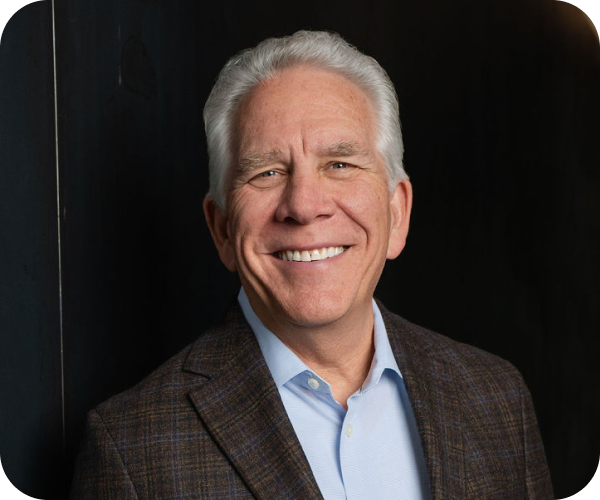
Mark McClain and the business of knowing who belongs
He expected to retire at IBM. Instead, Mark McClain built two identity companies, took SailPoint public twice, and kept returning to a stubborn question: how should a company treat its people?

HKR.TEAM: Do the job. Then redesign it.
For a decade, HKR.TEAM helped companies build remote teams. Its next bet: put someone inside the work, teach AI the routine, and keep a person responsible for the result.

bld.ai wants to make consulting run like software
The AI builder puts a global network of specialists behind one platform. Its most revealing experiment is the machinery that turns their work into proposals, projects, and payments.

Instantly.ai and the price of one more inbox
An agency’s expensive email habit became a software business. Instantly.ai’s bet: make the machinery of outbound sales cheaper, then take on more of the work.

XBOW wants proof. So it breaks in.
A failed login, a valid token, and a company betting that security gets better when software has to prove it can break something.

Pam answers. The service lane moves.
A dealership can lose a customer before anyone sees the car. Pam is building an AI workforce around that overlooked moment: the call somebody has to answer.

ReachLocal and the price of a missed call
ReachLocal helped local businesses buy their way onto the internet. Its evolution into LocaliQ asks a sharper question: what happens after the customer calls?