cloud
(192)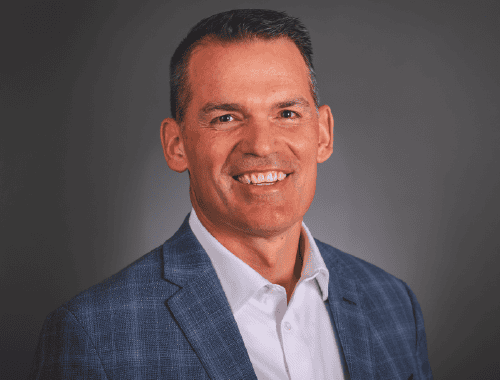
Adam Edwards and the Value of Knowing Who to Call
Before Telarus, there were two boys living four doors apart in Southern California. Adam Edwards has spent his career turning that kind of familiarity into a business proposition: when technology gets complicated, someone should know how to help.
Savantis Solutions Makes the Back Office Part of the Show
A cinema ticket is the start of a surprisingly complicated chain. Savantis connects the customer-facing moment to the machinery behind it - and sells the expertise to keep that machinery running.

Telarus Makes a Business of the Mess Between Buying Tech and Making It Work
The technology distributor equips independent advisors with supplier access, quoting software, and engineering help. Its next wager: customers will pay more attention to execution than to the cheapest quote.

Devasena Rajamohan
Devasena Rajamohan is Corporate Vice President of Dynamics 365 Customer Experience Applications at Microsoft, leading global teams of product managers, engineers, and data scientists driving innovation across Customer Insights, Sales, Customer Service, and Copilot. With a career spanning over two decades in enterprise CRM and cloud software—including senior leadership at SAP and early engineering roles at TATA Infotech—she has shaped how large organizations deliver AI-powered customer engagement. Under her leadership, Microsoft earned recognition as a Leader in both the 2025 Gartner Magic Quadrant for CRM Customer Engagement Center and The Forrester Wave Customer Service Solutions Q1 2026.

Mala Anand
Mala Anand is Executive Vice President and Chief Customer Experience Officer at Microsoft, leading the Customer Experience & Success division. A 25-year technology veteran who immigrated from Mumbai at 17 on a Rotary Youth Exchange Scholarship, she has shaped enterprise software at Cisco, SAP, and Microsoft, driving AI-powered transformations that measurably improve how customers get support. She is also executive sponsor of Women at Microsoft and an independent board director at Agilent Technologies.

The 30-Year-Old Phone Company That Quietly Became an AI-Era IT Shop
It started as the technology arm of a regional Bell telephone company. Three decades and a private-equity buyout later, CBTS runs cloud, security, and communications for 3,000-plus businesses - and it wants to be the partner that makes its clients look good.

Iron Mountain
It began as a Cold War bunker for filing cabinets. Seventy-four years later, the same company that guards your grandmother's insurance records is quietly building the warehouses where AI lives.
Tech Mahindra
The Mahindra Group's software arm turned a British Telecom side project and a rescued fraud case into a 148,000-person, 90-country IT services house - now betting the next chapter on agentic AI.
SAP
The 54-year-old German software maker quietly runs the plumbing of global business - and it is betting its next chapter on AI it calls Joule.
Oracle
The 48-year-old database company reinvented itself as the landlord of the AI boom - and a half-trillion-dollar order book to prove it.
OpenText
How a project to digitize the Oxford English Dictionary became Canada's largest software company - and why the world's biggest enterprises trust it to run the information they can't afford to lose.

Invision Community
For more than twenty years, a small team has quietly built one of the web's most enduring community platforms - the software behind forums you have almost certainly posted in without knowing its name.
IgniteTech
The company that buys aging enterprise software, wires it up with AI, and rents the whole library for one flat fee - and famously rebuilt its own workforce to get there.
Enghouse Systems
How a quiet Markham software company turned buying unloved businesses into a decades-long compounding machine - one contact center, video platform, and telecom system at a time.

How Puzzel, Genesys, Vocalcom and UJET Are Rewiring Support
Four contact center vendors, four very different 2026 bets - a Nordic cloud pioneer, an industry-defining incumbent, a founder who bought his own company back, and a Google-backed challenger under new leadership. Here is who is wiring the next customer call.

Fcode Labs
Fcode Labs is a Sri Lanka- and Singapore-based software engineering firm that builds AI-first digital products and provides dedicated remote engineering teams. Founded in 2018 by three University of Moratuwa graduates, it delivers digital transformation, machine learning, product engineering, cloud, and Web3 work for clients ranging from the Singapore Ministry of Health and University of Auckland to Sri Lanka's largest conglomerates. In 2026 it launched Forevate, a real-time market-intelligence product.
Global Mobility Service Inc.
Global Mobility Service Inc. (GMS) is a Tokyo-based FinTech and mobility company that gives people locked out of traditional credit a path to vehicle ownership. By pairing its proprietary IoT device, MCCS, with a cloud platform called MSPF, GMS lets lenders remotely manage and, if payments stop, safely disable a financed vehicle - turning driving behavior and payment data into a new form of creditworthiness. The model has extended auto loans to gig drivers, taxi operators and delivery workers across Japan, the Philippines, Cambodia and Indonesia who would otherwise be rejected by conventional screening.
ISATEC
ISATEC is a Malaysia-based enterprise software and IT services company that helps large enterprises and governments across Asia-Pacific with digital transformation, observability, application performance, cybersecurity, cloud modernization and intelligent automation. Founded in 1994 and based in Petaling Jaya, Selangor, it is a long-standing Dynatrace and Microsoft partner and an associate company of the regional IT group VSTECS, building products such as the KUBE low-code automation platform, the justSAMit IT asset management service and the SAMLite/IdentityLite identity tools.

Master Works
Master Works is a Riyadh-based Saudi technology company that helps public- and private-sector organizations turn data into assets. Founded in 2010, it delivers data management, business intelligence, artificial intelligence, computer vision, cloud and digital-transformation services alongside home-grown software products such as the P+ project-management platform and the Baseer speech-analytics engine. With around 700 employees and offices across the Gulf, Egypt, Jordan and India, it serves more than 140 clients and is positioned as a national data champion for Saudi Arabia's Vision 2030.

PlanRadar
PlanRadar is a Vienna-based SaaS platform that digitizes construction and real estate project management. Its mobile and web apps let site teams pin defect and task tickets directly onto digital plans and BIM models, capture photos, video and voice notes, assign work, and generate reports - replacing paper checklists and scattered spreadsheets. Founded in 2013, it serves more than 170,000 users across 75+ countries.

Astronomer
Astronomer is a New York-based data infrastructure company and the commercial force behind Apache Airflow, the open-source standard for data orchestration. Its flagship product, Astro, is a fully managed, cloud-native platform that lets data teams build, run, and observe data pipelines at scale, and its Astro Observe layer extends that into data operations and observability. Astronomer employs a large share of Airflow's core committers, serves 700+ enterprise customers, and raised a $93M Series D in May 2025 to power orchestration for enterprise AI workloads.

CoverGo | Insurtech
CoverGo is a global enterprise insurtech that gives insurers, MGAs, and brokers a no-code, API-first platform to build, distribute, administer, and process insurance products across life, health, and P&C lines. Founded in Hong Kong in 2017 by Tomas Holub, it runs on 500+ open insurance APIs and a patented drag-and-drop product builder, letting carriers launch new products in hours rather than months and modernize legacy core systems without ripping them out. Customers include AXA, Bupa, MSIG, Dai-ichi Life, and Bank of China Group Insurance, served from offices across Silicon Valley, New York, Dubai, Singapore, and Hong Kong.
NICE Actimize
NICE Actimize is the financial-crime, risk and compliance division of NICE Ltd. and one of the largest providers of anti-money laundering, fraud prevention and trading-surveillance software to banks, regulators and financial institutions worldwide. Its AI-driven X-Sight platform, ActOne case management and SURVEIL-X surveillance suite help more than a thousand institutions detect suspicious activity, screen against sanctions lists, manage regulatory reporting and investigate financial crime - increasingly using agentic AI to cut investigation time.
Quantiphi
Quantiphi is an AI-first digital engineering company founded in 2013 that helps enterprises turn data and machine learning into business outcomes. Working across cloud, data engineering and applied AI, it partners closely with Google Cloud, AWS, NVIDIA and others to build solutions for financial services, healthcare, insurance, retail and the public sector. The firm has grown to roughly 3,500+ employees across six continents and is known for its research-driven approach and its own products - Baioniq, Dociphi and Codeaira.

Megan Mackh
Megan Mackh is Vice President of Commercial Sales at Salesforce, where she leads teams driving customer success across cloud solutions. A Stanford and UC Berkeley Haas School of Business alumna, she spent nearly 15 years at Google - rising through AdWords, inside sales, and ultimately heading Global Telecommunications Partnerships for Google Cloud across 60+ telco partners worldwide. Named to CRN's Women of the Channel in 2020 and 2021, she is known for building high-performing teams and taking bold leaps into leadership from an unusually early age - she managed 18 people at AT&T at 22. She is currently pursuing a Doctorate in Public Health at Johns Hopkins Bloomberg School of Public Health.
Verato
Verato is a healthcare-focused identity data company that helps organizations answer a deceptively hard question: who is who? Founded in 2012 and based in McLean, Virginia, Verato pioneered Referential Matching - a technique that compares fragmented records against a proprietary reference database spanning the U.S. population with up to 30 years of historical demographic data. Its cloud platform, now sold as Verato MDM Cloud, links and cleans patient and member records across hospitals, health systems, payers, life sciences firms, and government agencies, reducing duplicate records, claims denials, and safety risks while enabling a single 360-degree view of each person.
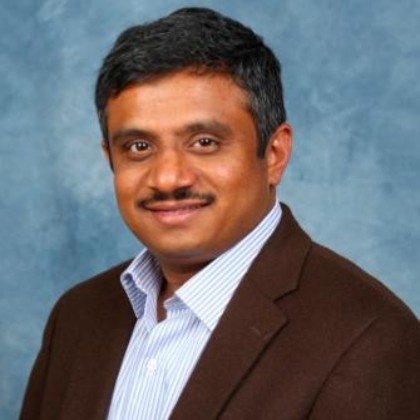
Raju Datla
Raju Datla is a serial entrepreneur and CEO of Fabrix.ai (formerly CloudFabrix), an AI-native IT operations platform he founded in 2015. Before Fabrix.ai, he sold two companies to Cisco - Jahi Networks (~$16M, 2004) and Cloupia ($125M, 2012), the latter becoming the foundation of Cisco's UCS management suite. At Fabrix.ai, he is pioneering Agentic AI for enterprise IT operations through a Robotic Data Automation Fabric that unifies data ingestion, AI agent orchestration, and workflow automation at scale.
Workday
Workday is a Pleasanton, California cloud software company that runs the core people and money systems for large organizations. Founded in 2005 by PeopleSoft veterans Dave Duffield and Aneel Bhusri after Oracle's hostile takeover of PeopleSoft, Workday built a single-code-base, subscription-delivered platform for human capital management, financial management, planning, and analytics. It has grown into one of the largest enterprise SaaS vendors, serving thousands of organizations - including a large share of the Fortune 500 - and is now pushing agentic AI deep into HR and finance workflows.
Autodesk
Autodesk is a design and make software company whose tools power the buildings, products, movies, and infrastructure of the physical world. Best known for AutoCAD, the company now spans architecture, engineering and construction (Revit, Civil 3D, Forma), product design and manufacturing (Fusion, Inventor), and media and entertainment (Maya, 3ds Max, Arnold). With roughly $6 billion in fiscal 2025 revenue and a near-fully subscription business, Autodesk's stated mission is to empower everyone, everywhere to design and make anything - increasingly with cloud platforms and AI woven into the workflow.
Dell Technologies
Dell Technologies is a multinational technology company headquartered in Round Rock, Texas, that designs, sells, and supports personal computers, servers, data storage, networking, and IT services. Founded by Michael Dell in 1984, it pioneered the direct-to-customer, build-to-order sales model and grew into one of the world's largest infrastructure and PC vendors. Following its 2016 merger with EMC, Dell now spans consumer laptops, workstations, and a fast-growing AI-optimized server business serving customers in more than 180 countries.