api-first
(52)
The Diabetes App That Found the Real Patient Was the Care Team
Welkin Health began by coaching people with diabetes. Then its founders noticed the harder problem: the people delivering care were trapped between spreadsheets, inboxes and software that could not bend.
Fimple wants banking to move at the speed of a product idea
A six-week core banking deployment gave Fimple a calling card. Now the software company is taking its mix of configurable banking, Islamic finance and local partnerships into new markets.
Antavo Wants to Make the Loyalty Card Feel Less Like Homework
The London scaleup powers points, tiers, prize wheels and perks for brands from KFC to Hyatt. Its real pitch is less visible: let marketers change a global loyalty program without waiting in engineering's queue.

Starling Built a Bank. Now It’s Selling the Engine.
The British challenger bank spent years building its own machinery. Engine by Starling is the wager that other banks will buy the working system - and some of the habits that made it work.

A Mortgage PDF Sent Mang-Git Ng on an Eight-Year Detour
The Anvil founder turned one miserable application into an API-first business - then had to trade an engineer’s instinct for perfect answers for the messier craft of selling.

Ashish Mandavia Is Fixing the Six-Second Moment Before Care Begins
A physician left the ward, learned the machinery of growth, and found his company in healthcare's overlooked doorway. Now Sohar Health is turning insurance verification from a waiting game into infrastructure.

The Startup That Turned Cloud Marketplace Paperwork Into a Product
Selling software through AWS, Azure, and Google Cloud is where the big B2B deals now happen - and also where the operational mess lives. Suger built the plumbing so vendors do not have to.
Vernost Is Building the Plumbing Behind Your Points, Trips and Payments
Most loyalty points live in a cul-de-sac. Vernost wants to turn them into a network - connecting rewards, bookings and checkout for the enterprises that serve millions of customers.
Spryker Built a Shop for Things That Don’t Fit in a Shopping Cart
The Berlin software company treats commerce less like a storefront and more like industrial infrastructure - modular, programmable and built for the strange rules of B2B buying.
Tiugo Technologies
Tiugo is assembling the invisible machinery behind digital content - four familiar developer tools, one shared growth engine, and a bet that editing, managing and delivering files work better together.

Plain
The AI support stack built for B2B teams. Composable infrastructure that gives you complete flexibility to build a support motion that grows with your business.

Invofox
Invofox is an AI document-processing platform that turns invoices, receipts, payslips, and shipping papers into clean, structured JSON through a single API. Built for software companies rather than end users, it pairs high-accuracy OCR and machine-learning models with human-in-the-loop verification so fintechs, accounting platforms, lenders, and logistics operators can automate payments and bookkeeping without anyone re-typing a document. Founded by three Spanish mathematics and computer-science graduates, backed by Y Combinator (S22), and now processing tens of millions of documents a year.

Sohar Health
Sohar Health is an API-first platform that automates insurance eligibility checks and verification of benefits (VoB) for behavioral and digital health providers. Founded in 2023 by physician Ashish Mandavia and engineer Lucas Gordon, the company turns a slow, error-prone front-office task into a real-time API call - returning most checks in seconds with high accuracy - so clinics can confirm coverage, cut claim denials, and get paid faster. It graduated from Y Combinator (S23) and raised $3.8M in seed funding led by Kindred Capital in 2025.

NymCard
NymCard is an Abu Dhabi-based embedded finance and payments infrastructure company that lets banks, fintechs, telecoms and enterprises launch and run card programs, lending and money-movement products through a single API-first platform called nCore. Founded in 2018 by Omar Onsi, it owns its issuing and switching technology rather than licensing it, is licensed by the Central Bank of the UAE, and is a certified partner of Visa and Mastercard across the Middle East, North Africa and Pakistan.
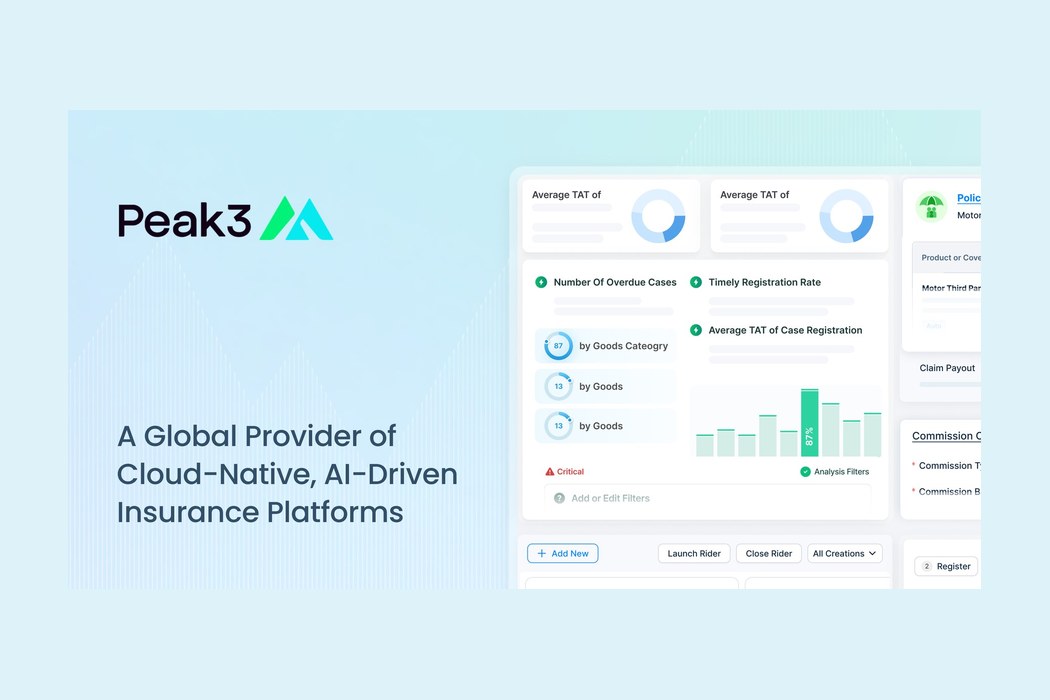
Peak3
Peak3 (formerly ZA Tech) is a Singapore-headquartered insurtech that builds cloud-native, AI-ready core software for the insurance industry. Its modular platform - spanning policy administration, distribution, claims and orchestration - lets insurers, MGAs and brokers launch and run life, health and property & casualty products across many markets. Founded in 2018 out of Chinese insurtech ZhongAn and rebranded to Peak3 in 2024 alongside a US$35M Series A led by EQT, the company powers global insurers such as AIA, Generali, Prudential and Zurich, and embedded-insurance programs for digital platforms including Grab, Klook, Lazada and PayPay. Its software has supported over a billion policies across 20-plus countries.
Tazapay
Tazapay is a Singapore-based cross-border payment platform that lets businesses collect, hold, and pay out money in over 170 markets without setting up local entities. Founded in 2020 by three payments veterans, it combines a payment gateway, multi-currency global accounts, escrow, and same-day payouts on top of local payment rails, cards, and stablecoins - all wrapped in institutional-grade compliance. The company processes more than $10 billion in annualized payment volume, serves 1,000+ enterprises and fintechs, and has raised roughly $68 million to date, including a $36 million Series B whose extension was led by Circle Ventures.

Dan Woods
Dan Woods is the Founder and CEO of Socotra, the AI-native cloud-native insurance core platform he built from scratch starting in 2014. A Stanford AI researcher and former Palantir engineer (employee #20), he left the data-intelligence world to fix insurance technology - an industry he describes as 'a decade behind banking.' Under his leadership, Socotra has raised $87M+ in total funding including a $50M Series C led by Insight Partners, and powers carriers and insurtech MGAs who can now launch insurance products in weeks instead of years.

Woodrow Levin
Woodrow 'Woody' Levin is the founder and CEO of Extend, a San Francisco company that built an API-first platform letting online merchants offer extended warranties, product protection, shipping protection and post-purchase solutions. Often described as 'AppleCare for everything else,' Extend raised a $260M Series C led by SoftBank's Vision Fund 2 in 2021 at a valuation above $1.6 billion. A serial entrepreneur, Levin previously founded BringIt (acquired by International Game Technology), Estate Assist (acquired by DocuSign, where he became VP of Growth), and the crypto asset fund 3.0 Capital. He also sits on the board of DraftKings.

Zack Kanter
Zack Kanter is the founder and CEO of Stedi, an API-first, cloud-native healthcare clearinghouse that routes eligibility checks, claims, and electronic payments between providers and insurers. He started his first company at 16, building a bootstrapped auto-parts wholesaler (Proforged) that he ran for roughly 13 years before selling it to Huron Capital. He then spent years wrestling with electronic data interchange (EDI), the arcane plumbing of business-to-business transactions, rewriting Stedi's codebase about eight times before finding extraordinary traction in healthcare. Along the way he became widely read for essays like 'Why Amazon is eating the world.' In March 2026 Stedi raised a $50M Series C led by Addition, bringing total funding to about $142M.

CoverGo | Insurtech
CoverGo is a global enterprise insurtech that gives insurers, MGAs, and brokers a no-code, API-first platform to build, distribute, administer, and process insurance products across life, health, and P&C lines. Founded in Hong Kong in 2017 by Tomas Holub, it runs on 500+ open insurance APIs and a patented drag-and-drop product builder, letting carriers launch new products in hours rather than months and modernize legacy core systems without ripping them out. Customers include AXA, Bupa, MSIG, Dai-ichi Life, and Bank of China Group Insurance, served from offices across Silicon Valley, New York, Dubai, Singapore, and Hong Kong.

Cyferd
Cyferd is an AI-led, data-driven digital transformation company that builds a cloud-native, no-code enterprise platform. Its proprietary AI engine, Neural Genesis, lets professional and citizen developers describe what they need in plain language and generate integrated business applications, AI agents and automated workflows on a single unified data model. Founded by Ranjit Bahia in 2021, Cyferd works across healthcare, legal, higher education, procurement, housing and sports, with dual headquarters in New York and London.

Pliant
Pliant is a Berlin-based B2B fintech that turns corporate payments into programmable infrastructure. Its API-first platform lets companies issue physical and virtual credit cards, automate spend controls and receipt handling, and plug card data straight into accounting systems like DATEV and NetSuite. Through its cards-as-a-service model, banks and software platforms can launch their own branded card programs. Founded in 2020 by Malte Rau and Fabian Terner, Pliant runs on the Visa network across 30-plus countries, serves more than 3,500 businesses, and raised a $40M Series B in 2025 to expand into the United States.
Vertalo
Vertalo is an Austin-based fintech that operates an SEC-registered digital transfer agent and tokenization platform connecting the digital asset ecosystem. Since 2018 it has helped issuers, fund managers, broker-dealers and custodians move private securities on-chain - handling digital cap tables, investor onboarding, compliance and settlement across multiple blockchains. More recently it has pivoted toward 'agentic' infrastructure, exposing its regulated transfer-agency operations through APIs and an MCP server so AI agents can issue, record and transfer securities.

Malte Rau
Malte Rau is the Berlin-based CEO and co-founder of Pliant, a B2B fintech that lets companies and banks issue physical and virtual credit cards and plug the resulting data straight into their finance stacks. A former risk manager and fintech investor, he founded Pliant in February 2020 with Fabian Terner and has grown it into a modular, API-first card-issuing platform serving thousands of European businesses. In April 2025 the company closed a $40 million Series B led by Illuminate Financial and Speedinvest to fund its expansion into the United States.

Ansa
Ansa is a San Francisco fintech that builds API-first, white-labeled stored-value wallet infrastructure for merchants. It lets brands launch their own branded digital wallet - the Starbucks-app model - where customers pre-load funds and pay in-app, online, or in-store. By batching many small purchases into one funded balance, Ansa cuts card processing fees on low-ticket transactions while adding incentives, loyalty, and analytics on top. Founded in 2022 by Adyen and Affirm alumni Sophia Goldberg and JT Cho, Ansa raised a $14M Series A in April 2024 (about 95% of it from female investors), bringing total funding to roughly $19.4M.
Anvil
Anvil is a San Francisco software company that turns paper-heavy back-office processes into programmable digital workflows. Its API-first platform bundles PDF generation and filling, no-code webforms, embedded e-signatures (Etch), and workflow automation so developers and product teams can collect data, generate compliant documents, and get them signed without stitching together multiple tools. Founded in 2018 by Mang-Git Ng and Ben Ogle, Anvil serves customers across insurance, financial services, HR, real estate, healthcare, and education, and has raised $10M in Series A funding.
Stedi
Stedi is an API-first, cloud-native healthcare clearinghouse that sits between providers and payers to move essential transactions - eligibility checks, claims, claim status, and electronic remittances - as programmable API calls instead of legacy batch files. Founded in 2017 by Zack Kanter, who came to EDI through an auto-parts business, Stedi rebuilt clearinghouse plumbing from scratch for the API and AI-agent era. It connects to thousands of U.S. payers, processes more than a billion transactions annually, and has raised $142 million from investors including Stripe, Addition, USV, and First Round.

Benji
Benji is the universal API for loyalty partnerships - think 'Plaid for loyalty rewards.' It lets brands across travel, hospitality, retail, food and fintech connect their loyalty programs through a single integration, launching co-branded earn, redemption, transfer and co-acquisition campaigns in days instead of months. Founded by the serial team behind 2ndKitchen (acquired by REEF Technology in 2021), Benji raised a $6.25M seed round in 2026 and already powers a network of programs - including JetBlue, CookUnity, 1-800-Flowers and Chip City - representing more than 50 million combined active members.
Mesh
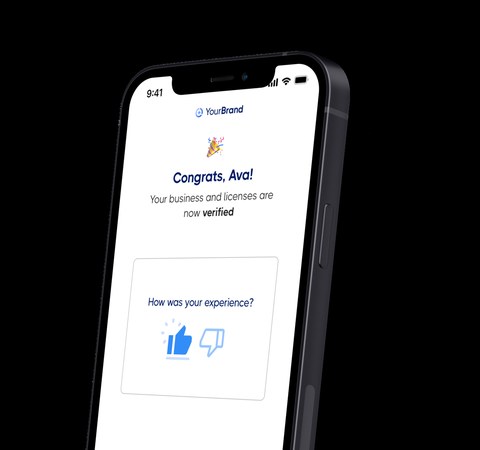
Mesh is an Austin-based, API-first B2B identity platform that verifies, onboards, and monitors small businesses and licensed professionals in real time. Founded in 2020 by ex-Amazon executives Diego Asenjo and Tony Bryan, Mesh combines professional license verification, business legitimacy checks, insurance and tax signals, and ongoing risk monitoring into a single multi-factor API - often described as 'Plaid for business identity.' It serves marketplaces, ecommerce platforms, fintechs, and construction/property-tech companies, with 100% coverage for state-licensed professionals in categories like contracting, home services, cosmetology, and architecture.

Miso.ai
Miso.ai (Miso Technologies) builds LLM-powered search, answers, and personalization for publishers, marketplaces, and content sites. Its flagship product, Miso Answers, sits on top of a customer's own content catalog to deliver ChatGPT-style, citation-backed answers with no hallucinations - fine-tuned to each brand's voice and grounded only in their material. Spun out of privacy-centric 'small data' research at Cornell Tech's Small Data Lab, Miso helps sites like O'Reilly Online Learning and Foundry's tech publications turn their archives into trustworthy answer engines that lift engagement and subscriptions.