Story
Why 'Plaid for Business Identity' Might Be the Most Boring Great Idea in Fintech
How verifying legitimacy became infrastructure worth building a company around.
The unglamorous question every marketplace asks - "is this business real?" - turned into one API call.
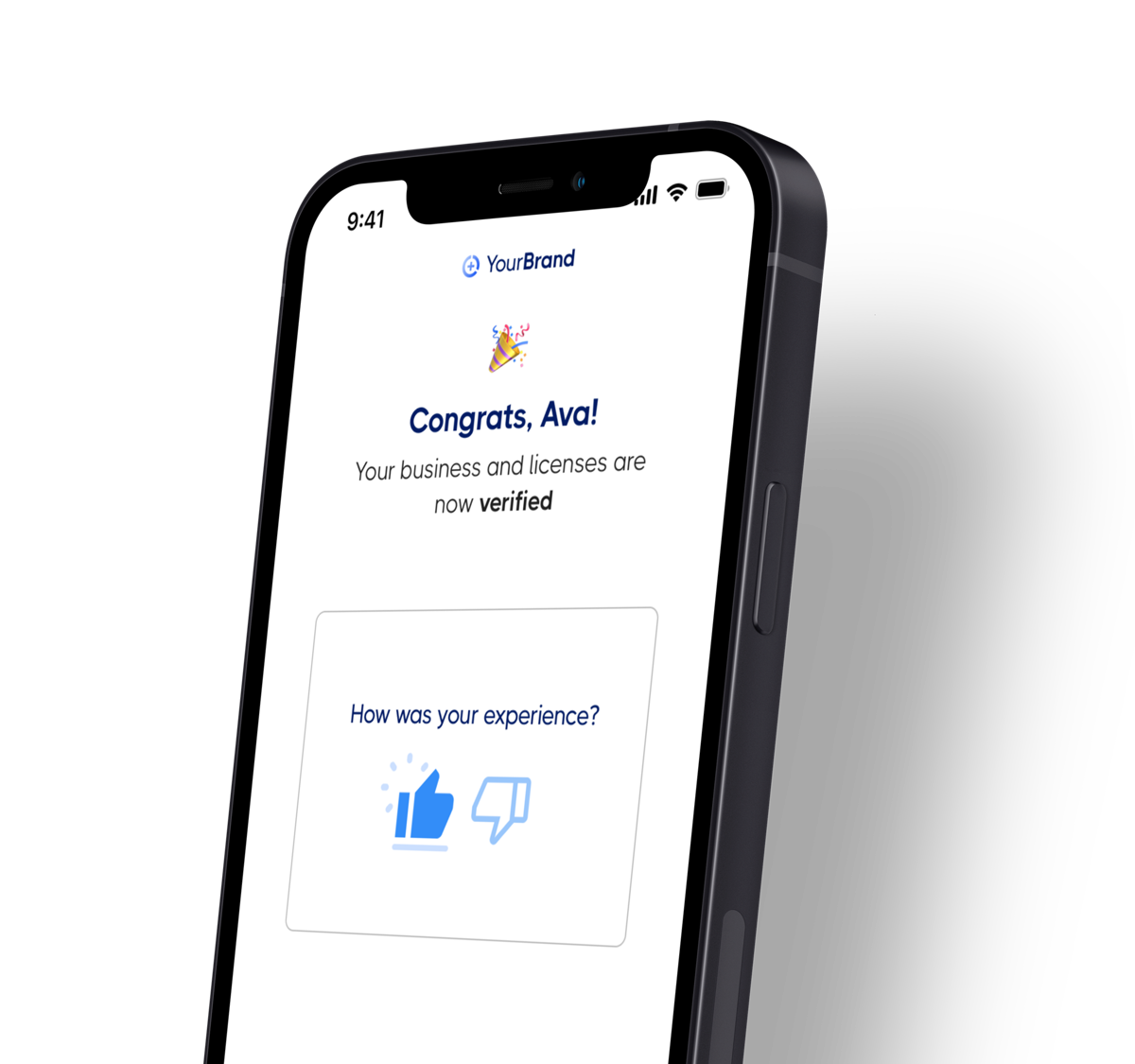
There is a genre of company that gets rich doing something nobody wants to think about. Mesh is trying to be one of them.
Here is a thing about the internet economy that is both extremely important and extremely dull: before a marketplace lets a contractor take your money, or a lending platform hands a plumber a line of credit, or a home-services app dispatches an electrician to your kitchen, somebody has to confirm that the business on the other end is real, licensed, and not going to disappear with the deposit. This is the least sexy problem in commerce. It is also, it turns out, a problem worth a company.
That company is Mesh. Founded in 2020 in Austin, Texas, by two former Amazon executives - Diego Asenjo, who runs it as CEO, and Tony Bryan, the CTO - Mesh sells a single, faintly magical thing: an API that answers the question "is this business legitimate?" in real time. It bundles professional license verification, business legitimacy checks, insurance and tax signals, and ongoing risk monitoring into one call. The shorthand the company likes, and that investors have adopted, is "Plaid for business identity." Which is a good line, because everyone knows what Plaid does, and because it neatly hides how much unglamorous plumbing sits underneath it.
The status quo Mesh is attacking is genuinely bad. By the company's own accounting, verifying a business takes a day or more in more than 30% of cases. That does not sound catastrophic until you remember what a day of friction does: it is where good customers get bored and abandon the signup, and where bad actors, who are patient, slip through the manual review. Speed, in verification, is not a nicety. It is the whole product.
Mesh's answer is to triangulate. Rather than trust a single database, it checks a business against hundreds of government and third-party data networks at once - secretary-of-state records, state licensing boards, insurance and tax signals - and returns a multi-factor verdict. The claim that gets the most attention is coverage: Mesh says it offers 100% coverage for state-licensed businesses and professionals in select categories. Those categories are exactly the ones that power the trades-and-services economy: general and specialty contractors, home improvement, architecture, cosmetology, and professional beauty. In other words, the plumber and the hairstylist, verified with the same rigor.
What makes this more than a database lookup is the design philosophy around it. Most fraud tools make legitimate users do more work - more forms, more uploads, more waiting. Mesh's stated bet is the inverse: verify the legitimate business without adding a single field. The company describes an "uncompromising commitment to delightful data capture experiences," which is a lot of syllables for a simple idea - the honest business should barely notice it is being checked.
The customers are the platforms that live or die on trust. Marketplaces and ecommerce sites onboarding third-party sellers. Fintechs and point-of-sale financing providers extending credit to small businesses. Construction and property-technology companies vetting subcontractors. Publicly, Mesh has been associated with names like Amazon, Houzz, Verdata, LendKey, FreeModel, and Gloss Genius - a spread that runs from beauty to home improvement to embedded finance, which is roughly the point. Business identity is horizontal. Everybody needs it, and almost nobody wants to build it themselves.
The money followed the logic. In February 2024, Mesh emerged from relative stealth with a $5.7 million seed round led by Greycroft, with participation from Foxe Capital. It is not an enormous number by fintech standards, but seed rounds for infrastructure companies rarely are; the interesting signal is that an established firm led it. Alongside the raise, Mesh loaded up on people who have built exactly this kind of business before - a chief revenue officer, Mike Nelson, who founded the identity-verification business at Mitek, and a partnerships-and-data lead, Andres Benvenuto, whose resume includes Socure, Dun & Bradstreet, and Creditsafe. For a fifteen-person company, that is a lot of gray hair in the data-and-identity trenches, and it is not an accident.
A year later, in February 2025, Mesh showed what the product looks like in the wild: a partnership with Verdata to automate professional license verification and monitoring for merchant onboarding and point-of-sale financing in home improvement. Translated, that means a contractor applying for financing at the point of sale can be verified and continuously monitored in the background, so the lender knows the license is still valid not just at signup but every day after. The "monitoring" half matters as much as the "verification" half - a license is only useful if it is still real next month.
Mesh sits in a crowded-ish neighborhood. The broader "know your business" category includes Middesk, Baselayer, Alloy, Trulioo, Sumsub, and the giants like LexisNexis Risk Solutions. But most of those are built for general business verification - is this an LLC, does the EIN match. Mesh's wedge is narrower and, arguably, deeper: real-time professional license verification for the licensed trades, the messy long tail of state boards that most KYB tools treat as an afterthought. Whether "specialist in licenses" is a durable moat or a feature that the incumbents eventually absorb is the open question - and it is the question that determines whether Mesh becomes infrastructure or gets acquired for its coverage.
For now, the story is clean and a little contrarian. Two Amazon veterans left the largest marketplace on earth, moved to Austin, and decided the most interesting thing they could build was not another consumer app but the trust layer underneath everyone else's. It is boring. It is also, if they are right about the leverage, the kind of boring that compounds.
Mesh unbundles the messy work of verification, then rebundles it into a single decision.
Validate professional licenses nationwide in real time through one API, with 100% coverage in select state-licensed categories.
Instantly verify businesses against authoritative data sources and continuously monitor risk and good standing.
Surface the professional licenses tied to a business - even the ones the business never self-reported.
Turn verified credentials into a public badge, so legitimate businesses stand out and attract more customers.
Onboard vetted contractors and subcontractors, then monitor license status on an ongoing basis.
Convert users faster at signup, then keep them compliant with continuous, background re-verification.
The KYB field is crowded, but most rivals verify entities. Mesh specializes in real-time license verification for the licensed trades - the long tail others treat as an afterthought.
Illustrative positioning on license-verification depth - not a market-share measure.
More than 30 years of combined Amazon experience, pointed at the least-glamorous problem in commerce.
Leads Mesh's mission to make business identity simple, trusted, and portable. Ex-Amazon.
Architects the multi-factor verification engine and real-time data triangulation. Ex-Amazon.
Leadership bench includes CRO Mike Nelson (founded identity verification at Mitek) and VP of Partnerships & Data Andres Benvenuto (Socure, Dun & Bradstreet, Creditsafe).
Diego Asenjo and Tony Bryan leave Amazon and set out to rebuild business identity from scratch.
Greycroft leads the round with Foxe Capital. Mesh unveils its Multi-Factor Business Identity solution and adds veteran leadership from Mitek, Socure, and Dun & Bradstreet.
Mesh and Verdata team up to automate license verification and monitoring for merchant onboarding and point-of-sale financing in home improvement.
Product demos and founder interviews - see how the API works and hear the thinking behind it.
How verifying legitimacy became infrastructure worth building a company around.
Replacing manual license checks with a single real-time API call.
The CEO's path from Amazon to founding a B2B identity startup.
What full coverage means, and how Mesh reaches every state board.
The behind-the-scenes layer that keeps home-services platforms honest.
The partnership powering merchant onboarding for home-improvement financing.
Profile compiled from public sources. Figures such as revenue and team size are approximate. Last updated July 2026.