hiring
(30)
Talogy puts the hiring hunch to the test
A good interview is a performance. Talogy wants to know what happens when the performance ends and the work begins.

Nicolas Walker and the 11:30 p.m. conversation
After Stanford, Spotify, Amazon, Microsoft and Linktree, Nicolas Walker started MochaCare with Pranav Uppiliappan. His new job comes with customers, code, a late-night operating schedule and rather a lot of talking.

Mohit Bhende and the value of one more chance
Twelve colleges turned him down. Years later, the Karat co-founder helped make the second-chance interview part of the hiring process. His career runs through a literary magazine, Xbox, and a very well-used Honda.
Hired’s $30 million lesson: watch the clock
Hired made employers compete for talent. Its first batch produced $30 million in proposed offers and no hires - a rather expensive-looking reminder that a marketplace needs more than interest.

The Six-Minute Assessment That Followed You Into the Meeting
The Predictive Index began with a wartime question about teamwork. Seventy years later, its business rests on a more awkward one: what happens after you hire the right person?

Workable and the trouble with “just email it”
A shared inbox can hire your first employee. Workable built a business around what happens when it has to hire your fiftieth - and now wants to handle the work on both sides of the offer letter.

Founder-Sized Ownership in Year One, Pallet's Agent PM Team
Pallet’s Agent PMs don’t wait years for a real mandate. They take charge of marquee accounts, live AI deployments, and new markets—often before the first month is over.

The Company That Reads the Internet So HR Doesn't Have To
Fama built AI that scans 10,000-plus public sources to catch the red flags a resume hides - then convinced the background-check giants to run on its engine.

Victor Luo
Victor Luo is the CEO and co-founder of Perfectly (YC W26), an AI-native recruiting operating system that automates sourcing, outreach, screening, and qualification for high-growth tech teams. A former machine learning scientist at TikTok who worked on large-scale recommendation systems, Victor sat through more than 800 agency-sourced interviews before deciding that hiring should work more like a recommendation engine. He is a two-time founder, a University of Virginia computer science graduate, and builds recruiting agents named Paul and Parker that deliver interview-ready candidates straight to Slack.
Elip AI
Elip AI is a Y Combinator (W25) startup building an AI job agent that lives inside WhatsApp. It reads through millions of job postings overnight, filters out ghost and duplicate listings, and sends each user a short list of ranked, personalized matches by morning - plus tailored, ATS-ready resumes. It is free for job seekers; employers pay when they hire. Founded by Gaurav Luhariwala, the company is based in San Francisco with an Indian entity in Jaipur.

Perfectly
Perfectly is an AI-native recruiting operating system that automates sourcing, outreach, screening, and qualification for fast-growing startups. Built by three ex-TikTok and Meta machine learning scientists, it treats hiring as a recommendation-systems problem: it learns a company's hiring preferences, reaches out to thousands of candidates, runs AI screens, and delivers interview-ready candidates directly into Slack. Backed by Y Combinator's Winter 2026 batch, Perfectly counts startups like Giga, Corgi, LlamaIndex, Porter, and Mintlify among its early customers and charges only when a role is filled.

Daniel Chait
Daniel Chait is the co-founder and CEO of Greenhouse Software, the New York-based recruiting platform he started with Jon Stross in 2012 to help companies make hiring a competitive advantage. A University of Michigan computer engineer who spent more than a decade as a software consultant and previously co-founded the investment-banking tech firm Lab49, Chait built Greenhouse around the idea of 'structured hiring.' He is co-author of the book Talent Makers, a frequent conference speaker, and a vocal commentator on how AI is reshaping recruiting - including his warning about an 'AI doom loop' flooding both job seekers and employers.

Dalia
Dalia is a Boston-based candidate conversion platform that helps employers turn lost career-site traffic into qualified applicants and hires. Its automated software captures job seekers who visit but don't apply, then re-engages them through personalized SMS and email job remarketing. Founded in 2019 by Sam Fitzroy and Jason Whitman, Dalia is used by mid-market and enterprise employers including Compass Group, Ryder, Baptist Health South Florida, and Cleveland Clinic to increase applicant conversion and lower cost-per-hire.
FloCareer
FloCareer is an AI-powered and expert-led interviewing platform that lets companies outsource their hiring interviews at scale. Through its Interview-as-a-Service model it deploys a network of 8,000+ vetted industry interviewers (FloExperts), while its AI interviewer NIVO conducts automated screening and coding interviews around the clock. The company helps 700+ organizations run structured, proctored, unbiased interviews with fast turnaround, reducing recruiter load and time-to-hire.

Paraform
Paraform is a San Francisco recruiting platform that connects companies with a network of 10,000+ independent recruiters and pairs them with custom AI agents to fill hard roles fast. Instead of betting that software alone can screen resumes, Paraform keeps humans in the loop and gives them AI tools plus white-glove operational support, handling intake calls, hiring-manager feedback, and payments. Companies like Palantir, Rippling, Cursor, and Cognition use it to meet candidates in days rather than months. Founded in 2022 by John Kim and Jeffrey Li, the company has raised $65M total, most recently a $40M Series B led by Scale Venture Partners in March 2026.

Jack & Jill
Jack & Jill is a London-based AI recruitment startup that replaces job boards and resume submissions with two conversational AI agents. Jack works for candidates - getting to know their skills and goals in a 10-minute conversation, scanning millions of jobs daily, and introducing them directly to hiring managers, all for free. Jill works for companies, learning what a team needs and surfacing well-matched people on a success-based fee. Founded in early 2025 by Omnipresent founder Matt Wilson and Kular.ai founder Saaras Mehan, the company raised a $20M seed round led by Creandum in October 2025.

SquarePeg
SquarePeg is an AI-native recruiting platform that acts as an intelligence layer on top of a company's existing applicant tracking system. It enriches, evaluates, and scores candidates - explaining every match - so lean recruiting teams can screen unlimited applicants, rediscover past candidates, source passively from 500M+ profiles, and filter out fraudulent applications without swapping out their tools. Founded by Claire McTaggart, the company raised a $3.5M seed round in early 2025 to build candidate-evaluation software for the modern recruiter.

CoffeeSpace
CoffeeSpace is a mobile-first, AI-powered matchmaking platform that helps founders, talent, and startups find each other - swiping their way to a cofounder, a first hire, or a team to join. Often described as 'Hinge for cofounders,' it uses granular filters and dual-sided compatibility matching to pair ambitious builders by skills, working style, time commitment, and equity preferences. Founded in 2024 and based in San Francisco, the app has grown to 30,000+ users across 100+ countries.

The Pancake That Launched 30 Job Reqs
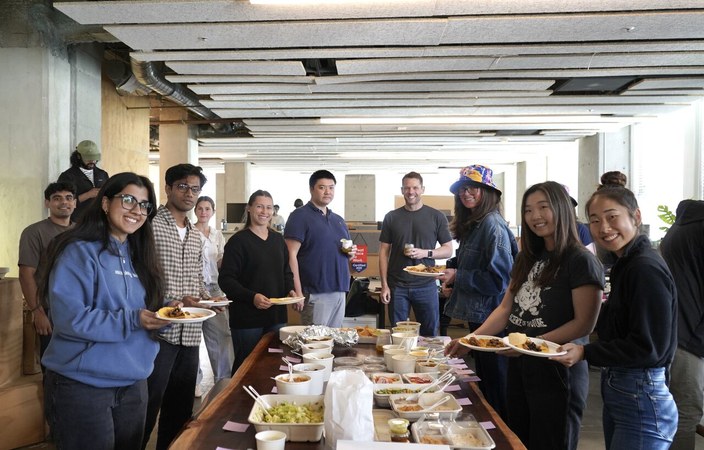
Pallet, a fast-growing startup, hosted a 'Pancakes & Pajamas' morning event that turned into a perfect window into the company's culture. Head of Talent Grace Turner used the LinkedIn post to celebrate the team's light-hearted spirit and to announce an ambitious hiring sprint: 30 new hires in 6 weeks. The post and its comment thread feature playful banter from team members Ankur Gupta (who invented a 'fake statistic' that good breakfast boosts output) and Bradley Callahan (whose blueberry pancakes achieved 'culinary innovation'), painting a portrait of a team that works hard and doesn't take itself too seriously.
Inside Pallet: Culture, Ownership, and the Race to Automate the Physical Economy
A behind-the-scenes look at the culture of Pallet, an AI logistics-tech company building the intelligence infrastructure for the global movement of goods. Founder and CEO Sushanth and members of the team describe a fast-moving, ownership-driven workplace where decisions are made in meetings and acted on within the hour, where everyone pitches in across engineering, sales, and post-sales, and where the company aims to become a generational logistics AI company. The piece captures Pallet's values, its people-first ethos, and what it feels like to build software that recreates decades-old logistics workflows.

Talent.com
Talent.com is a Montreal-born job search platform that aggregates tens of millions of job listings from career sites, staffing agencies and job boards into one searchable place. Originally launched in 2011 as Neuvoo, it rebranded to Talent.com in 2019, raised $120M US in Series B funding in 2022, and now operates across roughly 78 countries with AI-driven job matching, recruitment advertising for employers, and free tools like its widely used salary and tax calculators.

Karat
Karat is a Seattle-based company that runs technical interviews on behalf of employers through its 'Interviewing Cloud' - a global network of trained Interview Engineers who conduct 24/7 live, structured technical interviews backed by enterprise infrastructure and hiring analytics. Used by enterprises like Roblox, American Express, Intuit, Pinterest and Wayfair, Karat lets engineering teams scale hiring capacity, reclaim engineer time, and make fairer, more consistent hiring decisions.

Homebase
Homebase is a San Francisco-based workforce management platform built for small businesses running hourly teams. Founded in 2014, it combines employee scheduling, time tracking, payroll, HR compliance, and team communication in one mobile-first app. As of 2024, the platform serves over 150,000 businesses and 3.8 million hourly workers, having logged 8 billion hours and processed $3 billion in gross payroll. Backed by $198 million in total funding, Homebase competes by bundling tools that small business owners previously paid for separately - and more recently by embedding AI assistants across hiring, scheduling, and payroll.

Mercor
Mercor is an AI-powered talent marketplace that recruits domain experts - doctors, lawyers, engineers, scientists - to train and evaluate frontier AI models for labs like OpenAI, Anthropic, Google, Meta, and Amazon. Founded in 2023 by three Thiel Fellows, it has grown from a hiring tool into the human data backbone of the AI economy.

Max Wang
Max Wang is the Co-Founder and CTO of Workstream, a San Francisco-based HR and payroll platform built specifically for America's hourly workforce. He co-founded China's AngelList equivalent (VC.CN) in 2011, built it to a 50-person team, then crossed the Pacific to co-build Workstream with Desmond Lim and Lei Xu after a 100-interview discovery sprint revealed that hiring hourly workers was a massive unsolved problem. Today, Workstream serves 4,000+ businesses across 24,000 locations, has raised $118 million, and is deploying AI tools - including VoiceAI - to compress hiring cycles from weeks to hours for restaurants, franchises, and deskless-workforce employers.
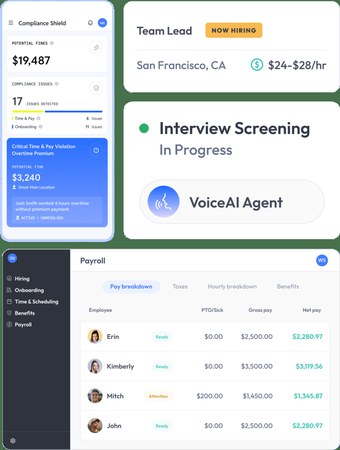
Workstream
Workstream is an HR, hiring and payroll platform built for the deskless economy - the 80 million Americans who clock in by the hour at restaurants, gyms, car washes and franchises. Founded in 2017 by three immigrants in San Francisco, it uses texting, voice AI and automation to cut time-to-hire by roughly 70% for chains like Burger King, Jimmy John's and Chick-fil-A franchisees.

Surya Midha
Surya Midha is a 22-year-old co-founder and Chairman of Mercor, the AI-powered talent platform valued at $10 billion. A Thiel Fellow, national debate champion, and Georgetown dropout, Midha co-built Mercor from a São Paulo hackathon into a company paying 30,000+ contractors over $1.5 million daily, matching elite human intelligence with AI labs including OpenAI, Anthropic, and Google DeepMind. In 2026, he became one of the youngest people ever to appear on the Forbes World's Billionaires List with a net worth of $2.2 billion.

Aline Lerner
Aline Lerner is the founder and CEO of interviewing.io, an anonymous technical interview platform that has hosted over 100,000 practice sessions and helped engineers get hired at companies like Facebook, Uber, Dropbox, and Lyft. A former MIT engineer who spent years as a professional cook before returning to tech, she ran hiring at Udacity, launched her own recruiting firm, and discovered through data that resume typos predicted candidate quality better than Ivy League credentials. Her data-driven writing on the dysfunction of technical hiring has been read by millions and featured in Forbes, the Wall Street Journal, and Fast Company (which named her one of the 100 Most Creative People in Business in 2018). In January 2025, she co-authored Beyond Cracking the Coding Interview, the official sequel to the seminal CtCI book, co-written with Gayle Laakmann McDowell.
Desmond Lim
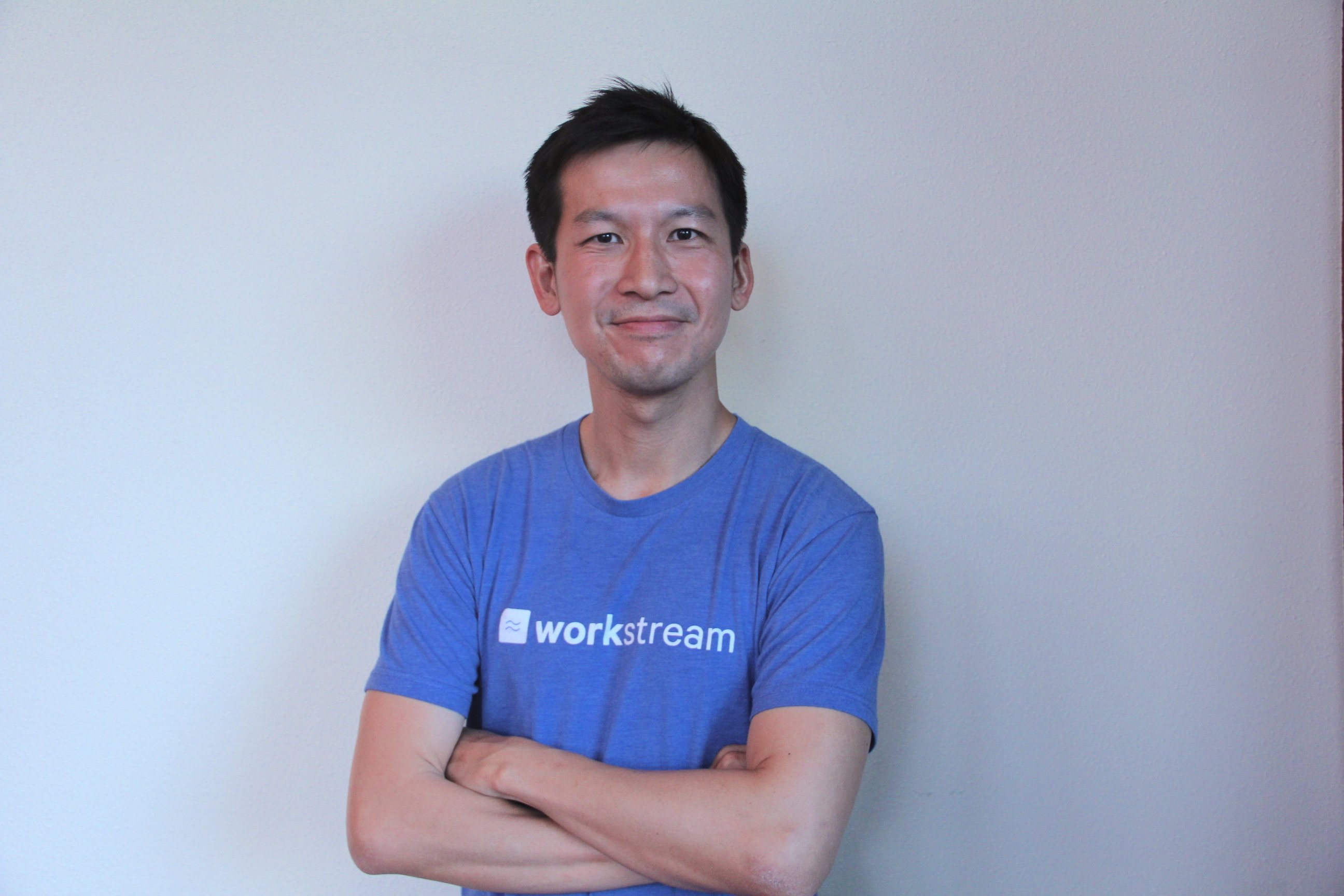
Desmond Lim is the co-founder and CEO of Workstream, an HR, payroll, and hiring platform built for the 70 million hourly and deskless workers in the US. Born in Singapore to a delivery driver father and part-time cleaner mother, he became the first in his family to attend university, went on to Harvard and MIT, and built a company that now serves 46 of the top 50 quick-service restaurant brands — including McDonald's, Burger King, and Dunkin' — while raising over $120M in venture funding.

Jacob Kaplan-Moss
Jacob Kaplan-Moss is one of the co-creators of Django, the Python web framework that powers Instagram, Pinterest, and thousands of other sites worldwide. After 25+ years building and leading software teams - from a Kansas newspaper where Django was born, to Heroku's security org, to 18F's government tech unit - he walked away from the tech industry in 2024, training as an EMT and volunteering with search and rescue. He remains a board member of the Django Software Foundation, publishes the 'jacobian' newsletter on engineering craft, and is known for his influential writing on hiring, documentation, and the 'programming talent myth'.