Tagged: economics
30 results
Michael Mauro
Michael Mauro is a Harvard undergraduate economics student from Long Island who has turned campus life into a business education. He helps run marketing at Harvard Student Agencies, the world's largest student-run company, works as a consulting manager for its summer Academies, and co-presides over the Harvard Undergraduate Economics Association. He plays club ice hockey, is aiming for law school, and has collected passport stamps from two dozen countries along the way.

Elizabeth Stone
Elizabeth Stone is the Chief Product and Technology Officer of Netflix, where she leads the company's product, engineering, data and design organizations. An economist by training with a PhD from Stanford and a bachelor's from MIT, she moved from equity derivatives trading and economic consulting into technology leadership roles at Nuna and Lyft before joining Netflix in 2020. She became Netflix's first CTO in 2023 and was elevated to CPTO in 2026, and is known for a data-driven, systems-thinking approach to building high-performance teams.
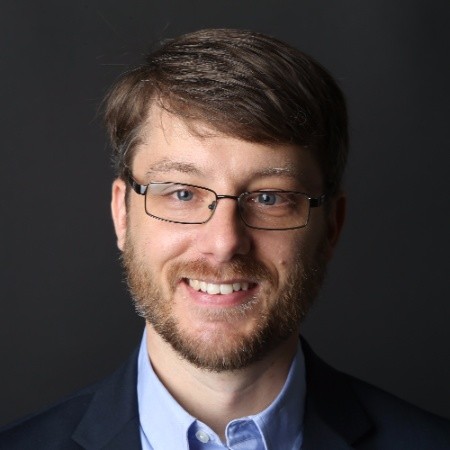
Ben Casselman
Ben Casselman is the Chief Economics Correspondent for The New York Times, where he turns labor reports, Fed decisions and inflation prints into stories people actually read. A self-described 'unapologetic econ nerd,' he built his name on evidence-first, data-driven reporting at The Wall Street Journal and FiveThirtyEight before joining the Times in 2017. He shared a Gerald Loeb Award and a Pulitzer finalist nod for Deepwater Horizon coverage, is a frequent voice on the NYT podcast The Daily, and teaches economics reporting at the CUNY Newmark Graduate School of Journalism.

Ryan Avent
Ryan Avent is an American economics writer and author who spent 15 years at The Economist, six of them writing the magazine's flagship Free Exchange column. He wrote The Wealth of Humans (2016), a widely discussed argument that automation, globalization and a productive elite are creating a glut of labor that breaks the old social contract of work. He now runs portfolio communications at the investment fund Select Equity Group, writes the Substack newsletter The Bellows, and has a book on belief and the fate of societies forthcoming from Yale University Press.

Alec Stapp
Alec Stapp is the co-founder and co-CEO of the Institute for Progress (IFP), a nonpartisan Washington, D.C. think tank he launched in 2022 with Caleb Watney to turn progress studies into concrete policy. He works at the intersection of metascience, high-skilled immigration, biosecurity, and infrastructure permitting, arguing that America's biggest obstacle to progress is not a shortage of ideas but a surplus of veto points. A George Mason economist by training, he became one of the most-followed voices of the abundance movement, translating dense regulatory questions into widely shared arguments for building more.

Alex Nowrasteh
Alex Nowrasteh is Senior Vice President for Policy at the Cato Institute and one of the most cited and combative voices in the U.S. immigration debate. A self-described 'radical' for open borders, he turns the standard fears about immigration - crime, terrorism, welfare, wages, culture - into testable claims and then publishes the numbers. He co-wrote the prize-winning 'Wretched Refuse?' and the rebuttal handbook 'The Most Common Arguments Against Immigration and Why They're Wrong,' and he is a regular on Capitol Hill, on cable news, and across the op-ed pages.

Binyamin Appelbaum
Binyamin Appelbaum is the lead writer on business and economics for The New York Times editorial board, and the author of 'The Economists' Hour,' a history of how economists came to reshape American policy. Before joining the editorial board in 2019, he spent nearly a decade as a Washington correspondent covering the Federal Reserve and economic policy in the aftermath of the 2008 financial crisis. His subprime-lending investigation at The Charlotte Observer won a George Polk Award and was a Pulitzer Prize finalist.

Catherine Rampell
Catherine Rampell is an economics journalist who turned spreadsheets into prime time. After 11 years as a Washington Post opinion columnist, she now runs the economics desk at The Bulwark, writes the 'Receipts' newsletter, and co-anchors 'The Weekend: Primetime' on MS NOW. Her trademark is data-driven argument: charts, receipts and footnotes deployed against political spin, on immigration, inflation, trade and the cost of living.

Conor Sen
Conor Sen is a Bloomberg Opinion columnist and founder of Peachtree Creek Investments, an Atlanta-based money management firm. He built a national following by reading the economy through housing, demographics and the slow grind of millennials moving through their life stages, and turned a habit of arguing with strangers on Twitter into one of the most-cited macro voices in financial media. His tagline, 'The future is a policy choice,' doubles as his worldview.

Eric Levitz
Eric Levitz is a senior correspondent at Vox who covers American politics, economics and the future of the Democratic Party, most visibly through his newsletter and column 'The Rebuild.' A former creative-writing student turned wonk, he spent roughly eight years at New York Magazine's Intelligencer before joining Vox, earning a reputation for data-driven, argument-forward pieces that frequently irritate both the online left and the right - sometimes in the same week.

Josh Barro
Josh Barro is an American journalist who left legacy media to run Very Serious, a subscription newsletter and podcast about politics, business, economics, and culture. A former Republican turned Democrat, ex-host of KCRW's Left, Right & Center and onetime New York Times and Business Insider columnist, he now writes a weekly mailbag called the Mayonnaise Clinic and co-hosts the litigation podcast Serious Trouble with attorney Ken White.

Justin Wolfers
Justin Wolfers is an Australian-American economist who turns dense data into plain talk for the rest of us. A professor of economics and public policy at the University of Michigan's Ford School, he co-hosts the Think Like an Economist podcast with his partner Betsey Stevenson, writes the Platypus Economics newsletter, and is one of the most quoted economic voices in American media. His work spans macroeconomics, labor markets, prediction markets, sports, and the surprisingly stubborn question of whether money buys happiness (his answer: more than people think).

Marc Goldwein
Marc Goldwein is the Senior Vice President and Senior Policy Director at the Committee for a Responsible Federal Budget (CRFB), where he has become Washington's most-quoted referee of how much the federal government can afford. A two-degree Johns Hopkins economist who once ran track for the Blue Jays, he helped staff the Simpson-Bowles Fiscal Commission and the 2011 'Super Committee,' teaches economics on the side, and now spends his days scoring the price tag of nearly every major bill and campaign promise. He talks fast, deploys statistics faster, and has made a career of telling both parties the same unwelcome thing: the math does not add up.

Martin Wolf
Martin Wolf is the chief economics commentator of the Financial Times, where his columns have shaped the thinking of policymakers, central bankers, and investors for nearly four decades. A former World Bank economist who never finished a PhD, he became, in Lawrence Summers' words, 'the world's preeminent financial journalist.' Once a forceful champion of globalization and free markets, he reversed course after the 2008 crash and now argues that capitalism must be fixed to save democracy itself.

Megan McArdle
Megan McArdle is a Washington Post opinion columnist who writes at the seam where economics, business and public policy meet. She was blogging as 'Jane Galt' from a desk near Ground Zero before most journalists knew what a blog was, parlaying an English-lit degree and a Chicago MBA into a career that ran through The Economist, The Atlantic, Newsweek/Daily Beast and Bloomberg View. A self-described right-leaning libertarian known for steelmanning the other side, she wrote 'The Up Side of Down,' a book arguing that failing well is the real engine of success. In 2025 she added a contributing-writer role at The Dispatch and turned to podcasting with 'Central Air' and 'Reasonably Optimistic.'

Milan Singh
Milan Singh is a writer and pollster based in Washington, DC, best known as the founder and director of the Yale Youth Poll, whose 2025 surveys forced a national conversation about the rightward drift of the youngest Gen Z voters. A 2026 Yale economics graduate from Cambridge, Massachusetts, he is a fellow at The Argument and a former researcher at Slow Boring, writing about polling, elections, inflation, housing, and the economy.
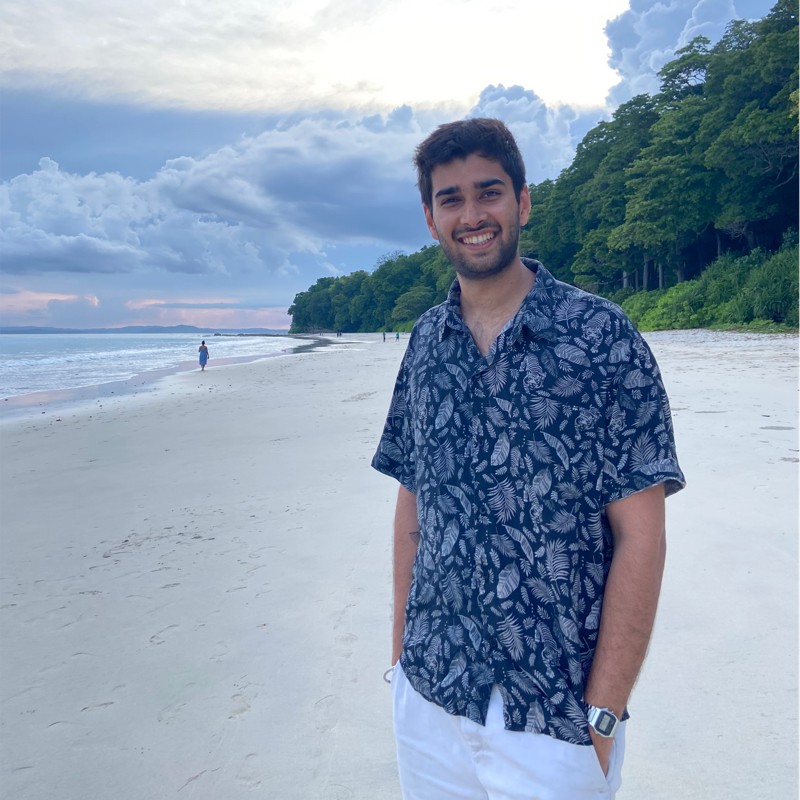
Yash Kewalramani
Yash Kewalramani is the co-founder of Cherry App, a Bengaluru-based social commerce startup that pays Instagram creators cashback for shopping and sharing. Backed by All In Capital, Cherry lets users earn 30-70% cashback by posting about brands on social media - turning everyday shoppers into micro-marketers. A Swarthmore College mathematics and economics graduate, Yash previously worked as a product manager at Jupiter and at Adappt Intelligence before launching Cherry in 2024 with co-founders Sharnam Singhwal and Samarth Mahapatra.

Samson Wu
Samson Wu is a Recruiting Operations Partner at Andreessen Horowitz (a16z), one of Silicon Valley's most influential venture capital firms. With roots in economics from Cal Poly San Luis Obispo and formative stints at AIESEC, Uber, and CloudKitchens, he has become a key architect of how a16z and its portfolio companies find and hire world-class talent. He supports the firm's New Media team as an HR Business Partner and brings operational rigor to recruiting functions that span early-stage startups to growth-stage companies across the a16z portfolio.

Dwarkesh Patel
Dwarkesh Patel is a 25-year-old Indian-American podcaster, writer, and emerging intellectual force in Silicon Valley. Through the Dwarkesh Podcast - launched from a college dorm room in 2020 - he has become the go-to long-form interviewer for AI leaders, economists, and historians, landing everyone from Elon Musk and Jensen Huang to Terence Tao. Named to TIME's 100 Most Influential People in AI in 2024, and called Silicon Valley's favourite podcaster by The Economist in 2025, he co-authored The Scaling Era: An Oral History of AI, 2019-2025 with Stripe Press. With 1.2M+ YouTube subscribers and 76,000+ Substack readers, Patel has built his platform entirely through obsessive preparation and organic growth.

James Pethokoukis
James Pethokoukis is a Washington D.C.-based economist, journalist, and author who holds the DeWitt Wallace Chair at the American Enterprise Institute. He writes the 'Faster, Please!' Substack newsletter - one of the leading voices in techno-optimism and pro-progress policy - hosts the 'Political Economy with Jim Pethokoukis' podcast, and authored 'The Conservative Futurist: How to Create the Sci-Fi World We Were Promised' (2023). A longtime CNBC contributor, he argues that culture - not capital - is the real barrier to the abundant, innovative future humanity could build.
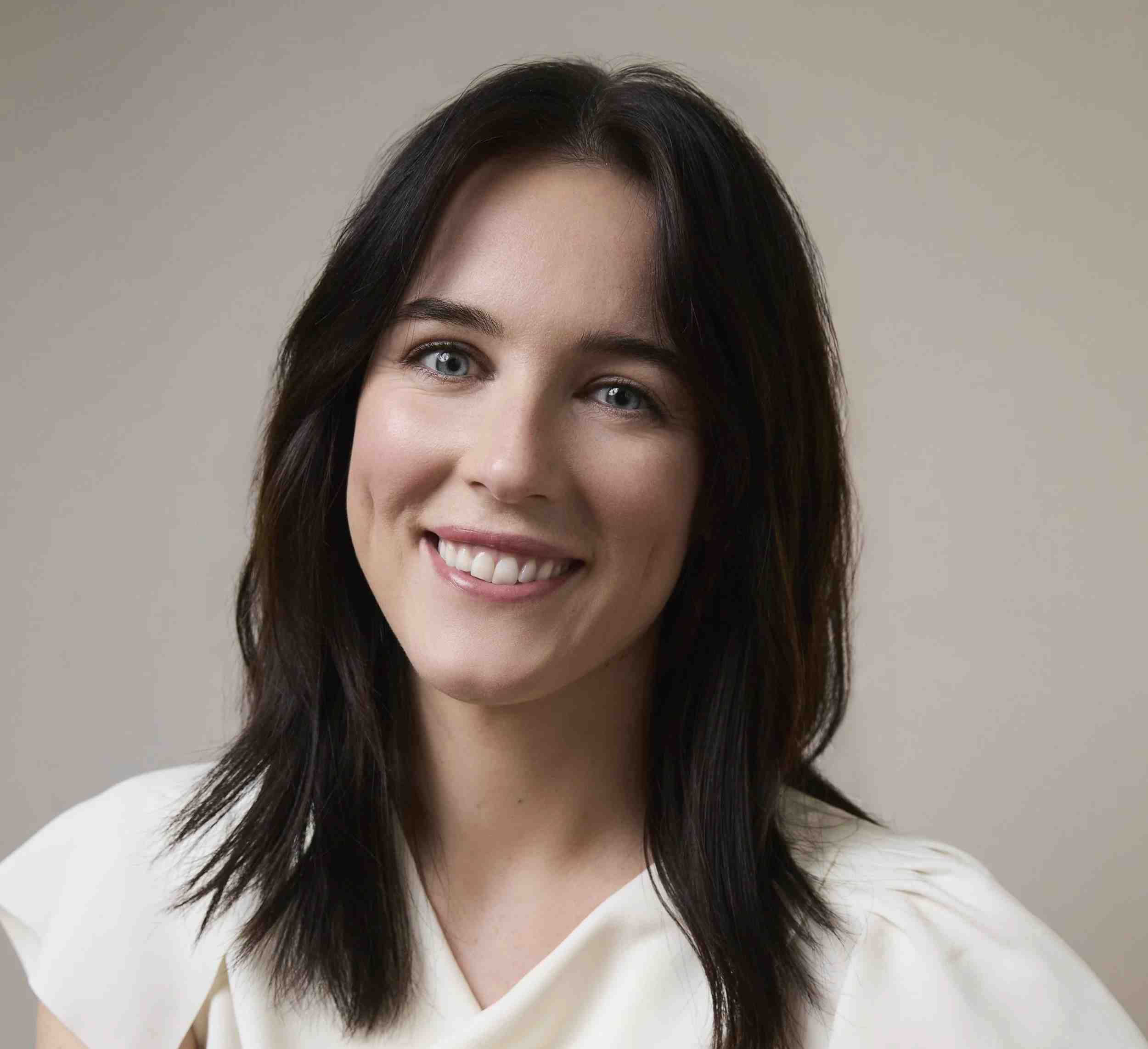
Kyla Scanlon
Kyla Scanlon is an economist, author, and content creator who coined the term 'vibecession' and has built a multi-platform media presence dedicated to making economics accessible. Her debut book 'In This Economy? How Money and Markets Really Work' (2024) became a New York Times bestseller. She reaches over 1 million followers across TikTok, Instagram, YouTube, Substack, and Twitter/X, and has been named to Barron's 100 Most Influential Women in U.S. Finance. A triple major from Western Kentucky University, she left a career in institutional asset management at Capital Group to pursue financial education full-time.

Noah Smith
Noah Smith is an independent economist-turned-writer best known for Noahpinion, one of Substack's largest economics newsletters with over 414,000 subscribers. A former Bloomberg Opinion columnist and ex-finance professor at Stony Brook University, he writes about technology, macroeconomics, geopolitics, and domestic policy with a techno-optimist, center-left lens. He also co-hosts the 'Econ 102' podcast with Erik Torenberg and is working on an English-language macroeconomics book.

Matthew Zeitlin
Matthew Zeitlin is an economics and energy journalist currently reporting for Heatmap News, where he covers the intersection of policy, finance, and the energy transition. With bylines at BuzzFeed News, Grid, Slate, The Nation, n+1, Bloomberg Opinion, and The Atlantic, Zeitlin has built a career dissecting how money, power, and policy shape the energy grid. He writes a personal economics newsletter on Substack and is one of the sharper voices covering how the U.S. economy navigates decarbonization.

Adam Tooze
Adam Tooze is the Kathryn and Shelby Cullom Davis Professor of History at Columbia University, Director of the European Institute, and one of the most widely-read public intellectuals in economics and geopolitics. His newsletter Chartbook on Substack has over 181,000 subscribers and his books - including The Wages of Destruction, Crashed, and Shutdown - have reshaped how historians, economists, and policymakers understand financial crises, the Nazi economy, and global disorder. He popularized the term 'polycrisis' and co-hosts the Foreign Policy podcast Ones and Tooze. Known for his extraordinary output, analytical range, and willingness to publicly revise his views, Tooze is that rare figure who straddles academic history and live economic commentary with equal authority.

Emily Oster
Emily Oster is a Harvard-trained economist, Brown University professor, and the mind behind ParentData - a platform transforming how millions of parents make decisions. With four consecutive New York Times bestsellers, TIME's 100 Most Influential People recognition, and over a million books sold, she wields data like a scalpel against pregnancy myths and parenting guilt, convincing readers that evidence beats anxiety every time.

Joe Weisenthal
Joe Weisenthal is a Bloomberg executive editor, co-anchor of 'What'd You Miss?' on Bloomberg Television, and co-host of the Odd Lots podcast with Tracy Alloway. Known on Twitter/X as @TheStalwart, he has spent 20+ years making arcane financial topics accessible and engaging for broad audiences. He helped grow Business Insider into a 50-million-visitor destination, then brought that digital-first energy to Bloomberg. His Odd Lots podcast, launched in 2015, is one of the most respected finance podcasts in the world. He is also one-quarter of the band Light Sweet Crude, proving that a man can love yield curves and guitar riffs in equal measure.

Matt Yglesias
Matthew Yglesias is one of America's most influential political writers - a Harvard-trained philosopher turned media entrepreneur who co-founded Vox and then bet on himself by launching Slow Boring, a Substack newsletter that earns him over $1.4 million a year. Known for his contrarian, rigorously argued takes on housing, immigration, economics, and American governance, he occupies a strange and productive niche: too wonky for Twitter, too heterodox for legacy media, and too prolific for anyone to ignore.

Paul Krugman
Paul Krugman is a Nobel Prize-winning economist, prolific author, and one of the most widely-read economic commentators in the world. After 24 years as an op-ed columnist for The New York Times, he left in December 2024 to launch a daily Substack newsletter that quickly surpassed 569,000 subscribers. A Distinguished Professor at CUNY Graduate Center, Krugman won the 2008 Nobel Memorial Prize in Economic Sciences for his work on New Trade Theory and New Economic Geography. With 4.3 million Twitter followers, 27 books, and a career spanning academia, policy advising, and public journalism, he remains a defining voice at the intersection of economics and politics.

Robin Wigglesworth
Robin Wigglesworth is the editor of FT Alphaville, the Financial Times' irreverent and free-to-read finance blog, which he runs from Oslo, Norway. A former Bloomberg Nordic economics correspondent turned Gulf war reporter turned global finance authority, Wigglesworth has carved out a rare niche: making the most technically forbidding corners of finance genuinely fun to read. His 2021 book Trillions - a definitive history of the index fund - became one of the FT's best books of the year, and his forthcoming A Fabulous Debt (September 2026) promises a sweeping history of the bond market. He is equal parts serious financial scholar and gleeful financial provocateur.

Tracy Alloway
Tracy Alloway is an award-nominated financial journalist and Executive Editor at Bloomberg Markets, best known as co-host of the Odd Lots podcast alongside Joe Weisenthal. With nearly two decades of experience covering global finance - from the 2008 financial crisis at the FT to cross-asset markets at Bloomberg - she has a rare gift for making the arcane mechanics of capital markets both comprehensible and entertaining. Her forensic curiosity and dry wit have made Odd Lots a must-listen on Wall Street.