pair-programming
(9)
The Coding School That Put Two People at One Keyboard
Microverse wagered that the missing ingredient in online education was another person. Its global coding school turned pair programming into a daily ritual, then discovered that a job market can rewrite even the cleverest curriculum.
The Company That Made Two Programmers One Desk
Pivotal sold a way to ship software: put engineers beside customers, make every release smaller, and give big companies a cloud platform that could keep up. Its most durable product may have been the habit of working together.
Aider Is the Coding Agent With Git Receipts
Aider edits the repo you already have, through the terminal you already use, with the model you choose. Its killer feature is less glamorous than autocomplete: every change leaves a clean Git trail.
CoderPad
CoderPad is a San Francisco-based technical interview and assessment platform that lets engineering teams evaluate developers in a real, runnable coding environment instead of on a whiteboard. Founded in 2013 by ex-Google and Amazon engineer Vincent Woo, it pairs live collaborative interviews with asynchronous take-home screens across 40+ programming languages, and has hosted millions of technical interviews for thousands of companies. In 2021 it acquired CodinGame to add candidate assessments and a developer skill-building community.
Recurse Center
The Recurse Center is a self-directed, free educational retreat in New York for programmers who want to get better at their craft. There is no curriculum, no teachers, and no grades - people spend six or twelve weeks working on whatever they find most interesting, alone or in pairs, guided by a few light social rules. Founded in 2011 as Hacker School and renamed the Recurse Center in 2015, it is free for participants and funds itself by running a recruiting agency that connects its community with hiring companies.
Bezi
Bezi is a San Francisco software company building an AI assistant that lives inside the Unity game engine. It indexes a developer's entire project in real time - scripts, scenes, assets, packages - so it can debug, generate code and shaders, build editor tools, and automate repetitive work with full project context. Founded in 2021 as a collaborative 3D design tool by ex-Oculus designers, Bezi raised $13M led by Benchmark and later pivoted to focus on AI for game makers, positioning itself as 'AI for building real games, not generating them.'

Nicholas Bergson-Shilcock
Nicholas Bergson-Shilcock is the co-founder and CEO of the Recurse Center (originally Hacker School), a free, self-directed educational retreat in New York City where programmers spend up to three months getting dramatically better at their craft. A lifelong unschooler who taught himself to code on an Apple IIe, he built RC with no teachers, no curriculum, no grades, and no certificates, funding it through an optional recruiting service rather than tuition. Since 2011, thousands of programmers from teenagers to sixty-year-olds have passed through its doors, guided by ideas like 'building your volitional muscles' and a handful of deceptively simple social rules.

Corey Haines
Corey Haines is a software developer, community catalyst, and author who quit a dead-end job in 2008 with $2,400 in his pocket, hit the road for 9 months pairing with programmers across the US for room and board, and accidentally invented the Coderetreat movement along the way. He co-created Coderetreat (now run in 100+ countries annually), wrote 'Understanding the Four Rules of Simple Design' based on observing thousands of programming pairs, co-founded Hearken (an audience-engagement platform serving 60+ global newsrooms), and has spent two decades championing software fundamentals over hype — all while claiming his only real goal in life is to be happy.
Kent Beck
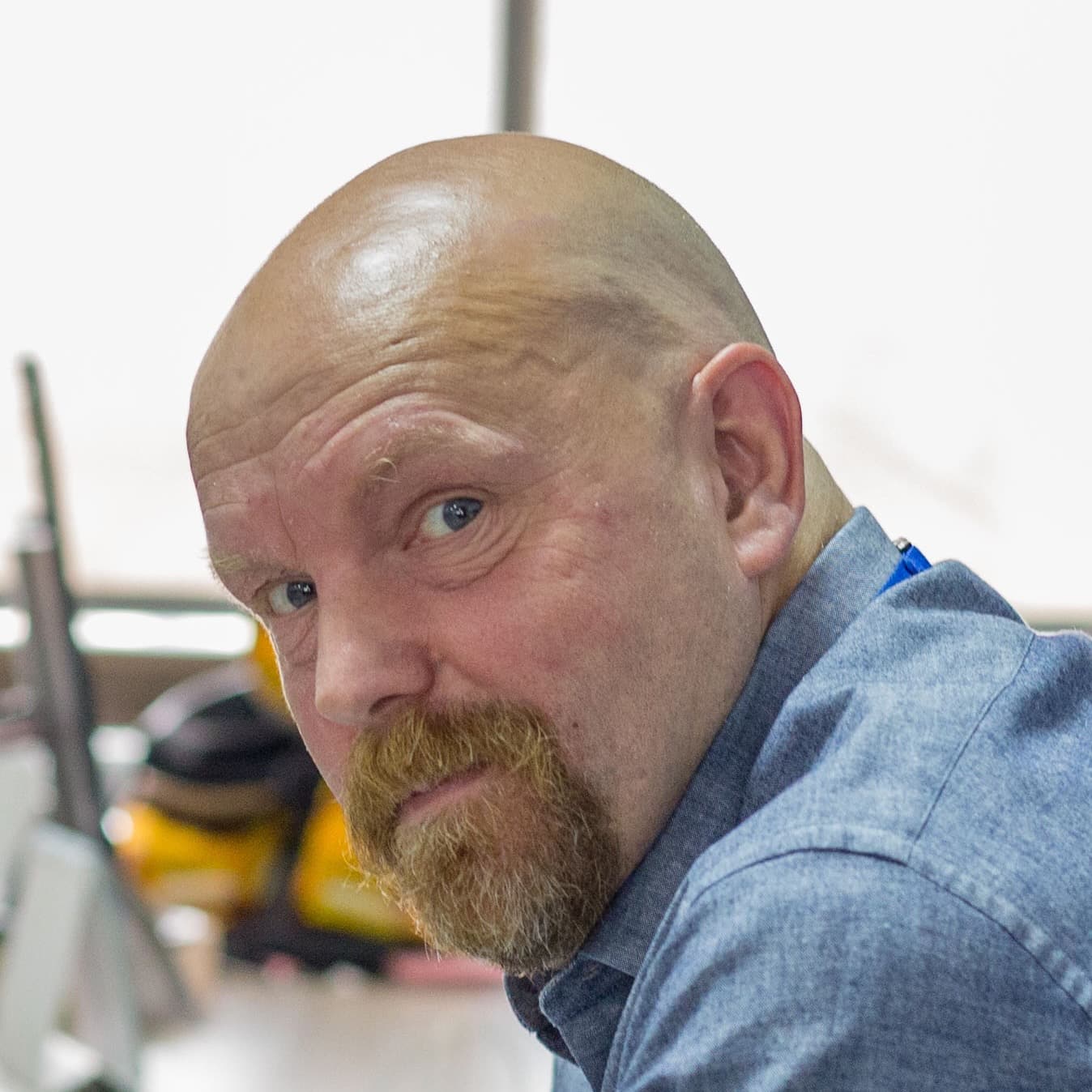
Kent Beck is the creator of Extreme Programming (XP) and a pioneer of Test-Driven Development, pair programming, and the Agile Manifesto. A programmer with 52+ years of experience, he co-created JUnit with Erich Gamma, co-invented CRC cards and design patterns in software with Ward Cunningham, and spent seven years coaching at Facebook. Today he runs the 'Software Design: Tidy First?' Substack newsletter (123,500+ subscribers in 195 countries), hosts the Still Burning podcast, and explores augmented human-AI coding. In April 2026 he publicly announced a Parkinson's disease diagnosis, continuing his mission to help technologists feel safe in the world.