Imagine a coding school in which the most important piece of equipment is another student. The student may be in Kenya, Colombia, Serbia, or India. The assignment is a web application. The real work is subtler: explain what you mean, understand what your partner means, and make the software run before the day is over. At Microverse, this was not a charming extra. It was the classroom.
The company, founded by Ariel Camus in 2017, taught people to become software developers for a global job market. Its full-stack program combined JavaScript, React, Ruby, Rails, projects, code reviews, career coaching, and remote collaboration. Students learned online with peers around the world. Employers could meet alumni for full-time positions or short contracts. The bet was that technical training would matter more if it also taught the everyday manners of distributed work.
- Microverse built a global coding school around pair programming, accountability, and remote-work practice.
- Its historic income-share model deferred tuition until qualifying employment, with reported payments capped at $15,000.
- The company paused new full-stack applications in June 2023 while it revised the program and responded to the market.
The other person is the product
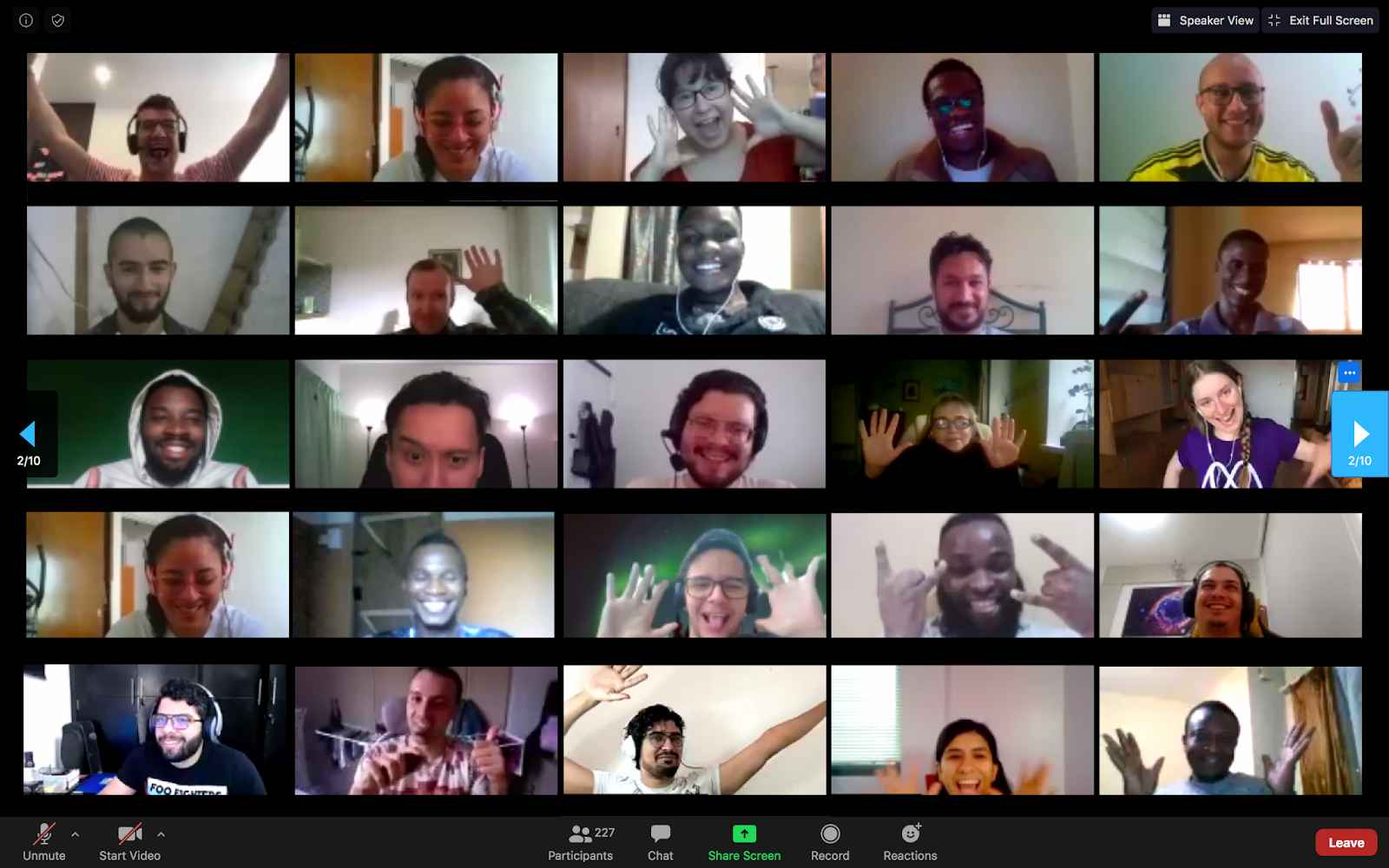
Most online courses can teach syntax. They can present a loop, a database, a neat little rectangle of code that works in the instructor’s browser. What they cannot easily sell is the moment when someone says, “I don’t understand your approach,” and waits while you make it clear. Microverse made that moment repeatable. Students worked with coding partners, joined accountability teams, reviewed one another’s work, and built group projects. The company described its method as intentionally light on conventional instruction and heavy on support.
Camus had lived and worked across several continents. On the company’s site, he says that geography had shown him a mismatch between ability and access. A person with the talent to write software might live far from an expensive university or a rich local hiring market. A remote company, in theory, could reach them. The school’s task was to make that theory survivable in a real interview and on a real team.
“Talent is everywhere, but opportunity is not.”Microverse’s founding refrain
This is why Microverse’s classroom looked so much like a workplace. Pair programming forces a person to name assumptions aloud. Pull requests force a person to leave a trail that another developer can read. A group project forces decisions about deadlines, ownership, and disagreement. None of those habits is especially glamorous. All of them matter when colleagues are separated by oceans and the only shared room is a video call.
The price of a postponed bill
Microverse became known for asking for no tuition upfront. Under the historic income-share terms reported for the full-stack program, a graduate paid 15 percent of income after earning at least $1,000 a month in a software-related job, until payments reached $15,000. That made the initial cash barrier much lower than a conventional tuition bill. It also meant the school’s revenue depended on students finding work and earning enough to pay.
The accounting has a second side. Studying full-time still costs time, rent, internet, and sometimes reliable electricity. Microverse experimented with living stipends; in one early account, Camus described a Nigerian student who could not afford fuel for a generator. That is a sharp reminder that deferred tuition does not defer life. A financing model can open the classroom door while living costs keep someone outside it.
For employers, Microverse offered a different transaction. Its employer page says companies could connect with graduates for full-time hiring without a hiring fee, or try developers on one-to-three-month contracts through Launchpad. Graduates had worked remotely in the program before arriving at a job. This positioned Microverse between an online school and a talent network. The closest alternatives were other coding bootcamps with deferred-payment plans, self-paced learning sites, and the free curricula available to anyone with a browser. Microverse’s answer to free content was the people and structure around it.
These numbers deserve their labels. The 95 are alumni who reported new jobs during one quarter, not every graduate in a cohort. Of them, 63 were first-time job searchers. The average salary reflects first full-time roles accepted in that period by a geographically varied group. A global school cannot honestly flatten Nairobi, Bogotá, and Berlin into one convenient salary claim. The company’s own report notes that some graduates took local or office-based work as a step toward remote careers.
When structure became the lesson
Microverse did not keep its first curriculum untouched. In its 2021 redesign, which it called Microverse 2.0, the company worked backward from data about hundreds of employed alumni. It curated learning materials rather than relying mainly on one open-source curriculum, added weekly deadlines, and set a target of seven months for the technical portion before job search. Students could repeat a week or module when they needed more time. The changes were practical: clearer finish lines, more accountability, and a closer fit between projects and the work graduates were finding.
The redesign also disclosed what had failed first. Students had struggled to stay motivated and to predict when they would finish. In a self-directed online school, flexibility can quietly become drift. Microverse’s remedy was to make progress visible each week without giving up mastery-based learning. That is a copyable idea beyond coding: measure a program against what alumni actually do, set a rhythm people can keep, and make a repeat possible without treating it as disgrace.
New full-stack enrollment paused. Microverse said it would support current students, improve the learning model, invest in new offerings, and adjust to changes in the market. The full-stack page still points visitors to the pause notice and a waitlist.
Then came the more consequential redesign: stop admitting new full-stack students. In June 2023, Camus announced a temporary pause. The company said it needed to improve the program and collaborative model, develop new offerings, and respond to changed market demands. It aimed at the time to reopen enrollment in 2024. A promise to reopen is not evidence that it did. Its public full-stack page continues to direct prospective students to the pause notice.
The pause matters because the school’s economics and its educational mission meet at employment. A job market can make a curriculum less relevant faster than a school can change it. Student support can be excellent and still fail to create enough vacancies. Microverse’s decision made a hard dependency visible: a pay-after-employment program needs actual hiring, not merely finished lessons.
The next language to learn
Microverse’s site also presents Leap, an English school for software developers. It is a small but telling extension of the original thesis. A developer seeking work across borders must often explain a design choice in English, discuss a bug with strangers, or endure the peculiar theater of a technical interview. A person may know exactly how to fix the code and still struggle to make that knowledge legible to the team that could hire them.
The company’s last prominent blog updates include guidance on English for developers in April 2024 and a report on a Kenyan student meetup in November 2023. Those are modest signals, but they fit the larger story. Microverse has always argued that a career is made in relationships as much as in code. Its original program rehearsed those relationships at scale. Its pause showed the limits of rehearsing for a labor market you cannot control.
The lesson for another school, or for someone learning alone, is concrete. Put people into the curriculum, not just into a forum. Ask them to explain, review, and revise. Track graduates rather than congratulating enrollments. Count living costs alongside tuition. And when employers change their minds, change the lesson before the next class pays for the mistake.