In 2015, John Koelliker had a modest problem with an immodest solution. He wanted to work in technology, but Brigham Young University did not yet have the sort of club that might explain how a student in Provo finds a desk in Silicon Valley. So he wrote to people. Hundreds of people. BYU alumni at the Bay Area’s large technology companies received cold messages from a sophomore with a few internships and a strong appetite for directions.
Several employees at LinkedIn replied. Koelliker spoke with them by phone, traveled to Sunnyvale, listened, and kept in touch. Two years later he joined LinkedIn’s Strategy and Analytics Program. Some of those early contacts became lasting friends and mentors. More than a dozen former LinkedIn colleagues would eventually invest in Leland, the company he now runs. One became his executive coach. Another joined the team as an engineer. The cold email, properly tended, had become a warm network.
This is the useful irony at the center of Koelliker’s career. He benefited from the generosity of a network, then set about building a business for people who did not have one. Leland is an online marketplace where customers find coaches for school admissions, career moves, tests, leadership, startup building, and an expanding collection of professional skills. Software handles discovery, scheduling, payments, and messages. The consequential part still happens between two people.
“Relationships matter. I’ll be forever grateful for all the incredible people I met at LinkedIn.”John Koelliker, reflecting on his path into technology
The first company wore cleats
Koelliker’s entrepreneurial apprenticeship began before the coaching marketplace. At BYU, where he studied information systems, he started Kore Baseball Products. The enterprise gave him what young founders often need most: a safe encounter with invoices, customers, and the discovery that an idea develops opinions the moment somebody is asked to pay for it. He also helped establish the BYU Tech Club, creating for other students some of the connective tissue he had gone looking for himself.
His major was a practical compromise between computer science and business. He wanted enough technical fluency to work in technology without surrendering his interest in people and markets. An Uber strategy internship followed in 2016. At LinkedIn, from 2017 to early 2020, he moved from analysis into product management and growth. He learned how a professional network behaves when every new feature touches several constituencies, each with firm views and a login.
He left for Curated, a smaller commerce startup, because the scale of LinkedIn was instructive but the proximity of a young company was irresistible. Curated made the founder’s life look less theoretical. Koelliker joined as a product manager in February 2020. By the end of that year, the Stanford MBA student was preparing for another experiment.
A route built from marketplaces
A side hustle finds its market
While working in product, Koelliker coached candidates for product-management interviews and MBA admissions. The work supplied an unusually direct view of the market. Applicants wanted help, but the established admissions firms could charge five figures. Coaches had expertise, but often lacked distribution, software, and a reliable way to earn from it. Customers faced a thicket of claims with few transparent reviews. The industry had plenty of advice and a shortage of legible trust.
Koelliker met Cameron Lehman through this work. Together, they tested the premise from several angles: a bootcamp, individual coaching, and premium content. One early admissions bootcamp drew about 70 people. Each format revealed another part of the machinery. Group instruction created community. Individual sessions created intimacy. Content created reach. A marketplace could combine the three while letting customers select the particular person behind the expertise.
The early build was pleasingly uncinematic. The founders studied take rates, debated how managed the marketplace should be, examined pricing, recruited coaches through their networks, and assembled an MVP with a no-code public layer and a custom marketplace behind it. Part-time engineers built the core. Trust had to be visible in profiles, reviews, credentials, and a checkout flow that did not make a nervous applicant even more nervous.
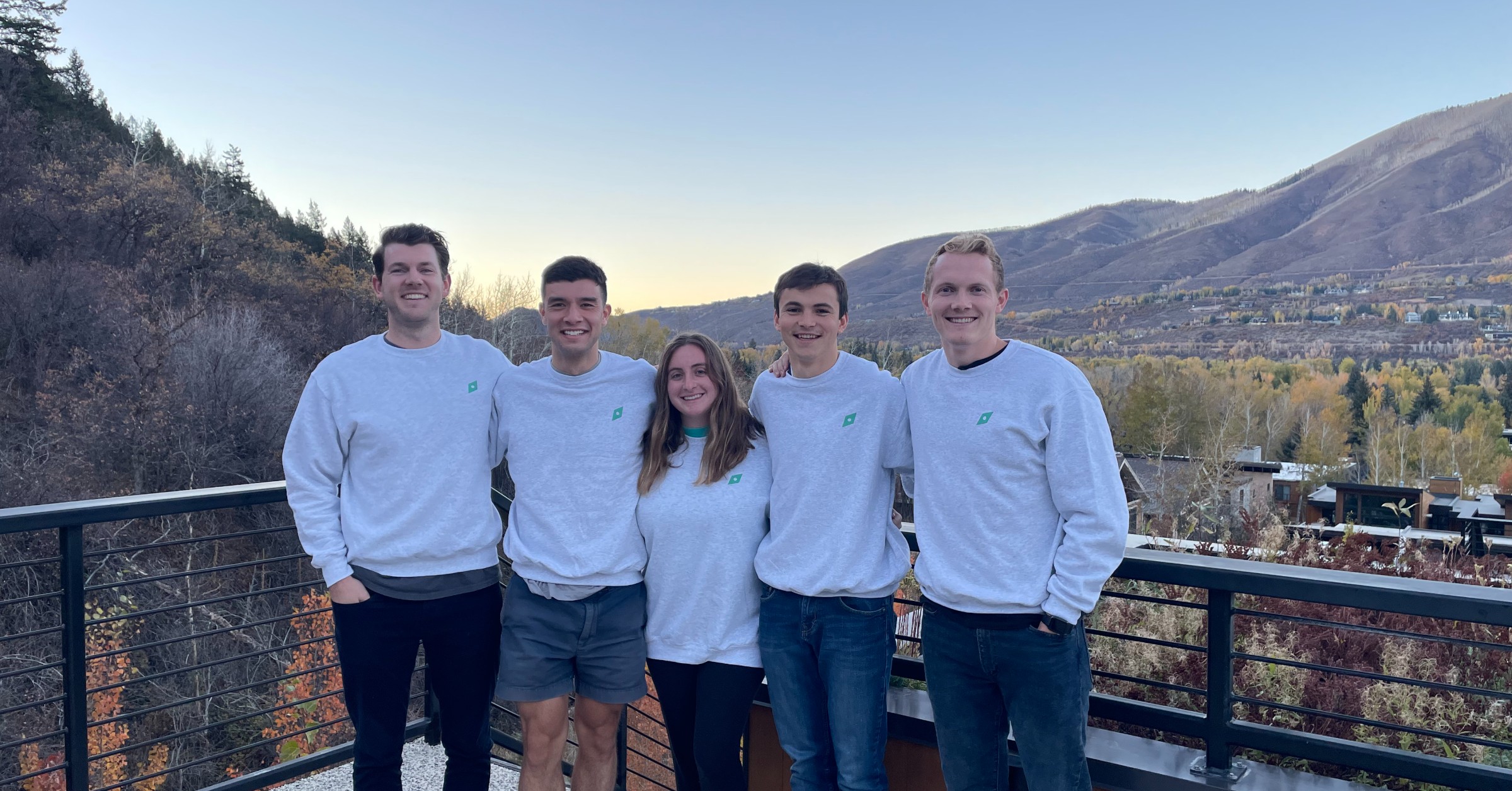
Leland opened in 2021 with MBA admissions as its beachhead. It was narrow enough for a marketplace to develop density and familiar enough to Koelliker for him to recognize quality. The company later moved into undergraduate admissions, consulting, product management, venture capital, private equity, test preparation, and other categories. Koelliker continued coaching on the platform himself. His public profile now records more than 27,000 minutes spent with clients, a rather thorough method of user research.
The numbers acquire passports
By November 2024, Leland reported more than 100,000 users in 70 countries, more than 1,000 coaches, and over 50,000 sessions completed during the previous twelve months. Revenue had quadrupled year over year. The business was cash-flow positive when it accepted a $12 million Series A led by Forerunner Ventures, with participation from GSV Ventures and others. Koelliker said the money was not a rescue. It was a decision to invest at an inflection point.
Marketplaces live or die by supply, and coaching supply is peculiarly difficult. A person can have an impressive résumé and still be useless at explaining how they acquired it. Leland said it accepted only 5 percent of applicants to coach. New coaches identify specific areas of expertise, while people in their professional networks can vouch for them. The distinction matters. Customers are not renting prestige by the hour; they are buying the ability of one person to notice what another has missed.
The growth engine was similarly personal. Koelliker said that 75 percent of growth remained organic in 2024, propelled by recommendations among friends, families, users, and the tightly linked communities inside particular professions. Dental-school admissions and software-engineering interviews look like separate businesses on a category page. Socially, they behave alike. People ask someone they trust who helped them.
A customer reaches a milestone. The coach earns a credible result. The story travels through a professional or family network. The next customer arrives already carrying a measure of trust.
AI enters the coaching room
Leland has added software for the coaches themselves: payments, scheduling, customer management, time tracking, reviews, packages, and discounts. AI can summarize sessions and extract action items. It can help a new coach draft a profile from work experience, or help a customer describe a goal and find plausible matches. The tools reduce the clerical tax on expertise. They do not need a bedside manner.
That division of labor contains Koelliker’s larger bet. Information is becoming abundant and answers are becoming instantaneous. People still need judgment, accountability, context, and encouragement. An applicant can ask a model how to prepare for an interview. A coach can notice that the applicant answers every question except the one being asked. In Koelliker’s formulation, Leland is not merely a shelf of advice. It is a place for relationships around consequential goals.
The company’s stated mission is to unlock human potential by making expertise universally accessible. Universal is doing ambitious work in that sentence. Coaching still costs money; marketplaces still make choices about which categories to build and whose credentials to recognize. Yet the direction follows Koelliker’s own route. A fortunate reply from a stranger should be reproducible. A useful introduction should not require a childhood in the right ZIP code.
“I coach because I love helping people reach their goals.”John Koelliker, on his Leland coaching profile
The oldest product remains a person
Koelliker describes himself as the oldest of five siblings and the father of four boys. He connects that position, practiced at home before it became a category of work, to his enthusiasm for mentoring. It is easy to detect the elder-brother energy in Leland’s vocabulary: coaches, champions, people in your corner. The language is warmer than “human capital,” which has always sounded like a bank account with shoes.
His management story also keeps circling back to relationships. The alumni who answered his messages helped him enter tech. LinkedIn colleagues taught him product craft, then showed up later around Leland as investors, teammates, coaches, and advisers. At Stanford, the difficulty and expense surrounding graduate applications sharpened the company’s first use case. Even the fundraising narrative is a chain of people who watched his work over time.
There is a temptation to describe a marketplace through its categories, its funding rounds, or the neat exponential curve on a slide. Leland’s more revealing unit is the appointment. A customer arrives with a goal and a degree of uncertainty. A coach arrives with experience and, ideally, the patience to translate it. Somewhere between them sits the software Koelliker built. If it works, it becomes briefly invisible.
The hundreds of cold emails were never really about email. They were requests for borrowed perspective. Koelliker’s company has spent the years since turning that request into something searchable and repeatable, then carrying it beyond a single school, industry, or country. Ambition may be abundant. His wager is that the right conversation can keep it from wandering around alone.