The job wants experience. The experience wants a job. Co.Lab has built a business inside that maddening loop, assembling aspiring product managers, designers and software developers into teams that have to make something together. There is a deadline. There are other people’s opinions. Eventually, someone has to decide what will actually ship.
That is a useful complication. A solo portfolio can demonstrate taste, persistence or technical skill. A shared project raises a different set of questions: Can you explain a problem? Can you accept that your favorite feature is too expensive? Can you hand work to another person without handing them a mystery? Co.Lab makes those questions part of an education people pay for.
The company sells online product training and mentorship to individuals, while also delivering programs with employers and educational organizations. Its distinctive offering is access to the social machinery of product development: a team, feedback and repeated decisions. The classroom looks a little more like the workplace students hope to enter.
Two winding roads, one shared classroom
Sefunmi Osinaike and Helen Huang met at the University of Waterloo. In their 2020 introduction, Osinaike described studying electrical engineering, building an app called Pave with friends and finding his way into product roles at Microsoft and Apple. Huang had studied Earth Sciences before moving into product management.
Their complaint was specific. Training often separated product, design and engineering even though employers expected those disciplines to cooperate. Internships could provide that experience, but access was uneven. Co.Lab would create product groups where learners practiced the work across those boundaries.

By December 2020, Huang was celebrating a Fall cohort’s demo day and announcing winter applications. Participants presented products to industry judges; mentors helped them get there. The company even supplied an affectionate collective noun: Co.Labbies. The playful vocabulary sat beside a serious expectation that people would show their work.
Huang later recalled that Co.Lab remained a side hustle for almost a year before the founders left their full-time jobs. The sequence is instructive: they ran the program alongside employment before committing to it. By that 2023 reflection, she reported more than 700 graduates and a community exceeding 10,000 learners.
The syllabus has other people in it
The four-week Product Sprint starts upstream of building. Learners investigate a problem, interview prospective users and turn findings into a product requirements document. Peer review and mentor feedback push them to revise it. The intended output is a portfolio showing research and product thinking, rather than simply attendance.
The eight-week Product Bootcamp moves into delivery. Co.Lab matches product learners with designers and engineers to develop a minimum viable product. The published format is part-time, with an estimated 10 to 15 hours of work each week and individual mentorship. A backlog and development sprints give the team a working rhythm.
For a career changer, the value is a more substantial interview conversation. Instead of describing a hypothetical feature, a participant can discuss what users said, which requirements changed and how the team responded. That does not make a student project equivalent to years of employment. It does supply decisions a recruiter can ask about.
Co.Lab’s project archive makes the work inspectable. Examples include Podball, designed to simplify podcast editing workflows, and a website for Community Fridges Toronto. These are student projects, not a catalog of software businesses owned by the school. Their educational value lies partly in the record of how they were made.
The iPhone idea that became Ebb
One revealing example is Ebb, a browser extension developed to reduce moving web components. Its team conducted four interviews and collected 31 survey responses while exploring accessibility problems. Research pointed toward abrupt movement as an issue worth narrowing in on.
The first proposed platform did not survive planning. Although 64% of survey respondents identified the iPhone as their most-used operating system, the team judged Apple’s approval process a poor fit for its timetable. It switched to a Chrome extension, initially targeting GIFs and later adding CSS animations.
The original version launched in June 2021. What failed first was the platform plan’s fit with the deadline. The transferable lesson is wonderfully practical: bring developers into the decision before promising the product. Research can tell you where demand sits; delivery constraints still determine what you can ship.
A portfolio gets more interesting when it can explain why the first plan changed.THE EDITORIAL TAKE
Tuition buys structure. Bring your own hours.
Co.Lab’s business combines consumer tuition with organizational training and mentorship delivery. A buyer is paying for more than access to lessons: matching, coordination, practitioner attention and a schedule are part of the proposition. Those services explain why the model occupies a different position from a library of recorded courses.
The legacy Bootcamp page lists $3,800 upfront or six $650 installments. The Sprint page lists $500 upfront or six $95 payments. Both pages retain 2023 cohort dates, so these are historical advertised prices, not a confirmed quote for a new intake. The installment totals are $3,900 and $570 respectively.
The AI Product Management page, reviewed in September 2026, advertises $799 upfront, discounted from $999, or six $150 installments. That payment plan totals $900. Its six-week format includes user research, requirements, prototyping and a portfolio case study, with group mentorship and feedback. The page features WalChat, a shopping-recommendation chatbot, as an example.
The installment option adds $101 to the advertised upfront price. Website checked September 9, 2026.
The other cost is coordination. This format suits someone able to protect time for shared work, receive criticism and keep commitments to teammates. A learner who needs entirely asynchronous study may struggle with that bargain. Someone who needs foundational coding instruction should distinguish learning to program from joining a team to practice development.
The customer is sometimes already at work
Co.Lab’s organizational work broadens the story beyond applicants trying to enter tech. At home-automation company ecobee, it delivered product-management training to customer success employees. Technical support lead Daniel Brown initially doubted how much a four-week course could cover. His account describes making problem statements, research plans, surveys and a product presentation.
That is a modest but useful change of mind: the work made the role more concrete. Employees who hear customer frustrations can practice translating those observations into research questions and product proposals. The training gives their existing proximity to users a more formal method.
At York University’s School of Continuing Studies, Co.Lab’s contribution was mentor access. Working product managers reviewed student projects in the university’s certificate program. This arrangement sells a piece of Co.Lab’s expertise without requiring the institution to adopt its entire course structure.
The Black Founders Network collaboration addressed a different obstacle: founders needed teams to build initial products. Co.Lab combined product learning with designers and engineers. Its account says participant Faizah Balogun won the BFN Smart Start Top Venture Award with the MVP developed through the program.
“you don’t really get it until you do it”FAIZAH / BFN FOUNDER, IN CO.LAB’S PARTNERSHIP ACCOUNT
Through the Diverse Tech Talent Program, Co.Lab worked with World Innovation League, Atila, Riipen and Skillhat. The first iteration ran from September 2023 through May 2024 with DIGITAL support. Co.Lab describes its role as curriculum development and delivery, operational coordination and participant communications. Its partnership overview reports 420 Black and underrepresented Canadians trained across the collaboration.
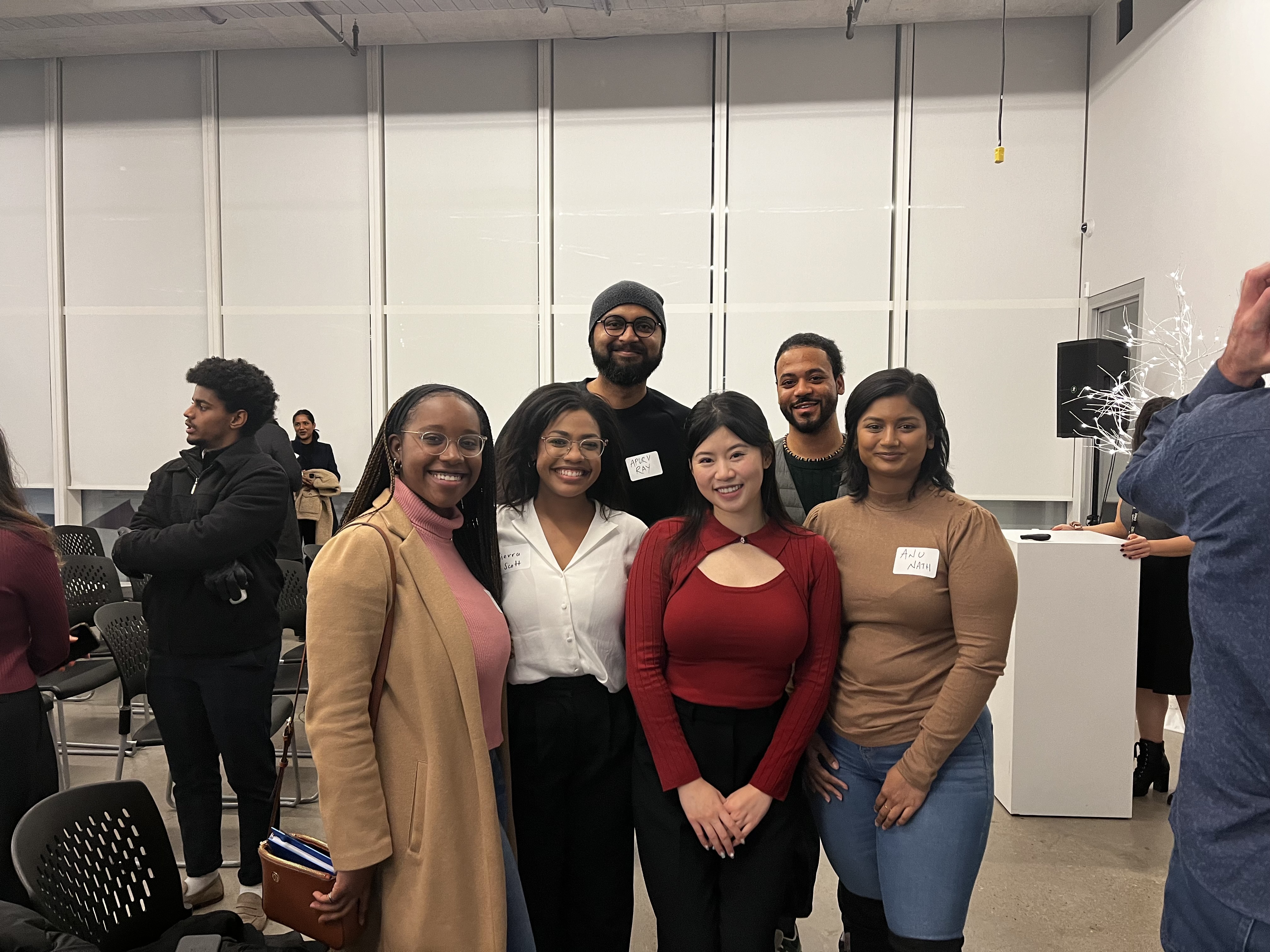
A placement number needs its small print
Co.Lab’s homepage reports more than 1,500 professionals across over 60 countries. It also displays a 75% placement rate within six months for selected cohorts, a 90% graduation rate and a $96,000 median graduate salary in US dollars. The company describes the figures as aggregated career-advancement data recorded from 2020 onward.
The qualification matters. A selected-cohort percentage cannot describe every intake, and a graduate salary is not a promise to the next applicant. These figures are company-reported. For a prospective student, the more useful question is which population resembles their own starting point, location and target role.
Public recognition offers another kind of evidence. In January 2022, ViewSonic and Hustle Fund named Huang Best Creator in their Affies awards. That recognizes the venture; it does not establish an individual learner’s employment prospects.
The company’s catalog now reaches into AI, while its co-founder’s path has also moved on. In her April 2026 personal biography, Huang lists Co.Lab under previous work and describes working on Trove. The enduring idea is visible in the student archive: give people a setting in which they must make decisions together, then let them explain the work.
Readers can copy that discipline without copying a tuition bill. Find collaborators with different skills. Pick one user problem. Put evidence and constraints in writing. Set a date to demonstrate what works. The useful portfolio begins where the immaculate plan meets another person’s informed objection.