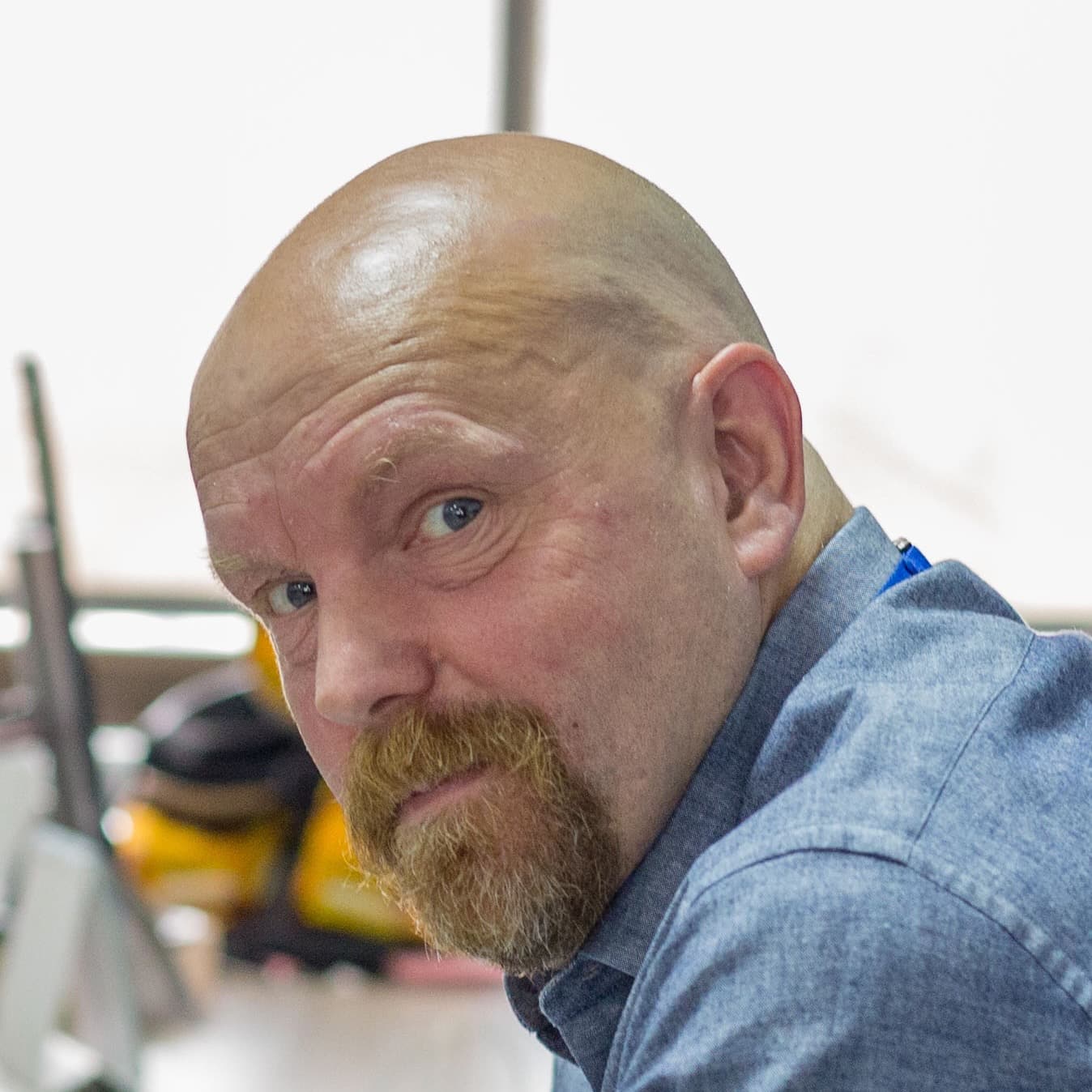
The Most Productive Contrarian in Software
There is a certain kind of genius that looks obvious in hindsight. Kent Beck's specialty is making you wonder how software ever existed without the ideas he brought to it. Test-Driven Development. Pair programming. Continuous integration. The Agile Manifesto. A testing framework family - JUnit, NUnit, PyUnit - that runs in essentially every serious codebase on Earth. The man didn't just improve how programmers work. He changed what it means to write software at all.
Beck was born in 1961 into a family of builders. His grandfather was a radio enthusiast who rewired everything he touched. His father was an electrical engineer who moved to Silicon Valley in the 1960s - before it had that name. Kent was, by his own reckoning, a third-generation geek. He and his father built their first personal computer together. The machine was a project. So was Kent.
He spent 1979 to 1987 at the University of Oregon, earning both a B.S. and an M.S. in Computer and Information Science. More importantly, he discovered Christopher Alexander - the architect whose "Pattern Language" described reusable solutions to recurring design problems. Beck saw the same principle lurking in software. The idea planted a seed that grew into an entire movement.
"I'm not a great programmer; I'm just a good programmer with great habits."
- Kent BeckAt Tektronix in the 1980s, Beck found his collaborator: Ward Cunningham. Together they did something embarrassingly simple that changed programming forever. When writing code, they took turns at the keyboard while the other watched. They didn't call it anything. We call it pair programming. They also co-invented CRC (Class-Responsibility-Collaboration) cards, which gave object-oriented design a physical, collaborative artifact. And they presented a foundational paper on design patterns at OOPSLA in 1987 - years before the Gang of Four book made the concept famous.
But Beck's most decisive break came at Chrysler in 1996. He was brought in to tune the performance of a Smalltalk payroll system covering 87,000 employees. He looked at the development process, found it broken, and proposed something radical: Extreme Programming. The name was deliberate provocation. Beck wanted, specifically, "a word that Grady Booch would never say he was doing" - because Booch was his primary competition at the time. XP went live. The system worked. And Beck had a methodology to export to the world.
By 1999, he published the XP book - "Extreme Programming Explained: Embrace Change" - which won a Jolt Award. That same year he co-authored "Refactoring" with Martin Fowler, a book that became a canonical reference. In 2001, he organized the precursor meeting that led to the Snowbird gathering, where he and sixteen others signed the Agile Manifesto in the Utah mountains.
"Optimism is an occupational hazard of programming: feedback is the treatment."
- Extreme Programming Explained, p. 31In 2002 came "Test-Driven Development: By Example" - a second Jolt Award and probably the most practically influential book in software development of the past twenty-five years. TDD changed how millions of developers think about the relationship between tests and code. The idea was simple: write the test before the code. The consequences were enormous.
Beck joined Facebook in 2011. He was, by his own account, taken aback: zero automated unit testing, everyone pushing code directly to production. He spent seven years studying their alternative safety mechanisms - feature flags, staged rollouts, developer accountability, collective code ownership. He came to appreciate them. He disagreed with other things. In 2018 or 2019, he left over what he described as "irreconcilable differences." He hasn't said more than that. He doesn't need to.
The Facebook departure prompted a personal reckoning. Beck emerged from it with a mission statement - "Help geeks feel safe in the world" - and a renewed clarity about what he wanted to do. He joined Gusto as Software Fellow, mentoring teams. Then Mechanical Orchard as Chief Scientist, working on the fascinating cultural and technical problem of pulling enterprises off mainframes. Then he went independent.
Today, Beck runs "Software Design: Tidy First?" - a Substack newsletter with over 123,500 subscribers in 195 countries, a 32% open rate, and readers at Meta, Netflix, Salesforce, Amazon, Anthropic, and OpenAI. He launched the Still Burning podcast in March 2026. He hosts the Thinkie World Congress, an annual conference on thinking habits. He writes books - the third in his Empirical Software Design series, "Tidy Together," is in progress. He codes in Rust, Python, Go, and Smalltalk. He coaches 1-on-1. He speaks at conferences. He makes cheese. He plays guitar. He is 65 years old and, by any reasonable measure, busier and more relevant than he has ever been.
In April 2026, Beck made a public announcement that landed hard in the software community. He revealed he had been dealing with Curvularia meningitis - a fungal brain infection that caused approximately ten strokes over twenty-eight months. And that he had recently been diagnosed with Parkinson's disease. Viewers of his podcast had noticed his hand trembling. He chose not to hide it. Beck is not the hiding type. He described the emotional shock of a diagnosis that rearranged his planning horizon - and then kept writing, kept coding, kept building.
His newsletter tagline reads: "Helping geeks feel safe in the world." The biography on his personal site lists: programmer, artist, coach, singer/guitarist, peripatetic. The poker coach, the cheese, the Smalltalk server he's building on the side - these are not distractions. They are the pattern. Kent Beck has always been the kind of person who looks at a hard problem, finds the simplest thing that could possibly work, and then does it with more discipline than anyone around him thought was possible. Fifty-two years in, the approach hasn't changed. Only the stakes keep growing.