python
(70)
Nehal Madhani Followed the Paperwork
He left a restructuring practice, taught himself to code, and discovered that customers needed something different from what he had built. The founder of Alt Legal has been following that clue ever since.
Boomi Data Integration: The money is in the handoffs
Rivery built a business around the awkward gaps between data tools. Inside Boomi, its wager is getting bigger: make the entire journey manageable, from the first database change to the last dashboard refresh.

Anaconda made Python easy. Now it sells peace of mind.
The company that helped millions get started with Python found its paying customer in a different room: the enterprise worried about what all that free software might bring through the door.
Beacon found 160 formulas hiding inside a million
Wall Street keeps its cleverest ideas in surprisingly ordinary spreadsheets. Beacon turns that private ingenuity into shared infrastructure - and Clearwater paid to bring the machinery inside.

Peter Hadlaw and the Quiet Machinery Behind Getting Paid
Tesorio's founding engineer works where machine learning meets the stubborn rituals of accounts receivable. His other lens is literal: a camera trained on city light, small details and the world beyond the spreadsheet.

David DeSanto and the Useful Art of Breaking Things
Anaconda's CEO spent years learning how software fails. Now the developer, security researcher and product operator is applying that education to a harder problem: making open AI useful without asking enterprises to surrender control.
Posit Gave Away the Data Science Workbench - Then Sold Enterprises the Keys
The company behind RStudio spent years making data science software free. Its business appeared when banks, drugmakers and governments needed that freedom packaged with permissions, audit trails and a dependable place to publish.

Anuraag Gutgutia
Anuraag Gutgutia is co-founder of TrueFoundry, a San Francisco-based enterprise AI platform that lets companies build, deploy, and govern generative and agentic AI inside their own cloud infrastructure. A quantitative analyst turned repeat entrepreneur, he spent seven years at WorldQuant rising to VP of Portfolio Management and the CEO's office before co-founding the talent platform EntHire (acquired by InfoEdge/BigShyft) and then TrueFoundry in 2021 alongside two IIT Kharagpur batchmates. TrueFoundry has raised $21.3M in total funding - including a $19M Series A led by Intel Capital in February 2025 - and serves Fortune 1000 companies seeking to run AI workloads without infrastructure complexity or data-sovereignty tradeoffs.

Tony Holdstock-Brown
Tony Holdstock-Brown is the co-founder and CEO of Inngest, a San Francisco developer platform that gives engineers a durable, observable execution layer for background jobs, workflows, and AI agents. A self-described tinkerer since age 10 and former Docker engineer, he started Inngest in 2021 with CTO Dan Farrelly after the two met in a New York co-working space. The company has raised roughly $31.6M, including a $21M Series A led by Altimeter in 2025, on the thesis that in an AI era the real moat is how fast a team can iterate.
Cloudsmith
Cloudsmith is a Belfast-founded, cloud-native artifact management platform that gives engineering teams a single place to store, secure, and distribute software packages and containers across 30+ formats. It acts as a private, fully managed registry with built-in supply chain controls - vulnerability and malware scanning, policy enforcement, quarantine, and global distribution - increasingly positioned around governing the flood of code produced by AI coding agents.
Code Ocean
Code Ocean is a New York-based B2B SaaS platform that makes computational research reproducible, traceable and collaborative. Its flagship Compute Capsule bundles code, data and the exact software environment together so an analysis runs identically today or years from now. Used by pharma, biotech and leading research institutes, and integrated with journals like Nature and IEEE, Code Ocean is building a trusted virtual lab where both scientists and AI agents can run real analyses with full version control, lineage and compliance.
DataCamp
DataCamp is an online learning platform that teaches data and AI skills through short, browser-based interactive exercises. Founded in 2013 and headquartered in New York, it offers 700+ courses in Python, R, SQL, Power BI, Tableau, and generative AI, along with hands-on projects, skill assessments, and industry certifications. The company serves both individual learners and enterprises, having grown to more than 10 million learners and thousands of business customers who use it to close data and AI skills gaps.

Davide Asnaghi
Davide Asnaghi is the co-founder and CEO of Diode Computers, a startup rebuilding how printed circuit boards are designed and manufactured. An Italian-born engineer trained at UC Berkeley, he spent years building hardware at Apple's Special Projects Group and medical-device companies before starting Diode to replace legacy EDA tools with open-source, AI-friendly software: a Python design language backed by a Rust compiler that turns requirements into manufacturable circuit boards in a fraction of the usual time. Diode raised an $11.4M Series A led by Andreessen Horowitz and partners with Anthropic to make Claude a more capable electrical engineer.

Modal
Modal is a serverless cloud platform that lets developers run compute-intensive AI and data workloads - inference, training, fine-tuning, batch jobs, and sandboxed code - without managing infrastructure. Built from scratch in Rust with a custom container runtime, file system, and GPU memory snapshotting, it delivers sub-second cold starts and elastic autoscaling from zero to thousands of GPUs, billed by the second. Founded in 2021 by Erik Bernhardsson and Akshat Bubna, the New York-based company reached roughly $300M in annualized revenue and raised a $355M Series C in 2026 at a $4.65B valuation.
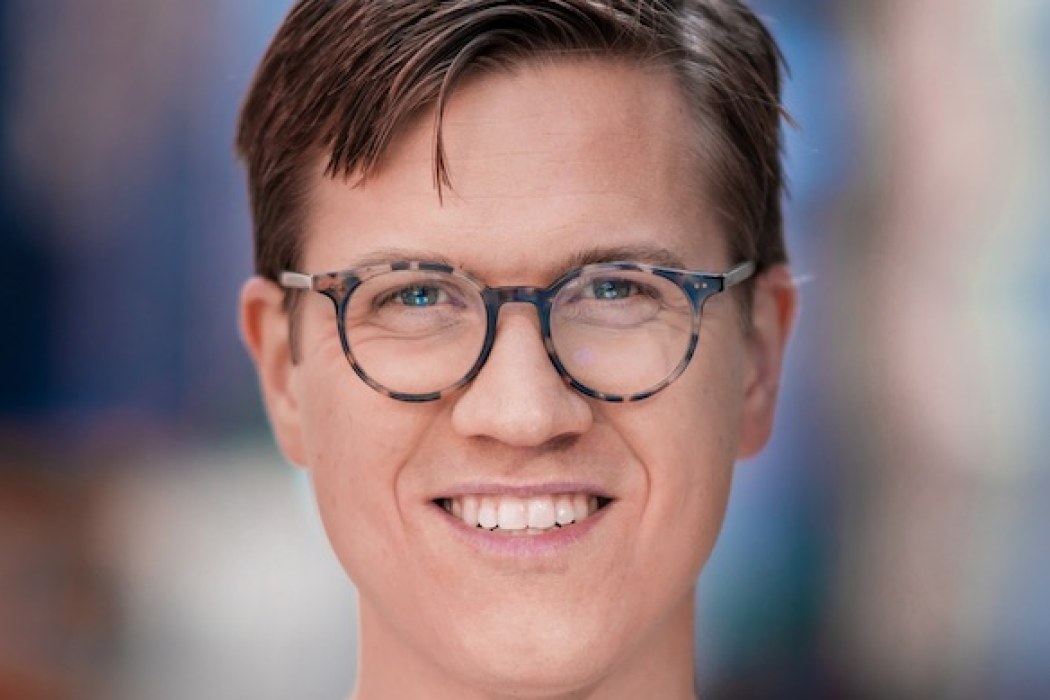
Erik Bernhardsson
Erik Bernhardsson is the founder and CEO of Modal Labs, a serverless cloud platform that gives AI engineers on-demand GPU compute with sub-second container starts. A Swedish engineer trained in physics at KTH, he built the first version of Spotify's music recommendation system (including the groundwork behind Discover Weekly), open-sourced the widely used Luigi and Annoy libraries, then ran a 300-person engineering org at Better.com before starting Modal in 2021. He is also a prolific blogger whose essays on engineering, data teams, and startups reach a large technical audience. In 2026 Modal raised a $355M Series C at a $4.65B valuation.

Jonathan Cornelissen
Jonathan Cornelissen is a Belgian entrepreneur, PhD in financial econometrics, and the co-founder and founding CEO of DataCamp, the online data science education platform he started in 2013. Frustrated while teaching himself R during his doctorate, he built DataCamp to make data skills accessible through interactive, browser-based courses. Over six years as CEO he grew it to more than 10 million learners, 200,000 paying subscribers, 2,500 enterprise customers and over $50 million in annual recurring revenue. He authored an introductory R course completed by over a million learners. Since stepping back from the CEO role he has focused on angel investing across education, AI and crypto, and writes about company building, hiring and startup equity.
Cogent Labs
Cogent Labs is a full-service software and AI studio that deploys practical, 'boring' AI automation for small and mid-size businesses - the kind that quietly removes repetitive manual work like data entry, status updates, and report generation. Founded by CEO Ehmad Zubair, the team blends web, mobile, and generative-AI engineering (Python, Django, React, React Native) with a fixed-price consulting model that maps a company's operations, prioritizes the highest-ROI automations, and ships production-ready workflows in weeks rather than six-month pilots.
Mage
Mage is a San Francisco Bay Area software company that builds an open-source and enterprise data pipeline platform for integrating, transforming, and orchestrating data. Founded in 2020 by former Airbnb engineer Tommy Dang, Mage offers a notebook-style, developer-friendly alternative to Apache Airflow, letting teams build batch and streaming pipelines in Python, SQL, and R. Its managed Mage Pro tier adds enterprise orchestration, collaboration, and AI-assisted authoring that generates, debugs, and refactors pipeline code from natural language.

Deepnote
Deepnote is a cloud-based, collaborative data notebook that reimagines the Jupyter notebook for teams. Founded in 2019 in San Francisco, it lets data scientists and analysts connect data sources, write Python, SQL and R, and work together in real time - like a Google Docs for data. In recent years it has leaned heavily into AI, adding an agent that can generate, edit and debug entire notebooks, and it went open source in 2025.

Nixtla
Nixtla is a San Francisco time-series intelligence company best known for TimeGPT, one of the first production-ready foundation models built specifically for forecasting and anomaly detection. It started as the open-source Nixtlaverse - libraries like StatsForecast and NeuralForecast with tens of millions of downloads - and now sells an enterprise platform that lets organizations forecast demand, detect anomalies, and support decisions with a few lines of code, on-premises or in the cloud.

CodeHS
CodeHS is a K-12 computer science education platform that gives schools everything they need to teach coding: a browser-based coding environment, a full standards-aligned curriculum spanning elementary through AP, teacher tools for grading and progress tracking, professional development, and industry certifications. Founded in 2012 by two Stanford CS section leaders, Jeremy Keeshin and Zach Galant, it now reaches millions of students and thousands of schools, and in 2025 acquired the K-8 creative coding platform Tynker.
DBOS, Inc.
DBOS, Inc. is a San Francisco- and Cambridge-based developer infrastructure company commercializing durable execution technology born from a joint MIT-Stanford research project led by Postgres creator Michael Stonebraker and Apache Spark creator Matei Zaharia. Its flagship open-source library, DBOS Transact, adds crash-proof workflow orchestration and built-in observability to ordinary Python and TypeScript programs by persisting application state in Postgres, so software resumes exactly where it left off after a failure - without a separate workflow server. The company pairs the library with DBOS Conductor and DBOS Cloud for managing and hosting reliable backends, AI agents, and long-running workflows.
Enki
Enki is a San Francisco-based edtech company building an AI-powered coaching platform that helps professionals and teams learn coding, data, and no-code tools faster. Founded in 2019 by Kirill Makharinsky and Bruno Marnette, Enki pairs on-demand 1:1 AI coaching with structured, role-specific exercises for tools like SQL, Python, Excel, Tableau, Looker, and Power BI. It began as a mobile app that grew to millions of users and 20,000+ five-star reviews, then pivoted toward enterprise upskilling, offering companies a way to raise data literacy and tool adoption across their workforce.

marimo
marimo is a San Francisco company building an open-source reactive Python notebook that replaces the error-prone JSON of Jupyter with pure Python files. Cells form a dataflow graph, so changing one variable automatically re-runs the cells that depend on it - notebooks are reproducible, git-friendly, deployable as apps, executable as scripts, and can even run entirely in the browser via WebAssembly. Founded in 2022 by Akshay Agrawal and Myles Scolnick, marimo raised a $5M seed in 2024 and joined CoreWeave in October 2025 while keeping the notebook free and permissively licensed.

Reflex
Reflex is an open-source, full-stack Python framework and cloud platform that lets developers build and deploy production-grade web apps entirely in Python - no JavaScript required. Founded by ex-Apple and Ancestry engineers Nikhil Rao and Alek Petuskey, the company (originally Pynecone, a Y Combinator W23 startup) wraps React components in Python so data scientists, analysts, and engineers can ship UI, backend, and deployment from a single codebase. It has grown to over a million apps built, 25k+ GitHub stars, and adoption inside Fortune 500 companies.

Akshay Agrawal
Akshay Agrawal is the co-founder and CEO of marimo, an open-source reactive Python notebook stored as plain Python files so it is reproducible, git-friendly, runnable as a script, and deployable as an app. A Stanford PhD advised by Stephen Boyd, he co-built version 1.0 of CVXPY, created the embedding library PyMDE, and worked on TensorFlow 2.0 at Google Brain. marimo has grown past 20,000 GitHub stars and raised a $5M seed round led by AIX Ventures, backed by figures including Jeff Dean, Wes McKinney, and Clement Delangue.

Sammy Sidhu
Sammy Sidhu is the co-founder and CEO of Eventual, the company behind Daft, an open-source, Python-native data engine built to wrangle messy multimodal data like images, video, audio and LiDAR at petabyte scale. A UC Berkeley EECS grad with a background in high-performance computing and deep learning, he cut his teeth on Wall Street high-frequency trading and then on the perception stacks of self-driving cars at DeepScale (acquired by Tesla), Lyft Level 5 and Woven Planet (Toyota). After repeatedly watching brilliant engineers burn 80% of their time fighting data plumbing instead of building, he and Jay Chia turned that frustration into Eventual. Daft now processes petabytes daily at Amazon, CloudKitchens, Together AI and Essential AI, and the company has raised roughly $30M from investors including CRV, Felicis, Microsoft's M12 and Citi.

Tryolabs
Tryolabs is a Montevideo-born AI and machine learning consultancy that builds custom data and AI solutions for companies worldwide. Founded in 2009, it pairs deep engineering with applied research across computer vision, NLP, generative AI and MLOps, and is known for open-source tools like Norfair and Luminoth. Its clients range from MercadoLibre and LATAM Airlines to Halliburton, Allianz and UNICEF, spanning retail, insurance, manufacturing, telecom, oil and gas and transportation.

Coiled
Coiled is a lightweight cloud compute platform that lets Python users scale data science, machine learning, and AI workloads from a laptop to thousands of cloud machines without Docker or Kubernetes. Founded in 2020 by Matthew Rocklin, the creator of the open-source Dask library, Coiled runs inside a customer's own AWS, GCP, or Azure account, handling provisioning, autoscaling, environment replication, and cost visibility so data teams can run Dask clusters, serverless functions, and batch jobs with minimal friction.
JITX
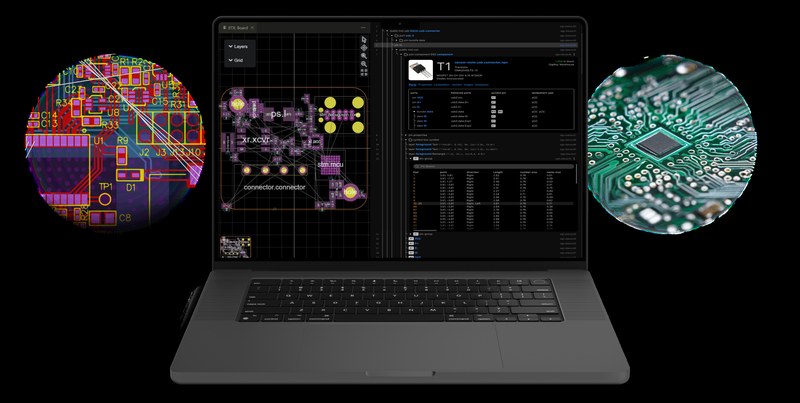
JITX is a Berkeley- and San Jose-based software company building a code-driven, AI-assisted platform for circuit board design. Instead of dragging parts around a canvas by hand, electrical engineers describe what a board must do in code, and JITX selects components, places parts, routes traces, and checks the design against electrical, mechanical, and manufacturing rules. Spun out of UC Berkeley and backed by Y Combinator and Sequoia Capital, the company is used by hardware teams at firms like Honeywell Aerospace, Lockheed Martin, Northrop Grumman, OpenAI, and HP, who report 5-20x productivity gains on complex multi-layer designs.