traceability
(31)
Do Van Long and the mango with a paper trail
A Vietnamese mango helped make his case for blockchain. Today, Do Van Long is applying the same question - how do you prove a claim? - to trade and business verification between Vietnam and Australia.
BigHaat sells the next move
A seed packet is only the beginning. BigHaat is building a business around what farmers need before they plant, while they grow, and after they harvest.

Inspectorio and the week nobody could see
A factory inspection is only useful if somebody can act on it. Inspectorio built a business around closing the gap between finding a problem and doing something about it.

Polarion and the Case of the Missing Requirement
A product can pass its tests and still fail to keep its promises. Polarion built a business around the awkward space between what engineers were asked to make and what they can prove they delivered.
The Factory’s Blind Spot Had Hands
Drishti put cameras over manual assembly lines and turned the motions between machines into usable data. At HELLA, the useful discovery was neither a robot nor an algorithmic miracle - it was an awkward reach across a workbench.
The Label Looks Boring. Loftware Built a Business Around Everything That Can Go Wrong.
A wrong label can stop a line, strand a shipment, or create a regulatory mess. Loftware turned that anxiety into a subscription software business - then expanded from printing barcodes to governing product identity across the supply chain.
The Boring Software Bet: How Ketryx Turned FDA Paperwork Into a Product Engineers Will Actually Use
Medical-device teams were losing release cycles to copy-paste compliance. Ketryx slipped into Jira and GitHub, automated the evidence trail, and built a $55 million-funded business around making regulated software less painful.
The Grand Rapids Company That Puts a Radio Inside Your Pill Bottle Cap
How a vertically integrated RFID factory in Michigan built a business on a simple bet: that the smartest part of a medicine bottle should be the cap.
The egg company that put a farm's name on every carton
How a 20-hen Texas farm turned radical transparency and 108 square feet of pasture per bird into a $759 million business - one carton at a time.
The Company That Puts a Label on Almost Everything You Touch at Work
For 110 years, Brady has made the humble label a serious business. Now, fresh off a $1.4 billion deal for Honeywell's barcode-and-scanner unit, the Milwaukee manufacturer is betting that whoever labels the thing should also track it.
Aruna
Aruna is Indonesia's largest integrated fisheries commerce platform, connecting small-scale coastal fishermen directly to domestic and global seafood buyers through a digital supply chain. Founded in 2016 by three Telkom University students, it removes layers of middlemen, uses local agents and mobile tools to onboard fishers, and pairs commerce with traceability, cold chain, and sustainability programs. The company operates across most of Indonesia's coastline and exports to dozens of countries under a 'People, Profit, Planet' mission.
Agridence
Agridence is a Singapore technology company that helps global agri-commodity supply chains prove where their raw materials come from. Born in 2018 as HeveaConnect, a digital B2B marketplace for physical natural rubber, it rebranded in 2022 and expanded into a modular traceability and compliance platform now spanning rubber, palm oil, cocoa, coffee, coconut and more. Its tools trace commodities from the farm plot to the shipment and file the paperwork regulators such as the EU Deforestation Regulation demand, serving tyre makers, food multinationals, traders and industry associations.
Vietnam Blockchain Corporation
Vietnam Blockchain Corporation (VBC) is a Ho Chi Minh City-based science and technology company founded in 2016 that builds and deploys practical blockchain solutions for enterprises and government. Its flagship platform, Agridential.vn, brings digital traceability and supply-chain transparency to agriculture, while its Blockchain-as-a-Service offering serves manufacturing, logistics, e-commerce, fintech, and smart-city projects. VBC positions itself as a hub for blockchain expertise in Southeast Asia, with more than 50 projects and 180+ partners and customers.
Craig Collins
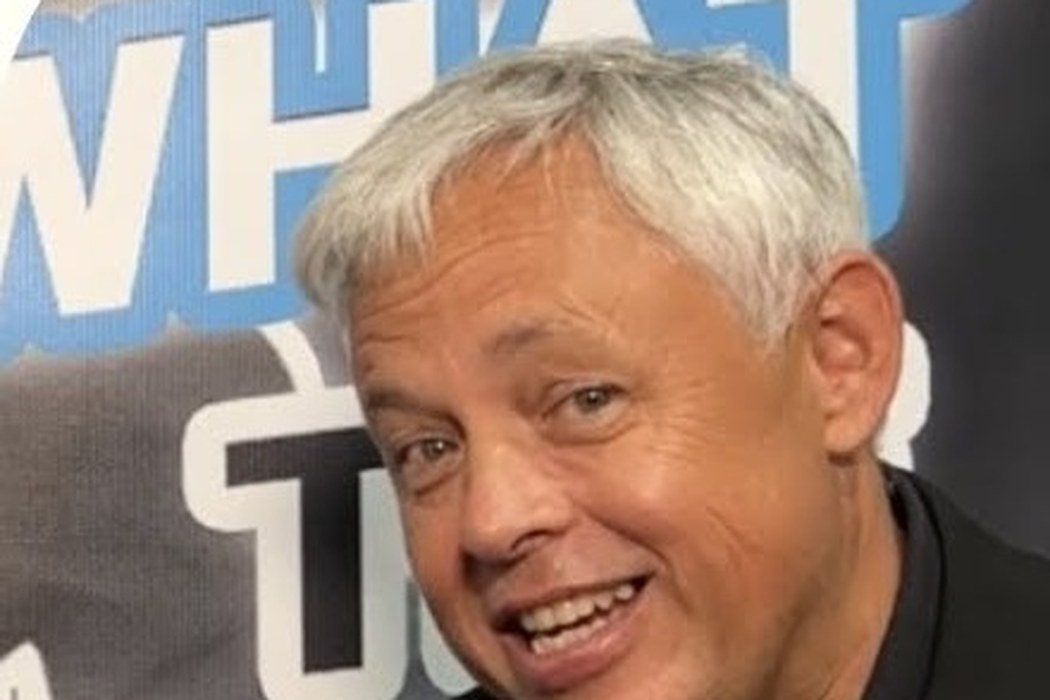
Craig Collins is the CEO of GraniteWMS, a South African warehouse management software company that has grown from a Cape Town product into a system running in 240-plus warehouses across more than 40 industries and four continents. A University of Cape Town science graduate and one of the early figures in South African barcoding, Collins spent roughly three decades in warehouse operations before leading GraniteWMS's push into the United States, Europe, the Middle East and the Caribbean. He hosts the company's 'What The Warehouse' show and is known for a hands-on, floor-level style: he spends much of his time inside actual warehouses looking for practical ways to improve how goods move.
Agro.Club
Agro.Club is a New York-based agri-tech company that runs a full-stack B2B grain marketplace connecting farmers, crop buyers, food companies and input suppliers on a single digital platform. Founded in 2018 by Egor Kirin, it pairs crop marketing, logistics and market data with embedded fintech tools such as invoice financing and factoring, aiming to make grain trade more efficient, transparent and secure across North America, Europe and South America.

Axoniq
Axoniq is a Dutch-founded enterprise software company that builds the backend infrastructure for event-sourced systems and, increasingly, for enterprise AI. Born from the open-source Axon Framework created by Allard Buijze in 2009, the company provides an event-sourcing platform - Axon Framework, Axon Server, and an agent runtime - that gives applications a complete, replayable memory of every decision they make. That memory is the foundation for auditability, explainability, and observability that regulated industries need before they trust AI in production. Axoniq's tools are downloaded 70 million+ times and used by more than 65,000 organizations worldwide.
GraniteWMS
GraniteWMS is a barcode-driven, cloud-based warehouse management system built for small and mid-market businesses. The flagship product of Cape Town-based Cradle Technology Services, it gives warehouses end-to-end visibility - receiving, put-away, picking, stock takes and full item traceability - and either runs standalone or integrates with ERP and accounting platforms such as Sage 200 Evolution, Sage 300, Sage Intacct and SAP Business One. It is deployed across 240+ warehouses spanning 40+ industries in Africa, Europe, the Middle East and North America.
Elevated Signals
Elevated Signals is a Vancouver-based software company building modern, cloud-based manufacturing operations software for highly regulated industries. Born out of the Canadian cannabis boom, its platform replaces paper, spreadsheets, and legacy ERPs with a single real-time source of truth across inventory, quality, traceability, planning, costing, manufacturing, and fulfillment. After raising a $7.9M CAD Series A led by Yaletown Partners in 2024, the company is expanding beyond cannabis into nutraceuticals, food and beverage, CPG, and critical minerals.
Flow Engineering
Flow Engineering builds an AI-native requirements and systems-engineering platform that lets complex hardware teams design, build, test, and iterate at software speed. At its core is a connected 'systems graph' that keeps requirements, CAD, code, simulations, tests, and certification artifacts in one live system of record - with AI agents running impact analysis and keeping everything aligned. Founded by mechanical engineer Pari Singh, Flow is used by companies like Rivian, Joby Aviation, Astranis, Stoke Space, and Figure, and raised a $23M Series A led by Sequoia in October 2025.
Visure Solutions
Visure Solutions is a specialized requirements management and Application Lifecycle Management (ALM) software company founded in 2002. Its all-in-one Visure Requirements ALM Platform helps teams in safety-critical and business-critical industries - aerospace and defense, automotive, medical devices, railways, energy and finance - capture, trace, verify and manage requirements alongside test management, risk management, change management and standards compliance. In recent years Visure has layered AI across the platform, launching the Vivia virtual assistant and an 'Engineering Intelligence' MCP server that lets AI agents work inside governed engineering workflows.
Oceanworks®
Oceanworks is a Los Angeles-based B2B platform that makes it easy for brands to buy verified recycled ocean and ocean-bound plastic and to fund the cleanup of plastic that has no resale value. It runs a global marketplace connecting collectors and recyclers with major consumer brands, backs every transaction with its Oceanworks Guaranteed traceability system, and sells IMPAC+ plastic offsets that work like carbon credits for plastic waste. The idea is simple: turn corporate demand into a paycheck for the people pulling plastic out of coastlines before it reaches the sea.
Specright
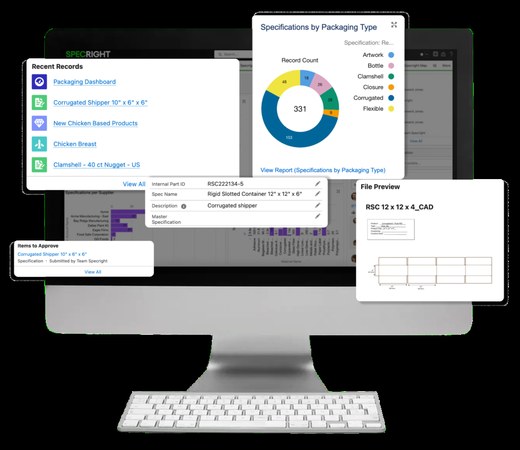
Specright is the first cloud-based, patented platform for Specification Data Management - the digital backbone that captures the DNA-level data of products, packaging, formulas, and bills of materials in a single source of truth. Founded in 2014 by packaging veteran Matthew Wright, it helps the world's largest brands and challenger startups cut costs, accelerate innovation, and reduce waste by replacing scattered spreadsheets with connected, auditable specification data. The platform now hosts more than 5 million products and is layering AI across formulation and spec-first PLM workflows.
Another Tomorrow
Another Tomorrow is a New York-based luxury fashion company building timeless womenswear with a sustainability-first model. Founded by former Morgan Stanley managing director Vanessa Barboni Hallik, it pairs farm-level material traceability with a digital ID on every garment, enabling provenance tracking, anti-counterfeiting, and authenticated resale. It was the first luxury fashion brand to earn B Corp certification and frames its work around human, animal, and environmental welfare.
FloVision Solutions
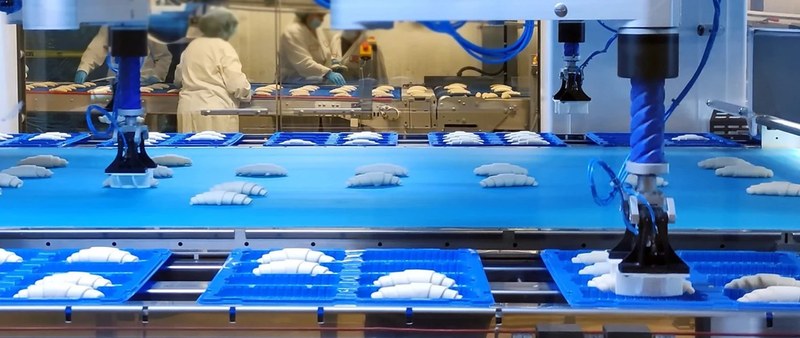
FloVision Solutions builds AI-powered sensors that bolt onto food processing lines to measure yield, monitor quality, and track staff performance in real time. Founded in 2020 by Rian McDonnell and Elise Weimholt, the South Bend, Indiana company helps beef and poultry processors recover lost yield and cut waste at the source. Its compact vision, depth, and load-cell sensors have scanned over 23.2 million kilograms of food across North America, Europe, and Australia, with customers reporting up to 1.5% yield recovery and as much as 15x ROI. In July 2025 it raised an $8.7M Series A led by Insight Partners.

Ophir Gaathon
Ophir Gaathon is the co-founder and CEO of DUST Identity, a Massachusetts deep-tech company that sprinkles microscopic, industrial diamond dust onto physical objects to give them an unclonable fingerprint. A Columbia-trained applied physicist who once chased the quantum properties of diamonds for computing, he turned that research into an identity layer for the physical world, used across defense, aerospace, automotive and luxury supply chains. Backed by Kleiner Perkins, Airbus Ventures, Lockheed Martin and Castle Island Ventures, his company has raised more than $50M and works on problems originally posed by DARPA.
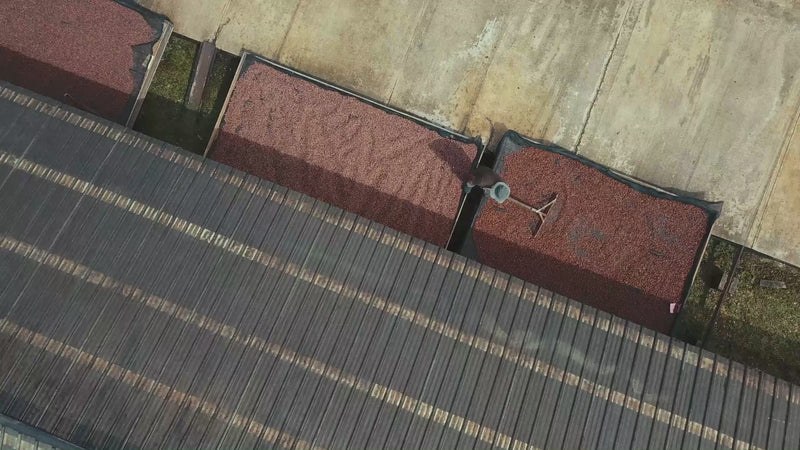
Uncommon Cacao
Uncommon Cacao is a specialty cacao trader that buys high-quality beans from thousands of smallholder farmers and sells them to premium and craft chocolate makers worldwide. Its signature move is radical openness: it publishes a public Transparency Report disclosing the prices paid at every step of the supply chain, and remains the only international cacao trader to do so. Founded by Emily Stone and built on the back of its Belize export operation Maya Mountain Cacao, the company is a certified B Corp and Public Benefit Corporation working to decommoditize cacao and pay farmers more.

Cofactr
Cofactr is a New York-based software and logistics company that automates electronics procurement and supply chain operations for hardware manufacturers. Its cloud platform takes a team from bill of materials (BOM) to build by combining AI agents with ITAR-registered warehouses to handle sourcing, ordering, traceability, storage, kitting, and delivery. Cofactr is built for high-compliance, fast-moving industries such as aerospace, defense, robotics, and medical devices.
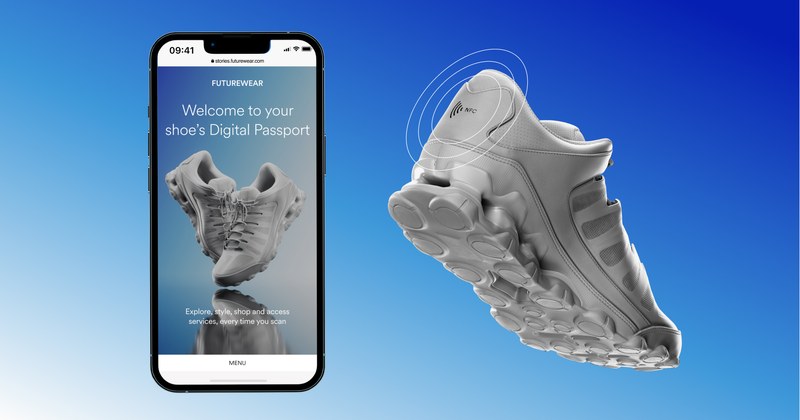
EON
EON is a New York-based enterprise software company building the Digital ID layer for physical products. Through its EON Product Cloud platform, brands give each item a unique, traceable digital identity - accessed via QR code, NFC chip or RFID tag - that follows the product across its full lifecycle, powering resale, repair, authentication, customer engagement and compliance with the EU's upcoming Digital Product Passport regulation. Founded in 2017 by Natasha Franck, EON authored the open CircularID Protocol and works with brands including Coach, Chloe, H&M, Mulberry and Target.
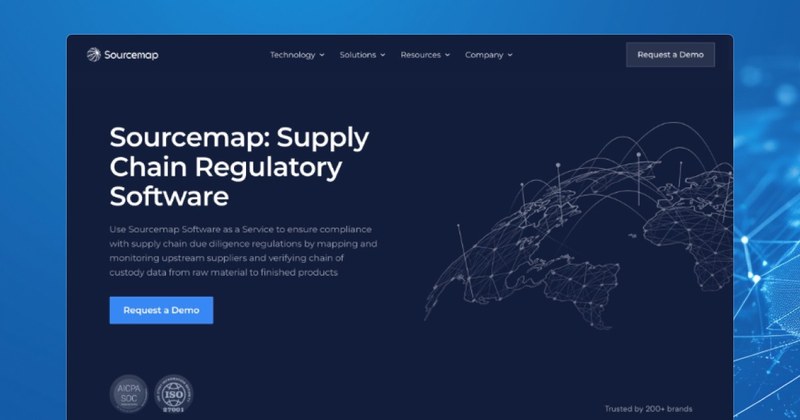
Sourcemap: the Supply Chain Mapping Company
Sourcemap is a New York-based enterprise SaaS company that maps global supply chains down to the raw-material origin. Born as a research project at the MIT Media Lab, it gives compliance and sourcing teams end-to-end, verified visibility across multi-tier supplier networks - helping Global 1000 brands meet forced-labor, deforestation, tariff and ESG regulations while reducing disruption risk.

Leonardo Bonanni
Leonardo Bonanni is the founder and CEO of Sourcemap, the supply chain mapping company he spun out of his PhD research at the MIT Media Lab. What began in 2008 as a 'Wikipedia for supply chains' became enterprise software that helps the world's largest brands in food, apparel, electronics, pharmaceuticals and automotive trace their products down to raw-material origins - tanneries, farms, mines and slaughterhouses. He testified before the US Senate and the French Senate on traceability, spoke at TEDxMilano, and has been named among the most influential people in business ethics.